
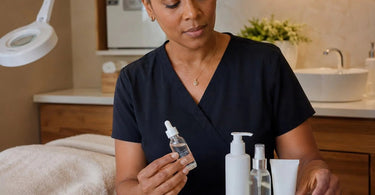
Pros rely on this daily essential, yet it's often the most overlooked service add-on in our industry: a solid, educational consultation about transitional skincare. You have a loyal client, let's call her Sarah. She lives in your humid coastal city, and her skin is dewy, plump, and happy. Then, she jets off to a bone-dry desert climate for a conference, or visits family in a cold, blustery mountain town over the holidays. She comes back looking like she's been on a three-day bender with a cactus—tight, flaky, red, and breaking out. She blames the hotel water, the airplane air, or that one glass of wine she had. But you, savvy professional, know the real culprit: climate shock. Her skin didn't have time to adjust, and her regular routine failed her. This is where you step in as the hero of hydration and the queen of the skin barrier.
Let's be real, our clients' skin is constantly being gaslit by their own travel plans and the whims of Mother Nature. One day it's 75 degrees and humid, and the next, their heating system is blasting dry air that sucks every ounce of moisture from their complexion. This isn't just a seasonal issue; it's a travel issue, a relocation issue, and frankly, a 'life happens' issue. And for you, it represents a massive opportunity to provide exceptional, high-ticket services and retail solutions that go far beyond the standard facial. By understanding the science of how skin behaves when it moves between drastically different climates—say, from a tropical climate to a desert climate—you can prescribe a transformational protocol that builds fierce client loyalty. So, grab your Magnifying Light and let's get into the nitty-gritty of saving Sarah's skin.
Why Does Climate Change Make Skin So Cranky?
Think of your client's skin as a very dramatic actor. It loves a stable, supporting environment. Climate directly impacts the two most critical factors for happy skin: humidity (the amount of water in the air) and temperature. The skin's job is to act as a barrier, keeping good stuff (like water) in and bad stuff (like pollutants and bacteria) out. When a client moves from a high-humidity environment to a low-humidity one, the air essentially becomes a thief. It starts pulling moisture right out of the skin in a process called Transepidermal Water Loss (TEWL) . This rapid loss doesn't just dehydrate the skin; it stresses it out, leading to inflammation, a compromised barrier, and a cascade of issues like flaking, sensitivity, and even breakouts as the skin over-produces oil to compensate for the sudden dryness . Conversely, moving from a dry climate to a humid one can overwhelm the skin with moisture, leading to clogged pores, increased sebum production, and a perfect breeding ground for the bacteria that cause acne. Your client isn't imagining it; their skin is literally trying to recalibrate its entire operating system.
Decoding the Four Climate Villains (And Their Tell-Tale Signs)
To become a transitional skincare guru, you need to diagnose the villain your client is facing or traveling to. Each climate creates a specific set of problems that require a unique professional strategy .
- The Arid Avenger (Desert & High Altitude): Think Las Vegas, Denver, or Arizona. The air is dry, often hot during the day and cold at night. The signs? Intense dehydration, tightness, fine lines looking like the Grand Canyon, and a rough texture. Skin feels parched and looks dull. Here, the priority is intense hydration and barrier reinforcement.
- The Cold-Hearted Frost (Polar & Cold Winter Climates): The dreaded winter in New York, Chicago, or Minnesota. The cold air holds no moisture, and indoor heating makes it worse. Signs include redness, stinging, a tight 'pulled' feeling, flakiness, and a compromised barrier that reacts to everything. This skin needs rich emollients, occlusives, and barrier-repairing ingredients.
- The Humid Hurricane (Tropical & Subtropical): Welcome to Florida, Louisiana, or a summer in Tokyo. Hot and sticky. Signs include an oily shine that appears two hours after cleansing, enlarged pores, congestion, and inflammatory acne. These clients need lightweight, oil-free hydration and ingredients that control sebum without stripping the skin.
- The Temperamental Temp (Seasonal & Mild Climates): The beautiful, moderate weather of San Diego or the Pacific Northwest. The issue here is not the climate itself, but the change into and out of it. Skin might be balanced, but a trip elsewhere or the shift from spring to summer can throw it off. The strategy is adaptable maintenance and a focus on keeping the barrier balanced.
Your Pre-Flight Checklist: Services That Fortify the Skin Before Travel
The smartest way to prevent a skin panic attack is to prepare. Before a client's big trip to a radically different climate, book them in for a 'Pre-Travel Prep' service. This is a high-value add-on they'll thank you for later! Start with a thorough analysis using a Wood's Lamp to assess hydration and congestion levels. A Hydrodermabrasion treatment is perfect for gentle but deep exfoliation and infusing a heavy dose of hyaluronic acid into the skin, giving it a reservoir of water to draw from. For clients heading to dry or cold climates, follow this with a Radio Frequency (RF) Machine treatment to boost collagen and tighten, combined with a soothing, ceramide-rich mask. For those going to humid climates, focus on deep cleansing with a High Frequency Machine to kill bacteria and calm sebaceous glands, followed by an ultra-light, oil-free hydration mask. This proactive service not only protects their skin but also positions you as a true expert.
The In-Flight Survival Kit: Retail Products That Travel Like a Pro
Don't let the airplane be the place where skin goes to die. That recycled air has about 10-20% humidity—drier than most deserts! Your retail counter is where you save the day. Build a 'Travel Transition Kit' featuring mini or travel-friendly versions of powerhouse products. It should include a gentle, non-foaming cleanser (to avoid stripping), a hydrating mist or serum like our Premium Skincare Products with hyaluronic acid, and most importantly, a barrier cream. For dry destinations, recommend a rich balm with shea butter and ceramides. For humid destinations, a gel-cream with niacinamide. Don't forget a lip balm and a hand cream—these small luxuries show you think of everything. When you package it in a chic travel bag, you're not just selling products; you're selling peace of mind.
The Heroic Homecoming: Restorative Post-Trip Treatments
This is your biggest ticket service. Your client is back, jet-lagged, and their skin is screaming. They need you. The post-trip facial is not a standard service; it's a rescue mission. Begin with a thorough consultation—where did they go, what changed, how did their skin react? This builds trust. Skip the aggressive extractions or intense peels. Their barrier is compromised and sensitive. Instead, focus on calming, cooling, and deeply hydrating. Use a Facial Steamer with lukewarm water (never too hot!) to gently open pores without adding heat stress. Follow with a Cold Hammer or cryo-stick massage to reduce inflammation and redness instantly. Next, a treatment using a Microcurrent Machine can help restore tone and lift, as muscles can get fatigued from travel stress. Finish with a soothing, barrier-repairing mask infused with niacinamide and peptides. Top it off with a gentle face, neck, and shoulder massage using a non-fragranced, calming lotion from our Massage Oils, Lotions, and Creams for Therapists collection. They will leave looking luminous, not red and raw.
Building Your Transitional Skincare Arsenal: Products & Tools You Need
To master this service niche, you need the right tools and products. A Magnifying Light is non-negotiable for accurate diagnosis. You'll need a variety of professional skincare lines, from Tuel Skincare for gentle, effective formulas to Murad for targeted climate-control solutions. Stock up on Compressed Sponges for hygienic, single-use product application, especially important when dealing with reactive skin. Have a selection of barrier-repair serums, lightweight hydrators, and occlusive balms ready to go. Don't forget the comfort items: a plush Boca Terry robe and warm, fluffy towels from a Towel Steamer make the entire recovery experience feel deeply luxurious.
Client Education Script: What to Say (and What to Sell)
Let's get practical. Your client, post-trip, is in your chair. Her skin is dry and irritated. She says, 'I used my regular moisturizer the whole time, but my skin just freaked out.' This is your moment. 'You know,' you say, leaning in with your Magnifying Light in hand, 'that makes perfect sense. Your moisturizer is great for our climate, but when you went to that dry mountain air, it was like sending a knight in a paper suit to battle. The air there literally pulls water out of your skin. So we're not going to change everything. We're going to add a shield. I'm going to recommend you add this Barrier Repair Cream—think of it as a raincoat for your face. And for next time, I'll send you home with a travel-sized 'Climate Shield' kit so your skin never has to go through this again.' This script sells the solution, not just a product.
By integrating transitional skincare into your services, you move from being a 'service provider' to an 'essential partner' in your clients' overall well-being. You're predicting their problems and solving them before they even happen. That's the kind of value that makes clients follow you anywhere—even if their skin has to adjust to a few different climates along the way. Now, go stock up on the essentials at Pure Spa Direct, your one-stop wholesale shop for everything you need to build a climate-proof business.
)