
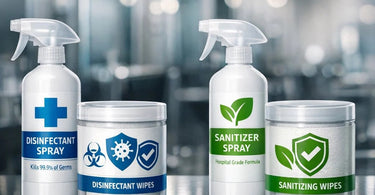
Pros rely on this every day, but does the thought of regulatory acronyms make your eyes glaze over faster than a client’s nail polish under a LED lamp? You’re not alone. Navigating the world of EPA registration and FDA approval can feel like trying to decipher a complicated nail art design without the instructions. But here’s the kicker: confusing these two isn’t just a bureaucratic oopsie—it could mean your disinfectants aren’t actually protecting your clients, and that’s a liability no salon owner wants. Let’s break down this crucial distinction with some clarity and a dash of humor, because keeping your space safe shouldn’t be as stressful as a last-minute brow wax before a hot date.
Think of it this way: the Environmental Protection Agency (EPA) is the boss of your environment—your surfaces, your nail tables, your massage tables, and your waxing stations. If a product is designed to kill germs on a non-living surface, it’s a pesticide in the eyes of the law and needs an EPA registration. Meanwhile, the Food and Drug Administration (FDA) is the authority for anything that goes in or on the human body. This includes hand sanitizers, antiseptic soaps, and even the creams you might use in a spa body treatment. One governs your tools and tables; the other governs items for skin application. Mixing them up is like using hard wax on a fabric couch—it’s just not the right tool for the job, and the results will be messy.
EPA Registration: Your Surface’s Best Friend
When you spray down your spa bedding or wipe your magnifying lamp, you’re using an EPA-registered product. The EPA regulates these under a law called FIFRA (the Federal Insecticide, Fungicide, and Rodenticide Act), which might sound scary, but it simply means they treat germs like pests that need to be controlled. To earn that coveted EPA registration number, a manufacturer must submit extensive data proving the product is both effective against specific pathogens and safe for humans and the environment when used as directed.
The golden rule with EPA-registered disinfectants? The label is the law. Literally. It states, “It is a violation of federal law to use this product in a manner inconsistent with its labeling”. This means you must follow the “Directions for Use” to the letter, especially the contact time—that’s how long the surface must stay wet to actually kill the germs. Skimping on the contact time is like leaving a sugar scrub on for five seconds and expecting miracles; it simply won’t work as promised.
FDA Approval & Oversight: For What Touches Skin
Now, let’s talk about the FDA. This agency steps in when the product is intended for use on people. The most common example in your salon? Hand sanitizer. Hand sanitizers are considered over-the-counter (OTC) drugs, and they fall under FDA authority. The FDA ensures they are safe and effective for direct consumer use based on their label instructions. It’s important to note that while the FDA “approves” new drugs, many OTC products, including sanitizers, follow established FDA “monographs”—essentially recipe books for what’s acceptable—and may not go through a pre-approval process. The FDA also regulates cosmetics, from skincare products to gel polish, focusing on their safety and labeling.
So, to put a bow on it: If you’re disinfecting a pedicure chair between clients, you need an EPA-registered disinfectant. If you’re offering a squirt of antibacterial gel to a client’s hands, that product is under FDA purview. Easy memory trick: EPA for the Environment (surfaces), FDA for Food & Drugs (things that go in/on the body).
The Gray Area: When Tools Become “Devices”
Here’s where it gets a tad more complex, like a multi-step facial. What about disinfectants used on tools that pierce the skin or touch mucous membranes, like lash tweezers or dermaplaning blades? These are considered critical or semi-critical devices. A formal agreement between the FDA and EPA gives the FDA primary responsibility for reviewing the safety and efficacy of liquid chemical sterilants used on these items. For the disinfectants you use on non-critical surfaces (like floors, counters, and furniture), the EPA remains in charge. When in doubt, always check the product label’s intended use and claims.
How to Be a Compliance Superstar in Your Salon
Knowledge is power, and now you have it! Here’s your actionable cheat sheet to ensure you’re always on the right side of the regulations:
- Read the Label, Every Time: Before you buy or use any disinfectant, sanitizer, or antiseptic, read the label front to back. Identify its EPA registration number (e.g., 12345-12) or its FDA status. The label tells you exactly what it’s meant to kill and how to use it properly.
- Respect the Contact Time: This is the most common mistake! If the label says a surface must remain wet for 3 minutes to kill Staph aureus, you must ensure it stays wet for the full 3 minutes. Set a timer!
- Use the Right Product for the Right Job: Don’t use a surface disinfectant on human skin. Don’t assume a hand sanitizer will work on your towel steamer. Match the product to its intended use site as stated on the label.
- Check for List N (If Needed): The EPA maintains a “List N” of disinfectants qualified for use against SARS-CoV-2. If this is a concern for your clientele, verify your products are on this list.
- Source from Trusted Distributors: Partner with a knowledgeable wholesale distributor like Pure Spa Direct, who curates professional cleaners and disinfectants that meet these regulatory standards. It takes the guesswork out of your supply ordering.
Understanding the difference between EPA registration and FDA approval isn’t just about passing a health inspection (though it sure helps with that!). It’s about providing genuinely safe, professional, and trustworthy service. It tells your clients that you care about their well-being down to the microscopic level. When they see you diligently following label directions on your wax strips or applicators, it builds immense confidence. So, wear your compliance knowledge like a badge of honor—it’s the invisible, yet essential, layer of protection in every fantastic service you provide.
