
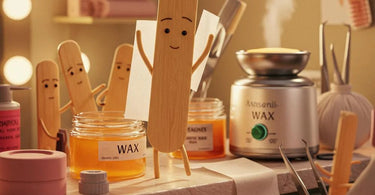
Make the most of every opportunity to elevate your waxing services, and it all starts with the humble wax stick. These little wooden wizards might not get the glamorous attention of the latest high-frequency machine or the fancy designer wax, but without them, your wax room would descend into a sticky, hairy chaos that would make even the most seasoned esthetician break out in a cold sweat. They're the silent partners in your hair removal success story, the trusty sidekicks that never get credit but always show up to work ready to perform.
Think about it: what other tool in your entire spa arsenal costs pennies but can make or break a client's experience? A poorly chosen or incorrectly used wax stick can lead to product waste, messy application, and even client discomfort. Meanwhile, the right wax stick applied with skill creates clean lines, precise application, and efficient service that keeps clients coming back. It's time we gave these unsung heroes the standing ovation they deserve.
More Than Just a Stick: Understanding Wax Applicator Types
Not all wax sticks are created equal, and choosing the right one is like selecting the perfect paintbrush for a masterpiece. The wrong choice can turn your brow wax into a blob-shaped disaster and your bikini line into something resembling a preschool art project.
Wooden Wax Sticks: The classic workhorse of the waxing world. These are typically made from birchwood or similar materials and are disposable, hygienic, and inexpensive. They come in various sizes from teeny-tiny for precision work to larger sizes for bigger areas. They're perfect for both hard wax and soft wax applications.
Reusable Applicators: For the eco-conscious esthetician, reusable options like metal or plastic spatulas can be sterilized between clients. These require proper cleaning and disinfecting but reduce waste. Many professionals love them for their firm edge and precision capabilities.
Roll-On Applicators: While not technically sticks, roll-on systems offer incredible consistency and speed for larger areas like legs and backs. They're especially popular in high-volume clinics where efficiency matters.
The choice often comes down to your preferred wax type, the specific service you're performing, and your personal technique. Many waxing pros keep multiple types on hand for different services – finer tips for facial work, sturdier options for body treatments.
The Art of the Application: Techniques That Make a Difference
Using a wax stick might seem as simple as dunking and spreading, but there's an art to it that separates the novices from the ninjas. The way you hold your stick, the angle of application, and even how you load the wax onto the stick can dramatically affect your results.
First, always hold the wax stick like a pencil, not a dagger. This gives you better control and precision. For larger areas, you might adjust your grip, but for most detailed work, the pencil grip reigns supreme. When loading wax onto your stick, avoid the temptation to create a giant glob on the end. Instead, skim the surface of the melted wax and coat both sides of the stick evenly. This prevents drips and ensures consistent application.
The application technique varies based on wax type. For hard wax, apply in the direction of hair growth with a medium-thick layer that's thicker at the end to create a tab for removal. For soft wax, apply against the direction of hair growth in a thin, even layer. The pressure matters too – too light and you won't properly adhere to hairs; too heavy and you'll irritate the skin.
Remember that the temperature of your wax affects how it behaves on the stick. Wax that's too cool will be difficult to spread, while wax that's too hot might run off the stick or risk burning the client. Your wax warmer should be set to the manufacturer's recommended temperature, and you should test a small amount on your wrist (protected with a glove, of course) before applying to the client.
Size Matters: Choosing the Right Wax Stick for the Job
Walking into our wax applicator collection can feel overwhelming with all the sizes available. But understanding which size works best for which service will transform your waxing game.
Small/Tiny Sticks (1.5-2.5"): These are your precision artists. Perfect for brow shaping, upper lip, chin, and other delicate facial areas. They allow for meticulous control and help avoid getting wax where it shouldn't be (like eyebrows that you're not trying to remove).
Medium Sticks (3-4"): The all-purpose workhorses. Great for underarms, bikini lines, and smaller body areas. They offer a good balance between control and coverage.
Large Sticks (5-6"): The big guns for big jobs. Ideal for legs, backs, chests, and other large surface areas. They help you cover more territory quickly and efficiently.
Jumbo Sticks (6"+): These are less common but useful for extra-large areas or when working with particularly thick wax formulations that require more support.
Many experienced estheticians develop personal preferences based on their hand size and technique. Some swear by longer sticks even for smaller areas because it keeps their fingers farther from the warm wax. Others prefer shorter sticks for the increased control. The best approach is to experiment with different sizes during your wax supplies order to find what works best for you.
Beyond Application: Other Clever Uses for Wax Sticks
These versatile tools aren't just for wax application! Creative estheticians have found multiple uses for wax sticks around the treatment room:
Mixing: Perfect for stirring paraffin wax or blending custom wax formulations. They're disposable, so no cross-contamination between batches.
Product Application: Use clean sticks to apply pre-wax products or post-wax treatments without dipping fingers into containers.
Cleanup: The pointed end can help clean wax out of hard-to-reach places in your wax warmer or around the rim of containers.
Sectioning: Use the non-business end to section hair before waxing, especially useful for precise brow work.
Testing Temperature: Before applying wax to a client, test the temperature on the back of your hand (protected with a glove) using the stick.
The Economics of Wax Sticks: Saving Money Without Sacrificing Quality
Let's talk numbers for a moment. While wax sticks are individually inexpensive, the costs add up over time, especially in high-volume studios. Buying in bulk through our bulk wax deals can lead to significant savings.
But don't let price be your only consideration. Cheap, low-quality sticks can splinter, break during application, or have rough edges that can irritate skin. The few pennies you save per stick might cost you in wasted product, longer service times, or even client discomfort.
Consider your usage patterns. If you primarily do facial waxing, you might go through hundreds of small sticks each month. If you focus on body waxing, larger sticks might be your main expense. Track your usage for a few weeks to determine your actual consumption, then order accordingly to take advantage of volume discounts.
Also think about storage – wax sticks should be kept in a clean, dry place to prevent contamination. Many studios use covered containers or dispensers to keep sticks hygienic until use. This is especially important in humid environments where wood products can warp or become compromised.
Environmental Considerations: The Green Side of Wax Sticks
In today's eco-conscious market, many clients and practitioners are thinking about the environmental impact of disposable tools. While wooden wax sticks are biodegradable, the sheer volume used in busy studios can still give environmentally conscious estheticians pause.
Several approaches can help minimize your environmental footprint:
Source Sustainable Products: Look for sticks made from sustainably harvested wood or bamboo. These options perform just as well as traditional sticks but come with better environmental credentials.
Consider Reusables: For some applications, metal or plastic spatulas that can be sterilized between clients might be appropriate. This requires proper cleaning protocols but significantly reduces waste.
Recycling Programs: Some companies now offer recycling programs for used wooden sticks. While not yet widespread, it's worth investigating options in your area.
Efficient Usage: Sometimes less is more. Using the appropriately sized stick for each service (rather than grabbing a large stick for a small job) reduces waste. Proper technique that minimizes wax waste also indirectly reduces stick waste since you'll need fewer applications to complete a service.
Remember that clients increasingly value businesses that demonstrate environmental responsibility. If you make eco-friendly choices with your waxing supplies, don't be shy about sharing this information – it could be the deciding factor for environmentally conscious clients choosing between studios.
Troubleshooting Common Wax Stick Problems
Even with the best supplies, sometimes things go wrong. Here are solutions to common wax stick dilemmas:
Problem: Sticks breaking during application.
Solution: You might be applying too much pressure, using low-quality sticks, or working with wax that's too cool. Check your technique, upgrade your stick quality, and ensure your wax is at proper temperature.
Problem: Wax dripping off the stick.
Solution: Your wax is likely too hot, or you're overloaded the stick. Adjust your warmer temperature and practice loading the appropriate amount of wax.
Problem: Difficulty controlling application.
Solution: You might be using the wrong size stick for the area, or your grip needs adjustment. Experiment with different sizes and practice your pencil grip.
Problem: Splintering.
Solution: This is typically a quality issue. Upgrade to higher-quality sticks from reputable brands like those available in our wax applicator collection.
Problem: Wax sticking to the stick instead of releasing onto skin.
Solution: This can happen with certain wax formulations or if the stick surface is too smooth. Some estheticians lightly score the application end of wooden sticks with a knife to create texture that helps release wax.
Building Your Perfect Wax Stick Arsenal
Now that you understand the importance and versatility of wax sticks, it's time to build your ideal collection. Every waxing professional should have:
1. Precision Sticks: For delicate facial work and detailed areas
2. All-Purpose Sticks: For most common body waxing services
3. Large Area Sticks: For legs, backs, and other expansive territories
4. Backup Supply: Because running out mid-appointment is not an option
Consider also keeping different types on hand – some wooden, some reusable – to accommodate different services and preferences. And don't forget proper storage solutions to keep your sticks clean and organized.
Your wax sticks might be the smallest tools in your salon arsenal, but they pack a powerful punch in terms of impact on your services, efficiency, and client satisfaction. By giving these humble heroes the attention and respect they deserve, you'll elevate your waxing game to professional new heights.
Ready to stock up on these wax room MVPs? Explore our extensive collection of wax sticks and applicators and discover why professionals trust Pure Spa Direct for all their waxing supply needs. Your next perfect wax application is just a stick away!
