
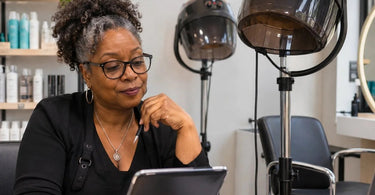
Top-tier products for pros... because your salon equipment should work just as hard as your stylists do! If you are shopping for a professional hooded hair dryer, you already know that not all dryers deserve a coveted spot on your salon floor. Some deliver beautifully consistent drying, adjustable comfort, and reliable performance. Others take up valuable space, frustrate your team, and leave clients wondering whether their roller set will be finished before their next birthday. Choosing the right professional hooded dryer is about much more than finding the prettiest machine or the biggest wattage number. It is about matching performance, functionality, comfort, and durability to the services your business actually provides.
A professional hooded hair dryer can be an incredibly valuable addition to a busy hair salon, beauty school, blowout bar, or specialty styling studio. These machines support everything from traditional roller sets and wrap styles to certain conditioning services and heat-assisted treatments. Unlike handheld dryers, hooded models allow clients to sit comfortably while controlled heated airflow circulates around their hair. For salon owners, that can create opportunities to organize appointments more efficiently and make better use of styling stations.
Before investing in your next machine, however, there are several important details worth examining. Let's explore what separates a practical professional purchase from an expensive piece of salon furniture that spends more time collecting dust than drying hair.
Start With the Services Your Salon Actually Performs
The first question is surprisingly simple: What will your team use this dryer for?
A salon specializing in roller sets, silk wraps, and traditional styling services may use a hooded dryer differently from a salon focused on color, conditioning, and texture services. The equipment should support your specific menu rather than forcing your stylists to work around its limitations.
Common professional applications include roller sets, wet sets, wrap styles, certain deep-conditioning treatments, and manufacturer-approved heat-assisted processing services. Hooded dryers may also be useful for drying styles that benefit from reduced direct manipulation while the hair sets.
For chemical services, always follow the processing instructions supplied by the product manufacturer. Not every hair color, permanent wave solution, or conditioning formula should be exposed to additional heat. A dryer with adjustable temperature controls provides flexibility, but those controls do not override the requirements of the products being used.
If your salon regularly performs multiple types of services, prioritize versatility. A machine that accommodates different hair lengths, roller sizes, and temperature requirements can deliver greater practical value than a highly specialized model.
Choose Between Freestanding and Wall-Mounted Designs
One of the biggest purchasing decisions involves the dryer configuration. Professional hooded hair dryers commonly come in freestanding and wall-mounted designs, and each offers advantages depending on your salon layout.
Freestanding hooded dryers typically feature a wheeled base and adjustable support column. Their biggest advantage is flexibility. You can move the dryer between stations, reposition it for different clients, or roll it into storage when the space is needed for another service.
These models can be particularly useful for salons with changing appointment patterns, shared styling stations, or limited dedicated drying areas. Look for a stable base, smooth-rolling casters, and dependable height adjustments. A mobile dryer should move easily without feeling unstable during normal operation.
Wall-mounted hooded dryers eliminate the need for a floor-standing base and can help maintain open pathways around styling stations. They are especially attractive for salons with designated drying areas or a carefully planned equipment layout.
However, wall-mounted models require additional planning. You must consider mounting location, wall construction, installation requirements, arm reach, electrical access, and whether the dryer can comfortably accommodate different chair positions.
Explore Professional Salon Equipment for Top Stylists and Barbers when comparing equipment that complements your existing salon layout.
Understand Wattage Without Getting Distracted by Big Numbers
Wattage is one of the first specifications shoppers notice, but it should never be the only factor driving your decision.
A dryer's wattage indicates its electrical power consumption or rated input. It does not independently tell you how quickly hair will dry or how evenly the heat will circulate.
Professional hooded dryers are available in different wattage configurations. For example, the Harmonia Portable Free-Standing Hood Dryer by Shosh Spa Essentials features a 1,000-watt heating system, variable heat settings, and a 60-minute timer. Those specifications offer useful starting points for evaluating its suitability for professional salon services.
Meanwhile, the Inge Wall-Mount Hood Dryer by HANS Equipment features an 880-watt design, adjustable temperature, and a 60-minute timer in a wall-mounted configuration.
Neither wattage figure should be interpreted as a guaranteed drying time. Actual performance depends on airflow design, heat distribution, hair density, product application, styling method, and the amount of moisture in the hair.
Compare the complete machine rather than assuming that the highest wattage automatically means the best purchase. Your electric bill may appreciate that approach, too.
Pay Attention to Airflow Direction and Heat Distribution
Airflow direction is an often-overlooked detail that can make a noticeable difference in salon operations.
Some hooded dryers use upward airflow, while others are designed with downward-directed airflow. These designs can behave differently around loose hair, roller sets, and lightweight styling arrangements.
With certain upward-airflow dryers, a hair net or another method of securing the hair may be necessary to keep the style in place. This is particularly important when working with loose sections or styles that could be disturbed by the moving air.
For example, the Harmonia dryer specifically calls for a hair net unless the hair is pinned down or otherwise restrained. That is an important operational detail to understand before purchasing.
The Paragon Hoodie Hair Dryer, available in freestanding or wall-mounted configurations, uses downward-draft airflow and a spacious dual-hood design. It also includes adjustable temperature controls and a 60-minute timer.
When comparing models, look beyond marketing descriptions and consider how air reaches the hair throughout the hood. Ask whether the design is appropriate for the styles your salon performs most frequently.
Consistent airflow and appropriate heat settings can help support predictable results, but no dryer eliminates the need for professional judgment and client monitoring.
Look for Adjustable Temperature and Timer Controls
A professional dryer should provide controls that are practical for the services your stylists perform.
Adjustable temperature is particularly valuable because different styling methods, hair conditions, and manufacturer-approved treatments may require different operating conditions. Fine, fragile, or compromised hair may need a more conservative approach than other hair types.
Temperature flexibility also allows stylists to respond to client comfort rather than treating every appointment as an identical drying session.
Timers are equally important. Many professional hooded dryers offer adjustable timers with maximum settings around 60 minutes, although specifications vary by model.
A conveniently located timer helps stylists manage drying sessions and avoid relying entirely on memory during busy appointment schedules. Still, a timer is not a substitute for checking the client and assessing the hair during the service.
Consider whether the controls are easy to read, easy to adjust, and accessible while the client is seated. Complicated controls may look impressive in a product photograph, but nobody wants to solve a puzzle just to start a roller set.
Where available, review whether the machine offers separate heat and airflow adjustments, clearly marked settings, and an accessible power switch.
Make Client Comfort a Priority
Your clients may spend a substantial portion of their appointment sitting beneath the hood. Their comfort deserves serious consideration.
Start with the hood itself. Is it spacious enough to accommodate the roller sets and hairstyles your team regularly creates? Can clients sit naturally without pressing their shoulders upward or holding their necks at an uncomfortable angle?
Hood size matters particularly for larger roller arrangements and fuller hairstyles. A hood that works beautifully for a compact set may not comfortably accommodate every styling technique.
Adjustable height is another valuable feature. Clients come in different heights, and your chairs may have different seat and backrest configurations.
Look for dryers that allow convenient vertical adjustment or hood repositioning. For wall-mounted machines, evaluate the arm's reach and range of motion before installation.
The Inge Wall-Mount Hood Dryer, for example, offers a rotatable, adjustable design and a lift-up visor for client comfort.
Noise level is worth investigating as well. A noisy machine positioned near several other operating dryers may make conversation, consultations, and the overall salon atmosphere less pleasant.
If possible, review operating demonstrations or ask about noise characteristics before ordering. A beautifully designed dryer loses some of its charm when clients have to shout their next appointment date over the motor.
Measure Your Space Before Ordering
Salon square footage is valuable, and equipment placement can influence everything from employee movement to client comfort.
Before purchasing, measure the area where your dryer will operate. Consider the machine's overall height, hood dimensions, base footprint, and any clearance needed to adjust or reposition its components.
For freestanding models, account for the entire base, not just the hood. A wide base may provide stability but could interfere with salon chair legs or nearby furniture.
For wall-mounted machines, consider the full range of the support arm. A dryer that looks compact while folded away may require considerably more clearance when extended into its operating position.
Also examine how clients will enter and exit the chair. Equipment should not create awkward obstacles or interfere with safe movement through the salon.
If you are planning a new drying area, browse Stylish Salon & Barber Furniture to coordinate seating and workstation arrangements with your equipment.
Remember to evaluate nearby outlets, cords, storage areas, and service pathways. The goal is a drying station that feels intentional rather than an obstacle course designed by an overenthusiastic furniture salesperson.
Check Electrical Requirements and Installation Details
Professional electrical equipment should be evaluated against your salon's available power supply before purchase.
Review the manufacturer's voltage, wattage, frequency, plug configuration, and installation instructions. Some hooded dryers are designed for standard North American electrical configurations, but requirements vary.
Never assume that every dryer will work with every outlet simply because the product is marketed for professional salons.
Multiple dryers operating alongside other salon appliances can place substantial demand on electrical circuits. Consider the equipment already connected in your facility, including styling tools and other electrically powered stations.
If you are unsure whether your existing circuits can safely support additional equipment, consult a qualified electrician before installation.
Wall-mounted models deserve additional attention because their mounting hardware and support structure must accommodate the equipment safely. Follow the manufacturer's installation requirements and use qualified installers where appropriate.
Also check for any required electrical safety certifications or listings applicable to the product and your facility. Do not assume compliance from appearance or advertising language alone.
Proper electrical planning is considerably less exciting than choosing salon furniture, but it is much more exciting than discovering that your new equipment cannot be used safely after delivery.
Evaluate Durability and Daily Maintenance
A dryer that performs well during an occasional demonstration still needs to withstand regular salon use.
Think about how frequently the machine will operate during an average workday. A salon running back-to-back roller sets needs equipment suited to repeated use, while an occasional-use styling studio may have different requirements.
Examine the construction of the hood, support column, adjustment mechanisms, controls, and base. On mobile dryers, inspect caster quality and how securely the machine remains positioned during operation.
For adjustable equipment, determine whether frequently handled components are designed to withstand repeated repositioning.
Maintenance accessibility matters, too. Hair, dust, and styling-product residue can accumulate around salon equipment over time. Follow the manufacturer's cleaning instructions, including any guidance for accessible vents, guards, and filters.
Avoid spraying cleaning products directly into electrical components, and disconnect equipment before cleaning whenever the manufacturer's instructions require it.
It is also wise to investigate the availability of replacement components. Pure Spa Direct offers Bulbs & Replacement Parts for Spa and Salon Equipment, although compatibility and availability must be confirmed for the specific dryer.
Replacement-part access, warranty terms, and service support can be just as important as the initial purchase price.
Compare Professional Hooded Dryer Options
Different dryer designs may be better suited to different salon environments. Rather than searching for one universally perfect machine, compare models according to your available space and service priorities.
Harmonia Portable Free-Standing Hood Dryer: This Shosh Spa Essentials model offers a mobile configuration, variable heat, a 60-minute timer, adjustable height, easy-glide casters, and a 1,000-watt heating system. It may appeal to salons that want the flexibility to relocate their dryer between stations. Remember the manufacturer's instruction about securing hair when using its upward airflow.
Inge Wall-Mount Hood Dryer: This HANS Equipment model features adjustable positioning, a lift-up visor, adjustable temperature, and a timer ranging from zero to 60 minutes. Its wall-mounted configuration is worth considering for a salon with a dedicated drying area and limited available floor space.
Paragon Hoodie Hair Dryer: Available in freestanding and wall-mounted configurations, this model features downward-draft airflow, a spacious dual hood, adjustable temperature, and a 60-minute timer. It is a useful option to examine when hood design and airflow direction are important considerations.
Vion Wall-Mounted Hood Hair Dryer: The Vion by HANS Equipment features a 1,000-watt heating system, adjustable wall-mounted arm, and a timer ranging from zero to 60 minutes. Its adjustable arm may be particularly useful for businesses designing a dedicated drying station.
These examples illustrate why the right choice depends on the intended application. Review current product specifications, electrical requirements, dimensions, installation instructions, and availability before ordering.
You can also browse Hair Styling Tools & Appliances for Salons to evaluate related professional equipment for your styling stations.
Consider Whether You Need a Hooded Dryer or a Hair Steamer
Another purchasing consideration is whether a traditional hooded dryer is actually the right type of equipment for the service you want to provide.
Professional hooded dryers and hair steamers are not interchangeable machines.
A hooded dryer primarily uses heated airflow to dry hair or support approved heat-assisted services. A professional hair steamer introduces moisture through steam and may be used during certain salon treatments when compatible with the products and techniques involved.
For example, the Athene Professional Hair Steamer by Shosh Spa Essentials includes electronic heat and time controls, adjustable height, an adjustable hood angle, and a mobile roller base. It uses distilled water according to its product instructions.
If your goal is traditional hair drying and setting, a hooded dryer is the more direct equipment category to investigate. If your treatment menu specifically requires steam, evaluate professional steamers separately.
Purchasing the wrong equipment category can lead to disappointing performance, unnecessary expenses, or services that cannot be performed as intended.
Calculate the Real Cost Beyond the Purchase Price
Salon owners are smart to compare equipment prices, but the lowest upfront price is not always the most economical option.
Consider the full ownership cost, including delivery, installation, electricity, maintenance, replacement components, and potential downtime.
Large or heavy equipment may require specialized delivery arrangements. Check shipping classifications, access requirements, and whether delivery includes anything beyond curbside service.
Wall-mounted dryers may involve additional installation expenses. Freestanding models may avoid certain mounting costs but require more floor space.
Think about how often the dryer will be used and whether it supports services that contribute meaningful revenue to your business.
For example, suppose a salon earns $30 in contribution toward fixed costs and profit from each additional completed service that a new dryer genuinely makes possible. A $600 equipment investment would require 20 such additional services to recover its initial cost, before accounting for operating and maintenance expenses.
That does not mean a dryer automatically creates additional appointments. The financial benefit depends on actual demand, available staff, scheduling, and whether drying capacity is currently limiting your salon.
The calculation is still helpful because it shifts the conversation from simply asking how much the dryer costs to asking what value it can realistically deliver.
Think About Salon Workflow and Employee Efficiency
A professional hooded dryer is part of a larger salon workflow, not an isolated piece of equipment.
Consider how clients transition from shampoo stations to styling chairs and drying stations. Does the machine support a smooth sequence of services, or will stylists need to move furniture and equipment every time they use it?
For busy salons, a dedicated drying area may help keep styling stations available for other appointments. In smaller studios, a mobile dryer may provide better flexibility because it can be repositioned as the appointment schedule changes.
Also consider how employees monitor sessions. The dryer should be placed where stylists can periodically check client comfort, drying progress, and any treatment-specific requirements.
Do not assume that hooded drying means clients should be left unattended. Equipment operation must follow manufacturer instructions, and heat-assisted services require appropriate professional supervision.
Simple details can make a meaningful difference. Convenient controls, accessible seating, easy equipment movement, and sufficient clearance may save small amounts of time throughout the day.
And in a busy salon, those small improvements can be worth more than another decorative shelf full of products nobody can reach.
Ask These Questions Before You Place Your Order
Before finalizing your purchase, use this practical checklist to compare the dryers on your shortlist.
- Primary services: Will the dryer support your most frequently performed drying, setting, and approved conditioning services?
- Configuration: Do you need a movable freestanding unit or a permanently positioned wall-mounted model?
- Hood size: Will the opening accommodate your typical roller sets, hair volume, and styling arrangements?
- Airflow: Does the machine use upward or downward airflow, and are hair nets or other restraints necessary?
- Temperature: Are the available settings appropriate for the intended services and client comfort?
- Timer: Is the timer convenient to operate and suitable for your usual session lengths?
- Adjustability: Can the dryer comfortably accommodate different clients and salon chairs?
- Electrical compatibility: Does the equipment match the available electrical supply and applicable installation requirements?
- Maintenance: Are cleaning procedures, replacement parts, and service information available?
- Ownership costs: Have you considered shipping, installation, maintenance, and potential downtime?
- Warranty: What coverage applies, and who handles service or repairs?
- Salon layout: Can clients and employees move safely around the dryer during regular operations?
Having these answers before ordering makes it easier to compare machines objectively rather than relying on product photographs or promotional descriptions.
Find the Right Professional Hooded Dryer for Your Salon
The best professional hooded hair dryer is not necessarily the largest, most powerful, or most expensive machine available. It is the one that fits your salon's services, space, electrical setup, staffing patterns, and long-term business goals.
Start by identifying the treatments and styling methods your team performs most often. Then compare airflow design, heat control, hood dimensions, adjustability, installation requirements, and durability. Finally, examine the complete ownership cost and the support available after purchase.
At Pure Spa Direct, we understand that professional salon owners need equipment that makes sense for real working environments. As a distributor of professional beauty and salon supplies, we help businesses shop across equipment categories and find products suited to their individual operations.
Explore our Professional Hair Salon & Barber Shop Supplies, browse Top-Quality Equipment & Furniture for Spas & Salons, or search for Hooded Hair Dryers to begin comparing options for your business.
Because the right dryer should make salon life easier, keep clients comfortable, and help your team deliver beautiful results. The only thing it should leave hanging is perfectly styled hair, not your appointment schedule!
