
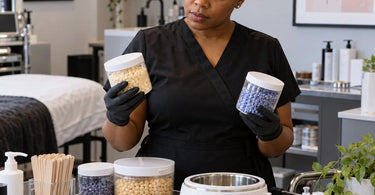
Elevate every treatment with this essential guide to choosing the right professional waxing supplies for your salon. Switching your salon's primary wax brand might sound as simple as ordering a different bag of beads, but experienced estheticians know there is much more happening behind that colorful packaging. Your wax affects application speed, service consistency, product consumption, client comfort, and ultimately your bottom line. Before breaking up with your current wax brand, it pays to make sure your exciting new relationship will actually improve your business. After all, nobody wants to discover halfway through a packed Brazilian waxing schedule that their new wax has the personality of brittle peanut brittle.
Whether you are frustrated with rising supply costs, inconsistent performance, frequent stock shortages, or simply curious about newer professional formulations, changing wax brands deserves thoughtful consideration. The goal is not necessarily finding the most expensive, most popular, or prettiest wax. It is finding a dependable product that works with your technicians, treatment menu, equipment, and financial goals.
1. Identify Why You Want to Change Wax Brands
Before comparing alternatives, take an honest look at your current waxing products. What problem are you actually trying to solve?
Perhaps your existing hard wax takes too long to set, creating unnecessary delays between clients. Maybe your soft wax requires repeated applications, increasing product use and treatment time. You might be dealing with inconsistent inventory availability, increasing wholesale prices, or formulas that do not perform well across the different hair types your technicians encounter.
Write down your top three reasons for considering a switch. Separate measurable problems from personal preferences. A technician who dislikes a wax fragrance may have a legitimate concern, but that issue deserves a different evaluation than a product that consistently breaks during removal.
Defining your priorities makes comparing alternatives much easier. Otherwise, you risk swapping one frustration for an entirely different frustration wearing a much cuter label.
2. Compare Hard Wax and Soft Wax Performance
Not every wax brand excels in every treatment category. Some professional lines offer an extensive selection of stripless hard wax formulas, while others provide compelling options for traditional strip waxing, roll-on applications, or specialized services.
Professional Stripless Hard Wax is commonly used for facial waxing, underarms, bikini services, and other targeted areas. Different formulations can vary considerably in elasticity, setting time, application thickness, and removal characteristics.
Soft Strip Wax for Effective Salon Hair Removal is frequently used for larger treatment areas, including legs, arms, and backs. These formulas are generally applied in thin layers and removed using appropriate waxing strips.
When testing a potential replacement brand, consider how well its products suit your actual service menu. A salon specializing in Brazilian waxing may place greater emphasis on flexible hard wax and efficient removal. A business performing large numbers of full-leg and back treatments may prioritize thin application, predictable removal, and economical soft wax consumption.
Do not assume that switching your primary brand means every treatment must use the same formula. Maintaining different products for specific services may provide better overall performance than forcing one wax to handle every situation.
3. Evaluate Working Temperature and Wax Warmer Compatibility
Wax temperature is one of the most important considerations when introducing a new brand. Different formulas may require different heating conditions, and a warmer setting that worked beautifully with your previous wax may not be appropriate for the replacement.
Review the manufacturer's recommended operating instructions for every formula you test. Evaluate heating time, working consistency, temperature stability, and how the wax behaves during extended service periods.
Your existing Professional Wax Warmers for Salons & Spas should also be part of the evaluation. Consider container compatibility, warmer capacity, temperature controls, and the practical demands of maintaining multiple wax products throughout the day.
A thermometer or suitable temperature verification method can help technicians assess the actual wax temperature rather than relying entirely on a warmer dial. Always follow manufacturer instructions and test the temperature before client application.
Never assume that a product described as low-temperature wax can be applied without proper temperature checks. Marketing language does not replace safe professional technique.
If a new brand requires additional warmers or replacement equipment, include those expenses in your switching budget before celebrating a lower price per bag.
4. Test Application Consistency, Elasticity, and Removal
Two hard wax formulas can look almost identical in their packaging and behave very differently on an applicator. One may spread smoothly in a thin, controlled layer, while another requires a thicker application to maintain its integrity during removal.
Pay attention to how the wax loads onto your applicator, spreads across the treatment area, grips appropriate hair, sets, and removes. Evaluate whether it remains flexible, becomes brittle, stretches excessively, or leaves unwanted residue.
The best wax for your business should support repeatable results using techniques recommended by its manufacturer. A beautiful demonstration from a brand representative is encouraging, but real-world performance during ordinary salon appointments is what matters.
Use the same evaluation criteria for each candidate product. Record observations about application control, removal consistency, product waste, and the need for additional cleanup.
It also helps to compare the performance of your existing Professional Wax Spatulas and Applicators for Salons & Spas with the new formula. Some waxes behave differently depending on application technique and tool selection.
5. Consider Client Sensitivities and Ingredient Differences
Changing wax brands means introducing a different product formulation to your clients. Even when two products are designed for the same service, their ingredient lists may differ.
Review manufacturer ingredient information, precautions, fragrance components, resin ingredients, and any relevant product documentation. Some clients may have known sensitivities that make particular formulations inappropriate for them.
Do not assume that a wax described as natural, gentle, hypoallergenic, or suitable for sensitive skin is automatically appropriate for every client. Ingredient awareness and individual consultation remain essential.
Update consultation procedures when introducing a new product. Ask about allergies, relevant medications, recent skin treatments, and other contraindications before proceeding. Follow the manufacturer's skin-testing recommendations, your professional training, and applicable licensing requirements.
Be especially careful when waxing clients who use topical retinoids, have recently undergone exfoliating treatments, or have compromised skin in the intended treatment area. A brand switch does not eliminate the need to assess whether waxing is appropriate.
A professional approach protects clients and helps your business maintain consistent service standards.
6. Calculate the Real Cost Per Waxing Appointment
Wholesale price matters, but the price printed on the bag is only the beginning of the financial equation.
A lower-priced wax may require a thicker application, create more waste, or increase service time. A more expensive formula might cost less per appointment if technicians consistently use less product and complete services efficiently.
Calculate your actual material expense for several common services. Include wax consumption, Quality Wax Strips & Rolls for Effective Hair Removal when applicable, disposable applicators, preparation products, and cleanup supplies.
For example, suppose Wax A costs $22 per kilogram and your average service uses 45 grams. The wax portion of that appointment costs approximately $0.99. If Wax B costs $28 per kilogram but requires only 30 grams, its wax cost is approximately $0.84 per service.
Those figures are hypothetical, but they demonstrate why unit price alone can be misleading. The seemingly expensive wax may actually be the economical choice.
Track service duration too. A formula that consistently adds several minutes to appointments can affect scheduling capacity and labor expenses. However, never sacrifice safe application, appropriate technique, or client comfort in pursuit of faster service.
For salons managing significant volume, exploring Bulk Wax Deals may provide additional purchasing flexibility once the preferred formula has been thoroughly tested.
7. Explore Established Professional Wax Brands
Choosing a new wax brand is easier when you compare several established professional options rather than committing to the first product that catches your attention.
Pure Spa Direct distributes professional waxing products from multiple manufacturers, giving salon owners the opportunity to explore different formulations, product categories, and price points without assuming that one brand fits every business.
Depending on your treatment menu, professional brands worth investigating include ItalWax, Berodin, Waxness, Cirepil, Lycon, and Starpil.
These brands offer different product selections and approaches to professional waxing. Rather than declaring one universally superior, review the individual formulas available within each line.
For example, compare hard wax flexibility for detailed services, soft wax application characteristics for larger treatment areas, and available options for your preferred working techniques. Check ingredient lists, product sizes, manufacturer instructions, and support resources.
Other professional collections, including Dermwax, Miss Cire, and Satin Smooth, can expand your comparison.
Remember that brand reputation is a useful starting point, not a substitute for testing. Your salon's specific services, climate, equipment, team experience, and client preferences should drive the final decision.
8. Review Pre-Wax and Post-Wax Product Compatibility
Your wax is only one part of a complete professional treatment system. Cleansers, preparation products, finishing oils, and soothing products all contribute to service quality.
Before switching brands, review how the new wax works with your current Pre & Post-Waxing Products. Some manufacturers recommend specific preparation or removal products for their formulas.
Check whether existing products remain appropriate or whether changes are needed. An incompatible preparation product may interfere with wax performance, while an unsuitable remover may create unnecessary cleanup challenges.
Calculate the expense of updating these supporting products if necessary. A wax line with an attractive introductory price may become less appealing if it requires substantial additional inventory.
Also evaluate the available Waxing Accessories & Removers for Professional Use that support your service workflow.
For clients who regularly experience ingrown hairs, consider how your professional aftercare recommendations and available Ingrown Hair Products fit into the broader waxing experience. Avoid promising that switching wax brands alone will prevent irritation or ingrown hairs.
9. Factor In Technician Training and Learning Curves
Your technicians may have spent years perfecting their techniques with a particular product. Introducing a new formula can change familiar application habits, removal timing, and working consistency.
Even highly experienced estheticians can benefit from product-specific training when switching wax brands. Review manufacturer recommendations and provide supervised practice opportunities before introducing the formula into regular appointments.
Consider scheduling a team demonstration followed by controlled testing. Encourage technicians to discuss differences in application thickness, setting behavior, flexibility, and removal technique.
If one technician loves the new wax while another struggles, investigate whether the difference comes from training, individual technique, equipment, or the product itself.
A successful transition should build team confidence instead of creating a treatment-room debate that lasts longer than the appointment.
Document the agreed-upon procedures so your entire staff follows consistent manufacturer-approved practices. Include hygiene requirements, temperature verification, application guidance, and product storage instructions.
10. Evaluate Supplier Reliability and Inventory Availability
A fantastic wax formula is not especially helpful when you cannot obtain it before your next busy weekend.
Consider how consistently the brand is available through your distributor. Review package sizes, ordering frequency, typical replenishment needs, and whether the product line offers suitable alternatives if a specific formula becomes temporarily unavailable.
For salons with multiple treatment rooms or several locations, predictable inventory management becomes particularly important.
Determine how much wax your business consumes during an average week and during seasonal peaks. Use those numbers to establish appropriate reorder points and backup inventory levels.
Take expiration dates, manufacturer storage recommendations, and available shelf space into account when considering larger orders. Buying excessive quantities of an unfamiliar wax is not a bargain if the formula ultimately fails your performance tests.
Working with a professional beauty distributor such as Pure Spa Direct can help you compare a wide assortment of salon supplies and maintain a more organized purchasing process.
11. Test the New Brand Before Making a Complete Switch
One of the smartest ways to reduce switching risk is to conduct a structured trial rather than replacing every container in your salon overnight.
Start with a small quantity of the formula you are considering. Review the manufacturer's directions, verify equipment compatibility, and introduce the product through an appropriate professional testing process.
Compare performance across the treatment categories for which the product is intended. Document wax usage, application behavior, service duration, removal consistency, and technician feedback.
Where appropriate, gather client feedback about the experience without making unsupported claims about reduced pain or improved skin outcomes.
A simple evaluation sheet can include the following criteria:
- Application consistency and ease of spreading
- Working temperature and heating stability
- Setting time and flexibility
- Hair removal performance
- Amount of wax used per appointment
- Cleanup requirements and product waste
- Technician confidence and training requirements
- Client comfort and any observed skin reactions
- Availability, package size, and total service cost
Compare the trial results against your current wax using similar service conditions whenever practical. Avoid drawing sweeping conclusions from a single appointment or from treatments involving very different hair and skin characteristics.
The objective is to gather enough reliable information to make a sensible purchasing decision, not to rush into a brand commitment because the sample smelled like a tropical vacation.
12. Plan a Gradual Inventory Transition
Once you identify a suitable replacement, create a practical transition plan.
Review remaining stock of your current wax and determine how it can be used responsibly within its recommended shelf life. Avoid unnecessary waste, but never continue using an unsuitable product simply because you purchased it in bulk.
Introduce the new formula in designated treatment rooms or service categories first. Confirm that technicians have completed the necessary training and that compatible equipment and supplies are available.
Keep products clearly identified, follow manufacturer storage instructions, and avoid mixing different wax formulas unless the manufacturer explicitly permits it.
Maintain appropriate sanitation procedures throughout the transition. Never double-dip applicators that have contacted a client's skin, and follow applicable infection-control requirements for wax handling and disposal.
For salons building a new setup around the replacement formula, Complete Waxing Kits for Salons & Spas may be useful to explore, provided their contents fit your equipment and service requirements.
13. Decide Whether a Single Primary Brand Still Makes Sense
After completing your evaluation, you may discover that your salon does not need to rely exclusively on one manufacturer.
A primary wax brand can simplify ordering, training, and inventory management. However, maintaining a secondary product for specialized services may provide meaningful advantages.
For example, a salon might favor one flexible hard wax for intimate waxing, a different soft wax for larger body areas, and another formulation for specific client needs when appropriate.
The challenge is balancing versatility against the administrative cost of stocking too many products. Every additional formula requires storage space, inventory tracking, staff familiarity, and consistent safety procedures.
If several products perform similarly, streamlining the selection may make daily operations easier. If one specialized formula clearly meets a need that your primary line does not, keeping it available may be worthwhile.
Let service results and business requirements determine the answer rather than assuming complete brand loyalty is always the best strategy.
14. Know When Staying With Your Current Wax Is the Better Choice
Not every disappointing waxing day means your brand needs replacing. Sometimes the real issue involves warmer settings, application technique, inconsistent product storage, hair length, or insufficient staff training.
Before abandoning a familiar product, investigate whether these factors explain the problem. Check current manufacturer instructions, review technician technique, and evaluate equipment condition.
If the wax consistently meets your performance requirements, remains readily available, produces manageable service costs, and supports positive client experiences, switching may provide little financial or operational benefit.
On the other hand, persistent performance problems, significant availability issues, unfavorable costs, or changing treatment requirements can justify exploring alternatives.
The important distinction is identifying a genuine opportunity for improvement rather than changing brands simply because something new looks exciting on social media.
Make Your Next Wax Brand Decision a Business Decision
Switching your salon's primary wax brand should be a deliberate investment in better operations, not an impulsive purchasing adventure. Evaluate product performance, application characteristics, ingredient considerations, equipment compatibility, technician training, total service costs, and supplier reliability before making the commitment.
Take advantage of sample testing where available, encourage honest staff feedback, and compare actual appointment-level results. The best wax for your business is one your team can use safely and consistently while supporting the quality and profitability of your services.
Ready to explore your options? Browse the professional waxing collections at Pure Spa Direct, compare established wax brands, and discover the supplies that fit your treatment menu. Whether you are planning a complete brand transition or simply improving your existing product selection, thoughtful purchasing decisions can help your salon deliver smooth services without creating unnecessary bumps behind the scenes.
