
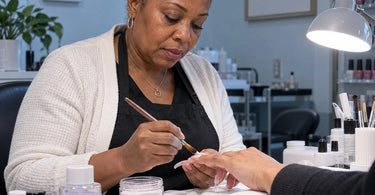
Your work deserves great tools... and acrylic that actually cooperates before your next appointment arrives. If you have ever watched a perfectly good acrylic bead turn into a sluggish little puddle on a chilly salon morning, you know how quickly a beautiful nail service can become an exercise in patience. Cold temperatures can interfere with how professional acrylic nail supplies perform, leaving technicians wondering why their usual liquid and powder system suddenly seems determined to take its sweet time. The good news? Understanding what happens to acrylic in a cold nail salon makes it much easier to restore predictable setting times, maintain beautiful nail enhancements, and keep your appointment schedule moving without turning the thermostat into a tropical vacation.
Temperature is one of those behind-the-scenes details that can make a surprisingly big difference in professional nail services. Your technique might be exactly the same, your favorite products might be unchanged, and your client might even be requesting her usual shape and length. Yet the acrylic behaves completely differently because the room, products, or client's hands are colder than normal. Let's explore why this happens, how to recognize temperature-related setting problems, and what professional nail technicians can do about them.
Why Does Acrylic Set More Slowly in a Cold Nail Salon?
Traditional liquid and powder acrylic systems harden through a chemical process called polymerization. When a technician combines acrylic liquid, commonly called monomer, with acrylic polymer powder, ingredients in the system initiate a reaction that transforms the workable mixture into a solid nail enhancement.
This process is influenced by temperature. In warmer conditions, polymerization generally proceeds faster. In colder conditions, the reaction slows down, extending the amount of time the acrylic remains workable before becoming firm enough for shaping and filing.
That means a nail technician accustomed to a particular working time may suddenly experience:
- Acrylic beads that remain soft longer than expected.
- Product that spreads before the desired structure is established.
- Difficulty maintaining a defined apex or crisp sidewalls.
- Longer waits before filing and refining enhancements.
- Occasional surface irregularities or crystallization associated with cold conditions.
- Appointments running behind because the product is not ready for the next step.
Think of it as the acrylic equivalent of someone refusing to leave a warm bed on Monday morning. Everything eventually gets moving, but the process is noticeably slower.
The important distinction is that acrylic does not simply dry like ordinary nail polish. Its setting behavior is primarily the result of a chemical reaction, which is why temperature, formulation, and mixing technique matter so much.
Cold Acrylic Liquid and Powder Can Make the Problem Worse
Sometimes the salon thermostat is not the only culprit. The temperature of the products themselves can influence how an acrylic system behaves.
Imagine a nail salon that lowers its heating overnight to reduce operating expenses. In the morning, the room begins warming up, but acrylic products stored in a chilly cabinet remain cold. Even though the technician feels comfortable, the liquid and powder may not have returned to their normal working temperature.
Cold product can contribute to slower polymerization and inconsistent application behavior. A bottle of monomer stored near a drafty window or an exterior wall may respond differently from one kept in a stable, temperature-controlled storage area.
For consistent services, keep acrylic monomer and acrylic powder under the storage conditions recommended by their manufacturers. Allow products that have become cold to return naturally to an appropriate room temperature before use.
Never attempt to accelerate this process with a microwave, hot plate, space heater, heating pad, or direct heat source. Acrylic liquids can contain flammable ingredients, and overheating or improper handling introduces unnecessary hazards. A stable environment is the professional solution, not an improvised chemistry experiment.
What Temperature Is Best for Professional Acrylic Nail Application?
Many professional acrylic systems perform predictably in a comfortable room-temperature environment, often around 68 to 75 degrees Fahrenheit. However, the ideal range depends on the particular manufacturer and formulation. Some systems are designed to work best at slightly different temperatures.
The most reliable approach is to follow the technical instructions for the specific liquid and powder combination being used.
Rather than treating one thermostat setting as a universal rule, salon owners should focus on temperature consistency. A workstation that swings from chilly in the morning to unusually warm by afternoon can produce noticeable differences in acrylic working time.
Consider keeping a small room thermometer near your nail tables and manicure stations. This inexpensive addition can help identify whether recurring application problems coincide with temperature fluctuations.
If the salon has several workstations, remember that temperatures can vary across the room. A station next to an exterior door, air-conditioning vent, or poorly insulated window may experience different conditions than a station near the center of the salon.
Your acrylic doesn't care that the thermostat says the salon is comfortable if its workstation feels like the frozen-food aisle.
How Cold Client Hands Affect Acrylic Setting Time
Even when the salon and products are comfortable, a client's cold hands can influence the setting process. This is especially noticeable when someone arrives from freezing outdoor temperatures and sits down for an acrylic service immediately.
The natural nail and surrounding tissue may be substantially cooler than usual. Once acrylic is applied, that cooler surface can influence the temperature of the material during the early stages of polymerization.
Cold hands may contribute to:
- Slower initial hardening near the nail surface.
- Difficulty maintaining consistent bead behavior.
- Unexpected changes in working time between clients.
- Greater potential for cold-related surface imperfections.
A practical solution is to allow the client's hands to reach a comfortable temperature naturally before application. A short period indoors may be sufficient. If necessary, ask the client to relax her hands comfortably while the technician prepares the workstation and completes the appropriate service preparation.
Avoid applying direct heat to freshly placed acrylic or using heated equipment as an improvised curing method. The goal is to create normal, stable application conditions rather than force the chemical reaction to happen faster.
Is Your Acrylic Bead Too Wet for the Temperature?
Temperature is important, but it is not the only factor affecting acrylic setting time. The ratio of liquid to powder can also change how the product behaves.
A bead containing too much monomer may appear excessively wet, spread more than desired, and take longer to reach a workable firmness. When the salon is already cold, this problem can become particularly frustrating.
A technician may notice that an overly wet bead:
- Loses its intended shape before it can be positioned correctly.
- Runs toward the sidewalls or cuticle area.
- Requires additional manipulation to build structure.
- Remains soft longer than the technician expects.
- Makes it harder to maintain consistent enhancement thickness.
Before blaming the weather entirely, evaluate bead pickup technique and the recommended liquid-to-powder ratio for your particular system.
Using quality nail brushes and tools helps support controlled pickup and application. However, the correct brush cannot compensate for consistently improper product ratios.
Do not make dramatic ratio changes simply to force faster setting. An excessively dry bead may not wet the powder properly and can create its own strength, adhesion, and appearance problems. Make only adjustments permitted by the manufacturer's instructions.
Why Mixing Different Acrylic Brands Can Complicate Cold-Weather Services
Professional acrylic systems are formulated with particular working characteristics in mind. The liquid, powder, initiators, and other ingredients are designed to function together under recommended application conditions.
Combining a monomer from one manufacturer with powder from another can introduce unpredictable behavior. This may become more noticeable when the room temperature is already affecting the polymerization process.
For example, a liquid formulated for a faster-setting system may not necessarily behave as intended with an unrelated powder. Similarly, switching powder brands while continuing to use the same monomer can change bead consistency, working time, and overall performance.
Whenever possible, use complete manufacturer-approved systems. Explore professional options from established nail-care collections such as CND and OPI, and verify the compatibility and application instructions for the specific acrylic products selected.
Consistency matters, especially in a busy nail salon where technicians need products to behave predictably throughout a full day of appointments.
Could Your Acrylic Products Be Old or Contaminated?
Cold temperatures are an obvious suspect when acrylic begins setting slowly during winter, but product condition deserves attention too.
Acrylic powder exposed to moisture, contamination, or improper storage conditions may behave differently from fresh, properly stored material. Similarly, monomer that has been stored incorrectly or contaminated during service may develop performance problems.
Check for warning signs such as unexpected changes in product appearance, unusual clumping, contamination, or inconsistent behavior even after the products return to their recommended temperature.
Professional storage habits make troubleshooting much easier:
- Keep containers securely closed when not in use.
- Store products according to manufacturer directions.
- Protect supplies from excessive heat, moisture, and direct sunlight.
- Avoid returning used liquid to the original monomer container.
- Use clean, appropriate containers for dispensing products during services.
- Check manufacturer shelf-life guidance and discard questionable materials.
Helpful workstation essentials include dappen dishes, appropriate dispensing accessories, and clean professional cotton, sponges, and wipes.
A clean and organized workstation will not change the laws of chemistry, but it certainly makes it easier to figure out which part of the process needs attention.
Why Slow-Setting Acrylic Can Create Filing and Finishing Problems
One of the biggest frustrations associated with slow acrylic setting is knowing when the enhancement is ready to file.
When acrylic has not reached the appropriate firmness, premature filing can produce poor results. Instead of removing material cleanly, the file may drag against a soft surface, and the enhancement may deform under pressure.
This can lead to uneven shaping, additional finishing work, and unnecessary product removal.
Technicians may also find themselves repeatedly checking whether the acrylic is ready, which disrupts their normal service rhythm.
Use the manufacturer's recommended setting indicators and application guidance before beginning refinement. A light tapping assessment may be part of a particular system's instructions, but should not be treated as a universal substitute for proper setting or full curing.
Once the material has reached the appropriate stage, high-quality nail files and buffers help refine the enhancement efficiently.
Remember that an acrylic enhancement becoming firm enough to file does not necessarily mean every aspect of its polymerization is complete. Respect the manufacturer's service timing and aftercare instructions.
What About Acrylic Crystallization in Cold Weather?
Some liquid and powder acrylic systems can develop a condition commonly described as crystallization when applied under unfavorable cold conditions.
This may appear as a frosty, whitish, grainy, or irregular area, sometimes near the cuticle or on portions of the enhancement that were especially cold during application.
One contributing factor can be polymerization proceeding too slowly while volatile components evaporate from the acrylic mixture. The resulting surface may not develop the smooth, uniform appearance the technician expected.
Crystallization should not automatically be confused with ordinary air bubbles, improper bead placement, or filing marks. Different defects can have different causes.
If crystallization appears, review the temperature of the room, client hands, and products, along with the manufacturer's mixing and application directions. Do not simply cover a visibly defective area with additional product and assume the underlying issue has disappeared.
When the integrity of an enhancement is questionable, properly correcting or replacing the affected material is preferable to concealing the problem.
Should You Switch to a Faster-Setting Acrylic Monomer?
Some professional acrylic systems offer different setting speeds to accommodate technician preferences and working conditions. Faster-setting options may be helpful in certain environments, but they are not automatically the best solution for every cold salon.
Before purchasing a different liquid, determine whether the problem is caused by temperature, application technique, incompatible products, or improper storage.
If a manufacturer offers a compatible faster-setting monomer, review its recommended temperature range, application instructions, and intended professional use.
A faster formulation may reduce working time, but it also requires technicians to work confidently and efficiently. Switching systems without training can replace one application problem with another.
Explore available professional acrylic liquids and acrylic nail supplies while comparing the specific performance characteristics and compatibility instructions of each product.
The goal is not to find the fastest acrylic on the planet. It is to find an appropriate system that delivers dependable performance and enough working time for your service technique.
How to Troubleshoot Slow Acrylic Setting Step by Step
When acrylic suddenly begins taking longer to set, a systematic approach can save time, materials, and frustration.
Step 1: Check the workstation temperature. Measure the temperature near the actual application area rather than relying exclusively on a wall thermostat across the room.
Step 2: Evaluate product storage. Determine whether the monomer and powder were stored in a cold cabinet, near an exterior wall, or in another location with fluctuating temperatures.
Step 3: Allow products to acclimate naturally. Follow manufacturer storage guidance and let cold supplies return to an appropriate room temperature without direct heating.
Step 4: Consider the client's hand temperature. If the client has just arrived from cold weather, allow time for her hands to become comfortably warm.
Step 5: Review bead consistency. Make sure the acrylic mixture follows the manufacturer's recommended liquid-to-powder ratio and is not unnecessarily wet.
Step 6: Confirm product compatibility. Check that the powder and liquid are intended to be used together.
Step 7: Inspect product condition. Rule out contamination, improper storage, and products that may have exceeded their recommended useful life.
Step 8: Perform a controlled comparison. If the manufacturer's instructions permit, compare the product's behavior under stable, recommended conditions before changing multiple variables.
Step 9: Contact the manufacturer when necessary. If a properly stored and correctly applied system continues to behave abnormally, request product-specific troubleshooting guidance.
Changing one variable at a time makes it easier to identify the actual cause. Otherwise, troubleshooting can quickly turn into a guessing game featuring three brushes, two monomers, and one extremely unimpressed nail technician.
How Salon Owners Can Prevent Winter Acrylic Problems
For nail salon owners and managers, slow acrylic setting is more than a minor technical inconvenience. Repeated delays can affect appointment scheduling, labor efficiency, and client satisfaction.
A technician who needs additional time on every acrylic service may have less flexibility for the rest of the day's appointments. Even small delays can accumulate during busy weekends or holiday periods.
Creating a simple seasonal procedure can help everyone on the team maintain consistent service quality.
Start by establishing temperature expectations for nail stations and maintaining appropriate heating during operating hours. Make sure products are stored under suitable conditions, including overnight and during scheduled closures.
Train technicians to recognize the difference between cold-related setting delays and other acrylic application problems. Provide a consistent approach for checking bead ratios, product compatibility, storage conditions, and readiness for filing.
Keep frequently used professional supplies organized in accessible workstations so staff members are not repeatedly retrieving products from cold storage areas immediately before application.
Review the condition of nail salon furniture and workstation placement when planning seasonal adjustments. Furniture located directly beneath a cold air vent or beside a frequently opened exterior door may contribute to inconsistent working conditions.
Most importantly, maintain appropriate local exhaust ventilation and general salon ventilation while controlling temperature. Do not block ventilation systems or reduce necessary airflow to keep the room warmer. Chemical exposure control remains essential during acrylic services.
Why Proper Ventilation Still Matters in a Cold Nail Salon
It can be tempting to close every window, seal every draft, and reduce airflow when winter arrives. However, acrylic nail services involve chemical products that require appropriate handling and ventilation.
Temperature comfort should never come at the expense of worker or client safety.
Follow applicable salon ventilation requirements, manufacturer instructions, and safety data sheets. Properly designed source-capture ventilation can help control airborne contaminants near the point where they are generated, while suitable general ventilation supports overall indoor air quality.
Ensure that exhaust and heating systems are maintained properly and that staff members understand safe handling procedures for professional acrylic liquids.
Store flammable nail liquids away from ignition sources, keep containers closed when possible, and follow the product's fire-safety and storage guidance.
Professional supplies such as protective gloves and masks should be selected according to the actual task and chemical hazards. Ordinary disposable masks are not substitutes for appropriate ventilation or properly selected respiratory protection when required.
A comfortable salon should also be a professionally managed salon. Beautiful enhancements and safe working practices belong together.
How to Maintain Consistent Acrylic Services Throughout the Year
Cold weather may highlight setting problems, but seasonal consistency is something nail salons can work toward year-round.
During warmer months, acrylic can set faster than technicians expect, reducing working time and making it harder to perfect structure before the material becomes firm. During cooler months, the opposite may occur.
Establishing repeatable application procedures helps minimize both situations.
Consider keeping a simple internal record of product systems, workstation temperatures, and noticeable changes in setting behavior. This can be particularly useful for salons with multiple nail technicians using different professional acrylic systems.
New technicians can benefit from practicing with their chosen products under normal working conditions and learning how temperature affects application. Experienced technicians may also appreciate refresher education when the salon changes product lines.
Maintain an appropriate inventory of essential professional nail care products, including compatible liquids, powders, brushes, files, and finishing supplies.
For salons providing multiple enhancement services, organize professional gel polish, dipping powder systems, and traditional acrylic systems separately. These products have different application and hardening requirements, so troubleshooting one category should not automatically be applied to another.
Frequently Asked Questions About Cold-Weather Acrylic Setting
Does acrylic take longer to set in winter?
Yes, it can. Lower temperatures generally slow the polymerization process in conventional liquid and powder acrylic systems. The amount of additional working time depends on the formulation, temperature, and application conditions.
Can cold acrylic monomer cause problems even when the salon feels warm?
Yes. Products stored in a cold location may remain below their recommended working temperature after the room itself becomes comfortable. Proper natural acclimation can help restore more consistent behavior.
Will adding more acrylic powder make the product set faster?
Changing the liquid-to-powder ratio can affect working characteristics, but using excessive powder is not a reliable or recommended shortcut. Follow the manufacturer's specified ratio to avoid improper wetting, poor application, or compromised performance.
Can I use a heater to make acrylic harden faster?
Do not use direct heat or improvised heating devices on acrylic products or freshly applied enhancements. Maintain the salon and supplies within the manufacturer's recommended temperature conditions instead.
Why does acrylic set slowly on one client but normally on another?
Differences in hand temperature, bead size, mixing ratio, application technique, and other service variables can affect the experience. Clients arriving from cold outdoor conditions may have cooler nails and hands than clients who have been indoors for some time.
Does slow setting always mean the acrylic is defective?
No. Cold temperatures, overly wet beads, product incompatibility, and improper handling can all cause unusual working behavior. If a system remains inconsistent after these variables are corrected, consult the manufacturer.
Should a salon purchase faster-setting acrylic for winter?
Possibly, if the chosen manufacturer offers an appropriate compatible system and the salon's conditions justify it. Start by correcting temperature and application variables before switching products solely because of a seasonal slowdown.
The Bottom Line: Keep Acrylic Predictable, Not the Salon Tropical
Understanding why acrylic product sets too slowly in a cold nail salon can help technicians avoid unnecessary delays, frustrating application problems, and inconsistent enhancements. Cooler temperatures slow the chemical reaction that hardens traditional liquid and powder acrylic, while cold products, chilly client hands, and overly wet beads can make the problem more noticeable.
The most effective solutions are usually straightforward: maintain stable working temperatures, store supplies correctly, use manufacturer-approved liquid and powder combinations, practice consistent bead pickup, and allow adequate setting time before filing.
For busy nail professionals, dependable products and repeatable techniques make a real difference. Explore acrylic nail supplies, professional nail brushes and tools, and manicure essentials to support efficient, polished services through every season.
After all, your acrylic should be setting beautifully while you work your magic, not taking an extended winter vacation on your client's fingernails.
