
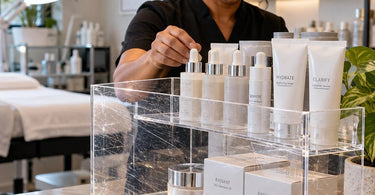
Your clients will notice the difference... especially when your beautiful acrylic retail displays look less like a luxury boutique and more like they have survived a wrestling match with a box of nail files. Those crystal-clear shelves, product risers, and countertop organizers look absolutely gorgeous when they are new, but somehow, the scratches seem to appear almost overnight. If you have ever cleaned a display with what seemed like a perfectly innocent paper towel and discovered a collection of tiny scuff marks afterward, you are definitely not alone. The good news? Acrylic scratching is not a mystery, and a few simple changes to your salon or spa routine can make a big difference in how long your displays stay beautiful.
Acrylic is popular in professional beauty environments for good reasons. It is lightweight, attractive, versatile, and excellent for showcasing retail products without distracting from their packaging. However, its polished appearance comes with a small catch: acrylic requires different care than glass. Understanding why it scratches and how to protect it can help salon owners, spa managers, nail technicians, estheticians, and retail associates maintain an inviting shopping environment without constantly replacing display fixtures.
Why Do Acrylic Retail Displays Scratch So Easily?
The simplest explanation is that acrylic is softer than glass. Acrylic, technically known as polymethyl methacrylate or PMMA, is a transparent thermoplastic that offers excellent optical clarity and relatively low weight. These characteristics make it especially useful for countertop displays, shelves, organizers, cosmetic stands, and promotional fixtures.
Unfortunately, the same material that makes acrylic lightweight and practical is also vulnerable to surface abrasion. Harder materials, including small particles of dirt, dust, and grit, can leave visible marks when they are dragged across its surface.
Even everyday activities can create scratches. Moving merchandise, rearranging displays, sliding product bottles, or wiping down a dusty shelf can gradually affect the finish.
The problem is particularly noticeable on clear, glossy acrylic because light reflects off small imperfections. Under bright salon lighting, fine scratches may become surprisingly obvious. That flawless transparent surface suddenly seems to have developed its own little collection of battle scars.
How Acrylic Compares With Glass and Other Display Materials
Glass generally offers better resistance to everyday surface scratching than standard acrylic. However, acrylic provides several advantages that make it attractive for busy professional retail environments.
It is considerably lighter than glass, making displays easier to move and rearrange. It also has greater impact resistance than ordinary glass, although it can still crack or break under certain conditions.
Acrylic is easy to manufacture into attractive shapes, including tiered risers, curved holders, divided organizers, and custom product stands. Its transparency allows merchandise to remain the visual focus.
Other materials bring different trade-offs. Metal displays can resist certain types of scratching but may chip, dent, or corrode depending on their finish and environment. Wood displays add warmth and texture but may require protection from moisture and spilled products. Polycarbonate is another clear plastic with high impact resistance, although standard grades can also scratch easily.
For many spas and salons, acrylic remains an excellent merchandising choice. The secret is selecting an appropriate display and maintaining it correctly rather than expecting it to behave like glass.
The Everyday Salon Habits That Cause Acrylic Scratches
Most acrylic displays do not become scratched because of one dramatic accident. Their appearance changes gradually through repeated contact with merchandise, cleaning materials, and everyday salon activity.
Sliding Products Instead of Lifting Them
Retail shelves need regular restocking. Whether your team is arranging premium skincare products, cuticle oil, or nail polish, sliding bottles and boxes across acrylic creates unnecessary friction.
Packaging seams, rough bottle bottoms, labels, and tiny particles trapped beneath products can all contribute to surface damage. Over time, these small movements produce scratches concentrated in the busiest sections of a display.
A better approach is to lift merchandise when reorganizing it. This takes only a moment longer and helps protect the surface beneath.
Using Paper Towels for Quick Cleaning
Paper towels are convenient, inexpensive, and seemingly available in every salon supply cabinet. Unfortunately, they are not ideal for acrylic.
Paper fibers can create fine scratches, particularly when dirt or dust is already sitting on the display. Repeated wiping gradually produces a cloudy appearance that may be difficult to reverse completely.
Use a clean, soft microfiber cloth or another acrylic-approved, nonabrasive cleaning material instead.
Dry Dusting a Dirty Display
Picture a busy Friday afternoon. Your retail counter has accumulated a little dust, so someone grabs a cloth and gives everything a quick wipe. Mission accomplished, right?
Not necessarily. Dry wiping can push abrasive particles across the acrylic surface. Those particles may function like extremely fine sandpaper, creating tiny scratches that become noticeable under strong lighting.
Remove loose debris gently and use an appropriate damp cleaning method rather than vigorously rubbing a dry, dusty display.
Stacking Displays Without Protection
Salons frequently rotate seasonal merchandise, promotional displays, and retail arrangements. When acrylic fixtures are stacked directly against one another, their surfaces may rub together during storage or transportation.
Even smooth-looking acrylic pieces can develop scratches when moved without protection. Soft dividers, individual wrapping, and organized storage help prevent unnecessary contact.
Can Cleaning Products Actually Damage Acrylic?
Absolutely. In fact, choosing the wrong cleaning solution can create problems beyond ordinary scratches.
Many household glass cleaners contain ingredients that are unsuitable for standard acrylic. Ammonia-based cleaners and certain solvents can damage the material, potentially causing cloudiness, discoloration, or fine stress cracks known as crazing.
Crazing is different from surface scratching. It appears as a network of tiny cracks within or near the surface and generally cannot be eliminated with ordinary cleaning or polishing.
Products containing acetone or aggressive solvents can be especially damaging. Alcohol-based cleaners may also be incompatible with some acrylic materials, particularly when the plastic is under stress.
This matters in professional beauty environments because salons routinely work with nail solvents, disinfectants, adhesives, and other chemical products. A cleaning solution suitable for one surface is not automatically appropriate for every display fixture.
When selecting products from a professional cleaners and disinfectants assortment, verify that the specific formula is approved for acrylic before using it on retail fixtures. Follow the cleaner label, the display manufacturer's instructions, and any applicable sanitation requirements. Do not assume that a gentle-looking product is automatically acrylic-safe.
How to Clean Acrylic Retail Displays Without Scratching Them
A consistent cleaning routine is one of the easiest ways to extend the attractive appearance of acrylic fixtures. The goal is to remove dirt without creating unnecessary friction or exposing the material to incompatible chemicals.
Step 1: Remove Merchandise Carefully
Lift products off the display rather than dragging them toward the edge. Place bottles, jars, and cartons on a clean surface while you work.
This is also a convenient opportunity to inspect packaging for leaks, sticky residue, or rough edges that may damage the display when products are returned.
Step 2: Remove Loose Dust and Debris
Before wiping, gently clear away loose particles. When the display design permits, use clean water to help lift dust without rubbing it across the surface.
Avoid scraping at dried residue with fingernails, razor blades, or other hard tools. A tiny spot of stubborn buildup is not worth creating a permanent scratch.
Step 3: Choose an Acrylic-Compatible Cleaning Solution
For many ordinary acrylic fixtures, a small amount of mild dish soap mixed with lukewarm water is appropriate. A cleaner specifically formulated for acrylic may also be used when recommended by the display manufacturer.
Always check the instructions for specialty acrylic, coated surfaces, printed designs, and assembled displays. Some finishes require different cleaning methods.
Step 4: Wipe Gently With a Clean Microfiber Cloth
Use light pressure and a clean, soft microfiber cloth. If the cloth becomes gritty or dirty, replace it rather than continuing to rub particles against the acrylic.
For heavily soiled displays, repeat the gentle cleaning process instead of increasing pressure. More elbow grease is not always more effective, especially when dealing with a relatively soft surface.
Step 5: Rinse and Dry Carefully
Remove any soap residue with clean water when appropriate, then gently blot or dry the display with another clean, soft cloth. Avoid excessive moisture around electrical components, glued joints, or fixtures with materials that should not get wet.
Return merchandise only after the surface is clean and dry. This helps prevent residue buildup and keeps the display looking polished.
Why Dust Is a Bigger Problem Than It Looks
Dust may seem harmless, but its contents vary depending on the environment. Fine mineral particles, debris from packaging, and other airborne materials can be abrasive.
In a nail salon, fine filing dust may settle on retail displays near manicure stations. In a hair salon, styling residue and everyday dust can accumulate on exposed surfaces. In a busy spa reception area, constant foot traffic and merchandise handling introduce additional debris.
Once these particles settle on acrylic, cleaning technique becomes particularly important. Wiping them around without first loosening or removing them increases the possibility of abrasion.
Consider positioning delicate displays away from heavy filing activity, treatment product splashes, and other areas where debris frequently accumulates. Attractive merchandising is important, but strategic placement can help protect the fixtures.
For salons with a dedicated retail section, placing displays on appropriate reception furniture or separate merchandise shelving can help reduce accidental contact with service-related materials.
Can Static Electricity Make Acrylic Displays Dirtier?
Yes. Acrylic surfaces can develop static electricity, particularly in dry conditions or through repeated rubbing. Static charge attracts lightweight dust particles, making freshly cleaned displays appear dusty again sooner than expected.
It can feel like an unfair little joke. You clean the display, turn around to answer the phone, and somehow it already looks ready for another dusting.
An acrylic-compatible antistatic cleaner may help reduce dust attraction. However, the product should specifically indicate suitability for the type of acrylic or surface coating involved.
Reducing unnecessary rubbing and maintaining a regular gentle-cleaning routine can also help limit the repeated buildup of dust and visible surface marks.
How to Protect Acrylic Displays From Product Packaging
Retail packaging can be surprisingly rough on acrylic. Glass bottles, metal containers, rigid plastic jars, and cardboard cartons all create different points of contact.
Consider how products are arranged and how frequently customers or staff will handle them.
For spa retail products, keep testers and frequently handled items in accessible locations where customers do not have to scrape them across multiple shelves.
For nail art supplies and small accessories, consider compartmentalized organizers that reduce repeated shifting.
For heavier bottles and jars, choose displays with sufficient weight capacity and stable platforms. If approved by the fixture manufacturer, removable protective liners or pads may help reduce direct abrasion. Make sure they are clean, compatible with acrylic, and do not create a slipping hazard.
A good display should support the way your team and clients naturally interact with merchandise. If everything must be shuffled around every time someone wants one little serum, the layout may need improvement.
Can You Remove Scratches From Acrylic Displays?
Sometimes. Whether a scratch can be repaired depends on its depth, location, and the type of acrylic involved.
Light surface scratches on standard, uncoated acrylic may respond to a polishing compound specifically designed for acrylic plastics. These products work by carefully refining the surface to reduce the visibility of fine marks.
However, polishing is not appropriate for every display. Specialty coatings, printed graphics, matte finishes, and certain textured surfaces can be permanently altered by abrasive polishing.
Before attempting repairs, check the manufacturer's recommendations and test an approved product on an inconspicuous area.
What About Deeper Scratches?
Deeper scratches are more difficult to correct. Some may require professional refinishing, while others make replacement more practical.
Trying to remove deep damage through aggressive sanding or buffing can distort the surface, create uneven reflections, or damage the structural integrity of thin acrylic components.
For inexpensive countertop risers, replacement may be more cost-effective than spending considerable time restoring a heavily damaged surface.
For larger or custom-made displays, professional acrylic restoration may be worth exploring. The best choice depends on the fixture's value, design, and condition.
Are Scratch-Resistant Acrylic Displays Worth Buying?
For high-traffic retail spaces, scratch-resistant acrylic may be worth considering. Certain acrylic products feature specialized coatings designed to improve resistance to everyday abrasion.
These surfaces can provide better durability than standard uncoated acrylic, although scratch-resistant does not mean scratch-proof.
Coated acrylic also requires its own maintenance instructions. Some coatings cannot be polished after damage, and cleaners suitable for ordinary acrylic may not be recommended for specific specialty finishes.
Before investing in upgraded fixtures, ask suppliers about the display material, coating characteristics, cleaning requirements, weight capacity, and intended use.
For busy beauty retail counters, it may make sense to invest in more durable displays for frequently handled merchandise while using standard acrylic for decorative arrangements or lower-contact product presentations.
Where You Place Acrylic Displays Matters
Acrylic durability is not determined by cleaning alone. Display placement affects how often a fixture gets bumped, wiped, moved, or exposed to potentially damaging substances.
Near manicure stations, airborne filing dust and accidental solvent exposure are concerns. Around waxing stations, sticky product residue may require extra cleaning. At busy checkout counters, bags, keys, jewelry, and payment equipment can make contact with exposed displays.
Consider placing delicate retail fixtures away from the busiest service zones. Dedicated merchandising areas can also make it easier for clients to browse without interfering with professional treatments.
Products associated with lash and brow services, skincare routines, or home nail care can be grouped by category on stable displays.
Keep enough space between fixtures for staff to replenish merchandise without bumping neighboring shelves. Leave convenient access to the products customers ask about most frequently.
Remember, an attractive retail setup should make shopping easier, not require the flexibility of a professional gymnast to retrieve a bottle of moisturizer.
How Often Should Salons and Spas Clean Acrylic Displays?
There is no universal cleaning schedule because every salon and spa experiences different levels of dust, traffic, and product handling.
However, a practical maintenance plan can help prevent minor issues from becoming major cosmetic problems.
Daily: Visually inspect displays for spills, fingerprints, debris, and product leaks. Address obvious contamination promptly using the correct cleaning method.
Several times per week: Perform gentle cleaning as needed, especially on customer-facing surfaces and frequently handled fixtures.
Weekly: Remove merchandise where practical, clean the display thoroughly, and inspect contact points for abrasion or residue.
Monthly: Review the condition of display fixtures, check stability, and identify areas where merchandise arrangement or storage practices may be contributing to scratches.
These intervals are flexible starting points rather than rigid requirements. Busy retail counters may need more frequent attention, while decorative displays in quiet areas may need less.
When Should You Replace a Scratched Acrylic Display?
Not every scratch requires a new fixture. Minor marks may be acceptable when they do not affect the overall presentation of merchandise.
However, replacement deserves consideration when the acrylic develops extensive cloudiness, deep gouges, cracks, sharp damaged edges, or structural instability.
Displays that can no longer support products securely should be removed from use. Cosmetic damage may be tolerable, but unstable shelving or fractured components present a different concern.
For customer-facing retail, appearance matters too. A heavily scratched fixture can distract from attractive packaging, obscure product labels, and make a carefully arranged shelf look less polished.
When planning replacements, consider both aesthetics and how the fixture will be used. A low-contact decorative stand has different durability requirements than a busy checkout organizer that gets handled throughout the day.
How to Choose Better Retail Displays for Your Beauty Business
Before purchasing another display, consider the products it will hold and the environment where it will be placed.
Look for sturdy construction, smooth accessible surfaces, sufficient product support, and a design that is easy to clean. Check the manufacturer's specified weight capacity, especially for heavy glass jars or larger retail bottles.
Choose compartments and shelf heights that let customers remove products without scraping them against the fixture. Rounded or well-finished edges may also make everyday handling more comfortable.
If the display will be moved frequently, consider how easily it can be transported and stored. Removable components may be convenient, but they should fit securely during use.
Browse options for salon retail displays, countertop displays, and acrylic organizers with the specific needs of your retail area in mind.
Professional beauty businesses may also benefit from coordinating retail displays with their existing spa and salon equipment and furniture. A cohesive setup can create a more inviting shopping experience while helping staff work efficiently.
Train Your Team to Protect Your Displays
Even the best acrylic display will struggle if five different employees clean it five different ways.
Establish a simple maintenance procedure that everyone can follow. Keep suitable microfiber cloths and approved cleaning products readily available. Label supplies clearly so acrylic-safe cleaners are not confused with solutions intended for mirrors, floors, or treatment equipment.
Show staff how to lift merchandise when restocking, remove dust gently, and avoid using paper towels or abrasive sponges.
Include display care in routine training for receptionists, retail associates, nail technicians, estheticians, and other employees responsible for merchandising.
It also helps to assign responsibility for regular fixture inspections. A quick check can identify a leaking product, unstable stand, or abrasive residue before it causes additional damage.
Most importantly, keep the process simple. If your team needs a 47-page instruction manual to clean a lipstick display, the procedure might be a little too ambitious.
Frequently Asked Questions About Scratched Acrylic Retail Displays
Why does my new acrylic display already have scratches?
New displays may develop marks during unpacking, installation, cleaning, or initial merchandising. Removing protective film too early can expose the surface to scratches while the fixture is being positioned. Inspect newly delivered displays before use and follow the supplier's handling instructions.
Can microfiber cloths scratch acrylic?
Clean, soft microfiber cloths are generally suitable for acrylic, but a dirty cloth can trap abrasive particles. Always use a fresh cloth and avoid pressing grit against the surface.
Is acrylic harder to maintain than glass?
Acrylic typically requires more careful protection against surface scratches than ordinary glass. However, it offers advantages in weight, impact resistance, and design flexibility that can make it a practical choice for professional retail settings.
Can I use regular glass cleaner on acrylic shelves?
Do not assume that glass cleaner is acrylic-safe. Ammonia and certain solvents can damage acrylic. Use a cleaning product specifically approved for the display material, following the manufacturer's directions.
Will acrylic polish remove every scratch?
No. Appropriate plastic polishing products may reduce light surface scratches on compatible, uncoated acrylic. Deep gouges, crazing, and damage to specialty coatings often require other solutions or replacement.
Do acrylic displays eventually turn cloudy?
They can develop a hazy appearance through repeated abrasion, chemical damage, or improper cleaning. Cloudiness is not inevitable, and suitable maintenance can help preserve clarity for longer.
Should I switch all my retail displays to glass?
Not necessarily. The best material depends on traffic, handling, merchandise weight, safety considerations, budget, and presentation goals. Acrylic remains useful for many salon and spa applications when its limitations are understood.
Keep Your Retail Displays Beautiful Without Making Maintenance a Full-Time Job
Acrylic retail displays scratch easily because their surfaces are softer than glass and vulnerable to abrasion from dust, packaging, cleaning materials, and frequent product movement. Chemical exposure and inappropriate cleaning methods can create additional damage that looks similar to scratching but may be more difficult to correct.
Fortunately, keeping acrylic attractive does not require complicated procedures. Gentle cleaning, clean microfiber cloths, compatible solutions, thoughtful merchandise placement, and careful handling can all help extend the useful appearance of your displays.
For salon and spa professionals, the objective is simple: create retail presentations that look organized, inviting, and easy to shop while keeping maintenance manageable for a busy team.
Explore salon and spa business supplies and spa retail products through Pure Spa Direct when planning your merchandising setup. As a professional beauty supply distributor, Pure Spa Direct offers a broad selection of products to help businesses organize and support their retail and service operations.
And remember: your acrylic displays are supposed to showcase gorgeous products, not audition for the role of the most scratched-up surface in the building. Give them a little care, and let the merchandise enjoy the spotlight.
