
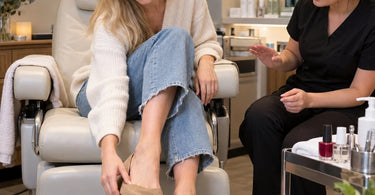
Maximize profits with this surprisingly simple pedicure strategy: help clients leave your salon with the beautiful polish they paid for, instead of a freshly smudged masterpiece courtesy of their favorite sneakers. Every nail technician knows the scene. A client admires her perfectly polished toes, announces that they are definitely dry, slips into her shoes, and discovers ten minutes later that her big toenail now features an exclusive design called Sock Texture Surprise. Understanding why clients put shoes back on too soon after a pedicure can help salon professionals prevent frustrating polish damage, improve client satisfaction, reduce avoidable touch-ups, and create a more polished service experience from beginning to end.
The good news? Most premature shoe disasters are preventable. With the right professional products, better drying procedures, practical footwear recommendations, and a little client education, your salon can significantly reduce the chances of freshly painted toenails meeting an untimely end inside closed-toe shoes.
Whether your business specializes in traditional polish, luxury spa pedicures, or long-lasting gel services, keeping the right professional pedicure supplies available is an important part of delivering consistent results. Let's explore why clients rush into their shoes and what nail professionals can do about it.
Why Clients Think Their Pedicure Is Dry When It Really Isn't
The biggest misunderstanding surrounding traditional pedicures is the difference between polish that feels dry and polish that has hardened sufficiently to withstand pressure.
Traditional nail lacquer dries as solvents evaporate from the polish film. The outer surface can become dry to the touch while the layers beneath remain relatively soft. This creates a deceptive situation: a client gently touches a toenail, feels no tackiness, and immediately assumes the polish can survive anything.
Unfortunately, a quick fingertip test and twenty minutes inside snug shoes are two very different challenges.
Closed-toe footwear presses against the nail surface, particularly around the big toe and the edges of the nail. Even when polish no longer transfers to a fingertip, continuous contact and friction can leave dents, dull spots, wrinkles, or noticeable fabric impressions.
Depending on the formula, application thickness, and drying conditions, conventional lacquer may require considerably longer to harden than clients expect. Some formulations can take many hours to reach their maximum hardness.
For salon professionals, the important message is simple: dry to the touch does not automatically mean ready for tight shoes.
The Real Reasons Clients Put Shoes on Too Early
Clients rarely intend to ruin their pedicures. Usually, they have completely understandable reasons for wanting to get moving.
1. They Have Somewhere Else to Be
Today's pedicure clients are juggling work schedules, school pickups, dinner reservations, errands, and approximately seventeen other responsibilities before lunchtime.
A client may schedule a relaxing pedicure during her lunch break, only to realize afterward that she needs to walk several blocks back to the office.
Those comfortable sneakers suddenly seem more practical than the disposable pedicure sandals offered at checkout.
Unfortunately, the polish does not care that she has a meeting at 2:00.
2. They Underestimate Drying Time
Many clients believe that ten or fifteen minutes under a drying fan guarantees their polish is completely hardened.
Although airflow can assist solvent evaporation, the drying process varies considerably among formulas. A few minutes of drying should never be presented as a universal guarantee that regular polish can withstand closed shoes.
Clients need realistic expectations before the service begins, not after their shoes are already back on.
3. They Forgot Appropriate Footwear
A client wearing boots, sneakers, or tightly fitted flats might have no practical alternative when her service ends.
This is particularly common during colder months, rainy weather, and appointments scheduled directly before work.
Providing a simple reminder when clients book can prevent this situation.
4. They Don't Want to Inconvenience the Salon
Some clients feel uncomfortable remaining in a drying area when they notice other customers arriving.
They may assume the technician needs the chair immediately or feel pressured to leave once payment is complete.
A welcoming drying station and clear communication can help clients understand that protecting the finished pedicure is a normal part of the appointment.
5. They Assume Every Polish Works Like Gel
As gel pedicures have become familiar to many clients, some assume that traditional polish delivers the same immediately hardened finish.
Gel and regular lacquer use different technologies. Properly cured professional gel polish is designed to harden under a compatible curing lamp, while regular lacquer must dry through solvent evaporation.
Explaining this difference helps clients choose the most appropriate service for their schedules and footwear.
How Long Should Clients Wait Before Wearing Closed-Toe Shoes?
There is no single waiting period that guarantees every traditional pedicure will be safe inside every shoe.
For conventional lacquer, allowing approximately one to two hours before wearing closed-toe footwear is a useful general planning guideline, but some systems and conditions require longer. Full hardening can take substantially more time, sometimes approaching 24 hours.
Clients should follow the specific polish manufacturer's instructions and their nail technician's recommendations. Tight shoes, heavy socks, and activities that place sustained pressure on toenails may require additional caution.
Quick-dry formulas can reduce waiting time, but their performance depends on the product and application method. A quick-dry top coat does not automatically make several thick layers underneath completely hardened.
Properly applied and fully cured gel polish generally allows clients to wear shoes much sooner, provided the manufacturer-specified curing process has been completed correctly. Any finishing product applied over the gel must also be considered.
The most effective approach is to discuss footwear requirements before applying polish rather than making a last-minute prediction at checkout.
Why Thick Polish Coats Make the Problem Worse
One of the easiest ways to improve pedicure drying performance is to revisit application technique.
Thick polish coats may appear to provide faster coverage, but they can slow overall drying and make the finished surface more vulnerable to dents.
Traditional lacquer requires adequate solvent evaporation. When technicians apply overly generous layers, the surface can begin setting while material underneath remains soft.
Professional application practices include:
- Preparing the nail plate according to the polish manufacturer's instructions.
- Removing residue that could interfere with adhesion.
- Applying thin, even coats rather than flooding the nail.
- Allowing appropriate drying time between layers.
- Using compatible base coats, color, and top coats.
- Avoiding excessive product buildup around the cuticle and sidewalls.
Maintaining an organized selection of professional nail polish, base coats, and quick-dry top coats helps technicians choose products suited to the service.
Thin, controlled application is not merely an artistic preference. It can make a meaningful difference in how well the finished pedicure holds up after the client leaves.
Build a Better Pedicure Drying Routine
Instead of relying on a vague instruction to sit for a few minutes, create a repeatable finishing routine for your salon.
Step 1: Discuss Shoes Before the Service
Ask clients what footwear they brought and whether they need to leave immediately after their appointment.
A simple question such as whether they have sandals or need to put sneakers back on can influence the entire service plan.
If a client must return to closed-toe shoes immediately, explain the limitations of conventional polish and discuss available alternatives.
Step 2: Choose the Right Polish System
Not every client needs the same finishing product.
Someone planning to spend the afternoon relaxing in sandals may be perfectly happy with traditional lacquer. Someone heading straight to an event in closed-toe footwear might prefer a professionally applied gel pedicure.
Stocking both professional gel polish and conventional lacquer gives technicians greater flexibility.
For clients who prefer traditional lacquer but are short on time, consider suitable fast-drying formulations and finishing products, while remaining clear about their limitations.
Step 3: Use Appropriate Drying Products
Depending on your service menu, useful products may include nail polish dryers, nail drying drops, fast-drying top coats, and comfortable pedicure sandals.
These tools can improve the finishing experience when used according to their instructions.
A drying fan may encourage airflow around conventional polish, but it should not be confused with a curing lamp for gel polish. Likewise, a gel curing lamp is not a substitute for allowing regular lacquer to dry properly.
Step 4: Explain the Shoe Risk Clearly
A friendly explanation can be more effective than simply saying that the polish needs more time.
Try telling clients that although their toes may feel dry, the polish underneath can still dent when pressed against shoes.
Explain that socks can also leave impressions, even if the shoes themselves never directly touch the nails.
Clients are more likely to follow advice when they understand exactly what could happen.
Step 5: Make Leaving in Sandals Easy
Keep an accessible supply of pedicure slippers or disposable sandals available near the finishing area.
When appropriate, discuss whether the client has suitable footwear for the trip home and whether outdoor conditions make sandals practical.
The easier you make protecting the polish, the less likely clients are to squeeze freshly painted toes into their favorite ankle boots.
Why Pedicure Sandals Are Such a Useful Salon Essential
Pedicure sandals may not be the most glamorous product in your supply closet, but they can be incredibly helpful for preventing pressure-related polish damage.
By keeping footwear away from the toenails, open-toe designs reduce the risk of direct contact with freshly applied lacquer.
They are especially valuable for clients who arrive wearing athletic shoes, loafers, boots, or other closed styles.
Salon owners should consider comfort, fit, traction, and intended use when choosing disposable or reusable footwear. An open-toe design does not eliminate every risk, and a lightweight disposable slipper may not be suitable for extended outdoor walking or slippery surfaces.
Keeping different sizes available can improve the client experience.
Professionals can explore disposable pedicure slippers and related spa essentials when planning their finishing stations.
Should Salons Recommend Gel Pedicures to Clients in a Hurry?
For certain clients, gel polish can be a practical solution to the traditional polish drying problem.
Unlike conventional lacquer, professional gel polish hardens through a specific light-initiated curing process. When the complete system is applied and cured correctly, the finish does not require the same extended air-drying period.
This makes gel particularly appealing to clients who regularly wear closed-toe shoes or have tightly scheduled appointments.
However, gel is not automatically the right choice for everyone.
Technicians should consider nail condition, client preferences, removal requirements, maintenance expectations, and the manufacturer's instructions.
Gel services also require suitable equipment, including a compatible LED or UV nail lamp. Correct curing time, lamp compatibility, and proper application are essential. Under-cured gel should never be treated as finished simply because it looks glossy.
Rather than positioning gel as universally superior, explain the differences and allow clients to select the service that best fits their needs.
A thoughtful consultation can create opportunities for appropriate service upgrades without turning every pedicure into a sales pitch.
Small Finishing Details That Make a Big Difference
Successful pedicure services depend on more than polish application.
Comfortable seating, clean workstations, organized supplies, and a well-planned service sequence can make the finishing experience feel more professional.
For example, whenever appropriate, complete moisturizing massage steps before the final nail preparation and polish application. This minimizes the need to handle freshly painted nails after the finishing coat.
If lotion, oil, or other products contact the nail plate before polishing, clean and prepare the nail as required by the chosen system.
Quality cuticle oil and nourishing treatments can support a luxurious pedicure experience, but their application should be coordinated with the polish manufacturer's directions.
Clients can also appreciate comfortable pedicure chairs and spas that support an efficient treatment workflow.
And let's not underestimate the power of a relaxing final few minutes. A comfortable client who understands the drying process is much less likely to perform an Olympic-level sprint toward the parking lot.
How to Prevent Smudged Pedicures Without Slowing Down Your Salon
Salon owners sometimes worry that encouraging longer drying periods will reduce appointment availability.
Fortunately, protecting a pedicure does not necessarily mean keeping every client in a premium service chair until her polish has fully hardened.
A separate, appropriately equipped drying area can help technicians prepare their primary stations for upcoming appointments while offering clients a comfortable place to finish their visit.
Consider designing the area around several practical features:
- Comfortable seating with enough space to avoid accidental contact with freshly polished toes.
- Appropriate airflow for conventional lacquer drying.
- Easy access to disposable sandals or other suitable footwear.
- Clear aftercare information explaining traditional polish drying limitations.
- A convenient checkout process that does not require unnecessary movement immediately after polishing.
- Retail displays featuring relevant nail care and aftercare products.
A thoughtful layout can improve service flow and allow technicians to stay on schedule without rushing clients through important finishing instructions.
For businesses updating their treatment areas, explore nail salon furniture essentials and practical equipment designed for professional salon environments.
Turn Pedicure Aftercare Into a Better Client Experience
Many clients forget verbal instructions as soon as they step outside the salon.
A short aftercare card, checkout reminder, or appointment confirmation message can reinforce what technicians explain during the service.
Consider including these reminders for clients receiving conventional lacquer pedicures:
- Wear open-toe footwear whenever practical while polish continues hardening.
- Avoid tight shoes and snug socks until the polish is sufficiently hardened.
- Remember that polish may feel dry before it can resist sustained pressure.
- Follow the recommended drying guidance for the specific products used.
- Avoid pressing, rubbing, or testing the nail surface repeatedly.
- Contact the salon if there are questions about the service or aftercare instructions.
For gel pedicures, explain the importance of proper maintenance and professional removal rather than repeating conventional lacquer drying instructions.
Clear aftercare guidance helps clients protect their results and establishes realistic expectations about what happens after the appointment.
What Should a Nail Technician Do When a Client Smudges Her Polish?
Even with excellent procedures, accidents happen.
A client may bump her toes against a chair, accidentally brush a nail while reaching for her purse, or squeeze into shoes before the polish is ready.
The best response depends on the extent of the damage and whether the product has sufficiently dried.
For a minor mark in conventional lacquer, a technician may be able to correct the surface using a product-compatible technique and an appropriate finishing coat.
For deep wrinkles, substantial smearing, or displaced polish, removing and reapplying the affected nail may produce a cleaner and more reliable result.
Avoid simply burying a badly damaged surface beneath several thick coats of polish. Excessive layers can prolong drying and leave an uneven finish.
Keep professional nail polish remover, cotton products and wipes, and frequently used polish shades organized so technicians can handle minor corrections efficiently.
Salons should also establish consistent touch-up policies that are fair, clearly communicated, and appropriate to the circumstances.
After all, a damaged toenail is frustrating enough without turning checkout into a courtroom drama.
Can Better Pedicure Education Increase Salon Profits?
Helping clients understand shoe-related polish damage is not just about preventing cosmetic mishaps. It can also contribute to a better business operation.
Every avoidable touch-up consumes technician time, uses additional supplies, and can interrupt an otherwise organized schedule.
Clear aftercare expectations may reduce preventable complaints while helping clients feel confident in the quality of their services.
Education can also help clients understand the practical differences among traditional lacquer, fast-drying products, and gel pedicures.
That creates natural opportunities to recommend appropriate services and retail items based on actual client needs.
For example, a client who regularly leaves appointments wearing athletic shoes may appreciate learning about a properly cured gel option. Another client might benefit from keeping an extra pair of open-toe sandals in her car.
These recommendations should remain practical and personalized rather than relying on exaggerated promises about drying speed or polish durability.
For businesses developing a professional nail service inventory, professional nail care collections and manicure essentials offer useful starting points.
Common Questions Clients Ask About Wearing Shoes After a Pedicure
Can Clients Wear Socks Immediately After a Pedicure?
With traditional lacquer, socks can create pressure and friction that damage polish before it has hardened. Tight socks and textured fabrics are particularly problematic. Clients should avoid covering freshly polished toenails until the polish is sufficiently hardened according to the product guidance.
Do Quick-Dry Drops Make Polish Instantly Shoe-Proof?
Not necessarily. Drying drops may accelerate the drying process, but their performance varies by formula. A surface that feels dry may still be vulnerable to pressure. Always follow the manufacturer's directions and avoid promising instant protection from tight footwear.
Does Sitting Under a Fan Fully Dry a Pedicure?
Airflow can help conventional lacquer dry, but it does not guarantee complete hardening within a specific number of minutes. Coat thickness, polish chemistry, and environmental conditions all matter.
Can Clients Wear Closed-Toe Shoes After a Gel Pedicure?
Generally, a properly applied and fully cured gel pedicure can tolerate footwear much sooner than conventional lacquer. The technician must use the correct lamp, curing schedule, and compatible products. Clients should also avoid unnecessary pressure that could cause discomfort or mechanically damage their nails.
Will Another Layer of Top Coat Fix Shoe Marks?
Light surface imperfections may sometimes be improved with appropriate products, but severe dents and displaced polish usually require more substantial correction. Additional top coat is not a reliable solution for every smudge.
Should Clients Bring Their Own Flip-Flops?
Bringing clean, comfortable open-toe footwear is a helpful precaution for traditional lacquer pedicures. Salons can also keep suitable pedicure slippers available for clients who forget.
Create a Simple Pedicure Shoe Policy Your Team Can Follow
Consistency is especially valuable in busy nail salons with multiple technicians.
Rather than having every employee offer different advice, establish a straightforward finishing protocol based on the polish systems used at your location.
The protocol should cover when technicians discuss footwear, how drying expectations are explained, which finishing products are appropriate, and what clients should do before leaving.
Train employees to distinguish between conventional polish, quick-dry lacquer, and light-cured gel instead of giving every client the same drying recommendation.
Review manufacturer instructions whenever you introduce new products or change equipment.
Finally, make sure your checkout team understands the same guidance. A technician's careful instructions should not be undermined by a well-meaning employee saying that every pedicure is completely dry after ten minutes.
That kind of mixed messaging is practically an invitation for a sneaker-related emergency.
The Bottom Line: Beautiful Pedicures Deserve a Better Exit Strategy
Clients put shoes back on too soon after a pedicure for understandable reasons. They are busy, they mistake surface dryness for complete hardening, they forget appropriate footwear, or they simply do not realize how easily fresh lacquer can be damaged.
Salon professionals can address these problems with better consultations, thin and consistent polish application, realistic drying guidance, appropriate finishing products, and convenient footwear solutions.
Most importantly, a beautiful pedicure should not end with confusion about how to protect it.
Whether you are updating your polish selection, improving your drying area, or training technicians on better aftercare communication, Pure Spa Direct offers a broad selection of professional salon supplies to support your service menu. Explore pedicure supplies, nail polish, gel polish, and pedicure slippers to find practical options for your business.
Because your clients should remember how wonderful their pedicure looked, not the moment their favorite sneakers turned it into abstract art.
