
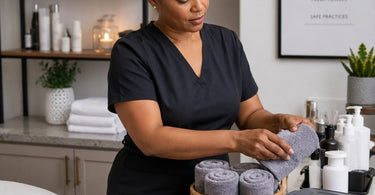
Your success is our focus and let's be real, in the high-stakes world of beauty and wellness, nothing says 'luxury experience' quite like a fresh, fluffy, warm towel. But flip that scenario, and nothing kills that vibe faster than a musty, damp towel that smells like a wet dog decided to take up residence in your treatment room. We get it. You are juggling back-to-back waxing sessions, lash lifts, and massage appointments, and the laundry pile can feel like a second full-time job. However, what happens in that brief moment between a service and the washing machine can make or break your reputation, your budget, and frankly, your sanity. So, let's talk about that dirty little secret hiding in your closed towel bin: the science of why damp towels should never, ever sit in a closed container.
We at Pure Spa Direct are obsessed with helping you put your best foot forward, and that starts with the basics. Think of this as your official warning: that seemingly innocent pile of used towels is a ticking time bomb of bacteria, mold, and odors. It's not just about a bad smell; it's about the health of your clients and the lifespan of your linens.
The Science of Stink: A Biology Lesson You Didn't Ask For
When a towel gets damp, it transforms from a simple piece of fabric into a five-star resort for microscopic freeloaders. We are talking about bacteria, fungi, and mold spores. These organisms are literally everywhere, but they thrive in one specific environment: warmth and moisture .
When you toss a damp towel into a closed container, you are essentially turning off the lights and cranking up the heat in a petri dish. The lack of airflow traps that moisture inside, creating an anaerobic (oxygen-free) environment that certain bacteria absolutely adore. As they feast on the dead skin cells, oils, and product residue left on the towel, they produce waste products. And guess what that waste smells like? That signature, nose-wrinkling 'stale towel' odor .
This isn't just a cosmetic issue; it's a hygiene hazard. In a professional setting, these pathogens can easily transfer to your next client, potentially leading to skin irritations, breakouts, or even more serious infections .
The Hidden Cost to Your Wallet
Beyond the ick factor, this is a matter of economics. Those towels are a significant investment for your spa or salon. When you leave them damp, the fibers break down. The constant presence of moisture and bacteria causes the cotton to weaken and thin out much faster. You end up with sad, frayed, and scratchy towels that need to be replaced far more frequently than they should.
Plus, once that mildew smell sets in, it is incredibly stubborn. It takes multiple hot washes with heavy-duty detergents and sanitizers to try and remove it, which costs you in utilities and product. Sometimes, that smell is permanent, and those towels are destined for the rag pile or the trash. Don't let your hard-earned cash go down the drain with your laundry water.
Closed vs. Vented: What the Professionals Do
Industry standards and many state regulations mandate that soiled linens must be stored in a covered container. However, the crucial detail is that these containers must be vented .
This is where many salon owners go astray. They buy a solid, airtight plastic bin or a pretty wicker basket with a tight lid. Big mistake. A closed container is a death sentence for your towels. You need a container that allows air to circulate. Think of a hamper with large holes or a covered bin that has gaps. This circulation allows at least some moisture to escape, preventing the immediate creation of that bacterial swamp, buying you precious time before laundry day .
Wash Day Wisdom: Why a Hot Cycle is Your Best Friend
Proper washing is non-negotiable. To kill the bacteria and mold spores that are growing on those towels, you need to use the right settings and products.
First things first, wash them at a high temperature. A hot wash (around 140°F / 60°C) is essential to break down oils and effectively kill the pathogens that are thriving in those fibers .
Second, skip the fabric softener! While it might make towels feel soft initially, it actually coats the fibers, reducing their absorbency. Over time, this creates a waxy buildup that also traps odors. Instead, toss a few wool dryer balls in the dryer to fluff them up and reduce static.
And remember, never, ever put a damp towel back into a closed container or a towel steamer. Ensure they are 100% dry before storing them, and always shake them out to fluff the fibers and allow any residual moisture to dissipate.
Case Study: The Towel Steamer Trap
Now, let's talk about a particularly sneaky culprit: the Towel Steamer. It's an incredible tool for offering clients that luxurious hot towel experience, but it can also be a bacteria breeding ground if not used correctly.
At the end of the day, many technicians will leave the steamer closed overnight with the leftover towels inside. This is the perfect storm: damp towels + heat + darkness = bacterial heaven. Not only will the towels smell awful the next day, but the steamer itself can become contaminated. Health regulations now stipulate that you must leave your towel warmer open overnight to allow the unit to dry completely. Unused steamed towels must be removed and laundered at the end of the day .
This is a simple change to your closing routine that will save you from a world of trouble. Think of it like this: if it's warm and damp enough to open your pores, it's warm and damp enough to grow a science experiment.
How to Build a Better System
The solution is all about having a solid workflow. Here's how to fix the problem and make your life easier:
1. Airflow is Everything: Invest in a proper, vented hamper for your soiled towels. This is non-negotiable. If you must use a solid container, leave the lid slightly ajar. The goal is to let air move freely.
2. The FIFO Method (First In, First Out): Rotate your towel inventory. When you get a fresh batch, put them at the bottom of the pile so the older towels on top get used first. This prevents towels from sitting in the back of a cabinet for months at a time .
3. Wash Immediately (Or Set a Schedule): Aim to wash your towels daily. The longer they sit, the more time the bacteria has to multiply and cause damage. For high-volume salons, you might even need to wash twice a day .
4. Train Your Team: This is a team sport. Ensure everyone understands the importance of letting towels breathe and the science behind why this matters. A quick training session on the importance of not cramming damp towels into a closed bin will save your towels and your reputation.
Your One-Stop Shop for the Solutions
At Pure Spa Direct, we have everything you need to level up your game and keep your linens pristine. From high-quality, durable towels built to withstand commercial washing to top-of-the-line, ventilated storage solutions, we are your wholesale partner in success.
Shop our selection of High-Quality Towels that are built to last. Need to upgrade your storage? Check out our Towel Storage options. And for the perfect hot towel experience without the hassle, browse our range of Towel Steamers.
Don't forget the essentials to keep everything clean. Browse our professional Professional Cleaners and Disinfectants to ensure your equipment stays as fresh as your towels.
So, the next time you go to toss a used towel in a bin, remember: it's not just a towel; it's a potential biohazard. Treat your towels right, and they will treat your clients to a safe, luxurious experience every single time!
