
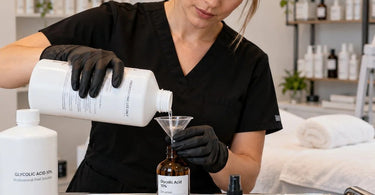
Simplify brilliance with this essential guide to decanting professional skin care products without turning your beautiful treatment room into a guessing game of mystery bottles and questionable creams. Transferring cleansers, masks, serums, and other professional formulas into smaller containers can make facial services more efficient, organized, and convenient. However, every transfer introduces opportunities for contamination, product confusion, and unnecessary waste if proper precautions are overlooked. For estheticians, spa owners, and beauty professionals, thoughtful labeling and hygienic handling are just as important as choosing high-quality professional skin care products. After all, your clients booked a facial, not a surprise science experiment involving an unlabeled jar.
Decanting may seem like a minor backstage task, but the way products are transferred, identified, stored, and dispensed can affect treatment consistency and client safety. A few practical procedures can help your team maintain professional standards while keeping busy treatment rooms running smoothly.
What Does Decanting Mean in a Professional Spa?
Decanting means transferring a portion of a product from its original container into another suitable container. In professional skin care settings, this might involve transferring a cleanser into a smaller dispensing bottle, portioning a facial mask for a treatment, or preparing a limited quantity of massage lotion for convenient access during services.
Professionals may decant products for several reasons. Large backbar containers can be inconvenient to move between treatment rooms. Smaller containers may fit neatly onto treatment carts, while controlled dispensing can help reduce unnecessary product handling.
There is an important distinction between dispensing a single-service portion into a clean treatment bowl and transferring product into another container for ongoing storage. Single-service portions are typically used promptly and discarded if unused. Products transferred for later use require additional attention to labeling, container suitability, traceability, and manufacturer instructions.
Not every professional formula is suitable for decanting. Some products have packaging designed to protect them from air, light, moisture, or microbial exposure. Others may carry specific handling instructions that make transferring them inappropriate. Before opening a product for transfer, confirm that the manufacturer permits the practice.
Why Accurate Labels Are Essential
Picture a treatment room with three identical white bottles. One contains a gentle cleanser, another contains an exfoliating formula, and the third contains a concentrated treatment solution. Without reliable labels, even experienced professionals can make mistakes.
That is not the kind of excitement anyone wants during a relaxing facial.
Every secondary container should be clearly identified before it is filled. A useful internal label generally includes the exact product name, manufacturer or brand, identifying concentration or strength when applicable, original lot or batch number, transfer date, and any relevant storage or handling instructions.
When a manufacturer provides a use-after-opening period or another applicable expiration instruction, that information should remain accessible. A secondary container should never imply that a product remains suitable longer than the manufacturer allows.
These details help estheticians select the correct formula and allow managers to trace products if a quality concern, complaint, or recall occurs.
Internal identification labels are not necessarily a substitute for legally required product labeling. Products transferred for resale, take-home use, or distribution may be subject to additional federal and state requirements. Professional treatment-room procedures should not be confused with permission to repackage retail cosmetics.
Never Let a Transfer Date Become an Imaginary Expiration Date
One surprisingly common mistake is treating the date a product was transferred as though it automatically establishes a new shelf life.
A freshly labeled bottle does not make the formula inside freshly manufactured. If a cream was produced months earlier, transferring it today does not reset its age, preservative system, or expiration date.
Maintain access to the original manufacturer's shelf-life information, lot number, and relevant instructions. If the manufacturer does not establish an acceptable holding period after transfer, do not invent one. Seek guidance from the supplier or manufacturer instead.
For products with limited stability after opening, the safest choice may be to keep them in their original packaging and dispense only the amount needed for an immediate treatment.
Products with uncertain identities, missing traceability, questionable storage histories, or signs of deterioration should not be used simply because they look expensive or because someone remembers buying them last Tuesday.
How Decanting Can Introduce Contamination
Professional cosmetic formulas are developed with particular packaging, ingredients, and preservation systems in mind. Transferring a formula changes the conditions under which it is handled and potentially stored.
Contamination can occur through improperly cleaned containers, unwashed hands, reused dispensing tools, dirty work surfaces, airborne particles, or contact between a container opening and contaminated equipment.
Even when a product contains preservatives, those preservatives are not an invitation to ignore hygiene. Preservation systems are formulated for specific conditions and may not compensate for careless handling or unsuitable storage.
Water-based products deserve particular attention because microbial contamination can compromise safety without producing an obvious change in appearance or odor.
Estheticians should never assume that a product is safe simply because it still smells pleasant. A questionable jar of cream does not get a second chance because its fragrance is delightful.
Prepare a Clean, Dedicated Transfer Area
Decanting should be performed in a designated work area away from used implements, treatment waste, food, beverages, and active client services.
Start by washing and drying hands thoroughly. Clean the work surface and disinfect it using an appropriate product according to its label directions, including the required contact time. Allow the area to reach the condition specified by the disinfectant manufacturer before beginning.
Useful supplies may include professional cleaners and disinfectants, clean single-use transfer implements, appropriate containers, and protective gloves when indicated by product handling instructions or the task being performed.
Keep containers closed until needed, and avoid touching their interior surfaces or dispensing openings.
Use transfer equipment that is clean, compatible with the formula, and permitted for the intended application. If a reusable tool is appropriate, follow its validated cleaning and disinfection or sanitization procedure. If reliable reprocessing cannot be achieved, choose suitable disposable equipment instead.
The objective is simple: keep unwanted material out of the product from the moment the original package is opened until the secondary container is securely closed.
Choose Containers for Compatibility, Not Just Appearance
A row of matching bottles can look wonderfully organized on a spa shelf. Unfortunately, coordinated packaging does not guarantee that every bottle is suitable for every formula.
Container selection should account for material compatibility, closure design, light protection, dispensing method, cleaning requirements, and manufacturer recommendations.
Explore Bottles & Jars for professional organization and dispensing needs, but verify that the specific container is appropriate for the product before transferring anything.
Some ingredients may interact with certain plastics or closures. Light-sensitive formulations may need opaque or protective packaging, while air-sensitive products may be best left in their original airless dispensers.
A pump or controlled-dispensing bottle may reduce repeated contact with the product compared with an open jar, provided that the manufacturer approves the alternative packaging.
Never reuse an unrelated container without an established cleaning process and compatibility assessment. Household food containers and mystery bottles discovered in the back of a supply cabinet are not appropriate substitutes for professional packaging.
Follow a Consistent Decanting Procedure
A documented procedure makes good hygiene easier to repeat across multiple treatment rooms, employees, and shifts. Rather than relying on each esthetician to develop a personal system, establish a simple transfer workflow that everyone can follow.
- Verify the product: Confirm its identity, batch information, expiration status, and manufacturer instructions. Do not transfer a product when repackaging or secondary storage is prohibited or unsupported.
- Inspect the packaging: Check the original container for damage, leaks, contamination, or other signs of a problem.
- Prepare the area: Wash hands and prepare a clean transfer surface and suitable equipment.
- Check the destination container: Verify compatibility, cleanliness, dryness when required, and suitability for the intended storage period.
- Label before filling: Identify the product, lot information, transfer date, and applicable handling requirements.
- Transfer carefully: Avoid touching container interiors, nozzles, or product-contact surfaces. Do not introduce water or other ingredients.
- Close promptly: Secure both containers as soon as the transfer is complete.
- Record the transfer: Document the amount transferred, employee responsible, destination container, and relevant product information.
- Store correctly: Follow the manufacturer's stated temperature, humidity, and light requirements.
This workflow can be incorporated into staff training and routine operational checks. It also establishes a clear expectation that transfers should never be rushed between clients or performed while the treatment station is being cleaned after a service.
Never Top Off an Old Bottle Without Proper Controls
Topping off is the practice of adding fresh product to a container that already holds an older amount. It may look efficient, but it can create unnecessary uncertainty about product age, batch identity, and cleanliness.
Combining old and new product can also complicate traceability. If the original portions came from different lots, identifying the affected material during a recall or quality investigation becomes considerably harder.
Unless a manufacturer has specifically established an acceptable refill process, avoid topping off secondary containers.
Use a replacement container or a validated refill procedure that includes the required cleaning, drying, inspection, and labeling steps. A quick rinse with water is not an adequate substitute for a proper process and may introduce additional contamination.
Do not combine partially used products from different containers simply to reduce waste. A few remaining ounces are not worth losing control over what is being applied to a client's skin.
Keep Treatment Portions Separate From Stored Product
For many facial services, one of the simplest ways to reduce contamination risk is to dispense only the amount required for the current client.
Clean, appropriate Mixing Bowls can help organize individual treatment portions. Professionals can also use suitable Applicators & Spatulas to remove and apply products without repeatedly touching the original supply.
Use a new disposable applicator or an appropriately reprocessed reusable implement whenever necessary to prevent cross-contamination. Never return unused treatment product to the original container.
Products remaining in a treatment bowl after a service should be discarded rather than poured into another container for future use.
For facial services, Professional Cotton, Sponges, and Wipes and Compressed Sponges can support a well-organized treatment setup when used according to their intended purpose and applicable hygiene requirements.
The broader lesson is that separating stored inventory from client-contact materials helps protect both product quality and the next person on the appointment calendar.
Why Concentrated and Active Formulas Need Extra Attention
Not every skin care product presents the same handling concerns. Concentrated exfoliating formulas, professional peels, treatment serums, and specialized solutions may have requirements that differ considerably from those of basic cleansers or body lotions.
For example, a product containing exfoliating acids may require specific chemical-resistant packaging, protection from light, or carefully controlled handling. Transferring it into an unsuitable container could interfere with labeling, dispensing accuracy, or product stability.
Within Advanced Facial Treatment Products for Salons & Spas, professionals may encounter formulas with specialized instructions that should remain available throughout every service.
Never dilute a professional formula, mix it with another product, or change its concentration unless the manufacturer specifically instructs professionals to do so.
For strong exfoliants and other specialized treatments, maintaining the original manufacturer's packaging may be the most practical approach.
Product identification becomes especially important when several similar-looking treatment solutions are used in the same room. A clear label can help prevent an inappropriate formula from being selected or applied to an unintended area.
Store Decanted Products Away From Heat and Moisture
A treatment room may be calming for clients while presenting less-than-ideal conditions for certain products. Facial steamers, heated towels, bright lighting, and frequent temperature changes can create environmental challenges.
Products should be stored according to manufacturer instructions rather than placed wherever they look prettiest in a display.
Keep suitable products in designated cabinets or storage areas protected from unnecessary heat, direct sunlight, and moisture. Do not position sensitive formulas beside a running Facial Steamer or other heat-producing equipment merely because that location is convenient.
Similarly, treatment products should not be stored directly next to cleaning chemicals where leaks, spills, or accidental mix-ups could occur.
Organize inventory so that older approved stock is evaluated and used according to the appropriate stock rotation procedure, while expired or questionable products are promptly removed from service.
Clean storage shelves and inspect container closures regularly. If a label becomes damaged, replace it using verified product information rather than guessing.
Train Every Team Member to Recognize Labeling Problems
Even the most thoughtfully designed storage system works only when the entire team follows it.
New employees should learn how to identify products, locate manufacturer instructions, prepare transfer areas, document handling, and recognize circumstances requiring a product to be removed from service.
Experienced staff also benefit from periodic refreshers. Busy appointment schedules can encourage shortcuts, especially when a favorite cleanser runs low five minutes before a fully booked afternoon.
Make it easy for employees to report a missing label, damaged container, questionable odor, separation, or suspected contamination without feeling pressured to use the product anyway.
A clear stop-use procedure should identify who evaluates questionable products and how affected inventory is isolated.
Simple reminders posted inside staff-only storage cabinets can reinforce procedures without adding clutter to the client-facing environment.
Good hygiene should be an operational habit, not an annual lecture accompanied by the world's least exciting clipboard.
Use Product Traceability to Support Professional Accountability
Traceability means maintaining enough information to identify where a product came from, which batch it belongs to, and how it was handled.
A practical internal log can record the product name, manufacturer, original batch number, original expiration information, date opened when relevant, transfer date, quantity transferred, secondary container identification, employee initials, and disposal details.
For multiroom spas, assigning internal container identification numbers can help track where transferred products are stored.
These records may be useful during inventory reviews, client complaint investigations, manufacturer communications, and recalls.
Transfer logs should be proportionate to the operation. A small facial studio may maintain a simple organized record, while a larger facility may prefer a shared inventory system.
Whatever method is chosen, it should be easy to update and consistently followed.
Understand the Difference Between Internal Use and Retail Repackaging
Decanting a limited amount of product for authorized professional treatment use is not the same as creating a new retail product.
Repackaging cosmetics for sale or take-home distribution can introduce additional obligations involving labeling, product identity, ingredient declarations, responsible-party information, warnings, and other applicable requirements.
State cosmetology and esthetics rules may also address storage, labeling, dispensing, sanitation, and product handling within licensed establishments.
Requirements vary depending on the product, location, and intended use. Products that meet the legal definition of drugs, including certain acne treatments and sunscreens, have additional requirements and should not be handled as though they were ordinary cosmetic creams.
Before developing an in-house sample or retail repackaging program, obtain appropriate manufacturer authorization and review the relevant regulatory requirements.
For client take-home recommendations, offering properly labeled manufacturer-packaged products from Must-Have Spa Retail Products for Enhanced Client Experience may be a simpler option than creating a separate repackaging operation.
Does Decanting Actually Reduce Product Waste?
Decanting can support efficient product use when it reduces unnecessary handling, improves portion control, and helps professionals dispense predictable quantities.
However, the financial benefit disappears quickly if transferred products must be discarded because their identities, storage conditions, or expiration information cannot be verified.
Extra containers, labels, cleaning materials, employee time, and unused portions also contribute to operating costs.
Rather than assuming every large container should be divided into smaller bottles, evaluate the workflow for each product. A pump dispenser used directly from its original packaging may be more efficient than transferring the formula at all.
For products used occasionally, dispensing a single-service quantity from the original container may minimize both handling and leftover inventory.
For frequently used products, manufacturer-approved dispensing accessories or professionally designed packaging may provide a practical alternative.
The goal is not to fill every shelf with identical bottles. It is to maintain reliable access to the correct products while protecting quality and controlling waste.
Create a Professional Spa Supply Station
A designated product preparation station can make organized handling easier for estheticians working across different treatment rooms.
Stock the station with appropriate secondary containers, approved dispensing tools, labeling supplies, clean treatment bowls, and relevant documentation. Keep cleaning products organized separately from cosmetics and product-contact equipment.
Pure Spa Direct supplies professional beauty and wellness businesses with a broad range of products that can support daily treatment-room operations. Explore Spa Essentials for Professionals, Spa Tools & Implements for Professionals, and Must-Have Supplies for Salon & Spa Business Success when planning your workspace.
For facial services, Premium Skincare Products for Spas and Salons can help professionals explore formulas suited to their treatment menus, while appropriate dispensing and sanitation supplies support responsible daily handling.
Always review individual product specifications and instructions before incorporating supplies into a transfer or storage process. Professional-grade products still need to be used as directed.
Common Decanting Mistakes Worth Avoiding
A few seemingly harmless shortcuts can undermine an otherwise excellent treatment-room system.
- Using vague labels: Descriptions such as facial cream or blue serum do not reliably identify a specific formula.
- Forgetting batch numbers: Missing lot information makes traceability more difficult during recalls or quality reviews.
- Reusing unverified containers: Residue, moisture, or incompatible materials can compromise the transferred product.
- Combining leftovers: Mixing portions from different containers can create contamination and inventory tracking concerns.
- Assuming preservatives prevent every problem: Formulated preservation does not eliminate the need for hygienic handling.
- Exposing products to heat: Improper placement near warming equipment or sunny windows may affect sensitive formulas.
- Ignoring manufacturer restrictions: Some products should not be transferred out of their original packaging.
- Returning unused treatment portions: Product that has been dispensed for a client should not be placed back into the stored supply.
- Creating arbitrary expiration dates: A transfer date cannot establish a scientifically supported shelf life.
- Relying on memory: Product handling procedures should be documented rather than reconstructed from an employee's recollection.
Addressing these issues requires more consistency than complexity. A straightforward procedure followed every day is more useful than an elaborate policy that nobody remembers.
Frequently Asked Questions About Decanting Professional Skin Care
Can estheticians transfer products into smaller bottles?
They may be able to when the manufacturer permits it and applicable regulations allow the practice. The destination container must be appropriate, handling must prevent contamination, and product identity and relevant safety information must remain available.
What information belongs on a decanted skin care product label?
For internal professional use, useful information includes the exact product name, brand, identifying strength when applicable, original batch or lot number, transfer date, and applicable storage or expiration details. Additional legal requirements may apply depending on location and intended use.
Can a decanted skin care product be stored indefinitely?
No. Transferring a product does not extend its manufacturer-established shelf life. If the manufacturer has not approved secondary storage or provided sufficient guidance, maintaining the original packaging or dispensing only immediate-use quantities is preferable.
Is it acceptable to reuse empty cosmetic bottles?
Only when reuse is permitted and a reliable, appropriate cleaning and preparation procedure has been established. Compatibility and complete removal of residues must be verified. Disposable containers should not be reused.
Should professional facial products be transferred for each individual client?
Not necessarily. Many treatment workflows benefit from dispensing the required amount directly from the original container into a suitable single-service vessel. This can limit unnecessary storage and handling of transferred material.
What should happen if a secondary container loses its label?
Remove it from use until its contents can be positively verified through reliable records. If the identity or handling history cannot be confirmed, discard the product according to applicable procedures.
Make Hygienic Product Handling Part of the Client Experience
Clients may never see the preparation area behind your treatment room, but they benefit from the care invested there. Clearly identified formulas, controlled dispensing, clean tools, and consistent storage practices help support professional treatments from beginning to end.
For spa and salon operators, responsible decanting starts with a simple question: does transferring this product actually improve the service without compromising the manufacturer's instructions or product integrity?
If the answer is yes, careful preparation, accurate labeling, proper containers, and traceable records can make the process more manageable. If the answer is no, leaving the product in its original packaging is often the smarter choice.
Pure Spa Direct supports beauty professionals with wholesale access to skin care, treatment-room supplies, containers, applicators, cleaning products, and other essentials for daily spa operations. Explore the professional spa essentials collection to find supplies that fit your treatment menu and workplace procedures.
Because great professional skin care is about more than what goes onto the skin. It is also about how carefully everything is handled before the treatment even begins. And the only mystery your facial room should offer is how your clients manage to look so relaxed afterward.
