
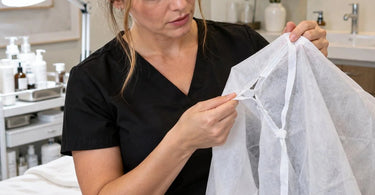
Excellence has never been easier... until a disposable gown decides to make its dramatic exit right in the middle of a busy spa day! One minute, your client is comfortably changing for a body treatment, and the next, a tiny tug on the neck tie produces that unmistakable ripping sound. Suddenly, everyone is having a wardrobe moment nobody scheduled. Understanding why disposable gowns tear at ties and seams can help spa owners, estheticians, waxing professionals, and salon managers avoid unnecessary interruptions, reduce supply waste, and keep treatments running smoothly. The surprising truth is that these frustrating little wardrobe malfunctions often have more to do with material construction, stress concentration, and garment fit than with anyone pulling too hard.
Disposable gowns are incredibly convenient for busy beauty and wellness businesses. They provide temporary coverage during selected spa treatments, protect clients from certain product splashes, and simplify preparation between appointments. However, not every disposable gown is constructed for the same purpose, movement, or level of durability. Understanding the differences can turn a frequently overlooked supply item into a smarter purchasing decision.
Why Disposable Gowns Tear at Ties and Seams More Often Than Anywhere Else
Think about how a disposable gown is worn. The main body of the garment usually hangs relatively freely, while the ties and seams support tension whenever someone adjusts the fit, reaches forward, bends, or turns. Those smaller attachment points must handle forces that the surrounding fabric may never experience.
The result is a classic weak-link situation. A gown might feel perfectly sturdy across its front panel, yet the waist tie separates from its attachment point after one enthusiastic adjustment. It is a little like owning a beautiful handbag with a flimsy handle. The material itself might be fine, but the connection determines how much everyday activity the finished product can tolerate.
For professionals offering facials, waxing, body treatments, and other services requiring temporary client coverage, these attachment points deserve attention during product selection.
The Science Behind Stress Concentration
One major reason disposable gowns fail at ties and seams is a phenomenon called stress concentration. This occurs when physical force becomes focused on a relatively small area instead of spreading evenly across a larger surface.
Imagine pulling gently on a broad piece of fabric with both hands. The force spreads across the material. Now imagine pulling on a narrow strip attached to that same fabric. The attachment point receives a much more concentrated load.
That is exactly what happens when a client tightens a gown tie. Even a modest pulling force can create substantial local stress where the tie meets the body of the garment.
Several design characteristics influence this problem:
- Attachment width: Narrow ties transfer tension through a smaller connection area.
- Reinforcement: Additional material or stronger bonding around an attachment can help distribute force.
- Seam placement: Seams positioned where the body bends or stretches may experience repeated tension.
- Fabric orientation: Some nonwoven materials resist pulling differently depending on the direction of the force.
- Construction consistency: Uneven bonding or incomplete seams can create localized weak spots.
These details are easy to overlook when shopping by package quantity and price alone, but they can make a noticeable difference during daily service.
Not All Disposable Gown Materials Behave the Same Way
Disposable gowns can be manufactured from several kinds of lightweight material, including polypropylene-based nonwovens, polyethylene films, and laminated combinations. Different materials provide different balances of comfort, breathability, fluid resistance, drape, and mechanical strength.
Spunbond polypropylene, for example, is commonly used in lightweight disposable apparel. Its fibers are bonded together to create a fabric-like sheet. Depending on construction, it can offer a useful balance of flexibility and affordability. However, its strength depends on factors such as fabric weight, fiber bonding, and manufacturing quality.
Other products use laminated materials that combine a nonwoven layer with a protective film. These constructions may offer different fluid-resistance characteristics, but a laminate is not automatically more tear-resistant. The bond between layers, attachment design, and overall garment construction still matter.
In other words, a gown advertised as thicker, heavier, or more protective is not necessarily stronger at its ties.
When comparing disposable spa apparel, look beyond the material description. Consider whether the manufacturer provides useful information about seam construction, sizing, fit, and intended applications.
Why Heat-Sealed and Ultrasonically Bonded Seams Sometimes Separate
Many disposable garments use thermal or ultrasonic bonding instead of conventional stitching. These manufacturing methods can join layers of synthetic material efficiently without introducing the needle holes associated with sewn seams.
When performed correctly, bonding can produce strong, consistent connections. However, the final strength depends on appropriate manufacturing settings, suitable materials, and the design of the bonded area.
If bonding is insufficient, sections may separate under tension. Excessive heat or energy can also create stiff, weakened areas in some materials. Either condition may contribute to premature failure.
Bond geometry also matters. A narrow line of bonding may experience concentrated stress, while a carefully designed wider attachment can spread forces more effectively.
Professional buyers usually cannot inspect factory bonding settings, but they can evaluate finished garments. Look for uneven seams, partially attached ties, brittle areas, and visible manufacturing inconsistencies before committing to large quantities.
The One-Size-Fits-All Problem Nobody Loves
One-size-fits-all sounds wonderful until you remember that actual humans are not manufactured in identical dimensions.
Disposable gowns that are too small may place constant tension on the shoulders, back opening, waist attachments, or side seams. When a client sits down, reaches toward a treatment table, or adjusts the neckline, that already stressed fabric has less capacity to accommodate movement.
Oversized gowns can cause problems too. Excess material may bunch underneath a client, catch on furniture, or encourage repeated tightening of the ties.
Fit-related problems are particularly noticeable during services that involve changing positions, including body treatments and certain waxing appointments.
For spas serving a wide range of clients, keeping more than one gown size or style available can improve comfort and reduce unnecessary strain. A properly fitting gown should provide appropriate coverage without requiring the ties to be pulled to their absolute limit.
Comfort is not a luxury upgrade here. It is part of making the garment work as intended.
How Clients Accidentally Put Extra Pressure on Gown Ties
Clients generally have no reason to know how fragile some disposable garment attachments can be. They simply want the gown to stay closed.
That often leads to familiar situations. Someone pulls the waist ties firmly to feel secure. Another client twists around to locate a neckline tie. Someone else sits on a loose section of the gown and stands up, accidentally stretching a seam.
Even well-meaning adjustments can introduce forces that lightweight disposable materials were never intended to tolerate.
Professionals can reduce these issues with a few simple preparation steps:
- Choose a gown size that allows comfortable movement.
- Explain where the gown opens and how the ties should be secured.
- Encourage clients to tie closures comfortably rather than tightly.
- Make sure gown fabric is not trapped beneath chairs, stools, or treatment tables.
- Keep replacement gowns accessible in case an attachment fails.
A quick explanation during client preparation can prevent an awkward interruption later. Nobody wants the memorable part of a luxurious facial to be a surprise costume change.
Why Repeated Adjustments Can Weaken Disposable Garments
Disposable gowns are generally designed for limited use, not repeated washing, extended wear, or endless tying and untying.
Every adjustment places a new load on attachment points. Repeated bending, pulling, and twisting may gradually damage fibers or weaken vulnerable bonded areas.
The exact effect depends on the material and construction. Some garments tolerate repeated movement surprisingly well, while others show visible damage after relatively little handling.
Even unused gowns can become compromised if they are frequently removed from their packaging, unfolded, repacked, or handled roughly during inventory preparation.
For busy spas, a simple operating rule helps: prepare each disposable gown for its intended single-use application, inspect it before presentation, and replace it if its condition becomes questionable.
Trying to save a damaged gown for another appointment is not economical if the result is an interrupted service and an uncomfortable client.
How Storage Conditions Affect Disposable Gown Quality
The way disposable garments are stored can influence their condition before they ever reach a treatment room.
Excessive heat, direct sunlight, moisture, and rough handling may adversely affect certain materials or packaging over time. The extent of any deterioration varies by material and manufacturer.
For example, some polymers can degrade with prolonged ultraviolet exposure. High temperatures may affect particular bonded or laminated constructions. Damp or damaged packaging can also raise concerns about cleanliness and product condition.
Fortunately, sensible inventory practices are straightforward.
- Store gowns in a clean, dry area according to manufacturer instructions.
- Keep unopened packages away from prolonged direct sunlight and excessive heat.
- Avoid crushing cartons beneath heavy supplies.
- Rotate inventory so older stock is generally used first, while observing any labeled expiration dates.
- Check packaging integrity before bringing supplies into treatment areas.
These practices are especially useful in spas where disposable apparel shares storage space with Salon & Spa Bedding, treatment accessories, and bulk backbar supplies.
What a Gown Tear Actually Means for Hygiene
Disposable gowns are often associated with cleanliness, but it is important to understand what a specific garment is designed to do.
A lightweight client modesty gown used during a spa service is not automatically a medical isolation gown, fluid-resistant protective garment, or substitute for task-appropriate personal protective equipment.
Products designed for cosmetic coverage should be evaluated according to their stated purpose. If a procedure requires protective clothing because of potential exposure to chemicals, blood, or other hazards, the garment must be selected according to the applicable exposure assessment, safety requirements, and manufacturer specifications.
For protective garments, a torn seam or detached tie can compromise fit, coverage, or the intended barrier. Even when the gown is simply providing modesty during a body service, a rip can create an uncomfortable situation for the client.
If a gown tears during use, stop and assess the situation. Replace it with an appropriate undamaged garment when necessary, maintain client privacy, and follow the salon or spa's sanitation and safety procedures.
For services requiring additional protective equipment, explore Protective Gloves & Masks for Salon and Spa Professionals and select products according to the specific task rather than assuming every disposable item provides the same protection.
How to Check Disposable Gowns Before a Busy Service Day
Finding weak ties before an appointment is considerably less exciting than finding them during one. That is exactly why a quick inspection routine is worth considering.
Start by selecting a representative gown from a new shipment or purchasing sample. Examine the neckline, waist ties, shoulder seams, and any other attachment points.
Check whether the seams are consistently joined and whether the ties appear securely attached. Look for visible holes, separated bonds, tears, excessive stiffness, or irregular construction.
Next, evaluate the fit on an appropriately sized adult or dress form. Have the wearer perform gentle, normal movements similar to those required during treatment preparation. The goal is to identify obvious usability problems, not to perform an improvised destructive strength test.
For recurring quality concerns, retain the relevant product information, lot number if available, photographs, and a description of the failure. This information can help your distributor or manufacturer investigate the issue.
A sample inspection cannot establish certified strength or barrier performance. However, it can reveal practical fit and construction problems before a large order becomes part of daily operations.
Choosing Better Disposable Gowns for Facials, Waxing, and Body Services
The best disposable gown is not necessarily the heaviest, most expensive, or most complicated option. It is the garment that reliably meets the needs of your particular service.
For facials, your priorities might include comfortable neckline construction, suitable chest and shoulder coverage, breathability, and easy changing. During body treatments, freedom of movement and appropriate coverage may be particularly important.
For waxing services, think about whether the gown allows convenient access to the intended treatment area while preserving client modesty. Pairing suitable disposable apparel with organized Waxing Supplies for Professionals can simplify room preparation.
For more extensive spa body services, consider how clients transition between changing areas and treatment tables, and whether the garment is intended to remain on throughout the procedure or only during preparation.
When purchasing, evaluate these practical factors:
- Intended use: Confirm that the gown is suitable for the planned service.
- Material: Consider comfort, breathability, coverage, and any required protection claims.
- Closure construction: Examine the number, placement, and reinforcement of ties.
- Size availability: Select options that accommodate your client population.
- Mobility: Make sure normal movements do not create excessive strain.
- Packaging: Consider convenient dispensing and appropriate storage.
- Consistency: Assess whether samples from different packages maintain similar quality.
Explore Spa Essentials for Professionals when building a coordinated treatment-room supply program rather than making each disposable purchase in isolation.
Disposable Gowns Versus Reusable Spa Apparel
There is no universal winner in the disposable-versus-reusable debate. Each approach offers practical advantages and tradeoffs.
Disposable gowns can simplify single-use workflows and reduce the need to launder that particular garment. They may be convenient for high-volume services, selected temporary-coverage applications, and situations where a suitable single-use item is preferred.
Reusable garments can provide a different wearing experience and may offer stronger seams and more durable closures, depending on their construction. However, they require appropriate laundering, handling, storage, and replacement procedures.
For some spas, a combination works best. Disposable options may serve certain treatments or client preferences, while washable robes or wraps support services where comfort and a more substantial garment are desirable.
Browse Professional Spa Apparel when evaluating apparel options for your treatment environment.
Remember that sustainability and overall operating cost depend on the actual materials, use patterns, laundry practices, and disposal methods involved. Neither option should automatically be considered superior in every situation.
When Cheap Disposable Gowns Become Expensive
Purchasing decisions often begin with unit cost. That makes sense when you are running a business and seemingly every supply has developed an impressive talent for becoming more expensive.
But price per gown does not tell the entire story.
Imagine two hypothetical purchasing options. Gown A costs $0.45 each, while Gown B costs $0.65 each. At first glance, the lower-priced option looks like the obvious bargain.
Now imagine your staff regularly encounters detached ties, damaged seams, and gowns that must be replaced before or during appointments. If Gown A creates enough additional waste, handling, and service interruptions, its actual operating cost may exceed the price difference.
This is not an argument that higher-priced gowns are automatically better. It is an argument for measuring performance alongside price.
Track the number of garments discarded before use, the number of replacements required during services, and the causes of recurring failures. Compare those findings with purchase prices and supplier consistency.
For busy businesses, reducing interruptions can be just as important as reducing supply costs.
Small Treatment-Room Habits That Prevent Big Wardrobe Problems
Many gown failures can be reduced without changing suppliers. Sometimes the problem is not the product alone but how the product is handled.
Train team members to unfold disposable gowns carefully, avoiding hard pulls on narrow ties. Keep them organized so attachments do not become tangled with other supplies.
During client preparation, provide clear changing instructions. Explain how to position the garment and where it should close. Encourage comfortable tying rather than over-tightening.
When setting up the room, keep loose fabric away from adjustable table mechanisms, stool wheels, storage drawers, and other places where it might snag.
Maintain easy access to replacement garments without placing stacks of unpackaged supplies in areas where they may become contaminated.
Coordinate these practices with your broader treatment-room setup, including clean High-Quality Towels and appropriately selected Hygienic Table Paper for Waxing, Spa & Massage Tables.
These are small operational details, but together they create a smoother experience for staff and clients alike.
What to Do When an Entire Batch Keeps Tearing
One damaged gown can be an isolated defect or the result of accidental handling. Repeated failures in the same location deserve a closer look.
If several gowns from one shipment consistently tear at the neck ties or waist seams, set aside the affected stock while investigating its suitability for use.
Document the product name, packaging details, supplier, lot information if present, and the nature of the damage. Photographs can help distinguish a detached bond from fabric tearing or a sizing-related problem.
Contact your supplier with the details and ask about available product information, quality concerns, and appropriate resolution options.
If a garment is being used as required protective apparel, follow applicable workplace procedures for defective PPE. Do not repair it with tape, staples, or makeshift knots and assume its original protective performance has been restored.
For ordinary client modesty gowns, replacing a defective item is generally more practical than attempting to salvage it.
Recurring defects should inform future purchasing decisions. A dependable supply relationship is about more than finding products at attractive prices; it also involves receiving consistent merchandise that performs as intended.
Build a Smarter Disposable Supply System
Disposable gowns work best when they are part of an organized service-preparation system instead of an afterthought tucked into a cabinet.
Start by matching garment types to specific treatments. Determine which services require disposable client coverage, which can use reusable alternatives, and which require separately specified protective clothing.
Next, establish minimum stock levels that reflect actual appointment volume and typical usage. Include a reasonable allowance for unexpected replacements without encouraging unnecessary waste.
Give employees an easy way to report defective garments. A simple note in an inventory log can reveal patterns that are otherwise easy to miss during a busy week.
Finally, review purchasing choices periodically. Compare not only price and package quantity but also fit, staff feedback, client comfort, and observed failure rates.
Products from collections such as Must-Have Supplies for Salon & Spa Business Success can be considered alongside disposable garments when planning a more efficient treatment-room inventory.
A reliable system reduces last-minute scrambling and helps your team focus on the service rather than the supplies.
The Bottom Line: Stronger Details Create Smoother Spa Experiences
Understanding why disposable gowns tear at ties and seams comes down to a few important realities. Attachment points concentrate force, construction methods affect strength, garment fit influences tension, and everyday handling can expose weaknesses that are not obvious when the gown first comes out of the package.
The good news is that many common problems can be minimized through thoughtful purchasing, appropriate sizing, careful storage, and simple staff training.
At Pure Spa Direct, we understand how important dependable professional supplies are to the everyday operation of spas, salons, and beauty businesses. As a distributor serving industry professionals, our goal is to help you find products and supplies that support efficient, comfortable, well-organized services.
Whether you are reviewing disposable gowns, updating your treatment-room essentials, or comparing professional apparel choices, paying attention to the little details can make a surprisingly big difference.
After all, the only thing that should leave your clients speechless is how wonderful their treatment felt, not the sudden sound of a gown seam surrendering halfway through their appointment!
