
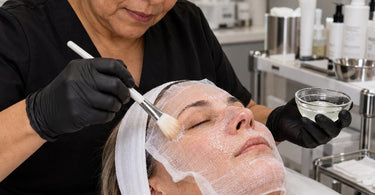
Work smarter, not harder... especially when your facial gauze seems determined to take a little vacation across your client's forehead. You carefully position it, reach for your treatment product, and suddenly the gauze is sliding toward an eyebrow like it has somewhere better to be. It is one of those tiny treatment room frustrations that can interrupt an otherwise beautifully organized facial. Fortunately, wandering gauze is usually a fixable application problem, not a sign that you need to start negotiating with a piece of cotton.
For professional estheticians, facial gauze can be an incredibly useful treatment accessory. It creates a flexible support layer for certain masks, helps with the removal of appropriate setting products, and can make specific facial services easier to manage. However, its performance depends on the material, the client's skin preparation, the treatment formula, and the application technique. Understanding why facial gauze slides around during product application can help you improve consistency, reduce product waste, and keep your treatment flowing smoothly.
Why Does Facial Gauze Slide Around During Product Application?
The short answer is that facial gauze needs an appropriate combination of fit, surface contact, product consistency, and gentle handling to remain properly positioned. When one of these elements is missing, the gauze can bunch, stretch, wrinkle, or shift as you apply a mask or treatment.
Unlike an adhesive dressing, ordinary facial gauze is not designed to stick firmly to the skin by itself. Its open weave and lightweight construction make it flexible, but those same qualities allow it to move when exposed to friction, uneven pressure, or slippery products.
The most common contributing factors include residual oils or skincare products, excessive moisture, a poorly fitting gauze sheet, the wrong material for the service, and application strokes that drag the fabric rather than depositing product through it.
Here is how to troubleshoot each issue without turning your facial treatment into a wrestling match.
1. Too Much Product Underneath Makes the Gauze Slippery
One of the biggest reasons facial gauze moves is an overly slick surface underneath. If the client's skin has a generous layer of massage cream, facial oil, cleansing residue, or another lubricating product, the gauze has very little resistance to movement.
Imagine trying to keep a lightweight napkin in place on a freshly buttered plate. The napkin is not necessarily the problem. The surface underneath is simply too slippery.
For facial protocols that call for gauze directly against cleansed skin, remove residual cleanser and excess oil before positioning the fabric. If the manufacturer specifies a preparatory product, apply only the recommended amount and follow the prescribed sequence.
Some treatments intentionally use a serum or other product beneath gauze. In those cases, do not remove that layer merely to increase grip. Instead, check whether the amount, texture, and placement match the treatment instructions.
Professional skincare products for spas and salons vary significantly in slip and consistency, so the correct preparation is always formula dependent.
2. Facial Gauze That Is Too Large Can Bunch and Shift
One-size-fits-all sounds wonderful until you remember that actual faces did not receive the memo.
A gauze mask that is too wide, too long, or incorrectly positioned can develop folds around the nose, jawline, and temples. When you begin applying product, your brush or spatula catches those loose sections and pulls the material away from its original position.
For services requiring a full-face gauze layer, consider professionally prepared, pre-cut facial gauze masks with appropriately positioned eye, nose, and mouth openings. These can reduce preparation time and provide a more predictable starting shape.
If the product instructions permit trimming, adjust oversized edges before application using clean, appropriate tools. Make sure the material lies comfortably over the facial contours without pulling tightly or obstructing breathing.
Pay particular attention to the bridge of the nose and the transition from the cheeks to the jawline. These areas often reveal fit problems first.
Browse pre-cut facial gauze and other professional facial supplies to compare formats suitable for your services.
3. The Gauze May Be Too Dry or Too Wet for the Protocol
Moisture management is another reason a gauze layer may refuse to cooperate.
Some professional treatment protocols use dry gauze, while others specify lightly dampened gauze or rely on the treatment product to saturate the fibers. There is no universal rule that wet gauze always stays in place better.
Excess water can create a slippery interface, alter the consistency of a mask, dilute a formula, or cause the material to stretch and sag. On the other hand, dry gauze may lift or move if a brush repeatedly catches its fibers during the initial application.
The solution is to follow the product manufacturer's instructions rather than automatically soaking the material.
If light dampening is explicitly permitted, distribute moisture evenly and avoid leaving excess liquid in the fabric. If the procedure calls for dry gauze beneath a setting mask, position it dry and allow the prescribed product application to secure it.
Consistency matters more than improvisation. Your gauze should be prepared the same way each time for the same service.
4. Heavy Brush Strokes Can Drag the Gauze Across the Skin
Even perfectly fitted gauze can slide if the application technique involves too much horizontal pressure.
Long, forceful brush strokes may catch the weave and pull the entire sheet in the direction of the movement. This is particularly noticeable when working with thicker masks that create resistance against the applicator.
Instead of immediately sweeping a loaded brush across the entire face, begin by gently depositing small amounts of product in the areas specified by the protocol. Once the material is appropriately supported, distribute the remaining product with controlled movements.
Depending on the formula, a light pressing or dabbing technique may be more effective than repeated sweeping. The goal is to apply product through or onto the gauze without constantly dragging the fabric.
Professional applicators and spatulas can make a noticeable difference. A soft mask brush may work well for fluid products, while an appropriately sized spatula may offer better control with certain thicker preparations.
Use whichever application tool is approved for the treatment, and remember that more pressure does not automatically produce better coverage.
5. The Gauze Weave and Thickness May Not Match the Treatment
Not all gauze is created equal, and that little detail matters more than it might appear.
Gauze can vary in fiber composition, ply, weave density, flexibility, thickness, and absorbency. Those characteristics influence how it drapes over the face and how it behaves when treatment products are applied.
A very lightweight, loosely woven sheet may distort when pulled or repeatedly brushed. A thicker material may resist conforming to the contours around the nose or chin. A tighter weave may also behave differently with a thick mask than an open weave designed to allow product to pass through its fibers.
The ideal material depends on the treatment. Certain setting masks benefit from gauze that provides structural support during removal, while other products may perform best without gauze at all.
Look for gauze specifically intended for professional facial applications and confirm compatibility with your chosen formula. You can explore professional cotton, sponges, and wipes and gauze facial masks when evaluating your backbar options.
If your existing material regularly stretches, sheds lint, or loses its shape, changing the gauze type may solve more problems than changing your entire application technique.
6. Product Consistency Can Push the Gauze Out of Position
Sometimes the gauze is perfectly innocent and the treatment product is doing all the mischief.
Thick products can tug at the fibers when spread too aggressively. Very fluid products may provide little initial support and encourage the material to slip before coverage becomes even. Products that begin setting rapidly can also create resistance if you continue brushing after the workable application window has passed.
Always prepare professional masks according to the manufacturer's directions. Follow the specified ratios, mixing procedures, application thickness, and working time.
A mask that has become excessively thick should not automatically be diluted. Adding unapproved liquid can change its performance and may interfere with the treatment.
Keep your mixing bowls and application tools ready before mixing products with limited working time. Organization helps you apply the formula while it remains within its intended consistency range.
Also verify that gauze is recommended for the particular mask. Not every facial treatment benefits from a fabric layer, and some formulations require direct skin contact.
7. Starting in the Wrong Area Can Create a Chain Reaction
Placement order can make a surprising difference in how well gauze stays aligned.
If you begin applying product at an unsupported edge, the brush may move the entire mask before the center is stable. You then correct one cheek, accidentally pull the other, and spend the next few minutes playing facial gauze ping-pong.
For suitable full-face gauze treatments, begin by positioning the material carefully around the central facial contours. Check that the eye, nose, and mouth openings are aligned and comfortable. Smooth the gauze gently over the cheeks, forehead, and chin without stretching it tightly.
When the manufacturer's protocol allows, placing small amounts of product in strategic areas can help stabilize the material before broader application. Work with short, controlled motions and move outward as the gauze becomes supported.
This approach minimizes the amount of loose fabric that your tools can accidentally catch.
Never use tape, improvised adhesives, or restrictive wrapping to hold facial gauze in place unless that method is specifically part of a professionally approved treatment protocol.
8. Client Movement and Treatment Table Position Can Affect Placement
A client who is uncomfortable may reposition their head, adjust their jaw, or repeatedly move their facial muscles. Even small movements can disturb loose gauze before a mask has been fully applied.
Check that the client is comfortably supported before beginning the gauze portion of the facial. Proper head and neck positioning can reduce unnecessary repositioning during application.
Comfortable massage tables and treatment chairs, clean salon and spa bedding, and appropriately placed massage bolsters can all support a more comfortable treatment setup.
Before covering the face, explain what the client should expect and confirm that they can breathe freely and communicate comfortably throughout the service.
Facial gauze should never obstruct the nostrils or compromise the client's ability to breathe. If the client experiences discomfort, difficulty breathing, or anxiety, stop and adjust or remove the material immediately.
9. The Wrong Gauze for the Wrong Service Can Create Unnecessary Problems
One of the most important professional troubleshooting questions is whether the service actually requires gauze in the first place.
Gauze is frequently associated with selected paraffin, plaster, and other setting facial masks because it can provide a removable support layer. Depending on the formulation, its weave may allow treatment material to pass through while helping the finished mask lift away more predictably.
However, that does not mean gauze belongs beneath every clay mask, gel mask, serum, peel, or specialty facial treatment.
Some masks are formulated for direct application. Others use a different type of carrier or support material. Certain chemical exfoliation and advanced skin procedures have specific manufacturer requirements that should not be changed by adding gauze.
Before incorporating gauze into a new treatment, review the manufacturer's protocol, intended use, contraindications, and removal instructions.
The best application technique cannot make an incompatible material combination perform like a properly designed treatment system.
How to Keep Facial Gauze in Place: A Professional Application Checklist
If you are training a new esthetician or refining your treatment room procedures, a simple checklist can make gauze application more consistent across your team.
Step 1: Verify the treatment protocol. Confirm that gauze is recommended, identify the correct material, and determine whether it should be applied dry, damp, or with a specific preparatory product.
Step 2: Prepare the skin appropriately. Complete cleansing and any required preparation. Remove unwanted residue without altering intentionally applied treatment layers.
Step 3: Check the gauze fit. Position the material over the face and make sure openings are correctly aligned. Adjust the size only when appropriate and permitted.
Step 4: Position the client comfortably. Ensure the head and neck are supported, explain the application, and confirm that breathing remains unrestricted.
Step 5: Prepare your tools and product. Arrange clean applicators, mixing supplies, and the prescribed mask before starting time-sensitive applications.
Step 6: Stabilize the fabric gently. Follow the product-specific application sequence, using controlled product placement rather than pulling or stretching the gauze.
Step 7: Apply with minimal drag. Use short, appropriate movements and avoid repeatedly brushing unsupported edges.
Step 8: Watch for shifting. If the gauze wrinkles or moves, pause and correct the position before the product sets, provided repositioning is allowed by the protocol.
Step 9: Follow the correct removal procedure. Observe the manufacturer's setting time and removal instructions. Do not pull forcefully if the material resists.
Step 10: Document recurring problems. If the same service repeatedly produces shifting, record the gauze type, product used, preparation method, and application sequence so your team can identify the actual cause.
What Should You Do If the Gauze Starts Sliding Mid-Treatment?
First, resist the temptation to keep applying more product in the hope that it will magically glue everything into place. More product can increase mess, create uneven thickness, and waste supplies.
If the treatment has not begun setting and the manufacturer's instructions permit adjustment, pause the application. Identify whether the problem comes from an oversized edge, excessive moisture, a slippery base, or an applicator that is pulling the fabric.
Gently reposition the gauze without stretching it, then resume with smaller, more controlled application movements.
If the gauze has become heavily displaced, contaminated, or unsuitable for continued use, replace it with fresh material when the treatment protocol allows. Do not reuse disposable gauze between clients.
If a setting product has already hardened or entered a stage where manipulation is no longer appropriate, follow the prescribed removal process rather than attempting to force the gauze back into position.
A calm correction is much more professional than an increasingly enthusiastic battle with a sliding mask.
Which Facial Supplies Help Make Gauze Application Easier?
A smooth gauze application starts with the right combination of products and practical treatment room supplies. You do not necessarily need more equipment, but you do need materials that work together.
Professional facial gauze: Choose appropriate gauze sheets or pre-cut masks designed for the intended facial service. Compare sizing, weave, and handling characteristics before purchasing for regular backbar use. Browse facial gauze supplies.
Facial mask brushes: Appropriate brushes can improve application control and help distribute product without excessive dragging. Explore facial mask brushes.
Professional mixing bowls: Consistent product preparation begins with clean, appropriately sized tools. Shop mixing bowls.
Disposable cotton and wipes: Keep suitable single-use supplies available for skin preparation, cleanup, and maintaining an organized treatment area. Browse professional cotton, sponges, and wipes.
Professional facial masks: Make sure the mask formula is intended for your chosen application method. Compare professional facial masks and advanced facial treatment products.
Backbar essentials: Clean towels, appropriate applicators, organized storage, and treatment supplies help prevent unnecessary interruptions. Explore spa essentials for professionals and spa tools and implements.
When comparing professional supplies, think about compatibility and consistency rather than simply choosing the cheapest or thickest gauze available.
Why Consistent Gauze Application Matters for Your Spa Business
A gauze sheet that costs very little can still create surprisingly expensive frustration when it repeatedly interrupts treatments.
Every time an esthetician stops to reposition material, remake a mask, or replace supplies, the service becomes less predictable. These interruptions can increase product use, extend treatment time, and distract from the client experience.
Multiply a few extra minutes across several facial appointments, and suddenly your carefully planned schedule is feeling a little less carefully planned.
Consistent application also supports staff training. When every esthetician follows the same approved preparation and application sequence, troubleshooting becomes much easier. New team members can learn a repeatable process instead of relying on personal tricks that may not work with every formula.
For spa owners and managers, evaluating material quality, treatment compatibility, and staff technique together is often more productive than blaming the supplies alone.
Frequently Asked Questions About Facial Gauze Application
Should facial gauze be wet before applying a mask?
Not necessarily. Some products require dry gauze, while others specify light dampening or a different preparation method. Follow the mask manufacturer's instructions because excessive water can change product consistency or encourage slipping.
Can I use regular medical gauze for a facial?
Only if it is appropriate for the intended cosmetic treatment and meets the relevant product and hygiene requirements. Facial-specific gauze may offer a more suitable size, weave, and shape for professional mask applications.
Why does gauze bunch around the nose?
The material may be too large, too stiff, improperly aligned, or unable to follow the contours around the nose. Pre-cut facial masks and careful positioning may help improve the fit.
Does thicker gauze stay in place better?
Not always. Thicker gauze may offer more structure but can also be less flexible. The best option depends on how the material conforms to the face and interacts with the treatment formula.
Can I put serum underneath facial gauze?
Only when the treatment protocol allows it. Some services intentionally incorporate products beneath gauze, while others require direct contact between the fabric and prepared skin. A slippery serum can also affect how easily the gauze moves.
Should I use more mask product to stop the gauze from sliding?
Not automatically. Adding extra product can create uneven coverage and unnecessary waste. First evaluate the gauze fit, product consistency, skin preparation, and application pressure.
Is gauze necessary for every professional facial mask?
No. Gauze is useful for certain treatment systems, especially some setting masks, but other formulas are designed for direct application. Always confirm that the manufacturer recommends gauze before incorporating it.
Keep the Gauze in Place and the Facial Running Smoothly
Facial gauze should support your treatment, not become the main event. When it starts sliding around during product application, the solution usually begins with a closer look at preparation, sizing, moisture, material selection, and application technique.
A well-fitted gauze sheet, compatible treatment formula, and gentle application method can make a meaningful difference in how smoothly the service progresses. Just as importantly, a repeatable procedure helps your estheticians deliver consistent work without unnecessary interruptions.
At Pure Spa Direct, we understand that the little supplies matter just as much as the impressive equipment in a professional treatment room. As a distributor of professional spa, salon, and beauty supplies, we help beauty businesses source the everyday tools and treatment essentials that keep services organized and efficient.
Explore our selection of facial gauze, facial mask brushes, and professional facial treatment products to help refine your backbar setup.
Because the only thing that should be drifting away during a relaxing facial is your client's stress, not the gauze heading toward their hairline.
