
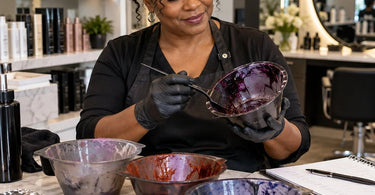
Solutions that professionals trust... start with understanding why even the simplest salon tools sometimes develop a personality of their own. Take your trusty hair color mixing bowls, for example. They begin their careers looking beautifully clean, smooth, and ready for anything, but after a few appointments, one bowl suddenly has a mysterious purple shadow, another looks permanently espresso-colored, and the bowl reserved for vibrant reds appears to have survived a crime scene. If you have ever scrubbed a color bowl until your hands were tired, only to discover the stain was still there, welcome to one of the most common frustrations behind the salon chair. Understanding why hair color bowls develop permanent stains can help professional colorists choose better equipment, improve cleaning routines, and recognize when discoloration is simply cosmetic versus when a mixing bowl genuinely needs replacing.
Hair color bowls are among the hardest-working accessories in professional salons. They hold permanent dyes, demi-permanent formulas, direct pigments, toners, developers, and lighteners throughout a busy schedule. While their job appears simple, the chemistry happening inside these containers is anything but. Those stubborn stains are often the result of color molecules interacting with microscopic surface imperfections, material characteristics, and the oxidation reactions that make professional hair coloring possible.
Why Hair Color Bowls Develop Permanent Stains in the First Place
The short explanation is that hair color contains ingredients specifically designed to create or deposit lasting color. Unfortunately, those ingredients are not particularly interested in limiting their artistic talents to hair.
Professional hair color formulas contain different types of colorants depending on their chemistry. Oxidative permanent and demi-permanent systems typically rely on dye precursors and couplers that react in the presence of an oxidizing developer. Direct dyes, including many fashion-color formulas, contain preformed color molecules that deposit without requiring the same oxidative development process.
Both types can discolor mixing bowls, although the mechanisms differ. Some colorants cling to the surface, some collect in tiny scratches, and others may migrate into susceptible plastic materials. Once colored compounds become embedded below the accessible surface, ordinary washing cannot always remove them completely.
The result is a bowl that looks stained even after every removable trace of product has been cleaned away. It is not necessarily a housekeeping failure. Sometimes the bowl is simply wearing the memories of a thousand root touch-ups.
The Chemistry of Oxidative Hair Color Makes Stains Especially Persistent
Permanent hair color involves chemical reactions rather than merely placing an existing pigment on the hair. When a compatible color formula is combined with its designated developer, hydrogen peroxide participates in the oxidation process that produces colored compounds.
Within the formula, relatively small dye precursors can undergo reactions that generate larger colored molecules. This chemistry helps create the desired hair shade, but it can also produce discoloration on susceptible equipment surfaces.
Imagine a dark brown permanent color sitting inside a textured plastic bowl throughout a lengthy application. As the mixture develops, colored compounds remain in direct contact with the bowl. Tiny scratches and microscopic surface irregularities provide places for residue to collect.
Even after rinsing, some color may remain trapped in those areas. Repeated exposure can gradually intensify the discoloration.
Oxidative color stains are especially noticeable when working with deep brunette, black, auburn, and certain red formulations. Their appearance depends on the specific dyes, material, contact time, and cleaning history.
This is also why a bowl may seem reasonably clean immediately after washing but display a faint gray or brown shadow once completely dry.
Plastic Hair Color Bowls Are Durable, but Not Indestructible
Plastic bowls are popular throughout professional hair salons for excellent reasons. They are lightweight, affordable, easy to handle, and available in shapes designed for efficient mixing and brush loading.
However, not every plastic behaves the same way when exposed to professional color formulas.
Some plastics have surfaces that are more resistant to pigment uptake than others. Material composition, additives, manufacturing quality, chemical compatibility, and surface finish can influence how readily discoloration develops.
Although many professional plastic bowls have relatively nonporous surfaces, polymers can still develop microscopic scratches or absorb certain dye compounds to varying degrees.
This distinction matters because a stain might be sitting on the surface, lodged within a scratch, or absorbed slightly into the material itself. Each situation responds differently to cleaning.
Professional colorists shopping for hair color bowls should look for durable, chemical-compatible construction, smooth interiors, stable bases, and manufacturer guidance concerning cleaning and disinfecting.
A well-designed bowl will not necessarily remain spotless forever, but quality construction can make ongoing maintenance considerably easier.
Tiny Scratches Create Perfect Hiding Places for Pigment
Here is an especially frustrating salon reality: the harder you scrub certain plastic bowls, the more opportunities you may create for future staining.
Abrasive scouring pads, harsh scrubbing powders, and aggressive scraping can damage smooth plastic surfaces. Those microscopic scratches may not be obvious at first, but they create additional places where color residue can become trapped.
Over time, a previously smooth bowl can develop a slightly dull or rough interior. Each new color appointment may then leave more visible discoloration.
It becomes a vicious cycle. The bowl stains, someone scrubs harder, the surface becomes rougher, and the next formula stains it even more.
Before long, the bowl has developed a more extensive color history than the salon appointment book.
Using compatible, nonabrasive cleaning tools is an important part of preserving the original surface finish. Stylists should also inspect bowls regularly for scratches, cracks, chips, or rough areas that make complete cleaning difficult.
Direct Dyes and Fashion Colors Can Be Particularly Stubborn
Anyone who has worked with vivid purple, electric blue, magenta, or cherry-red fashion colors knows these formulas can leave memorable marks on everything from gloves to salon countertops.
Many semi-permanent fashion colors use direct dyes. Unlike traditional oxidative color systems, these formulations may contain preformed dye molecules that deliver visible color without mixing with peroxide developer.
Some direct dyes have a strong affinity for particular plastic surfaces. Depending on the colorant and polymer, molecules can adhere to the surface or migrate into its outer layers.
That helps explain why a bowl used for a single intense blue or violet service may develop noticeable discoloration even if it was previously spotless.
For salons regularly offering creative coloring, maintaining dedicated color mixing bowls for vivid pigments can be a practical workflow choice.
Separate bowls can also reduce confusion during busy appointments, especially when multiple shades are being prepared simultaneously. Dedicated tools still require appropriate cleaning and disinfection between clients.
Why Immediate Rinsing Does Not Always Prevent Staining
Cleaning a bowl immediately after use is one of the best ways to minimize color buildup. However, prompt cleaning is not an absolute guarantee against discoloration.
Consider what happens during a typical root-retouch appointment. The stylist mixes the formula, loads the application brush, sections the hair, applies the product, and returns repeatedly to the bowl.
During that entire process, color remains in contact with the interior surface. Oxidative reactions may already be underway, and direct dyes may already be interacting with the bowl material.
By the time the application is finished, some discoloration can have developed even though the stylist has followed an excellent cleaning routine.
The important distinction is between minimizing staining and eliminating every possibility of staining. Immediate product removal is helpful, but the particular bowl material and hair color chemistry determine how successful that effort will be.
Do not sacrifice proper cleaning or safe chemical handling in an attempt to restore a perfectly white appearance.
Can Hair Developer Make Color Bowl Stains Worse?
Developer is essential to many professional oxidative coloring services, but its relationship with mixing-bowl staining is more complicated than simply saying peroxide causes stains.
Developer contains hydrogen peroxide at a concentration appropriate to the particular coloring system. When mixed with oxidative hair color, it supports the reactions that produce the intended shade.
Because those colored compounds develop while the formula is inside the bowl, the finished mixture may leave visible marks on susceptible surfaces.
However, hydrogen peroxide can also change or lighten some colored substances under certain conditions. That does not mean developer is universally effective or appropriate as a bowl stain remover.
Different dye molecules respond differently to oxidation. An improvised developer treatment may have little effect on a stain, and repeated chemical exposure may not be suitable for every bowl material.
Always follow the bowl manufacturer's cleaning recommendations and the product manufacturer's handling instructions instead of experimenting with leftover developer.
Salon chemistry is wonderful when it happens exactly where it belongs. Your cleaning sink does not need to become an unsupervised science laboratory.
How to Clean Professional Hair Color Bowls Correctly
A consistent cleaning routine helps protect tools, improve appearance, and support professional salon hygiene. The goal is to remove actual product residue while preserving the bowl's surface.
Step 1: Remove leftover color promptly. Follow product disposal requirements and avoid allowing mixed chemicals to dry inside the bowl. Never save leftover mixed oxidative color for later use.
Step 2: Rinse according to product instructions. Use an appropriate water temperature and avoid unnecessary splashing. Professional gloves help protect hands from residual chemicals.
Step 3: Wash with compatible detergent. Use a mild cleaning product approved for the bowl material, along with a soft cloth or nonabrasive sponge. Pay special attention to interior curves, rims, handles, and brush-rest areas.
Step 4: Rinse thoroughly. Remove detergent and any loosened color residue before proceeding.
Step 5: Inspect the bowl. Examine the surface under good lighting. A persistent color shadow is different from sticky residue, dried product, cracks, or surface damage.
Step 6: Disinfect when required. Follow applicable state cosmetology rules and use an approved disinfectant suitable for the bowl material, observing the product's dilution, contact-time, and rinsing directions. Cleaning and disinfection are separate processes.
Step 7: Allow appropriate drying and storage. Follow the instructions for the cleaning and disinfecting products before returning tools to a clean storage area.
For compatible cleaning products, explore Professional Cleaners & Disinfectants for Salons and Spas.
Cleaning Products That Deserve Extra Caution
The internet is overflowing with creative solutions for stained salon equipment. Unfortunately, not every cleaning trick is appropriate for professional use.
Abrasive powders and rough pads can scratch plastic. Strong solvents may damage certain polymers or remove protective finishes. Concentrated oxidizers and incompatible chemicals can create unnecessary safety concerns.
Never mix bleach with ammonia-containing products, acidic cleaners, or other chemicals unless a product manufacturer specifically directs an approved procedure. Dangerous reactions and irritating gases can result.
Likewise, do not assume that combining developer with household cleaning products will improve stain removal.
For stubborn discoloration, consult the bowl manufacturer's care instructions before using specialty stain removers. Products intended for countertops, laundry, or bathroom fixtures are not automatically suitable for salon mixing tools.
A cleaner that makes plastic look brighter but damages its surface is not a particularly good bargain.
Does a Permanently Stained Color Bowl Mean It Is Unsanitary?
Not necessarily. Cosmetic discoloration and inadequate sanitation are different issues.
A bowl may retain a visible pigment stain after all removable product residue has been cleaned away. If the material remains smooth, intact, and compatible with required disinfection procedures, staining alone does not prove that the bowl is contaminated.
However, discoloration should never be used as an excuse to overlook accumulated residue or damaged surfaces.
If a bowl has deep scratches, cracks, peeling coatings, persistent deposits, or other defects that prevent reliable cleaning and disinfection, replacing it is generally the more appropriate choice.
Salon professionals should follow their state board requirements and the instructions for any disinfectant used on reusable implements.
Remember that disinfecting a surface does not replace the need to remove visible soil first. A bowl should be properly cleaned before applying a disinfectant that requires a precleaned surface.
And if a mixing bowl looks like it has survived fifteen years of experimental purple hair, a replacement might improve the appearance of your color station even if the existing stains are only cosmetic.
How to Prevent Permanent Hair Color Bowl Stains
Prevention begins with selecting appropriate tools and establishing repeatable habits across the salon team.
Choose bowls intended for professional chemical services. Select products identified as compatible with the coloring and lightening formulas used in your salon. Do not assume every household plastic container is appropriate for salon chemistry.
Favor smooth, durable interiors. Smooth surfaces are generally easier to clean and inspect than heavily scratched or textured alternatives.
Use the correct mixing implements. Pair bowls with hair color brushes and mixing tools that will not unnecessarily gouge their surfaces.
Remove product shortly after application. Do not leave unused color sitting in a bowl throughout the afternoon simply because the next appointment is already arriving.
Avoid aggressive scrubbing. Use cleaning methods appropriate for the material, and reserve abrasive tools for surfaces specifically designed to tolerate them.
Consider dedicated vivid-color bowls. Separating frequently used fashion-color equipment may help maintain organization and reduce the visual impact of especially stubborn pigments.
Replace worn equipment proactively. Build inexpensive essentials into your routine supply orders rather than waiting until every bowl has become visibly damaged.
These small practices are easier to maintain when color stations have sufficient tools available for back-to-back appointments.
Do Dark Hair Color Bowls Hide Stains Better?
Yes, dark-colored bowls can make certain stains less noticeable, although they do not necessarily prevent staining.
Black, charcoal, and other dark mixing bowls may conceal the brownish or gray discoloration that stands out dramatically against white plastic.
That can help busy color stations maintain a polished appearance between appointments. However, darker surfaces may make some kinds of residue harder to notice, which makes proper cleaning and visual inspection especially important.
White bowls offer strong visual contrast and can make leftover product easier to spot. They may also make subtle changes in mixed color easier to see under consistent salon lighting.
Neither color is automatically better for every professional. The choice depends on workflow, personal preference, material quality, and how the team checks tools for cleanliness.
Most importantly, a black bowl is not a magical stain-proof bowl wearing an elegant little disguise. Its surface properties still matter.
How Hair Lighteners and Bleaches Affect Mixing Bowls
Hair lightening introduces another set of considerations because professional lightener formulas can contain persulfates and other ingredients designed to support controlled lifting when used according to manufacturer directions.
When mixing products from the Hair Bleaches and Lighteners collection, stylists should use bowls and implements specifically approved for the chosen formulation.
Lightener does not necessarily create the same pigment staining as a dark dye, but chemical exposure, incompatible cleaning practices, and repeated tool wear can affect equipment over time.
Some bowls may gradually lose their original gloss or develop visible signs of wear. Not every change is caused by lightener itself; cleaning methods, surface abrasion, and general use may contribute.
If a bowl becomes cracked, unusually rough, brittle, or visibly damaged, remove it from service.
Always follow the lightener manufacturer's mixing-container requirements. Some formulations specify nonmetallic tools, and product-specific directions should take priority over general salon habits.
Why Stained Hair Color Bowls Matter for Salon Presentation
Clients may never examine the inside of a mixing bowl closely, but they notice the overall condition of their surroundings.
A tidy color station communicates organization, attention to detail, and professional care. Clean brushes, arranged foils, properly stored formulas, and well-maintained tools all contribute to the experience.
That does not mean every bowl must remain cosmetically perfect. A small stain on an otherwise clean, serviceable tool is not automatically a problem.
But severely discolored, scratched, or damaged accessories can make an otherwise beautiful station look neglected.
For salons that photograph their color services for social media, presentation becomes even more important. Clients watching a transformation video may see everything from the color formula to the workstation behind it.
Fresh, matching bowls and coordinated Professional Hair Salon & Barber Shop Supplies can make an organized station feel especially inviting.
The goal is not perfection for the sake of appearances. It is equipment that functions properly, can be maintained hygienically, and supports the polished experience clients expect.
When Should a Professional Salon Replace Its Hair Color Bowls?
There is no universal replacement schedule for reusable color bowls. Their useful life depends on construction, frequency of use, chemical exposure, cleaning methods, and visible wear.
Consider replacement when a bowl develops cracks, rough patches, peeling finishes, deep scratches, or persistent material damage that interferes with cleaning.
Also consider replacing bowls that no longer sit securely on the workstation or have damaged handles, unstable bases, or worn measurement markings that affect accurate mixing.
A purely cosmetic stain does not automatically require disposal, provided the bowl remains suitable for professional reuse and can meet applicable sanitation requirements.
For busy salons, regularly reviewing the condition of mixing bowls alongside brushes, clips, combs, and other reusable supplies can make purchasing more predictable.
It is generally easier to replace a few worn accessories during a planned supply order than to discover that every usable bowl is already occupied when three color clients arrive at once.
Build a Smarter Hair Color Station With the Right Supplies
Hair color bowl maintenance works best as part of an organized professional workflow rather than an isolated cleaning chore.
Start by keeping enough bowls available for the number of simultaneous coloring services your salon performs. Assign a convenient location for clean tools, establish a separate area for used implements, and make sure employees understand the cleaning and disinfecting procedures required for each tool.
Keep frequently used color applicator brushes, measuring tools, protective gloves, and mixing accessories readily accessible. Good organization helps reduce rushed cleaning and accidental cross-use between different color formulas.
Stock dependable Protective Gloves & Masks for Salon and Spa Professionals as appropriate for the chemical services being performed, and follow the personal protective equipment recommendations on relevant product labels.
If your team frequently works with oxidative color, toners, vivids, and lighteners, consider maintaining clearly identified sets of compatible bowls for different service categories.
This approach can simplify setup, improve inventory management, and reduce unnecessary wear from constant scrambling between appointments.
Frequently Asked Questions About Permanent Hair Color Bowl Stains
Can permanent hair dye stains be completely removed from plastic mixing bowls?
Sometimes. Surface residue and relatively fresh stains may respond to compatible cleaning methods. However, colorants that have migrated into plastic or become trapped in damaged surfaces may remain visible permanently. Cleaning should never compromise the material or required sanitation procedures.
Why does black hair dye stain mixing bowls so easily?
Deep shades contain combinations of colorants that create a strong visual contrast against light-colored equipment. Oxidative color development and repeated contact with worn surfaces may make those marks especially noticeable.
Are glass hair color bowls less likely to stain than plastic?
Smooth, intact glass is generally resistant to pigment absorption and can be easier to clean. However, glass may be breakable and heavier, and it must be appropriate for the salon environment and the specific formula. Follow product and workplace requirements when selecting materials.
Can I use household bleach to remove color stains?
Do not use household bleach unless the bowl manufacturer specifically approves the method and all product safety instructions can be followed. Never combine bleach with leftover hair color, developer, ammonia-containing products, or other incompatible chemicals. An approved cleaning method is preferable to an improvised chemical treatment.
Do stained bowls affect future hair color formulas?
A residual cosmetic stain does not automatically mean a formula will be affected. Actual leftover chemicals, incompatible materials, flaking coatings, or accumulated deposits are more significant concerns. Properly clean and inspect tools before reuse.
How often should salon color bowls be cleaned?
Reusable bowls should be cleaned after each use and disinfected as required by applicable regulations and product instructions. Never assume that a quick rinse is an adequate substitute for the required sanitation process.
The Bottom Line: A Little Color History Is Normal, but Good Maintenance Matters
Why hair color bowls develop permanent stains comes down to a combination of professional color chemistry, dye behavior, surface characteristics, repeated exposure, and ordinary wear. Oxidative colorants can produce lasting discoloration, direct dyes may cling to or migrate into certain plastics, and scratches provide additional places for pigments to remain.
The best defense is not endless scrubbing. It is choosing appropriate tools, following compatible cleaning procedures, removing used formulas promptly, and replacing equipment when its condition no longer supports safe professional use.
At Pure Spa Direct, we help salon and beauty professionals source the tools, accessories, and supplies that keep demanding service schedules running smoothly. Explore our selection of Mixing Bowls, Professional Hair Color, and Must-Have Supplies for Salon & Spa Business Success to support an efficient, well-equipped color station.
Because your professional hair color should create unforgettable results on your clients, not an unforgettable purple souvenir inside every mixing bowl.
