
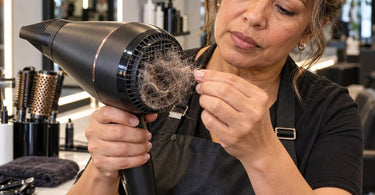
Pros trust this for stunning outcomes... but even the most fabulous professional blowout depends on something surprisingly unglamorous: a clean hair dryer intake. That little vent hiding on the back or bottom of your favorite professional hair dryer can collect an astonishing amount of lint, loose hair, dust, and styling product residue during a busy salon day. One minute your dryer is delivering smooth, beautiful results, and the next its filter looks like it has been secretly growing a tiny sweater. If you have ever wondered why hair dryer intakes collect lint and hair so quickly, the answer involves airflow, salon activity, product residue, and a little maintenance science that every stylist should know.
For professional hairstylists, barbers, salon owners, and beauty educators, understanding this buildup is about more than keeping equipment pretty. A clogged intake can restrict airflow, interfere with drying performance, contribute to overheating, and create unnecessary interruptions between appointments. Fortunately, a few practical habits can help keep your hardworking styling tools operating as intended.
Why Hair Dryer Intakes Act Like Tiny Vacuum Cleaners
A hair dryer does not create its airflow out of thin air. Inside the appliance, a motor-driven fan pulls surrounding air through an intake opening, directs that air through the dryer, and sends it toward the nozzle. Depending on the selected settings and dryer design, the moving air passes through a heating system before reaching the client's hair.
That continuous intake airflow is exactly why the rear vent collects debris so efficiently. Every time the dryer operates, nearby airborne particles have an opportunity to travel toward its intake. The protective screen or filter catches many of those particles before they reach sensitive internal components.
In other words, the filter is doing its job. Unfortunately, doing that job in a busy salon can get messy remarkably quickly.
Unlike a hairbrush that collects strands through direct contact, a dryer intake gathers material from the air around it. Floating lint, fine hair fragments, dust, and suspended styling residue can all accumulate on the intake surface during normal use.
Salon Air Contains More Debris Than You Might Think
A professional salon is a wonderfully busy environment. Clients move between stations, stylists brush and section hair, towels circulate, and styling products are applied throughout the day. All that activity introduces small particles into the surrounding air.
Freshly cut hair is an obvious contributor. While longer strands often fall onto capes or floors, shorter pieces can become airborne when stylists brush hair, remove capes, use blow dryers, or clean workstations.
Textile fibers add another source of debris. Salon towels, capes, clothing, and other fabric items can release lint through repeated handling and laundering. A station located near towel storage or a busy laundry area may encounter more airborne fibers than one positioned away from those activities.
Dust and fine particles also enter through ordinary room circulation. Foot traffic, ventilation systems, open doors, and frequent workstation cleaning can redistribute settled material.
The result is a constantly changing mixture of particles surrounding the dryer. Your intake filter simply happens to be an enthusiastic collector.
Why Hairspray and Styling Products Make Buildup Worse
Loose hair and lint are only part of the equation. Professional styling products can make intake buildup more stubborn, especially in salons where sprays are used frequently.
Fine droplets from hairsprays and other aerosolized products may remain suspended briefly before settling on nearby surfaces. Some of that material can reach the air intake while a dryer is operating.
As styling residue accumulates, it can leave a film on the filter screen. That film may make dust, lint, and fine hair particles more likely to cling to the surface rather than fall away.
Over time, a lightly coated screen can develop a visible layer of debris that becomes progressively harder to remove.
This is especially relevant when using professional hairsprays, texturizing sprays, root-lifting products, and finishing sprays near active styling equipment.
There is no need to banish hairspray from your salon. That would be a rather dramatic sacrifice for good hair. Instead, avoid directing spray toward dryer intakes, follow product ventilation instructions, and keep the dryer away from airborne product clouds whenever practical.
Why Some Hair Dryers Clog Faster Than Others
Two professional dryers can operate in the same salon and still accumulate debris at noticeably different rates.
One reason is intake location. Some dryers draw air through a rear grille, while others position their filters near the handle or elsewhere in the housing. Each design exposes the intake to a slightly different surrounding airflow pattern.
Filter construction also matters. Different screens and filtering systems capture particles differently. Fine mesh may intercept smaller material, while larger openings can allow certain particles to pass through.
Airflow characteristics can influence how much suspended debris reaches the intake. However, a higher airflow rating does not automatically mean a dryer will clog faster. Intake geometry, filter design, room conditions, and maintenance frequency all contribute.
Finally, individual work habits make a difference. A dryer operating for hours during back-to-back blowouts naturally encounters more opportunities for particle collection than one used occasionally.
That is why cleaning schedules should reflect actual salon traffic rather than assuming every dryer needs identical attention.
What Happens When a Hair Dryer Intake Gets Clogged?
A dirty intake may look like a minor cosmetic problem, but significant buildup can interfere with how the appliance moves air.
When lint and hair cover portions of the intake, they reduce the area available for incoming airflow. Depending on the dryer, this restriction can affect the volume of air delivered through the nozzle.
For busy hairstylists, the consequences may include reduced airflow, longer drying sessions, inconsistent performance, or unexpected thermal protection shutdowns.
Restricted airflow can also interfere with heat management. Hair dryers rely on adequate air movement to operate within their intended temperature conditions. When that airflow becomes insufficient, some models activate protective systems that interrupt heating or shut the appliance down.
Repeated overheating is not something to ignore. It may indicate a blocked filter, obstructed airflow, or another condition requiring attention.
And because the last thing anyone needs during a fully booked Saturday is a dryer staging a dramatic exit, catching intake buildup early is worth the effort.
The Warning Signs of a Dirty Hair Dryer Filter
Fortunately, a clogged intake often leaves clues before equipment performance becomes seriously affected.
Watch for the following signs during normal salon operations:
- Visible lint buildup: A fuzzy layer appears across the intake screen or around its edges.
- Reduced airflow: The dryer seems to deliver less air than it normally does at the same settings.
- Longer drying sessions: Familiar services begin taking more time without an obvious change in hair condition or technique.
- Unusual operating sounds: The dryer sounds different from normal, particularly if accompanied by reduced performance.
- Unexpected heat interruption: The heating function cuts out or the dryer shuts down during use.
- Frequent filter alerts: Models equipped with maintenance indicators request cleaning more often.
These symptoms are not exclusive to dirty filters. Electrical faults, motor problems, damaged components, and other issues can produce similar effects. If cleaning the intake does not restore normal operation, stop using the dryer and follow the manufacturer's service guidance.
How to Clean a Professional Hair Dryer Intake Safely
Cleaning a dryer intake is usually straightforward, but the correct procedure depends on the manufacturer's instructions and the appliance's filter design.
Before beginning, switch off the dryer, unplug it from the electrical outlet, and allow it to cool completely.
Step 1: Inspect the intake. Locate the air intake and examine the screen for accumulated dust, lint, and loose hair. Look for visible damage or anything obstructing the opening.
Step 2: Check the manufacturer's instructions. Determine whether your model has a removable filter cage, detachable screen, or fixed grille. Remove only the parts identified as user-serviceable.
Step 3: Remove loose debris. Where permitted by the manufacturer, gently lift away lint and hair using a suitable soft brush or approved cleaning accessory. Avoid pushing debris deeper into the appliance.
Step 4: Clean removable components appropriately. Some filters can be washed separately, while others require dry cleaning only. Follow the exact procedure specified for your dryer. Never assume that a washable filter on one model means another model can be cleaned the same way.
Step 5: Allow washable components to dry completely. If the manufacturer permits washing, make sure the cleaned parts are fully dry before reinstalling them. Never expose the dryer's electrical housing or internal components to water.
Step 6: Reassemble and inspect. Secure the filter properly before operating the appliance. Never run a dryer without a required intake filter or protective cover.
Step 7: Check normal operation. Once the appliance is correctly reassembled, confirm that airflow and operating behavior appear normal.
Do not insert sharp tools into the intake, attempt unauthorized disassembly, or continue operating a dryer that repeatedly overheats. If a burning odor, smoke, sparks, damaged cord, or other abnormal condition appears, discontinue use and arrange appropriate professional service or replacement.
How Often Should Busy Salons Clean Dryer Filters?
There is no single cleaning interval that suits every professional dryer. Manufacturer recommendations vary according to the appliance and filter design.
Some professional models call for daily filter inspections and frequent cleaning, while others specify weekly or monthly maintenance. High-traffic salons may need to clean their filters more often than the baseline schedule.
A practical approach is to establish a simple routine that incorporates the manufacturer's minimum requirements:
- Daily: Visually inspect frequently used dryers for lint, hair, and product buildup. Address visible obstruction according to the equipment instructions.
- Weekly: Review each dryer's condition and perform scheduled filter cleaning when required or appropriate for usage levels.
- Monthly: Examine dryer housings, plugs, cords, attachments, and general operating condition for wear or damage.
- As needed: Increase cleaning frequency during busy periods, heavy aerosol product use, or unusually dusty salon conditions.
A station checklist can make the process easier. Assign responsibility for equipment inspections so the task does not become everyone's job and, somehow, nobody's job.
For salons with several styling stations, a simple maintenance log also helps managers recognize equipment that repeatedly develops excessive buildup.
Small Salon Habits That Help Reduce Lint Collection
While lint accumulation cannot be eliminated completely, thoughtful workstation practices can reduce unnecessary exposure.
Start with routine station cleaning. Remove freshly cut hair from floors and nearby surfaces using suitable cleaning methods rather than allowing loose strands to circulate around active styling equipment.
Store clean salon towels in an organized location away from dryer intakes. Avoid placing running dryers directly beside piles of used linens or loose fabric.
Keep aerosol styling products directed away from appliance ventilation openings. When possible, finish spraying before operating a dryer nearby.
Pay attention to equipment placement as well. Avoid laying dryers on surfaces where their air intakes may contact hair clippings, towels, capes, or other materials.
Use appropriate heat-resistant holders and maintain clear ventilation around the appliance according to its instructions.
Regular cleaning of professional hair brushes and combs can also help keep accumulated loose strands and styling residue under control throughout the workstation.
The goal is not a laboratory-clean salon. It is a realistic environment where debris is managed before it interferes with professional equipment.
Does a Dirty Intake Affect the Quality of a Blowout?
It certainly can, although the impact depends on how severely the intake is restricted and how the dryer responds.
Professional blowouts rely on controlled airflow, appropriate heat settings, brush technique, and proper hair preparation.
If a clogged intake reduces airflow, the stylist may need additional passes to remove moisture or shape sections. This can make familiar services feel less efficient and may encourage unnecessary increases in heat settings.
For clients with thick, dense, or long hair, reduced airflow can become particularly noticeable during time-intensive drying sessions.
Clean intake filters help the appliance deliver the airflow it was designed to provide, supporting more predictable styling performance.
Pairing a properly maintained dryer with quality professional hair care products and appropriate styling tools helps create a consistent salon experience.
Remember that more heat is not automatically the answer to weaker airflow. If a dryer appears to be struggling, inspect its condition rather than simply turning up the temperature.
When Should a Salon Replace a Hair Dryer Instead of Cleaning It?
Not every dryer problem can be solved with a filter brush and determination.
If an appliance continues to overheat, shut down unexpectedly, emit unusual odors, or operate inconsistently after manufacturer-approved maintenance, it may require professional evaluation.
Visible cord damage, loose electrical connections, cracked housings, damaged intake guards, and other safety concerns should also prompt immediate removal from service.
A dryer with persistent problems should not be kept in rotation simply because it still turns on occasionally. Reliable equipment is an important part of professional service delivery.
When replacement becomes necessary, consider the demands of your salon before choosing a new model.
Evaluate factors such as airflow performance, weight, ergonomics, heat and speed controls, attachment compatibility, filter accessibility, manufacturer support, and recommended maintenance procedures.
Professional options can be explored through Hair Styling Tools & Appliances for Salons and the BaBylissPro collection at Pure Spa Direct.
For larger teams, standardizing around dryers with manageable cleaning procedures and readily available approved replacement components may also simplify equipment care.
Why Filter Maintenance Is a Smart Salon Business Habit
Professional dryer maintenance may not be the most exciting part of running a beauty business, but it can support important operational goals.
Maintaining clear intake airflow helps equipment function as designed. That matters when appointments are tightly scheduled and stylists depend on reliable tools throughout the day.
A preventive maintenance routine may also help identify minor issues before they become disruptive equipment problems.
Consistent procedures make it easier to train new team members, establish accountability, and maintain orderly styling stations.
For salon owners managing multiple dryers, equipment care can become part of a broader professional supply and workstation management strategy.
Pure Spa Direct supplies a wide selection of Professional Hair Salon & Barber Shop Supplies, helping beauty businesses source tools and essentials for their daily operations.
Whether your salon specializes in luxury blowouts, dimensional color, precision haircuts, or everyday styling services, dependable equipment supports a smoother workflow.
Make Hair Dryer Intake Care Part of Your Salon Routine
So, why do hair dryer intakes collect lint and hair so quickly? Because they continuously draw in surrounding air, and professional salons happen to be environments filled with moving hair, textile fibers, airborne dust, and styling product residue.
The intake filter captures much of that material to help protect the appliance. Over time, accumulated debris can restrict airflow and interfere with performance, especially when routine maintenance gets overlooked.
The solution is not complicated: inspect dryer filters regularly, follow manufacturer-approved cleaning procedures, keep styling stations tidy, and replace or service equipment when safety or performance problems persist.
A few moments spent caring for your dryers can help prevent unnecessary interruptions during an already packed appointment schedule.
Explore Professional Salon Equipment for Top Stylists and Barbers at Pure Spa Direct to support your team's styling needs. Because your salon's equipment should be helping create beautiful hair, not quietly collecting enough lint to qualify as a craft project.
