
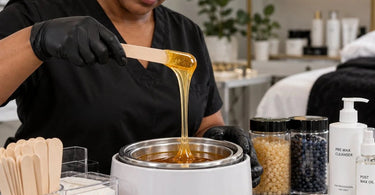
Top products, top results... until your professional hard wax decides it would rather be sticky than successful. You apply a beautiful strip, wait for it to set, reach for the removal tab, and discover that your wax has apparently developed a lifelong attachment to your client's skin. Instead of lifting cleanly, it stretches, strings, smears, or refuses to firm up. Meanwhile, your appointment schedule is ticking away, your client is wondering what is happening, and you are silently negotiating with a blob of wax. If you have ever asked why hard wax stays tacky too long, you are definitely not alone. The good news? Most stubborn setting problems have identifiable causes, and knowing what to adjust can bring your waxing services back under control.
Hard wax should cool into a flexible, cohesive film that grips hair and can be removed without a fabric strip. Different formulations have different setting times, but persistent gumminess is not something professionals should simply accept as normal. Temperature, application thickness, room conditions, skin preparation, equipment performance, and formulation all influence what happens between application and removal. Understanding those variables helps estheticians troubleshoot confidently without compromising client comfort or safety.
Why Hard Wax Stays Tacky Too Long Instead of Setting Properly
Hard wax changes consistency as it cools. When heated, the ingredients soften enough to spread around the hair. As the application loses heat, it becomes more structured and develops the flexibility needed for removal. Professional formulations often contain resins, waxes, polymers, and other ingredients that influence elasticity, adhesion, melting behavior, and setting speed.
The important detail is that not every hard wax behaves identically. Some formulas are designed for rapid removal, while others remain workable longer to accommodate delicate areas, large sections, or different application techniques. A flexible film can also retain a slightly soft feel without being defective. What matters is whether the product reaches the manufacturer's intended removal condition within a reasonable working period.
If your wax remains wet-looking, extremely stretchy, or difficult to lift well beyond its expected setting window, something in the process needs attention. Let's investigate the usual suspects, starting with the one that gets blamed for almost everything in the waxing room.
1. Your Hard Wax Is Too Hot During Application
Excessive working temperature is one of the most common reasons hard wax takes too long to set. When the wax leaves the warmer hotter than necessary, it carries extra heat onto the application area. That heat must dissipate before the film can develop enough structure for removal.
Overheated wax may look unusually thin, flow too quickly off the applicator, and spread farther than intended. After application, the surface can remain shiny and gummy longer than expected. If you attempt removal prematurely, the wax may stretch into strings instead of lifting as one piece.
The professional fix is to evaluate consistency before application. Stir the wax thoroughly and observe how it moves on a clean applicator. Most hard wax should have a smooth, controlled working texture, although the ideal consistency varies by formula. Follow the manufacturer's recommended operating instructions rather than chasing one universal warmer temperature.
Reduce an excessively high warmer setting gradually, allow the wax to stabilize, and verify that the application temperature is safe before contacting the client. Never compensate for slow setting by applying wax hotter or repeatedly testing overheated wax on the client's skin. A good professional wax warmer makes controlled temperature adjustments much easier.
2. The Wax Layer Is Too Thick or Uneven
Hard wax needs enough thickness to form a strong, flexible strip, but thicker is not automatically better. A heavy application retains heat longer, especially through the center. The outer surface may begin to cool while the interior remains soft, creating an application that looks ready but stretches when lifted.
This frequently happens when an esthetician loads too much wax onto the spatula, repeatedly spreads over the same section, or unintentionally creates a raised mound through the middle of the strip.
Instead, apply a controlled, even layer appropriate for the specific formulation. Maintain sufficient body for cohesive removal and create a defined removal tab. Avoid thick ridges, large pools, and unnecessary overlapping. Manufacturers may recommend different thicknesses for traditional hard wax versus modern film wax, so their instructions should guide your technique.
Experiment with small, consistent practice applications rather than changing several variables at once. Better thickness control can reduce wasted product, improve setting predictability, and make removal easier. Your wax should form a removable film, not a miniature topographic map.
3. Your Treatment Room Is Too Warm
The temperature of your treatment room affects how quickly wax releases heat after application. In a warm environment, the difference between the wax temperature and surrounding conditions is smaller, so cooling can take longer.
Think about waxing rooms exposed to afternoon sunlight, treatment spaces with poor ventilation, or busy salons where several pieces of equipment are running simultaneously. Even if the warmer setting never changes, wax performance may shift throughout the day.
For more consistent services, keep room temperature reasonably stable and comfortable. Pay attention to direct sunlight, heat-producing equipment, and the location of treatment beds relative to air vents. If the room is warmer than usual, consider working in smaller sections and adjusting the wax warmer within the manufacturer's safe operating guidance.
A room thermometer is a simple addition to your professional setup. Tracking environmental changes can help explain why an application that worked beautifully at 9 a.m. suddenly becomes a sticky situation by midafternoon.
4. Excess Humidity and Skin Moisture Are Interfering
Humidity deserves attention, especially in warm climates and treatment rooms where moisture accumulates. Humid conditions can coincide with slower cooling, increased perspiration, and less predictable wax adhesion. Moisture on the skin can also prevent wax from gripping hair consistently, making an already difficult application feel even more troublesome.
There is an important distinction here: humidity does not automatically prevent every hard wax formula from setting. The exact effect depends on the product, temperature, skin condition, and surrounding environment. However, a hot, humid treatment room combined with perspiring skin can certainly complicate professional waxing.
Begin with appropriate skin preparation. Use a compatible pre-wax cleanser, remove excess product as directed, and ensure the skin is properly prepared before applying wax. Where the manufacturer's protocol permits, a very light application of waxing powder may help manage surface moisture.
Do not automatically add powder to every client or every formula. Some wax systems specify particular oils, cleansers, or barriers, and using incompatible products can reduce performance. In humid environments, ventilation and appropriate dehumidification may also help maintain more consistent room conditions.
5. Your Client's Skin Is Holding More Heat Than Expected
Hard wax does not cool in isolation. It rests against living skin, and the warmth of the treatment area can influence setting time. Areas with greater natural warmth, skin folds, or prolonged contact with bedding may behave differently from cooler, exposed skin.
Underarms, bikini areas, and other warm treatment zones can make wax feel softer for longer. This can be especially noticeable when applying thick strips or working in a warm room.
Evaluate each treatment zone rather than expecting identical setting times everywhere. Smaller applications can be easier to control, and allowing a strip to reach the appropriate removal condition is essential. Maintain comfortable environmental conditions and avoid unnecessary heat buildup around the treatment area.
Never use extreme cold, ice directly on the client, or abrupt temperature changes to force wax to set. Do not place wax over overheated, irritated, broken, or otherwise contraindicated skin. Professional technique always begins with respecting the client's skin.
6. Too Much Pre-Wax Oil or Residual Product Was Applied
Pre-wax products are important, but the wrong amount or an incompatible formulation can create trouble. Certain hard wax systems benefit from a carefully controlled oil barrier, while others have different skin preparation requirements.
When too much oil, lotion, or residue remains on the surface, the wax may slip, fail to grip hair properly, or leave an unpleasantly greasy feeling. This can be mistaken for wax that has not set even when the film itself has cooled.
For reliable results, follow the exact preparation recommendations for your chosen hard wax. Use only the amount of compatible product needed, and avoid layering multiple formulas without confirming that they work together.
Professional pre- and post-waxing products are valuable tools, but more product does not necessarily mean better preparation. A properly measured application generally produces more predictable results than a generous coating of everything within reach.
7. The Hard Wax Formula Has a Naturally Longer Setting Time
Not every tacky strip signals a technique problem. Some professional hard wax formulations are intentionally designed to remain flexible and workable longer than others. These differences can be beneficial depending on the service.
A fast-setting wax may suit experienced technicians performing repetitive applications efficiently. A slower-setting formula can allow additional working time for detailed placement or areas that require greater control. The challenge arises when the formula's intended behavior does not match the technician's pace, treatment area, or room conditions.
Explore the different characteristics available in ItalWax professional waxes, Berodin, Cirepil, and Starpil. These are examples of professional waxing brands available through Pure Spa Direct, not interchangeable products with identical instructions.
Compare the manufacturer's stated working characteristics, recommended application thickness, and expected removal condition before choosing a formula. The best product is not necessarily the one that sets fastest. It is the one that performs reliably for your services and allows safe, effective removal.
8. Your Wax Warmer Is Heating Inconsistently
Sometimes the culprit is not the wax or your application technique. It is the equipment quietly creating chaos from its corner of the treatment room.
Wax warmers regulate heat in different ways. Some cycle between heating and resting periods, and the wax temperature may vary depending on pot size, fill level, thermostat behavior, and how thoroughly the product is stirred. A control dial does not necessarily indicate the exact temperature of the wax itself.
If the wax alternates between watery and thick throughout the day, investigate the warmer. Observe whether the heating element is functioning normally, whether the insert is seated correctly, and whether the wax is being mixed according to the manufacturer's directions.
Refilling the pot can also change the working consistency. Fresh beads temporarily alter the temperature and melting balance, making it important to wait until the contents are uniformly melted and stabilized before resuming application.
Inspect equipment regularly and replace malfunctioning warmers rather than repeatedly increasing the heat. When your warmer is unpredictable, no amount of inspirational salon music is going to fix your wax consistency.
9. Repeated Heating or Improper Storage Has Affected the Wax
Professional wax products are designed to tolerate normal melting and working conditions, but excessive heating, prolonged exposure to inappropriate temperatures, contamination, or poor storage can compromise performance.
Wax that has been held at excessive heat for extended periods may behave differently from a fresh batch. Depending on the formulation, changes can include unusual thickness, poor elasticity, discoloration, odor changes, or inconsistent removal. Repeatedly heating the same material without following manufacturer guidance can make troubleshooting more difficult.
Keep unused wax in clean, properly closed containers under recommended storage conditions. Avoid introducing water, cleanser, oil, or foreign material into the pot. Use clean, appropriate tools, follow hygienic handling procedures, and never return used wax to the warmer.
If a batch behaves abnormally despite correct temperature, preparation, and technique, compare it with fresh product from an appropriate source. Discontinue using wax that appears contaminated, deteriorated, or inconsistent with the manufacturer's specifications.
When purchasing bulk waxing supplies, inventory rotation and appropriate storage are just as important as choosing a dependable formulation.
10. You Are Checking the Strip Too Early or Using the Wrong Readiness Test
Timing is a skill that improves with practice. An application may appear opaque or slightly matte while the center remains too soft for clean removal. Conversely, waiting until every strip feels completely rigid can cause certain formulations to become brittle.
Rather than relying on a stopwatch alone, learn the visual and physical readiness indicators recommended for your product. Many hard wax formulations are ready when the surface is no longer excessively tacky and the strip has enough structure to lift as a cohesive film while retaining flexibility.
Check the removal tab carefully, avoiding unnecessary pulling on the surrounding skin. If the wax strings, smears, or collapses, it may need additional cooling or a correction to the next application's temperature or thickness.
Remember that the correct removal window differs between brands and formulas. A strip that is ready in one treatment situation may need a different amount of time in another. The goal is not simply to remove wax quickly. It is to remove it safely, comfortably, and effectively.
How to Fix Hard Wax That Is Already Tacky on the Client
Discovering a gummy strip mid-service can be frustrating, but rushing removal is rarely the answer. First, assess whether the wax is still too warm or simply failing to grip because of preparation or application problems.
If the strip is excessively soft but the client is comfortable and the skin appears normal, allow additional cooling time consistent with the product's instructions. Avoid repeatedly tugging at an unstable removal tab, because this can increase discomfort and cause uneven pulling.
If the wax has cooled sufficiently but remains unusually sticky or cannot form a removable film, do not force it off. Use a compatible professional wax remover or post-wax product as directed by the manufacturer, gently working to remove residue without excessive rubbing or scraping. Products marketed for removing wax from equipment are not automatically suitable for skin.
After removal, assess the treated area carefully. If the client experiences unusual pain, burning, persistent redness, or visible skin damage, stop the service and follow appropriate skin safety procedures. Do not immediately apply another layer simply to compensate for the first unsuccessful application.
Once the skin is safe and comfortable, identify the cause before proceeding. A short pause to correct the warmer or application technique is better than turning one troublesome strip into an entire appointment of unnecessary irritation.
Build a Reliable Hard Wax Troubleshooting Routine
Experienced estheticians know that consistent results come from repeatable habits. Instead of guessing every time a wax behaves strangely, establish a simple troubleshooting sequence that can be used throughout your treatment team.
Step 1: Observe the wax in the pot. Check whether it appears unusually runny, thick, separated, or inconsistent. Stir according to product instructions and assess the working texture.
Step 2: Verify safe application temperature. Confirm that the wax is appropriate for skin contact before applying it. Adjust the warmer gradually rather than making extreme changes.
Step 3: Review skin preparation. Check for moisture, perspiration, residual lotions, and incompatible pre-wax products.
Step 4: Evaluate application thickness. Look for thick centers, uneven edges, or oversized sections that retain heat.
Step 5: Consider room conditions. Note whether temperature, humidity, sunlight, or nearby equipment may be affecting the treatment space.
Step 6: Respect the formula's removal window. Use the manufacturer's readiness indicators and never force removal from a strip that has not developed sufficient structure.
Step 7: Change one variable at a time. A controlled adjustment makes it easier to determine which correction solved the problem.
Keep a short reference sheet at your waxing station listing the working characteristics of each formula your team uses. Including product names, warmer observations, application notes, and typical room conditions can reduce inconsistencies between technicians.
Professional Tools That Help Prevent Slow-Setting Wax
Proper technique matters most, but well-chosen professional supplies support consistency. Reliable heating equipment, appropriate applicators, compatible preparation products, and organized treatment stations make wax behavior easier to manage.
Start with your professional waxing supplies and evaluate whether each component suits the products and services you offer. Your equipment should support precise temperature management, and your applicators should allow controlled distribution without excessive product buildup.
Explore professional wax spatulas and applicators in suitable sizes for brows, underarms, bikini services, and larger body areas. Proper application control can reduce both uneven thickness and unnecessary waste.
Consistent skin preparation is equally important. Stock compatible cleansers, manufacturer-approved barrier products, disposable supplies, and appropriate finishing products. Keep a dedicated supply of professional skin-safe residue removers for situations where the wax does not release as expected.
For salons developing a new waxing menu, complete waxing kits can provide a convenient starting point. Review each kit's contents and instructions to ensure the products are compatible and appropriate for professional services.
How Slow-Setting Wax Affects Appointment Times and Product Costs
A tacky wax problem might seem minor when it happens once. Across a full day of appointments, however, additional cooling time, cleanup, and repeated applications can become expensive.
Consider a technician performing multiple waxing services each day. When every application requires extra waiting or leaves residue behind, the accumulated delays can reduce scheduling flexibility. Excessively thick strips also increase product consumption, while unsuccessful applications may require additional materials and cleanup time.
That is why professional waxing efficiency should be measured by more than the price of a bag of beads. Consider how predictably a formula melts, spreads, sets, grips hair, and removes under your normal working conditions.
A slightly different wax formula or an improved application method may reduce waste enough to make a noticeable operational difference. At the same time, never shorten essential cooling time or override safety precautions simply to move clients through faster.
The best waxing workflow is one that balances service quality, technician control, client comfort, and reasonable product use. Speed is helpful. Predictable results are even better.
Train Your Waxing Team to Recognize the Difference Between Tacky and Ready
One technician's perfectly flexible strip can be another technician's sticky nightmare. Without consistent training, team members may interpret wax readiness differently, especially when switching between formulas.
Use manufacturer-approved demonstrations and supervised practice to teach the relationship between application temperature, film thickness, and removal timing. Compare how a properly applied strip behaves against one that is too thick, too hot, or removed prematurely.
Train technicians to identify warning signs such as excessive stringing, unusual residue, inconsistent setting, or excessive skin pull. Reinforce that a slower-than-expected setting time is a reason to investigate, not an invitation to pull harder.
It is also helpful to standardize workstation setup. Place warmers away from unnecessary heat sources, keep recommended skin preparation products within reach, and make it easy for technicians to maintain hygienic working practices.
Clear training prevents minor inconsistencies from becoming repeated service issues. And if everyone on the team understands what properly set wax should look and feel like, there will be far fewer dramatic conversations with the wax pot.
Frequently Asked Questions About Hard Wax That Stays Sticky
Why is my hard wax still sticky after several minutes?
The wax may be too hot, applied too thickly, or cooling slowly because the treatment room or skin is unusually warm. The formulation itself may also have a longer setting time. Check the manufacturer's instructions and evaluate the application before attempting removal.
Does turning the wax warmer down help hard wax set faster?
It can help when excessive application temperature is the cause. Lowering the warmer setting allows future applications to begin at a more appropriate working temperature. However, wax that is too cool can become difficult to spread or grip hair properly. Always stay within the manufacturer's recommended working conditions.
Can humidity make hard wax stay tacky?
Warm, humid environments can contribute to unpredictable wax performance, particularly when perspiration and skin moisture are present. The effect varies by formulation. Proper environmental control and compatible skin preparation can help improve consistency.
Should hard wax feel completely hard before removal?
Not necessarily. Many professional hard wax formulas are designed to remain flexible rather than becoming rigid. The strip should reach the manufacturer's recommended removal condition and lift cohesively without excessive stretching, smearing, or breaking.
Why does hard wax stretch like chewing gum?
Excessive stretching often indicates that the wax is too warm, has not set sufficiently, or is applied too heavily. Some formulas are naturally elastic, so evaluate whether the stretching prevents normal cohesive removal rather than judging elasticity alone.
Can I apply another layer of hard wax over a sticky strip?
Do not automatically cover a failed application with more hot wax. Adding another layer may trap additional heat or increase pulling on the skin. Follow the specific manufacturer's guidance for corrective applications and assess the client's skin before proceeding.
Does expensive hard wax always set faster?
No. Setting speed is determined by formulation and working conditions, not price alone. Some premium professional waxes are designed for flexibility or extended application time. Choose products based on suitability, consistency, safety, and performance during your actual services.
Make Sticky Wax Problems a Thing of the Past
Understanding why hard wax stays tacky too long can turn an annoying service interruption into a straightforward troubleshooting opportunity. Start by checking temperature, then look at thickness, room conditions, skin preparation, equipment behavior, and product formulation. The most effective correction is usually the one that addresses the actual cause instead of adding more heat, more wax, or more pulling.
For waxing professionals, consistency is everything. Well-maintained equipment, compatible preparation products, appropriate application techniques, and thoughtful formula selection help create smoother appointments and more predictable results.
Pure Spa Direct supplies professional estheticians, waxing studios, salons, and spas with a broad selection of waxing products and treatment essentials from established industry brands. Whether you are evaluating a new hard wax, replacing an unreliable warmer, or updating your waxing workstation, explore the professional options available to support your services.
Because your wax should be holding onto unwanted hair, not holding your entire appointment schedule hostage. Here's to flexible strips, clean removals, confident technicians, and a little less sticky drama in the treatment room!
