
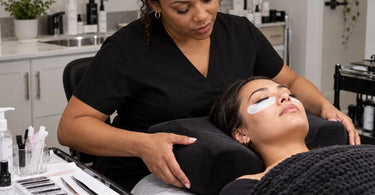
Top products pros stock without fail... usually include the little comforts that make a long beauty appointment feel effortless. A supportive lash pillow is one of those hardworking essentials, especially when a lash artist spends hours creating beautiful extensions, performing lash lifts, or perfecting brows. But what happens when that perfectly placed pillow starts traveling across the treatment bed like it has somewhere more exciting to be? Suddenly, the client is shifting, the technician is reaching, and the carefully arranged workstation needs another adjustment. Understanding why lash pillows slide out of position during services can help beauty professionals create a more stable, comfortable, and efficient treatment experience.
For professional lash artists, pillow movement is more than a minor inconvenience. A shifting pillow can change the position of the client's head, affect access to the lash line, and interrupt the steady working posture needed for detailed application. The good news? Most slipping problems have practical explanations, and many can be corrected without completely redesigning the treatment room.
Why Do Lash Pillows Slide During Professional Services?
Lash pillows move when the forces acting on them overcome the friction and stability provided by the surface underneath. That sounds like a physics lesson nobody requested during a volume lash appointment, but the principle is surprisingly useful.
Several factors can contribute to movement, including slippery upholstery, loosely fitted bedding, soft mattress toppers, incompatible pillow shapes, and the natural adjustments clients make while lying down. The weight of the client's head also changes how the pillow responds to pressure.
Even a pillow that feels secure during setup may gradually shift once the client relaxes, turns slightly, or adjusts her shoulders. These small movements can become more noticeable during longer services.
The solution begins with identifying exactly what is moving. Is the pillow sliding across the sheet? Is the entire sheet shifting beneath the pillow? Or is the pillow staying in place while its internal foam compresses and changes the client's head position? These situations require different adjustments.
Slippery Treatment Bed Surfaces Are Often the Culprit
Professional treatment beds frequently feature smooth vinyl, polyurethane upholstery, or other easy-clean materials. These surfaces are practical for a busy salon, but some combinations of pillow covers and upholstery provide relatively little resistance to movement.
Place a satin-like pillow cover on a slick treatment bed, and you may have created a miniature skating rink. Beautiful? Absolutely. Helpful during precision lash isolation? Not particularly.
The amount of grip depends on the materials touching each other, their texture, the pressure applied, and whether the surfaces are clean and dry.
A smooth pillow cover may slide more readily against polished upholstery than a cover with a textured underside. However, even textured fabrics can move when placed over loose bedding.
Before replacing the pillow, inspect the entire surface underneath it. A properly fitted salon and spa bedding system can help eliminate unnecessary fabric movement.
Make sure fitted sheets are appropriately sized, secured around the mattress, and free from excess material that bunches beneath the client's head.
Loose Sheets Can Make a Stable Pillow Slide
Sometimes the lash pillow is innocent. The sheet beneath it is the actual escape artist.
Loose linens create a moving layer between the pillow and treatment bed. Even if the pillow grips the fabric well, the entire fabric layer may gradually migrate as the client changes position.
This problem is particularly common when oversized flat sheets are draped over narrow treatment beds or when additional bedding is placed over a slippery mattress topper.
Consider these practical adjustments:
- Choose fitted sheets designed for the dimensions of the treatment bed.
- Smooth excess material away from the headrest before each appointment.
- Secure bedding according to the bed manufacturer's instructions.
- Avoid stacking multiple loose fabric layers beneath the pillow.
- Check that mattress toppers and protective covers remain properly positioned.
Professional spa towels may also be useful as washable positioning accessories when the setup allows, but they should not create bulky ridges or uncomfortable pressure beneath the client's neck.
The objective is a smooth, stable foundation rather than a mountain of linens that looks luxurious until somebody moves.
Pillow Shape and Size Affect Stability
Not all lash pillows are designed the same way. Some feature a broad rectangular base, while others have contoured neck channels, raised sides, or a recessed area for the head.
These shapes affect how the pillow distributes weight and interacts with the treatment bed.
A narrow pillow positioned on a wide, heavily padded bed may feel less stable than a broader design with a substantial contact area. Likewise, a pillow with a curved underside may rock or shift on certain flat surfaces.
The pillow should fit comfortably within the head section of the treatment bed without extending awkwardly over an edge or resting against an unstable adjustment mechanism.
For salons offering professional lash extension services, it is worth comparing different pillow profiles with the treatment furniture already in use.
Look for designs that provide consistent head and neck support, an appropriate working height, and a stable base. A pillow should support the client without forcing the neck into excessive extension or flexion.
Remember that a dramatic-looking contour does not automatically mean better support. The right fit depends on the client, the service, and the overall workstation.
Soft Foam Can Change Position During Long Appointments
Memory foam and other cushioning materials can provide welcome comfort, but their compression characteristics matter.
Some softer pillows compress gradually under the weight and warmth of the client's head. This may change the working height or allow the head to settle into a different position.
Although foam compression is not the same as the pillow physically sliding across the bed, the resulting change can feel remarkably similar to a lash artist.
One minute the lash line is positioned beautifully. The next, the client's head seems lower, the neck angle has changed, and the technician is wondering whether the pillow secretly deflated.
Evaluate whether the pillow maintains adequate support throughout a typical service. If it bottoms out, collapses unevenly, or no longer returns to its intended shape, the cushioning may be unsuitable or worn.
Firmer support is not automatically better, either. Excessively rigid pillows may create pressure points and encourage the client to reposition more frequently.
The best choice balances comfort, support, and stability for the duration of the treatment.
Client Movement Creates Gradual Pillow Migration
Clients rarely remain completely motionless during an entire lash appointment. Even someone enjoying a peaceful nap may shift her shoulders, adjust her jaw, reposition her arms, or make small changes to relieve pressure.
Those subtle movements can transfer force through the head and neck into the pillow.
During a lengthy extension appointment, repeated adjustments may slowly push a loosely supported pillow away from its original location.
Rather than expecting clients to become decorative statues, focus on reducing the discomfort that encourages unnecessary movement.
Before beginning, ask whether the client feels comfortable through her neck, shoulders, back, and legs. Check whether her head rests naturally in the pillow's intended support area.
If appropriate, a properly positioned massage bolster beneath the knees may improve overall comfort and reduce the desire to shift position. Select supports that suit the client and the treatment bed.
Forcing a client to remain still despite discomfort is never a good solution. A brief positioning adjustment is much better than spending the rest of the appointment fighting against the pillow.
Treatment Bed Angles Can Encourage Sliding
The angle of the treatment bed may be another contributing factor.
Some professional facial beds and reclining chairs feature adjustable backrests or head sections. When these surfaces are inclined, gravity can create a component of force that encourages the client, bedding, or pillow to move downward.
The effect becomes more noticeable when the pillow rests on smooth material or when the client's head places pressure against the lower edge of the support.
Check that adjustable sections are correctly locked and positioned according to the equipment manufacturer's directions.
A bed that shifts unexpectedly or has a loose headrest mechanism should be taken out of service until it can be properly inspected or repaired.
Professionals reviewing spa equipment and furniture should consider how the headrest, mattress surface, and pillow work together.
A stable treatment platform can make an enormous difference in the consistency of the lash workstation.
Incorrect Pillow Placement Can Make Everything Worse
Even an excellent pillow can perform poorly when placed too high, too low, or at an awkward angle.
Positioning the pillow too close to the end of the treatment bed may leave part of its base unsupported. Placing it too far toward the shoulders can interfere with natural neck alignment and reduce its ability to cradle the head.
A pillow rotated slightly off-center may also receive uneven pressure, making it more likely to twist or shift during the service.
Start by aligning the pillow with the centerline of the treatment bed. Confirm that its intended support surfaces make full contact with the bed or securely fitted bedding.
Then have the client recline normally and check that her head rests comfortably without excessive pressure on the neck.
Depending on the pillow design, the head may rest in a central recess while the neck receives support from a raised section. Follow the specific product instructions rather than assuming every pillow has the same orientation.
Once the client is comfortable, verify that both eyes remain accessible from the technician's normal working position.
A good setup should not require the artist to stretch, twist, or hold her shoulders in an uncomfortable position.
How to Keep Lash Pillows From Slipping
Once the source of movement has been identified, a few straightforward changes can improve stability.
1. Start with a clean, dry surface. Remove residue from the treatment bed and pillow cover using cleaning methods approved for their materials. Allow surfaces to dry fully before preparing the next appointment.
2. Secure the bedding. Replace loose or oversized sheets with properly fitted alternatives. Make sure mattress covers and toppers are also stable.
3. Check the pillow's underside. A pillow with a manufacturer-designed nonslip surface may offer better grip on compatible bedding or upholstery.
4. Consider an appropriate nonslip accessory. If the pillow manufacturer permits it, a cleanable, nonabrasive nonslip underlay designed for the application may help reduce movement. Avoid improvised adhesives, rough materials, or anything that could damage upholstery or interfere with sanitation.
5. Match the pillow to the bed. Check the pillow's width, length, base shape, and support height before making it part of the standard station setup.
6. Position the client before placing tools. Make final comfort adjustments before arranging lash tiles, adhesive accessories, or instruments around the working area.
7. Recheck stability before application. Gently confirm that the pillow and linens remain positioned when the client settles into the bed.
These steps help address the problem at its source instead of relying on repeated mid-service corrections.
Be Careful With DIY Nonslip Solutions
It can be tempting to reach for double-sided tape, household drawer liner, rubber shelf mats, or whatever happens to be hiding in the salon supply cabinet.
Unfortunately, not every material belongs on professional treatment furniture.
Some improvised products can leave adhesive residue, stain upholstery, trap moisture, interfere with cleaning procedures, or break down when exposed to disinfectants.
Others may wrinkle or create uncomfortable pressure points under the client's head.
Any nonslip accessory should be compatible with the treatment bed, pillow materials, and cleaning requirements. It should remain flat, secure, and free from exposed edges that could irritate the client.
If the accessory cannot be adequately cleaned between clients or is prohibited by the equipment manufacturer, choose another solution.
Use appropriate professional cleaning and disinfecting products according to their labels and the surface manufacturer's instructions.
A stable pillow is wonderful. A sticky mystery substance permanently attached to an expensive treatment bed? Considerably less wonderful.
How Pillow Movement Affects Lash Application Accuracy
Lash artists depend on a consistent working position for precise isolation, extension placement, and comfortable hand movements.
If the client's head shifts unexpectedly, the technician may need to change her arm position, viewing angle, or distance from the lash line.
These interruptions can make detailed application less efficient and encourage awkward working posture.
A shifting pillow can also disrupt the location of nearby accessories if they are resting on the pillow's side panels. Tools and containers should never be positioned where movement could cause them to fall onto the client.
Keep lash tweezers, adhesive accessories, and other instruments on appropriate stable working surfaces when they are not actively in use.
Good workstation ergonomics depend on more than the pillow itself. The technician's stool height, treatment bed height, lighting, and equipment placement should work together to support a neutral, comfortable posture.
That is particularly important during appointments requiring sustained close-up work.
Why Lash Artists Should Check Their Lighting Setup
Poor lighting can indirectly contribute to positioning problems.
If the artist continually changes her position to see the lash line, she may repeatedly adjust the client's head or move the pillow to compensate.
Over time, those corrections can undermine an otherwise stable setup.
Properly positioned LED bright lamps can help illuminate the treatment area without requiring unnecessary head or body repositioning.
Arrange lighting to reduce shadows while avoiding uncomfortable glare for the client.
Rather than lifting or pushing the client's head to chase a better view, adjust the lamp, stool, or bed within the equipment's safe operating range.
Better visibility and stable client positioning make a much happier partnership than repeatedly wrestling with a wandering cushion.
Cleaning and Maintenance Can Influence Pillow Performance
A lash pillow may gradually become more difficult to position if its cover stretches, its foam deteriorates, or its base changes texture through repeated use and cleaning.
Inspect pillow covers for loose seams, damaged closures, stretched fabric, and uneven wear.
Check the cushioning for permanent compression, lumps, or areas that no longer provide consistent support.
Follow manufacturer instructions for laundering removable covers or cleaning wipeable materials. Not all pillow materials tolerate the same detergents, disinfectants, or cleaning temperatures.
Allow reusable accessories to dry completely before returning them to service.
Where possible, maintain enough clean covers and appropriate backup pillows to support the appointment schedule without rushing cleaning procedures.
Professionals shopping for replacement accessories can explore lash and brow service supplies alongside other treatment-room essentials.
Should You Replace a Lash Pillow That Keeps Moving?
Not necessarily. If the pillow itself remains supportive and undamaged, a bedding adjustment or more appropriate positioning method may solve the problem.
However, replacement deserves consideration when the pillow no longer supports the client reliably or consistently slips despite proper setup.
Evaluate replacement options by looking at several practical characteristics:
- Base stability: Does the pillow sit flat and resist unwanted movement on the intended surface?
- Support quality: Does it maintain comfortable head and neck positioning throughout the service?
- Material compatibility: Can the cover be cleaned using methods suitable for a professional treatment environment?
- Appropriate dimensions: Does it fit the treatment bed without overhanging or crowding the technician's workspace?
- Durability: Does the pillow retain its shape and support after repeated use?
- Workstation compatibility: Does its height allow the artist to work without excessive leaning or raised shoulders?
For salons offering multiple services, versatility can also matter. A pillow suitable for lash extensions may be useful during certain brow treatments, provided it supports the client appropriately and meets the requirements of each procedure.
Explore lash and brow enhancement supplies when reviewing the overall service setup.
Build a Consistent Lash Bed Setup Routine
Busy salons benefit from repeatable preparation procedures, especially when several technicians use the same treatment room.
A standardized setup makes it easier to recognize changes in pillow performance and prevents each artist from improvising a different arrangement.
Before the first client of the day, inspect the treatment bed, pillow, linens, and accessories. Make sure all components are clean, dry, stable, and ready for use.
Between appointments, reset the bedding, inspect the pillow for movement or damage, and follow the required cleaning procedures.
When a pillow repeatedly slips in the same location, document which surface or bedding combination is involved. Testing one adjustment at a time can reveal the source of the problem.
For example, if the pillow stops shifting after a loose flat sheet is replaced with a properly fitted cover, the bedding was likely a major contributing factor.
If the problem persists across different beds and linens, the pillow's shape or base material may deserve closer attention.
This simple approach is more reliable than replacing every accessory and hoping the pillow finally decides to cooperate.
Better Pillow Stability Means a Better Client Experience
Clients may never notice that their lash artist carefully selected the pillow height, secured the treatment linens, and adjusted the workstation before the appointment.
They certainly notice when the pillow keeps slipping out from under their head.
Stable head support helps clients settle comfortably into longer appointments and reduces the need for disruptive adjustments.
It also allows technicians to focus on their work rather than repeatedly correcting the treatment setup.
For salon owners and managers, those small improvements can contribute to a more consistent experience across appointments and team members.
Professional results begin with professional preparation, and comfortable positioning should be part of every lash service routine.
The Bottom Line: Keep the Lash Pillow Where It Belongs
Why do lash pillows slide out of position during services? Usually, the answer involves some combination of surface friction, loose bedding, pillow design, client movement, or treatment bed positioning.
Start with the simple fixes: inspect the linens, evaluate the pillow's base, confirm proper positioning, and make sure the client feels comfortably supported.
If movement continues, review the compatibility of the pillow, mattress, and treatment furniture before considering replacement.
At Pure Spa Direct, we know that professionals need dependable tools and thoughtfully chosen supplies to keep their treatment rooms running smoothly. As a wholesale distributor of professional beauty, spa, and salon products, we help businesses shop for the equipment and everyday essentials that support efficient services.
Browse our lash pillow options, professional lash supplies, and spa essentials to find products suited to your treatment-room needs.
Because your lash clients came for beautiful results and a relaxing appointment, not to watch their pillow attempt a dramatic exit halfway through the service.
