
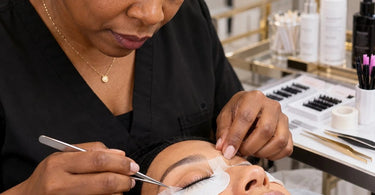
Your key to success is here... and sometimes that key is catching one tiny lower lash before it decides to make a break for freedom. During professional lash services, lower lashes that escape from underneath pads or tape can interfere with isolation, become attached to upper lashes, slow down the appointment, and create an uncomfortable surprise at the end of the service. For lash artists, learning why this happens and building a reliable isolation routine can make appointments smoother, cleaner, and considerably less dramatic.
Lower lash isolation looks simple until you meet the client whose lashes point in five directions, whose eyes water the moment she lies down, or whose cheek moves every time she tells a good story. That is why having the right Lash & Brow Service Supplies and knowing how to adjust your technique are equally important.
Why Lower Lashes Escape From Under Pads and Tape
The most common reason is incomplete coverage during the initial setup. Lower lashes can be extremely fine, pale, short, or tucked into the inner and outer corners. A lash artist may think every lash is safely underneath the pad, only to discover a nearly invisible little rebel halfway through the set.
Eye shape also plays a major role. A pad that fits beautifully on one client may buckle, lift, or leave gaps on another. Prominent cheekbones, deep-set eyes, rounded eyes, under-eye fullness, and differences in lower-lid contour can all change the way a pad sits against the skin.
The solution is not simply pushing the pad higher. Pads and tape should remain comfortably below the waterline and should never touch the eye. Instead, the professional goal is to create secure lower-lash coverage while maintaining client comfort and complete eye closure.
The Pad May Be Moving After You Place It
A perfectly positioned pad at minute one is not guaranteed to stay perfectly positioned through an entire appointment. Skin oils, skincare residue, makeup, tears, humidity, facial expressions, and normal movement can gradually reduce adhesion or change the pad position.
Talking is a surprisingly common culprit. Clients naturally move their cheeks and lower eyelids while speaking, smiling, and laughing. One funny story later, the outer corner that was perfectly secured may suddenly have two tiny lashes peeking over the edge like they paid for VIP seats.
This is why periodic visual checks matter. Do not treat lower-lash isolation as a one-time task that disappears from the checklist once adhesive application begins. Recheck after significant client movement, watering, coughing, laughing, or any adjustment to the eye area.
Prep Matters More Than It Gets Credit For
If the under-eye area is oily, damp, or coated with residual skincare or makeup, pads and tape may not grip consistently. Proper professional preparation helps create a cleaner surface and allows your isolation materials to perform as intended.
Keep appropriate Lash Cleanser and other professional prep supplies within reach at your station. Follow the directions for the products you use, and make sure the skin is appropriately prepared and dry before positioning adhesive pads or tape.
This little step can save a surprising amount of mid-service frustration. Five extra seconds of preparation beats twenty minutes wondering why the same outer corner keeps escaping.
Some Lower Lashes Are Just Sneaky
Short regrowth lashes are especially easy to miss. They may sit close to the lid, disappear behind longer lower lashes, or become visible only after the client closes her eyes. Light-colored lashes can be equally deceptive because they may blend into the pad or skin.
Good lighting is essential. Professional LED Bright Lamps can improve visibility during detailed lash services, particularly when you are checking corners and fine regrowth lashes.
After positioning the pad, inspect the lash line from more than one angle. Look across the inner corner, center, and outer corner rather than relying on one straight-down view. Then have the client close her eyes and inspect again before beginning application.
Pad Shape Can Be the Real Problem
There is no universal under-eye pad shape that magically fits every client. Some clients have lower lids that cooperate beautifully with a standard curved pad. Others make that same pad behave like it has suddenly forgotten its job description.
If the pad continuously lifts at an inner or outer corner, consider whether its shape, thickness, flexibility, or adhesive characteristics fit that particular client. Browse professional Eye Pads and keep more than one option available when possible.
A professional lash station benefits from flexibility. The best product is not necessarily the pad you use most often. It is the one that provides secure coverage and comfortable positioning for the client sitting in front of you.
Use Lash Tape Strategically
Tape can be an excellent partner to an under-eye pad. Rather than repeatedly repositioning an otherwise comfortable pad, a lash artist may use small pieces of appropriate Lash Tape to secure stubborn areas or capture fine lashes that remain exposed.
The emphasis is on strategic placement. More tape is not automatically better. Excessive layers can make the setup bulky, complicate removal, or interfere with your working area. The goal is controlled isolation, not turning the client into a craft project.
Apply tape according to your professional training and the manufacturer's directions. It should secure lashes without creating uncomfortable tension, pressing against the eye, or preventing complete eye closure.
Always Recheck After the Client Closes Her Eyes
This is one of the easiest habits to build and one of the most useful. The lower lid changes position when the client moves from looking upward to fully closing the eyes. A pad that appeared perfect during placement may shift slightly once the face relaxes.
Before beginning the lash application, confirm that the lower lashes remain isolated and that the pad or tape is not touching the waterline or eye. Also confirm that the eyes are comfortably and completely closed.
If something looks questionable, adjust it before starting. Fixing placement now is easier than discovering twenty minutes later that one lower lash has formed an unwanted friendship with an upper extension.
Watch the Inner and Outer Corners
The inner and outer corners deserve extra attention because these areas often contain tiny, angled, or difficult-to-see lower lashes. They are also common places for pads to lift because the surface contour changes rapidly around the eye.
When inspecting isolation, do not focus only on the center of the lash line. Use your lighting and viewing angle to check both corners thoroughly. Small professional tools such as Micro Applicators can also be useful additions to a well-organized lash station for precision-oriented services and preparation tasks when used according to their intended purpose.
If one corner repeatedly presents a problem, a small amount of correctly positioned tape may provide better control than attempting to move the entire pad closer to the eye.
Client Watering Can Change Everything
Watery eyes can make isolation materials less predictable. Moisture may affect adhesion, encourage pads to shift, and make the surrounding area harder to manage. If a client begins watering during the service, pause and evaluate what is happening rather than simply continuing and hoping the pad behaves.
Check comfort, placement, and eye closure. A pad or tape edge should not be contacting the eye. If the client experiences irritation or discomfort, stop and correct the cause according to your professional training and product instructions before proceeding.
The fastest lash appointment is not the one where nobody pauses. It is the one where small problems are caught before they become big problems.
Build Rechecks Into Your Lash Routine
Experienced professionals often develop checkpoints throughout the appointment. The exact workflow can vary, but useful moments include immediately after initial placement, once the eyes are closed, after noticeable facial movement, after watering, following tape adjustments, while changing working sections, and before final removal.
These quick checks take seconds and can prevent escaped lower lashes from bonding to upper lashes. They also give you repeated opportunities to confirm that the client remains comfortable.
Keeping your station organized with Premium Lash Extensions & Supplies for Pros makes these adjustments easier because you do not have to stop and hunt for tape, pads, applicators, or other essentials when something shifts.
Do Not Forget Client Comfort
It can be tempting to focus so intensely on catching every lower lash that the pad gradually creeps too close to the eye. Secure isolation matters, but comfort and proper placement matter more.
Ask the client whether the pads and tape feel comfortable before beginning. If she reports scratching, stinging, pressure, or irritation, reassess immediately. Do not assume the sensation will disappear once the service gets underway.
A comfortable client is also more likely to remain relaxed and still, which helps the isolation stay where you placed it. Everybody wins, including those tiny lower lashes that were planning their escape.
Create a Setup That Works for Different Clients
A professional lash artist benefits from having options rather than forcing one pad-and-tape combination to work for everyone. Stock a thoughtful assortment of pads, tape, cleansing supplies, disposable tools, and precision accessories so you can adapt to different eye shapes, skin conditions, and lash patterns.
Pure Spa Direct is a distributor serving spa, salon, and beauty professionals, making it easy to shop across categories when building or replenishing a lash station. You can also explore broader Lash & Brow Enhancement Services for Professionals supplies when planning your service inventory.
Consistency usually comes from a combination of product selection and technique. If lower lashes repeatedly escape on multiple clients, evaluate the entire routine: preparation, pad fit, lighting, tape placement, eye closure, client movement, and your frequency of rechecking.
The Takeaway for Lash Professionals
Lower lashes generally escape because they were missed initially, the pad does not match the client's eye contour, adhesion is compromised, facial movement shifts the setup, moisture interferes with placement, or tiny corner lashes become exposed during the service.
The best response is a careful professional workflow: prepare the area appropriately, choose isolation materials that fit the client, keep pads and tape safely below the waterline, inspect every section of the lower lash line, confirm placement again after the eyes close, and continue checking throughout the appointment.
Lower lashes may be tiny, but they certainly know how to create a full-size inconvenience. A few intentional checkpoints, the right professional supplies, and an adaptable isolation technique can keep those miniature escape artists safely where they belong while you focus on creating a beautiful lash service.
