
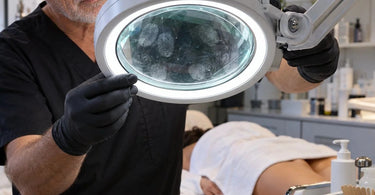
Simplify. Improve. Succeed... Those three little words sound wonderful until you sit down to perform a beautiful, detailed facial and discover that your magnifying lamp has somehow collected a perfect constellation of fingerprints directly in the center of the lens. Not around the edges, mind you, where they could peacefully coexist with your professional ambitions. No, these mysterious smudges have chosen the exact spot where you need to see every pore, fine hair, and tiny detail. And somehow, despite cleaning that lens yesterday, it looks like someone hosted a miniature fingerprint convention on it overnight.
Sound familiar? If you work in a spa, salon, facial treatment room, or lash studio, you probably have a complicated relationship with your magnifying lamp. You love the clarity, appreciate the illumination, and depend on the precision. But those fingerprints? They are the tiny, greasy villains of an otherwise perfectly organized treatment room.
Fortunately, there are practical reasons fingerprints appear in such inconvenient places. Understanding how they get there, why they are so noticeable, and how to prevent them can help you maintain clearer visibility without spending half your appointment polishing equipment.
Why Do Magnifying Lamps Attract Fingerprints in the First Place?
Magnifying lamps are designed to bring small details into focus. Unfortunately, they also happen to be positioned precisely where busy professionals naturally reach throughout a treatment.
Think about how you use yours during an ordinary appointment. You pull the lamp toward the client, adjust the angle, change the height, reposition the lens, and occasionally move the whole assembly to accommodate a different treatment area.
Somewhere during those adjustments, a fingertip lands on the lens rather than the frame.
Congratulations. You have created another tiny optical masterpiece.
Human fingertips naturally transfer skin oils, moisture, and residue to surfaces. Even freshly washed hands can leave marks because the skin produces oils that help maintain its protective barrier. Add facial creams, massage products, sunscreen, or traces of other professional products, and those marks can become particularly noticeable.
The magnifying lens itself does not necessarily attract fingerprints more than other smooth surfaces. Instead, its location, frequent handling, and optical properties make every accidental touch much more obvious.
Why Are the Fingerprints Always Right in the Middle?
There is a frustratingly logical explanation for this phenomenon.
The center of a magnifying lens is usually the area professionals look through most often. It is also a convenient place for an impatient hand to land when someone reaches across the lamp or attempts to reposition it without grabbing the frame.
Consider these common treatment room habits:
- Reaching over the client: A professional adjusts the lamp while concentrating on the treatment area, accidentally brushing the lens with a fingertip.
- Moving the lamp quickly: During a busy appointment, grabbing the nearest accessible surface can feel faster than locating the adjustment handle.
- Cleaning without checking: A rushed wipe may move oily residue around instead of removing it completely.
- Sharing equipment: Multiple estheticians or technicians may handle the same lamp differently throughout the day.
- Working with product residue: Hands that have recently handled lotions, oils, or creams can transfer a more persistent film.
Because the center of the lens is the primary viewing area, even one small mark can interfere with the most important part of your working field.
The outer edge could have twenty fingerprints and you might barely notice. Put one enthusiastic thumbprint in the middle, however, and suddenly your professional magnifying lamp resembles a windshield after a questionable car wash.
Why One Tiny Smudge Can Make Such a Big Difference
A fingerprint may seem insignificant, but magnifying lamps depend on clear optical surfaces to deliver a useful view.
When oils or residues collect on the lens, they can scatter incoming light, reduce contrast, and create visible haze or glare. Under certain lighting conditions, a fingerprint becomes especially distracting because it interrupts the clean view between your eyes and the treatment area.
For estheticians performing detailed skin assessments, that interference is inconvenient. For lash professionals, nail technicians, and brow specialists, it can become a recurring interruption in work that depends on excellent visibility.
Consider how different services rely on a clean magnifying lens.
Facial treatments: Estheticians use magnification to observe skin texture, visible congestion, and fine details during professional skin care services. A cloudy viewing area can make those observations less convenient.
Brow services: Professionals working with lash and brow enhancement supplies benefit from clear visibility when examining fine hairs and evaluating symmetry.
Lash applications: Detailed work involving professional lash extensions requires careful visual attention, appropriate working distance, and consistent lighting.
Nail services: Magnification can assist with intricate details, especially when using nail art supplies for precise decorative designs.
Waxing services: Clear illumination can help professionals visually assess treatment areas while working with professional waxing supplies.
The takeaway is simple: A clean lens supports the visibility that makes magnification useful in the first place.
The Sneaky Role of Skin Care Products and Treatment Room Residue
Fingerprints are not always composed of ordinary skin oils alone.
Spa professionals work with products that can leave thin films on hands and equipment. Moisturizers, facial oils, sunscreens, cleansing balms, and massage lotions may all contribute to stubborn smudges when transferred to a lens.
Even tiny quantities can create a visible streak when spread across a smooth optical surface.
Imagine finishing a luxurious facial using products from your advanced facial treatment collection. You reposition your magnifying lamp for a final inspection, but your fingers have a trace of product residue.
One quick adjustment later, your previously sparkling lens has acquired what appears to be a translucent avocado-shaped cloud.
Beautiful on toast. Less impressive on professional equipment.
Airborne dust can also settle on exposed lenses. When dust combines with oils or product residue, ordinary dry wiping may produce streaks rather than the clear finish you expected.
This is one reason a consistent cleaning routine is more effective than repeatedly improvising with whatever towel happens to be nearby.
How to Clean a Magnifying Lamp Without Damaging the Lens
Before reaching for a disinfectant spray or a bottle of general-purpose glass cleaner, remember that magnifying lamps are not all manufactured with identical lens materials or protective coatings.
Some lenses may be glass, while others use optical plastics or coated surfaces. Cleaning products that are suitable for one material may damage another.
Always follow the equipment manufacturer's specific cleaning and maintenance instructions. If those instructions are unavailable, identify the model and lens material before selecting a cleaner.
A practical cleaning routine generally includes the following steps:
- Turn off the lamp: Disconnect electrical power when directed by the manufacturer and allow the equipment to cool before cleaning.
- Remove loose debris: Use an appropriate clean, soft brush or optical air blower to remove particles that could scratch the surface during wiping.
- Choose an approved cleaning method: Use a lens-safe product compatible with the material and coatings specified by the manufacturer.
- Use a clean microfiber cloth: Wipe gently with a clean, lint-free cloth suitable for optical surfaces. Avoid excessive pressure.
- Address remaining streaks: If permitted by the manufacturer, use a small amount of approved cleaner on the cloth rather than spraying liquid directly into the lamp assembly.
- Inspect the lens: Check the viewing surface under normal lighting and repeat the approved cleaning process if residue remains.
- Allow appropriate drying: Make sure the lens and surrounding surfaces are dry before returning the equipment to service.
Paper towels, abrasive cleaning pads, strong solvents, and unapproved chemical solutions can scratch or damage certain optical materials.
Never assume that a cleaner suitable for countertops is automatically appropriate for magnifying lenses.
Also distinguish between cleaning and disinfecting. Removing fingerprint residue from an optical surface does not automatically constitute disinfection. Follow applicable sanitation requirements and manufacturer-approved disinfection procedures for equipment surfaces that require them.
The Biggest Prevention Trick: Stop Touching the Lens
Revolutionary? Perhaps not. Effective? Absolutely.
The most straightforward way to reduce fingerprint buildup is to change how you handle your lamp.
Encourage everyone using the equipment to reposition it by its designated handle, arm, or other manufacturer-approved adjustment point.
Avoid pushing directly against the lens, even when you are wearing gloves.
Gloves can still transfer products, contaminants, and residue to surfaces. They are not magical fingerprint shields, despite their impressive ability to make ordinary tasks feel delightfully official.
If you work in a shared treatment room, establish a simple handling rule so every technician follows the same approach.
Consistency matters because even the most careful professional cannot maintain a spotless lens if the next person routinely grabs it with both hands.
Give Your Magnifying Lamp a Proper Home
Sometimes fingerprints happen because equipment placement makes awkward handling unavoidable.
A lamp positioned too far from the treatment area may require excessive reaching. A poorly arranged workstation can force professionals to maneuver around bottles, tools, treatment supplies, or furniture whenever they need to adjust their lighting.
Consider the relationship between your lamp, treatment table, rolling cart, and frequently used supplies.
The right arrangement should let you position the magnifier without reaching across the optical surface or making uncomfortable movements over the client.
For treatment rooms undergoing an equipment refresh, explore professional spa equipment and furniture that support an efficient workflow.
Adjustable lamp arms, suitable mounting arrangements, and stable rolling bases can be useful features depending on room layout and the services performed.
The goal is not to create an elaborate equipment obstacle course. It is to make the correct handling position the easiest one to use.
Choosing a Magnifying Lamp That Is Easier to Maintain
If your current magnifying lamp feels awkward, difficult to reposition, or nearly impossible to clean around the edges, it may be worth examining alternative designs.
Professional magnifying lights come in configurations suitable for various treatment room environments.
When comparing options, evaluate these practical considerations.
Adjustable positioning: A properly designed arm can help professionals move the magnifier into the desired position without handling the lens itself.
Accessible controls: Convenient switches and adjustment points reduce unnecessary contact with optical surfaces.
Appropriate magnification: Higher magnification is not automatically better. Choose a lens that provides the field of view and working distance required for your services.
Useful illumination: Consistent, comfortable lighting supports detailed work. Adjustable brightness can be beneficial when different tasks require different lighting conditions.
Stable mounting: Choose a suitable clamp, rolling stand, or integrated mounting configuration for the treatment room.
Clear maintenance instructions: Confirm that approved cleaning methods, replacement components, and service information are available.
Replacement parts: Depending on the model, access to compatible bulbs and replacement parts can make long-term ownership more convenient.
Also remember that magnification labels can be confusing. Diopters and advertised magnification factors describe related but different optical characteristics. Compare manufacturer specifications rather than assuming that every model labeled with a larger number provides a better professional viewing experience.
A Simple Daily Cleaning Routine for Busy Spas
Cleaning is much easier when it becomes part of the normal room-reset process instead of a dramatic emergency triggered by one particularly stubborn fingerprint.
Consider organizing your routine around three checkpoints.
Before the first appointment: Inspect the lens for fingerprints, haze, dust, or dried product residue. Clean it using the manufacturer-approved method if necessary. Check that the lamp operates properly and that its arm or stand remains stable.
Between clients: Follow the equipment manufacturer's directions and your facility's required cleaning and disinfection procedures. Check the lens for visible marks and remove them safely before the next service. Do not let cosmetic lens cleaning replace any required sanitation step.
At closing: Inspect the lens and accessible equipment surfaces, remove approved-to-clean residue, check for obvious wear, and position the lamp safely for the next workday.
Keep compatible microfiber cloths and approved cleaning supplies in a designated clean storage area so they are easy to find.
Products from professional cotton, sponges, and wipes may support other treatment room tasks, but only use a material on the optical lens if it is approved for that surface.
For general room sanitation, maintain a separate supply of appropriate professional cleaners and disinfectants and follow their applicable labeling and equipment compatibility instructions.
Keeping these responsibilities distinct helps prevent accidental damage while maintaining professional sanitation standards.
When a Fingerprint Is Actually Something Else
Have you ever cleaned a magnifying lens repeatedly, only to discover that the mysterious blur refuses to disappear?
Before declaring war on that stubborn little cloud, consider whether it is actually a fingerprint.
Several equipment issues can resemble ordinary smudging.
Fine surface scratches: Improper wiping or contact with abrasive particles can create marks that remain visible after cleaning.
Damaged coatings: Certain cleaning chemicals or mechanical wear may affect protective optical coatings, producing a hazy appearance.
Internal contamination: Some enclosed optical assemblies may develop issues inside the lens housing that ordinary surface cleaning cannot resolve.
Lighting reflections: Bright overhead fixtures or an unsuitable lamp angle may produce glare that looks similar to surface haze.
Optical wear: Aging or damaged lens components can affect viewing quality independently of surface cleanliness.
If a lens remains cloudy after appropriate cleaning, avoid aggressive scrubbing or experimenting with stronger solvents.
Check the manufacturer's troubleshooting instructions or consult an authorized service provider. Sometimes the problem is not a dirty lens; it is a component that needs professional attention or replacement.
Why Clean Equipment Matters to the Client Experience
Clients may never understand the difference between a 3-diopter and a 5-diopter lens, but they certainly notice when a treatment room looks thoughtfully maintained.
A clean magnifying lamp contributes to the overall impression of organization, care, and professionalism.
It also makes your own workflow more pleasant. You can concentrate on the treatment rather than repeatedly shifting your head to look around an oily streak.
That matters during services where professionals must maintain focus for extended periods.
Imagine completing a detailed brow service using professional lash and brow tint products. Your workstation is organized, your lighting is comfortable, and your magnification offers a clear view of the area.
Now imagine performing that same service while repeatedly stopping to wipe an annoying smudge.
The first experience feels smoother because equipment maintenance is supporting the service instead of interrupting it.
A clean lens will not replace professional technique, proper sanitation, or training. It simply allows a valuable tool to perform closer to its intended purpose.
Five Small Habits That Can Make a Big Difference
Preventing unnecessary fingerprint buildup does not require a complicated maintenance program.
Start with five manageable habits that can fit into an ordinary professional schedule.
- Handle the frame, not the glass: Teach every team member to use designated adjustment points when moving the magnifier.
- Keep cleaning materials nearby: Store compatible optical cleaning supplies where staff can access them without disrupting room organization.
- Inspect before detailed services: Look through the lens before beginning tasks that require especially clear visibility.
- Maintain an organized workstation: Keep frequently used products within convenient reach so repositioning the lamp does not become an awkward juggling act.
- Follow a consistent maintenance schedule: Incorporate lens inspection and manufacturer-approved cleaning into regular room preparation and closing procedures.
These habits are particularly helpful in businesses where multiple technicians use the same equipment.
They also apply to other precision tools, including specialty lighting, inspection devices, and equipment with sensitive optical surfaces.
Build a Treatment Room That Works Smarter
A magnifying lamp should make professional services easier, not create another daily frustration.
That is why maintenance, equipment selection, and room organization deserve attention alongside treatment products and service techniques.
Whether you are updating a facial room, improving a lash station, or organizing a busy waxing workspace, thoughtful equipment choices can reduce unnecessary interruptions.
Explore professional spa tools and implements to complement your treatment setup, and consider LED bright lamps for applications that need additional illumination without magnification.
For professionals evaluating new magnifying equipment, the Magnifying Lights collection at Pure Spa Direct offers options to compare for different service environments.
As a professional spa and salon supply distributor, Pure Spa Direct helps businesses source equipment and supplies from manufacturers and professional brands. Selecting the appropriate equipment ultimately depends on your services, available space, maintenance requirements, and preferred workflow.
The Bottom Line: Keep the Magnification, Lose the Fingerprints
So why do magnifying lamps collect fingerprints exactly where you need to look through them?
Because busy hands naturally reach toward the most accessible part of the lamp, ordinary skin oils transfer easily to smooth optical surfaces, and even small marks become noticeable when they interrupt your primary viewing area.
There is no secret fingerprint magnet hiding inside your equipment. Just a combination of human habits, optical surfaces, and the occasional hurried adjustment between clients.
The solution is refreshingly manageable: Handle the lamp correctly, organize your workstation, follow manufacturer-approved cleaning procedures, and choose equipment that is comfortable to position and maintain.
A little prevention can save plenty of unnecessary wiping, squinting, and wondering who touched the lens this time.
And if another mysterious thumbprint appears directly in the middle tomorrow? At least you can approach it with a cleaning plan instead of conducting a full treatment room investigation.
Keep your equipment clean, your view clear, and your attention where it belongs: delivering thoughtful, professional service to every client.
