
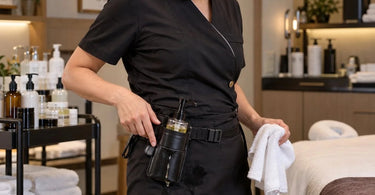
Your clients deserve excellence... and your favorite work clothes deserve to survive another massage session without becoming an abstract oil painting! If you have ever discovered a mysterious greasy patch on your uniform after a perfectly peaceful treatment, your massage oil holster might be the culprit. These convenient little accessories are supposed to make your job easier by keeping massage oils and lotions within reach, not turn your waistband into a miniature oil spill. Fortunately, most holster leaks have surprisingly simple explanations, and a few smart adjustments can save your clothing, your products, and your patience.
Massage therapists rely on holsters to maintain smooth treatment flow, reduce unnecessary reaching, and keep products accessible during bodywork. However, even a well-designed holster cannot prevent every drip if the bottle, pump, product consistency, or positioning creates problems. Understanding where the moisture is coming from is the first step toward keeping your professional wardrobe looking professional.
Why Do Massage Holsters Leak in the First Place?
Here is an important distinction: the holster itself usually does not generate the leak. In most situations, the liquid escapes from the bottle or dispensing mechanism, then collects inside the holster fabric or travels down the outside of the container.
Because the holster sits directly against your waist or hip, that accumulated oil eventually transfers onto your clothing. Think of the holster as the unfortunate messenger delivering bad news from your lotion bottle.
The most common causes involve overfilled bottles, loose pump assemblies, residual product around the dispenser, incompatible containers, and movement during treatments. Sometimes several of these problems happen together, creating a leak that seems impossible to track down.
1. Your Massage Oil Bottle Is Overfilled
It is tempting to fill a massage oil bottle right to the top, especially when your appointment schedule is packed. Nobody wants to refill a dispenser halfway through a busy afternoon. However, overfilling can create problems when inserting the pump assembly or handling the container.
If the product level is too high, installing the pump may displace liquid toward the bottle opening. Excess oil can collect around the threads, beneath the pump collar, or along the bottle exterior.
Once that bottle goes into your holster, gravity handles the rest. The oil slowly travels downward and eventually reaches the fabric against your clothing.
The fix: Follow the bottle manufacturer's recommended fill level and leave enough room for the pump assembly. After refilling, wipe the bottle neck, threads, pump collar, and exterior before placing it back into the holster. A clean refill process takes only a moment and can prevent an afternoon of greasy surprises.
2. The Pump Collar Is Loose or Improperly Seated
One of the most overlooked sources of massage oil leaks is the connection between the pump and bottle.
Repeated pumping, handling, and refilling can loosen a threaded pump collar. If the closure is not seated correctly, oil may seep through the connection, especially when the bottle tilts during treatment.
A cross-threaded collar can create the same problem. The pump may appear attached while leaving an imperfect seal.
The fix: Remove the pump, inspect the bottle threads and closure, and reinstall it carefully. Tighten it according to the manufacturer's instructions without forcing the plastic components. If the collar, threads, or sealing components are damaged, replace the affected part rather than attempting to compensate by overtightening.
Professionals who refill bottles frequently should make this check part of their regular treatment-room preparation.
3. Leftover Oil Around the Pump Creates Sneaky Drips
Not every greasy spot indicates a defective container. Sometimes the pump works perfectly, but leftover massage oil remains around the dispensing nozzle after each use.
That small amount of product can slowly migrate down the pump head and bottle. After several applications, multiple tiny droplets become a noticeable oily residue.
This is especially common when therapists dispense product quickly or return the bottle to the holster immediately after pumping.
The fix: Use a controlled pumping motion and catch the complete dose in your palm. When practical, briefly inspect the nozzle for hanging droplets before returning your hand to treatment. Wipe the dispenser exterior during room turnover with a suitable clean cloth or wipe.
A little attention to pump hygiene goes a long way. Your massage oil belongs on your client's skin, not decorating your scrub pants.
4. The Bottle Is Too Large for the Holster
Massage holsters are not necessarily universal. Some are designed for specific bottle capacities, shapes, or dispensing systems.
Using an oversized container can stretch the pocket, alter its orientation, or push the pump against your body. A bottle that sits too high may also catch on your arm or clothing as you move.
Conversely, an undersized bottle may shift excessively inside a roomy pocket, increasing the chance of tipping and accidental pump activation.
The fix: Match the holster to the recommended bottle dimensions and capacity. If you regularly switch between massage oils and lotions, consider a compatible bottle-and-holster set rather than mixing components that were never designed to work together.
Explore massage holsters with bottles for coordinated options that help simplify professional product dispensing.
5. Your Holster Tilts When You Move
Massage therapy is physical work. You bend, step, lean, rotate, and shift your weight throughout the session. Your holster follows every movement.
If the belt is too loose or positioned awkwardly, the bottle may tip forward or sideways. This can allow liquid to reach the pump connection or escape through an imperfectly sealed dispenser.
Repeated movement may also cause a bottle to rub against the holster opening, transferring oil residue to the fabric.
The fix: Adjust the holster so the bottle remains as upright and stable as possible throughout your normal treatment movements. Position it where your forearm and body will not repeatedly strike the pump.
Before your first client, try a few gentle bends, reaching motions, and stance changes. If the dispenser tips dramatically or the pump rubs against your clothing, adjust the belt or choose a more secure holster.
6. The Pump Is Being Pressed Accidentally
Here is a classic massage-room mystery: the bottle does not appear damaged, the cap is secure, and somehow oil keeps accumulating inside the holster.
The answer may be accidental pumping.
When the bottle sits too close to your abdomen, elbow, massage table, or equipment, routine movements may depress the pump head. Even a partial press can dispense product directly onto the bottle or into the holster pocket.
Some pump designs include locking mechanisms, but these should be used according to the manufacturer's directions and are not a substitute for proper positioning.
The fix: Keep the dispenser clear of surfaces that might press against it. Test your setup while standing beside the massage table and performing realistic treatment movements. If your pump repeatedly makes contact, move the holster farther toward your side or use a different compatible dispenser.
7. The Massage Oil or Lotion Is Changing How the Pump Performs
Not all massage products flow in the same way. Lightweight massage oils, thicker lotions, creams, and gels behave differently when dispensed.
Some pumps are intended for relatively thin liquids, while others are better suited to viscous products. Using a pump outside its recommended product range can cause inconsistent dispensing, difficult pumping, or unwanted residue around the nozzle.
Product compatibility also matters. Certain materials may not be suitable for every formulation, especially when concentrated fragrance ingredients or specialty products are involved.
The fix: Select pumps and containers that the manufacturer identifies as compatible with your chosen product. Browse Massage Oils, Lotions, and Creams for Therapists when evaluating professional formulations for your services.
When changing product types, inspect the pump's performance before using it with clients. Do not assume that a dispenser working beautifully with lotion will behave identically with a thin oil.
8. Old Residue Inside the Holster Keeps Transferring to Clothing
Sometimes you solve the actual leak but continue discovering oily marks on your uniform. What gives?
The holster fabric may still contain product from earlier spills.
Absorbent textiles and seams can retain massage oil, especially when residue has collected over several treatments. Body warmth, friction, and pressure may then transfer that oil onto your clothing long after the original spill occurred.
The fix: Remove the bottle and inspect the holster interior. Clean the accessory according to its care instructions, paying attention to seams, pockets, and areas that contact your uniform.
For example, certain holsters are designed to be washed with warm water and air-dried. Other materials may require different cleaning methods. Always follow the specific product instructions rather than assuming every holster is machine washable.
Allow the holster to dry completely before returning it to service. If the fabric remains heavily saturated or continues transferring residue despite proper cleaning, replacement may be the more practical solution.
9. The Bottle or Pump Has Developed Wear and Damage
Professional massage equipment gets a workout. Refillable containers are handled, cleaned, transported, and used repeatedly throughout the week.
Over time, bottle necks, pump collars, seals, or dispensing components may become worn or damaged. A small crack near the threaded opening can create a persistent leak that ordinary tightening will never solve.
Plastic containers can also become distorted when exposed to unsuitable cleaning methods, excessive heat, or incompatible products.
The fix: Inspect containers for cracks, warped openings, damaged threads, and signs of product seepage. Replace compromised bottles or pumps promptly.
Keeping a small inventory of appropriate Bottles & Jars and compatible dispensers makes it easier to address these issues without disrupting appointments.
After all, your equipment should not be held together by wishful thinking and one heroic paper towel.
10. Refilling Practices Leave Oil on the Outside of the Bottle
Busy treatment rooms often refill dispensers between clients. Unfortunately, hurried refilling can leave a thin film of product around the bottle neck and exterior.
Even when the pump seals correctly, this leftover oil can slowly collect inside the holster. Because the residue may be nearly invisible at first, therapists sometimes assume the container is leaking internally.
The fix: Establish a simple refill routine. Work over a protected surface, use suitable dispensing equipment, avoid overfilling, close the bottle securely, and thoroughly wipe the exterior.
Check the container for leaks before returning it to your waist. For shared treatment rooms, make sure every therapist follows the same refill and inspection procedures.
How to Find the Exact Source of a Massage Holster Leak
If you are not sure which problem is responsible, a short troubleshooting test can help you identify the source without sacrificing another uniform.
Step 1: Remove the bottle from the holster and thoroughly clean its exterior. Clean or replace the holster if existing oil residue could interfere with your inspection.
Step 2: Check the bottle for visible damage and verify that the pump collar is correctly installed.
Step 3: Place the bottle upright on a clean, protected surface and dispense several controlled pumps. Watch the nozzle, pump head, threaded connection, and bottle sides for emerging droplets.
Step 4: If the bottle remains dry, insert it into the cleaned holster and observe its position during normal movements without a client present. Look for tipping, rubbing, or accidental pump activation.
Step 5: If leaking continues, test an appropriate replacement pump or bottle. Change one component at a time so you can identify the actual problem.
Never continue using a visibly damaged or persistently leaking container during a professional service. The cost of a replacement is usually much easier to manage than the inconvenience of contaminated clothing, slippery surfaces, or interrupted treatments.
Should You Choose a Single or Double Massage Holster?
The right holster configuration depends on your treatment style and product needs.
A single-bottle holster works well for therapists who use one primary massage medium throughout a session. It keeps the setup lightweight and reduces the number of bottles that could accidentally bump against the table or body.
A double-bottle holster can be useful when treatments require quick access to two different products, such as massage oil and lotion. However, both bottles should fit securely, remain upright, and have enough clearance for controlled dispensing.
More bottles do not automatically mean better workflow. The goal is comfortable, efficient access without unnecessary movement or added weight.
Professionals comparing configurations can explore double massage oil holsters and single massage oil holsters to find options suited to their treatment routines.
Why Professional Holster Quality Matters
A well-designed massage holster should hold its intended bottle securely, allow comfortable access, and withstand routine professional handling and cleaning.
Useful features may include adjustable belts, reinforced stitching, sturdy pockets, washable materials, and compatible refillable containers.
For example, the Hold All Holster with Bottle & Jar offered through Pure Spa Direct is designed to hold a compatible pump-top 8 oz bottle or a 4 oz jar with a lid at waist height. This type of setup can be practical for therapists who want their treatment products accessible without repeatedly reaching away from the massage table.
Another option is to explore professional massage equipment and accessories from brands such as NRG and Earthlite. Always check the individual product specifications, bottle compatibility, and cleaning instructions before purchasing.
Remember that a better holster helps stabilize the container, but proper pump maintenance and handling remain essential. Even the fanciest pocket cannot negotiate a truce with a cracked bottle.
How to Prevent Oil Stains on Massage Therapist Uniforms
Prevention starts with keeping your equipment clean and your product containers secure. Selecting practical workwear can provide additional protection against everyday treatment-room messes.
Consider professional uniforms made from fabrics that tolerate routine cleaning according to their care labels. Darker colors and patterned fabrics may make minor marks less noticeable, but they will not prevent oil absorption.
Explore Professional Spa Apparel for clothing suited to busy spa and wellness environments.
If massage oil reaches your clothing, address the stain promptly. Gently blot excess product instead of rubbing it deeper into the fibers. Use an appropriate fabric-safe stain treatment and launder according to the garment care instructions.
Before machine drying, inspect the stained area. Heat can make some oily stains more difficult to remove. Heavily oil-contaminated textiles require additional care because residual oils can create a dryer fire hazard. Follow appropriate laundering and equipment safety procedures, and never place oil-saturated items in a dryer.
Create a Five-Minute Massage Holster Maintenance Routine
The easiest way to prevent recurring drips is to make holster care part of your normal spa maintenance schedule.
At the beginning of the day, inspect your bottle and pump for damage, verify that the dispenser is secure, and check that the holster is clean and dry.
Between treatments, wipe visible residue from the bottle and pump, check for fresh drips, and confirm that the holster remains comfortable and properly positioned.
At the end of the day, remove the bottle, inspect the inside of the pocket, and clean components as directed by their manufacturers. Schedule deeper cleaning whenever residue accumulates.
For spas with multiple therapists, consider keeping a few compatible replacement bottles and pumps available. Standardizing equipment can make maintenance easier and reduce confusion about which components fit together.
These small habits support a more organized treatment room and help protect the investment you make in Professional Massage & Wellness Products.
Frequently Asked Questions About Massage Holster Leaks
Why does my massage oil holster leak even when the pump is closed?
Check for leftover oil around the nozzle, a loose pump collar, bottle damage, or old product absorbed into the holster fabric. Some dispensing mechanisms are not completely leakproof when tilted, even if the pump head is in its closed position.
Can I use any pump bottle in my massage holster?
Not necessarily. Bottle capacity, shape, neck dimensions, pump design, and holster pocket size all affect compatibility. Choose components recommended by the manufacturer.
Are massage lotions less likely to leak than massage oils?
Product thickness can affect how readily a liquid flows through small openings, but thicker products are not automatically leakproof. Properly matched pumps and secure closures matter more than consistency alone.
How often should I clean my massage holster?
Inspect it regularly, remove visible residue promptly, and clean it according to the manufacturer's instructions. High-volume treatment rooms may require more frequent attention than occasional-use setups.
Should I replace a holster that keeps staining my uniform?
If the bottle and pump are functioning properly but the holster continues transferring oil after appropriate cleaning and drying, replacing the accessory may be the best option.
Keep the Massage Flowing and the Oil Off Your Clothes
Understanding why massage holsters leak or drip onto clothing makes it easier to solve the problem before it becomes part of your daily routine. Most issues come down to bottle compatibility, pump condition, filling practices, movement, or lingering oil residue.
Start with the simplest solutions: clean the dispenser, check the closure, confirm a secure fit, and position the holster so the bottle stays upright. Replace damaged components and establish regular cleaning habits to keep your setup working smoothly.
Pure Spa Direct helps massage therapists, spas, and wellness professionals find the supplies they need for efficient daily services, from professional massage oils and lotions to dispensing accessories and treatment-room essentials.
Because your hands should be busy delivering an amazing massage, not investigating another mysterious oil stain. Save the relaxing glow for your clients and leave the greasy surprises out of your uniform!
