
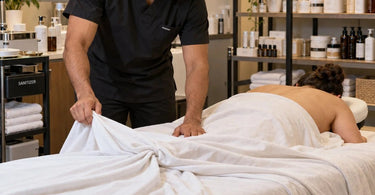
Effortless results start here... unless your massage table sheets have decided to perform their own interpretive dance halfway through a 90-minute treatment. One minute, your massage table sheets are beautifully smooth, perfectly tucked, and looking like they belong in a luxury spa advertisement. The next minute, one corner has escaped, the fabric has rotated sideways, and your carefully prepared treatment table resembles a fitted-sheet wrestling match. Sound familiar? For massage therapists and spa professionals, twisting sheets are more than a minor annoyance. They can create uncomfortable fabric bunching, interrupt treatment flow, and make an otherwise polished service feel unnecessarily fussy. Fortunately, understanding why massage table sheets twist during long sessions makes it much easier to prevent the problem before your next client gets comfortable.
Longer massage appointments naturally involve more movement, changing pressure, client repositioning, and contact between multiple layers of bedding. Each small movement can gradually pull fabric away from its original position. The secret to keeping everything smooth is recognizing how sheet fit, fabric texture, table accessories, and everyday treatment techniques work together.
1. Your Massage Table Sheets May Not Fit the Table Properly
One of the most common reasons massage table sheets twist during long sessions is surprisingly simple: the sheets do not fit the table correctly. A fitted sheet that is too large leaves excess fabric available to bunch beneath the client. A sheet that is too small may struggle to remain securely wrapped around the corners, especially when the client changes positions.
Massage tables come in different widths, lengths, cushion thicknesses, and corner shapes. Adding a fleece pad, protective cover, or warming layer changes the total thickness that the sheet must accommodate. A sheet that fits a bare table beautifully may suddenly become difficult to secure once additional layers are installed.
Before purchasing replacement linens, measure the table with its everyday accessories in place. Pay particular attention to the pocket depth of fitted sheets and whether the elastic can comfortably reach beneath the table cushion.
Professional Salon & Spa Bedding offers options specifically intended for treatment environments, making it easier to choose linens suited to professional massage tables rather than relying on ordinary household bedding.
2. Repeated Client Movement Gradually Pulls the Fabric Sideways
Even the most relaxed client moves during a massage. They adjust an arm, reposition their hips, turn their head, bend a knee, or transition from face down to face up. None of these movements seems dramatic, but their combined effect can gradually shift the fabric underneath them.
Longer sessions provide more opportunities for this movement to accumulate. A small sideways pull during the first 15 minutes may become a noticeable diagonal wrinkle by the end of an extended appointment.
Clients wearing minimal clothing can also create direct contact between skin and fabric. Depending on the material, moisture, and pressure, this contact may grip the sheet and pull it along as the client moves.
The solution is not to ask clients to remain perfectly motionless. Nobody books a relaxing massage hoping to compete in a statue contest! Instead, choose properly fitted linens, secure the corners, and smooth the table surface before beginning the treatment.
3. Different Sheet Fabrics Create Different Levels of Friction
Fabric choice plays a meaningful role in how massage table sheets behave during extended treatments. Cotton, cotton blends, flannel, and microfiber have different textures, weights, stretch characteristics, and responses to moisture.
Some smooth fabrics move easily against protective table coverings. Others offer a slightly more textured surface that may help limit sliding under certain conditions.
Consider these common professional massage linen options:
- Cotton sheets: Often selected for their familiar feel, breathability, and comfortable texture.
- Flannel sheets: Feature a brushed surface that feels cozy and may offer more grip against certain underlying materials.
- Microfiber sheets: Typically lightweight and soft, although their performance depends on the weave, finish, and surface underneath.
- Cotton-polyester blends: Can provide a balance of softness, durability, and ease of laundering.
No single fabric automatically guarantees a twist-free treatment. What matters is how the sheet interacts with the table surface, protective layers, laundering routine, and client movement.
Professionals comparing options can explore flannel massage sheets and microfiber massage sheets to identify the most appropriate materials for their treatment rooms.
4. Slippery Table Protectors Allow Sheets to Shift
Massage table protectors serve an important purpose by helping protect upholstery and underlying padding. However, some protective materials have smooth surfaces that allow bedding to slide more easily.
When a fitted sheet rests against a slippery protector, the fabric may gradually move in response to client repositioning or pressure from the therapist.
This can become especially noticeable during longer appointments involving multiple position changes.
Check whether the sheet slides when you apply gentle sideways pressure to the prepared table. If it moves easily before the client even arrives, the combination of surfaces may be contributing to the problem.
Review the compatibility of your protective layer with your table and linens. A properly sized protector that remains securely positioned is preferable to a loose covering that shifts underneath the fitted sheet.
Avoid improvised fasteners, loose clips, or unsecured materials that could interfere with table operation, damage equipment, or create discomfort.
5. Table Warmers and Thick Toppers Change the Fit
Nothing says luxury quite like a comfortably warmed massage table. Unfortunately, adding several inches of soft accessories without reconsidering sheet dimensions can turn your perfectly fitted linens into an accidental fabric puzzle.
Massage Table Warmers & Toppers for Client Comfort can improve the treatment experience, but they also change the height, texture, and contour of the table surface.
A thicker setup may prevent fitted-sheet pockets from wrapping securely around the corners. Soft toppers can also compress and rebound as the client moves, encouraging the surrounding fabric to shift.
To reduce this problem, confirm that every layer is positioned according to its manufacturer's instructions. Check that the fitted sheet accommodates the entire setup rather than only the original table cushion.
For electric warmers and adjustable tables, follow equipment instructions carefully. Keep fabric clear of moving mechanisms, avoid unsafe attachments, and never use a setup that conflicts with the warmer's operating requirements.
6. Worn Elastic Makes Fitted Sheets Less Secure
Professional massage linens work hard. Between frequent treatments, laundering, drying, folding, and stretching around table corners, fitted-sheet elastic experiences substantial wear.
Over time, elastic may lose some of its ability to recover its original shape. When this happens, the sheet can appear properly installed while lacking the tension needed to remain in place during movement.
Look for corners that feel unusually loose, elastic that has become uneven, or fitted sheets that no longer hug the table consistently.
It also helps to examine whether elastic extends around the full perimeter or is concentrated in limited sections. Construction details can influence how effectively the sheet maintains its position.
Regularly inspect your fitted massage table sheets and retire pieces that no longer fit reliably. Replacing a worn sheet is usually less disruptive than repeatedly stopping appointments to straighten one.
7. Massage Techniques Can Transfer Pressure Into the Bedding
Not all sheet movement comes from the client. The therapist's technique can also influence how bedding shifts during treatment.
Long strokes, broad compressions, stretching techniques, and repositioning can introduce movement into the layers beneath the client. Depending on body mechanics and treatment style, pressure may travel laterally across the table surface.
This is particularly relevant during extended sessions that combine relaxation massage with more focused therapeutic techniques.
The goal is not to sacrifice effective treatment techniques to protect the sheets. Instead, prepare the bedding to accommodate the work being performed.
Use secure fitted linens, keep excess material away from treatment areas, and ensure that draping allows necessary movement without unnecessarily dragging the bottom sheet.
For treatment rooms offering different modalities, explore Professional Massage & Wellness Products that support the demands of your services.
8. Bolsters and Positioning Accessories Can Displace the Sheets
Bolsters provide valuable positioning support during massage services. They may be placed beneath the knees, ankles, or other areas to help clients maintain comfortable positions.
However, moving a bolster across a loosely fitted sheet can pull fabric out of alignment. Repeatedly adjusting positioning accessories may contribute to twisting, particularly when the sheet is already prone to slipping.
Choose appropriately sized Massage Bolsters and position them carefully rather than dragging them across the treatment surface.
Whenever possible, lift and reposition accessories gently while maintaining proper draping and client support. Matching bolster covers and coordinating linens can also help maintain a neat, consistent treatment-room appearance.
9. Laundry Practices May Affect Sheet Shape and Performance
Sometimes the problem starts long before the client enters the treatment room.
Repeated exposure to inappropriate wash temperatures, excessive drying heat, incompatible cleaning products, or rough handling can affect fabric dimensions, fibers, and elastic components.
Sheets may gradually shrink, stretch, become distorted, or lose some of their original fit. A fitted sheet that worked beautifully when new may behave differently after many laundry cycles.
Follow the care instructions supplied with each linen product. Avoid assuming that every fabric requires the same wash and drying process.
For massage practices using oils and lotions, pay particular attention to laundering requirements for removing product residue. Residual massage oils can affect the feel of linens and present laundering and dryer safety concerns. Use appropriate cleaning procedures, inspect linens for remaining residue, and avoid placing oil-contaminated items in a heated dryer.
Maintaining professional linens is about more than keeping them visually attractive. Proper care supports predictable fit, cleanliness, durability, and consistent client comfort.
How to Keep Massage Table Sheets Smooth During Long Sessions
A dependable treatment-room setup does not require an elaborate system. Small, repeatable preparation habits often make the biggest difference.
Before each appointment, use this practical checklist:
- Inspect the table surface. Confirm that the protective covering, topper, and other accessories are flat and securely positioned.
- Check the fitted-sheet dimensions. Make sure the sheet wraps around the complete table setup without excessive stretching or loose fabric.
- Secure every corner. Confirm that elastic edges remain properly positioned underneath the cushion where intended.
- Smooth the center. Remove unnecessary folds and diagonal tension before placing additional linens.
- Prepare appropriate draping. Arrange the top sheet and blanket so client movement does not repeatedly tug on the bottom layer.
- Position bolsters thoughtfully. Avoid dragging accessories across the fitted sheet.
- Check the setup during treatment transitions. When appropriate and while preserving privacy, gently correct fabric movement before it becomes uncomfortable.
- Replace worn linens. Remove sheets with damaged elastic, persistent distortion, or other signs that they no longer fit reliably.
Consistency matters. When every therapist follows the same preparation routine, treatment rooms are easier to maintain and linen-related interruptions become easier to identify and address.
Should You Choose Fitted Sheets or Flat Sheets for Massage Tables?
Both fitted and flat sheets have practical roles in professional massage services.
Fitted sheets are designed to grip the table cushion and can provide a neat, streamlined surface. Their effectiveness depends on accurate sizing, elastic construction, and the materials underneath.
Flat sheets offer flexibility for different table dimensions and draping arrangements. However, they require thoughtful placement and sufficient fabric for secure, comfortable coverage without creating loose folds.
Some professionals prefer fitted bottom sheets with flat top sheets, while others develop a flat-sheet setup that works well with their equipment and treatment style.
The best approach is the one that supports proper draping, sanitation, client comfort, and consistent positioning throughout the appointment.
A coordinated massage linen set can simplify purchasing and create a more consistent appearance. For example, professional options such as NRG Premium Microfiber Massage Table Sheet Sets include fitted and flat sheets along with a crescent cover. Confirm the listed dimensions against your own table before ordering.
How to Troubleshoot Sheets That Keep Twisting
If twisting remains a problem, identify exactly where the movement begins rather than replacing every piece of bedding at once.
If the corners repeatedly pop off: Inspect pocket depth, table thickness, sheet dimensions, and elastic condition.
If the entire sheet slides sideways: Check the friction between the sheet and the protective layer underneath.
If fabric bunches near the middle: Look for excess material, poorly positioned toppers, or tension created during draping.
If twisting happens mainly when clients turn over: Examine whether the fitted sheet remains secure under lateral movement.
If the problem appeared after adding a table warmer: Reassess the complete stack of padding and accessories.
If only older sheets twist: Compare their fit and elastic performance with newer linens of the same size.
Test one change at a time. This helps distinguish a sheet-quality issue from a compatibility problem involving other treatment-room equipment.
Why Smooth Massage Linens Matter for the Client Experience
Clients may never notice the precise thread count of their massage sheets, but they can certainly notice a stubborn wrinkle underneath their shoulder blade.
Smooth, properly positioned bedding helps maintain a comfortable treatment surface and allows the therapist to focus on the service rather than repeatedly correcting fabric.
Thoughtful linen preparation also supports professional presentation. Fresh, clean, neatly arranged sheets contribute to the overall atmosphere of a well-managed massage room.
For spas operating multiple treatment rooms, standardized linens and consistent table preparation can reduce setup variability between therapists.
Keeping suitable replacements available is another useful operational practice. A dependable inventory of Spa Essentials for Professionals, massage linens, and table accessories helps teams respond when individual items wear out or need replacement.
Make Your Next Long Massage Session Smoother From Start to Finish
Massage table sheets usually twist because of a combination of factors rather than one mysterious linen malfunction. Incorrect sizing, slippery protective layers, worn elastic, client movement, positioning accessories, and repeated laundering can all contribute.
The good news is that most of these problems can be addressed through better fit, thoughtful fabric selection, careful equipment layering, and a consistent treatment-room setup.
Explore professional massage sheets and spa bedding, along with massage tables and chairs, to create a setup suited to your services.
Because the only thing that should be getting twisted during a relaxing massage is the plot of the audiobook your client plans to finish afterward. Your sheets have a much simpler job: stay put, stay smooth, and let the therapist do the magic.
