
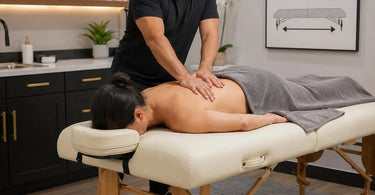
Boost sales effortlessly with happier therapists and clients, starting with a choice you make before the first client even walks in: the width of your massage table. I know, I know, it sounds about as exciting as watching paint dry, but trust me, this is the stuff that either makes your workday feel like a graceful ballet or a wrestling match with a very heavy, very uncooperative bear. As a therapist, your body is your most valuable tool, and just like a carpenter wouldn't use a sledgehammer to hang a picture frame, you shouldn't be using a table that fights against your natural mechanics. We're going to dive deep into why the number of inches under your clients isn't just about their comfort, but about the longevity of your own career and the quality of your pressure. Because let's be real, nobody wants to be the therapist who has to retire early because their shoulders are screaming louder than their clients after a deep tissue session. We're going to get into the nitty-gritty of stance, leverage, and how to stop reaching for the stars (or, you know, the client's lower back) every single day.
It's easy to get swept up in the allure of a massive, super-wide table. It looks luxurious, it looks stable, and you might think, “My clients will feel so secure!” And they might. But at what cost? At the cost of your spine, that's what. When we talk about proper body mechanics, the width of your table is right up there with height in terms of importance . Think of it like this: every extra inch of width is an extra inch you have to lean forward, reach out, and compromise your center of gravity. Over a full day of massages, those inches add up to a mountain of stress on your lower back, shoulders, and wrists. It's a silent killer of careers. You might not feel it on a Monday, but come Friday, you'll be feeling every single one of those extra inches. The goal is to get your core as close to the client as possible, allowing you to use your body weight for leverage rather than just muscle strength. A table that is too wide physically prevents you from doing this, forcing you to work harder, not smarter . So, while you're focusing on giving the best massage possible, the width of your table is the unsung hero or the villain of your story.
The Great Width Debate: How Wide is Too Wide?
So, what are we actually talking about here? Table widths generally range from 24 to 36 inches, but the most common, and the sweet spot for many, is in the 28- to 32-inch range . The industry standard is often cited as 30 inches, and it's a popular choice because it provides a decent balance between client space and therapist reach . But the “standard” doesn't mean it's the “best” for you, your body, or your specific clientele. A 28-inch table is often a godsend for mobile therapists or practitioners with a smaller frame. It's lighter, easier to carry, and—crucially—easier to reach across . On the other hand, a 32-inch table can be a fantastic choice for a fixed, stationary setup, especially if you regularly treat larger-bodied clients. It offers them a spacious, comfortable experience, but it demands more from you. The physics are simple: the wider the table, the more you have to lean in to reach the midline, putting strain on your shoulders and lower back . It's a classic trade-off between client comfort and therapist ergonomics. For most therapists, a table that's too wide is far more detrimental than one that's slightly narrow. A narrower table forces you to stand closer, which is exactly where you want to be for efficient, powerful work .
Your Stance, Your Leverage, and The Reach of Doom
Let's break down exactly how width messes with your mechanics. First, your stance. When you're working on a client, you want to be in a lunge or a horse stance, with your feet planted and your body weight over your center of gravity. A narrow table allows you to stand close enough that your knees are almost brushing the table's edge. This position lets you drop your weight directly through your forearms and hands, generating deep pressure with minimal muscular effort. Now, picture a wide table. You're forced to stand back, arms extended like a zombie reaching for a brain. Your leverage is gone. Instead of using your body weight, you're relying on your deltoids and erector spinae to generate pressure . This is a recipe for disaster, leading to shoulder impingement, chronic back pain, and a generally miserable day. The other issue is what I call the “Reach of Doom.” This is when you have to stretch across the table to work on the client's opposite side. This overreaching not only strains your shoulders but also puts you in a position where you have zero control over your pressure. It's a one-way ticket to applying too much or too little pressure, and neither is good for you or your client .
Enter the Scoop: A Design That Actually Gets It
Now, before you swear off ever buying a table wider than a yoga mat, let's talk about a clever design feature: the scoop. Some manufacturers have created tables with a cut-out or a “scoop” in the middle section of the table . The idea is brilliant: the table is wider at the top for the client's shoulders, ensuring they feel secure and have room to rest their arms. However, the table narrows around the low back and pelvis area. This is the zone where you, as the therapist, often need to apply the deepest, most precise work. This scoop design allows you to step in closer to the client's center, giving you ideal biomechanical advantages for working on the low back and hips without sacrificing overall client comfort . It's the best of both worlds, literally shaping the table to accommodate both the client's and the therapist's needs. If you're a therapist who does a lot of deep tissue or sports massage, a scooped table might just be your new best friend. It acknowledges that a client's shoulders and a therapist's stance don't have to be at war with each other.
Accessorize Your Way to Perfect Positioning
Maybe you already have a table, and it's a little too wide for your liking. Before you go on a shopping spree for a replacement, consider some accessories that can help. One of the simplest solutions is a massage bolster. Placing a bolster or rolled towel under the client's ankles or knees can change their position on the table, often allowing you to stand closer to their side without overreaching. Another fantastic, and often overlooked, feature is the face cradle. Many tables have multiple face cradle attachment points. By moving the cradle off-center, you can position the client closer to the edge of the table, especially when they are prone . This is a game-changer for neck and upper back work, as it allows you to stand directly in front of the client's head without having to lean over the table. It's a small adjustment that can make a world of difference to your posture. And remember, the goal is always to find a way to keep your body in a neutral, aligned position. If your equipment is fighting you, find a workaround with accessories until you can upgrade to a table that truly fits your body.
The Height Connection: A Quick PSA
Since we're on the topic of therapist mechanics, I'd be remiss if I didn't mention height. Width and height work together. You can have the narrowest table in the world, but if it's set too high, you're still going to be in trouble . A general rule of thumb for deep work is that the table should be low enough so the top is below the bottom of your knee joint. This allows you to sink your weight into the client. Conversely, if you're doing lighter, more precision-based work, you might want a slightly higher table. When buying a new table, especially a stationary one, investing in a chiropractic or electric lift table can be a game-changer. Being able to adjust the height for each client and each service will significantly reduce the wear and tear on your body . Remember, you and your client are both unique, and your equipment should be just as adaptable.
The Right Table: An Investment in Your Career
Choosing the right Top Quality Massage Tables Chairs for Relaxation & Wellness isn't just about spending money; it's an investment in your career. The average massage therapist's career is often cut short by burnout and injury, and so much of that can be prevented by a simple change in equipment . Think about the sheer number of hours you spend leaning over a table each week. Those hours add up. A table that is a poor fit for your body mechanics is a small, consistent stressor that, over time, can lead to major injuries. On the flip side, a table that allows you to work with proper posture and leverage will not only make you a more effective therapist but will also keep you in the game longer. You'll feel better at the end of the day, have more energy for your personal life, and maintain the strength and dexterity you need to provide outstanding care to every client. It's a no-brainer. Look at your table as a partner in your work, not just a piece of furniture. If your partner is making your life harder, it's time for a change.
Your Next Steps: Finding the Perfect Fit
So, how do you figure out what width is right for you? Try this: stand in your treatment position and measure the distance from your chest to the edge of a table. Now, imagine reaching the center. Does it feel like a comfortable stretch or an awkward lunge? Better yet, if you have a colleague or friend with a different width table, try it out for a few sessions. There's no substitute for real-world experience. When you're ready to shop, remember to consider your primary clientele. Are they mostly average-sized adults, or do you specialize in sports massage or prenatal work where clients might appreciate a bit more space? Also, consider your practice setting. Are you a mobile therapist who needs something lightweight? The Portable Massage Tables category offers excellent options for therapists on the go, usually with more manageable widths and weights. For stationary clinics, a wider, heavier-duty model might be perfect. At Pure Spa Direct, we have a wide range of options from top-tier brands like Earthlite, Oakworks, and Living Earth Crafts, each with various widths, features, and padding options to suit every therapist's needs.
Invest in Your Health, Invest in Your Business
Ultimately, paying attention to your table width is a sign of professionalism. It shows that you care about your own well-being, which directly translates to the quality of care you provide. It's a key component of a sustainable, successful practice. If you're constantly in pain, your energy levels dip, your attitude suffers, and your clients can feel it. By taking proactive steps to protect your body, you're not just saving yourself from injury; you're investing in your ability to serve more clients, make more money, and actually enjoy your job. So, the next time you're shopping for supplies, don't just grab the biggest, baddest table on the floor. Think about your body. Think about your stance. Think about your leverage. And remember, a happy therapist is a successful therapist. As you're setting up your treatment room, don't forget the finishing touches, from high-quality High-Quality Towels and Hygienic Table Paper to the perfect Massage Oils, Lotions, and Creams to complete the professional experience. Your clients (and your chiropractor) will thank you. Now go forth, choose wisely, and work smarter, not harder, because you've got a long, successful career ahead of you, and you're going to need your body for all of it.
)