
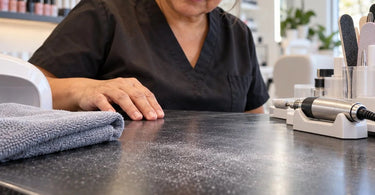
Because details matter... especially when you just spent five glorious minutes making your nail station sparkle, only to discover a fresh layer of mysterious white powder decorating everything before your next client even sits down. If you work with nail files and buffers, acrylic enhancements, or gel products, you already know that nail dust has a remarkable talent for appearing exactly where you do not want it. It settles on freshly wiped tabletops, sneaks onto polish bottles, coats your favorite lamp, and somehow finds its way into places that were nowhere near the filing action. The frustrating part is that your cleaning routine may be perfectly reasonable, yet the dust keeps coming back like an uninvited guest who refuses to take the hint.
There is a practical explanation for this annoying phenomenon. Nail dust behaves differently depending on particle size, airflow, surface material, moisture, and the way it is generated. Understanding those factors can help professional nail technicians improve workstation cleaning, reduce unnecessary dust movement, and maintain a more comfortable environment throughout a busy appointment schedule.
Why Nail Dust Seems to Reappear Immediately After Cleaning
The simplest explanation is that nail dust does not necessarily disappear when you wipe a surface. Some particles settle quickly, while smaller particles can remain suspended in the air and gradually land after the cleaning is finished. Other particles may already be sitting on nearby shelves, lamps, equipment, and product containers, ready to become airborne again when something moves.
That freshly cleaned manicure table may genuinely be clean when you finish wiping it. Unfortunately, the surrounding air may still contain particles from the last filing session. As those particles settle, the tabletop starts looking dusty again.
Think of it as cleaning your kitchen counter while someone is still shaking flour into the air. The counter is not doing anything wrong. It is simply located directly beneath a tiny indoor snowstorm.
Professional nail services create different amounts and types of dust. Natural nail filing, acrylic enhancement removal, hard gel refining, and electric file work can all produce airborne or surface-level particles. The amount generated depends on the material, technique, equipment, and duration of the service.
Fine Nail Dust Is Small Enough to Travel Beyond the Manicure Table
One reason nail dust is so persistent is that filing produces particles of different sizes. Larger fragments often fall near the filing area. Smaller particles can travel farther with moving air, and some may remain airborne long enough to settle well after the filing stops.
These particles can collect on manicure lamps, drawer handles, decorative displays, containers, and nearby furniture. Even surfaces several feet from the filing area may accumulate residue over the course of a busy day.
This is especially noticeable in salons with multiple technicians working simultaneously. Each workstation creates its own opportunities for dust generation, while normal movement throughout the room can redistribute particles.
That is why cleaning only the immediate filing area may not solve the entire problem. Effective dust management involves controlling particles where they are created, maintaining appropriate ventilation, and cleaning the surrounding environment.
Static Electricity Can Make Nail Dust Stick to Certain Surfaces
Have you noticed that some surfaces seem to attract nail dust more aggressively than others? Plastic equipment housings, acrylic organizers, synthetic materials, and certain polished surfaces may accumulate dust partly because of static electricity.
Static charges can develop when materials rub against one another. Depending on the surface and environmental conditions, those charges may help attract or retain fine particles.
This does not mean every dusty surface is electrically charged. Ordinary particle settling, surface texture, and leftover residue also play important roles. However, static can contribute to the frustrating experience of wiping down a surface and seeing fine powder cling to it again.
Dry indoor conditions may make static-related attraction more noticeable. Nail salons often contain numerous plastic organizers, tool housings, and other nonmetallic surfaces that can collect dust.
For professional nail technicians, the practical lesson is simple: a smooth-looking surface is not necessarily a dust-resistant surface. Choosing easy-to-clean workstation accessories and controlling airborne dust are generally more useful than endlessly polishing the same tabletop.
Why Freshly Cleaned Surfaces Sometimes Hold Dust More Easily
Here is another possible culprit: cleaning residue.
Some cleaning products can leave a film if they are used incorrectly, mixed improperly, or not removed according to their instructions. Product residue may make a surface feel slightly tacky, allowing particles to adhere more readily.
Even a surface that looks completely dry can occasionally retain residue from certain cleaning formulations.
Using appropriate professional cleaners and disinfectants is important, but more product does not automatically mean better cleaning.
Follow the manufacturer's instructions for dilution, application, required contact time, rinsing when specified, and drying. Cleaning and disinfecting are separate steps, and disinfectants must remain on surfaces for their labeled contact time to work as intended.
Avoid using furniture polish or unapproved anti-static coatings on nail work surfaces. Some products may leave unwanted residue or interfere with materials used during professional services.
The goal is a properly cleaned surface, not one that has been coated with enough product to qualify as a second manicure.
Airflow Can Carry Nail Dust Right Back to Your Clean Station
Salon airflow is another major factor in dust movement.
Air conditioning vents, portable fans, open doors, and people walking through the room can influence where particles travel. A stream of air moving across a filing station may carry dust toward nearby products and equipment.
Even seemingly helpful habits, such as using a fan to blow filing dust away from the tabletop, can create problems. The visible powder may disappear from the immediate work area, but that does not mean it has been safely removed from the salon.
It may simply have relocated to your neighboring technician's workstation. Congratulations, the dust has changed departments.
Instead of blowing particles away, focus on capturing them close to where filing occurs.
General room ventilation and properly designed local exhaust ventilation serve different purposes. General ventilation helps manage overall indoor air conditions, while local exhaust equipment is intended to capture contaminants near their source before they spread throughout the room.
For salons handling frequent acrylic, gel, and electric filing services, reviewing workstation ventilation can be particularly valuable. Equipment should be selected and maintained according to its intended function, and salon owners should verify applicable ventilation requirements in their jurisdiction.
Why a Nail Dust Collector Can Make Such a Difference
A professional nail dust collector can be a useful part of a dust-control strategy because it helps capture particles near the filing area.
Instead of allowing all the dust to spread across the tabletop, a properly positioned collection system draws air and particles toward its intake. The effectiveness depends on the equipment's airflow, filtration or exhaust design, positioning, and maintenance.
Not all dust collection systems perform equally, and a device marketed as a nail dust collector should not automatically be considered a substitute for required salon ventilation.
Consider these practical details when evaluating equipment:
- Capture location: The intake should be positioned to collect dust as close to the filing source as practical without interfering with the service.
- Airflow performance: The unit should provide sufficient airflow for its intended application.
- Filtration: Review the manufacturer's filter specifications and replacement requirements rather than assuming every filter captures the same particle sizes.
- Maintenance access: Filters and collection compartments should be accessible for safe cleaning and replacement.
- Workstation compatibility: The collector should fit the manicure table and allow comfortable positioning for the technician and client.
Technicians shopping for nail tables and manicure stations may also want to consider workstation designs that accommodate dust extraction equipment or built-in ventilation.
A thoughtfully arranged workstation can help make dust control part of the normal service process instead of another chore squeezed between appointments.
Your Electric Nail File Technique Also Influences Dust Movement
An electric nail file can make professional enhancement services more efficient, but the filing process still creates dust.
The amount and direction of that dust can vary based on the material being removed, the bit selected, the manufacturer's recommended operating settings, hand positioning, and the amount of product being removed.
Unnecessary filing may create additional debris without improving the finished result. Using appropriate professional techniques and removing only the material needed for the service can help limit excess dust generation.
Positioning the client's hand near an effective dust collection intake may also improve capture.
Technicians should receive suitable training before using electric filing equipment and follow manufacturer instructions for bits, speeds, and safe operation.
Remember that the objective is not simply to make dust less visible. It is to reduce unnecessary airborne exposure while performing the service correctly.
The Sneaky Places Nail Dust Hides Between Clients
Sometimes the dust on your freshly cleaned table is not new at all. It is old dust that has been disturbed from another location.
Common overlooked areas include manicure lamp bases, power cords, drawer tracks, bottle caps, tool organizers, chair adjustment mechanisms, and the undersides of tabletop equipment.
Dust can accumulate around the equipment stored on manicure stations, especially where surfaces have edges, grooves, or narrow spaces.
When a technician moves a lamp or slides an organizer across the desk, previously settled particles may be disturbed and redistributed.
A more complete workstation cleaning routine should therefore account for surrounding objects, not just the largest visible tabletop surface.
Keeping frequently used nail brushes and tools organized in suitable clean storage areas can also reduce unnecessary handling and contamination.
It is worth reviewing whether every decorative item and accessory truly needs to live on the working surface. The adorable miniature plant may be charming, but it does not need a permanent acrylic dust hairstyle.
Why Dry Dusting and Blowing Dust Around Can Make Matters Worse
One common cleaning mistake is attempting to remove fine nail dust using dry cloths, sweeping motions, compressed air, or vigorous brushing.
These methods may move particles from one area to another or send settled dust back into the air.
For suitable hard surfaces, use cleaning methods that capture and remove dust rather than redistribute it. Depending on the surface and the salon's procedures, this may include appropriately dampened disposable wipes or a vacuum designed for collecting fine particulate matter.
Do not use an ordinary household vacuum without verifying that its filtration and construction are appropriate for the material being collected.
Also avoid using the same cloth repeatedly across multiple stations without appropriate cleaning or replacement. A cloth carrying dust from one tabletop to another is not really cleaning. It is providing complimentary transportation.
Once visible debris has been removed, follow the required cleaning and disinfection procedure for reusable tools and applicable workstation surfaces. Follow product labels and state board requirements.
A Practical Between-Client Cleaning Routine for Busy Nail Salons
Between-client cleaning does not need to become a complicated production. It does, however, need to be consistent and appropriate for the services performed.
Step 1: Finish filing with dust capture operating. Keep the collection equipment positioned correctly during dust-generating work and operate it according to the manufacturer's instructions.
Step 2: Manage visible debris without blowing it around. Use an appropriate dust-removal method that collects particles rather than scattering them across nearby surfaces.
Step 3: Check the surrounding workstation. Pay attention to lamp bases, frequently handled equipment, bottle exteriors, and other areas where dust tends to accumulate.
Step 4: Clean and disinfect correctly. Remove soil and debris, then use an appropriate disinfectant on surfaces that require disinfection. Follow labeled directions, including any required wet contact time.
Step 5: Prepare fresh service supplies. Replace disposable items as required, process reusable implements according to applicable regulations, and organize supplies for the next appointment.
Step 6: Inspect dust collection equipment. Check for obvious buildup or airflow problems and follow the manufacturer's maintenance schedule. Filter replacement and deeper equipment cleaning may be performed at designated intervals rather than after every service.
Stocking suitable professional cotton, sponges, and wipes can help make routine cleaning easier to manage.
The objective is a repeatable system that protects service quality without forcing technicians to reinvent their cleaning process throughout the day.
Daily and Weekly Nail Station Maintenance Matters Too
Between-client cleaning addresses immediate service turnover, but some areas need additional attention during daily or scheduled maintenance.
At the end of the workday, inspect workstation storage areas, equipment exteriors, and other dust-prone locations. Review whether particles are collecting around air intakes, under furniture, or on shelves near active filing stations.
Dust collection systems should be maintained according to their specific instructions. A loaded filter, obstructed intake, or poorly maintained collection compartment can compromise the performance of some equipment.
Weekly or scheduled maintenance may include deeper cleaning of appropriate furniture surfaces, reorganizing supplies, and checking whether ventilation equipment is functioning as intended.
For high-volume salons, a written cleaning and equipment-maintenance checklist can improve consistency across multiple technicians.
It also helps remove the guesswork from determining who was supposed to clean the shared lamp, the storage cabinet, or that one mysterious shelf everyone politely ignores.
Can Nail Dust Be a Health Concern for Nail Technicians?
Yes. Nail dust deserves attention for reasons beyond the appearance of the workstation.
Depending on the service, filing dust may contain particles from natural nails, artificial nail materials, or product residues. Exposure to airborne particles can contribute to irritation or respiratory concerns, and workplace hazards vary according to the products and processes involved.
Professionals should review relevant product safety information, use appropriate source capture and ventilation, and follow workplace safety requirements.
Personal protective equipment may be appropriate based on a workplace hazard assessment. A properly selected filtering respirator may help address certain particulate exposures, but respiratory protection should not replace effective engineering controls. Employers should follow applicable respiratory protection requirements, including fit testing and training when required.
Remember that a workstation can look visually clean while fine airborne particles remain present. Appearance alone is not a reliable measure of air quality.
Professional protective gloves and masks should be selected based on the specific task and hazard, not simply their appearance or comfort.
How Manicure Station Organization Can Reduce Dust Problems
Organization may not stop dust from being generated, but it can make the cleaning process more efficient.
A crowded manicure table provides more surfaces where particles can collect. Every extra container, decorative object, exposed tool, and open supply tray adds another location that may require cleaning.
Consider organizing supplies according to how frequently they are needed. Keep essential items readily accessible while storing reserve inventory and infrequently used accessories away from active filing areas.
Closed storage can help protect suitable clean supplies from settling dust when used correctly. However, tools and products should never be returned to clean storage before they have received any required cleaning, disinfection, or preparation.
Choosing practical furniture and storage solutions from nail salon furniture essentials can help streamline workstation layouts.
A cleaner visual presentation also contributes to the professional atmosphere clients expect, especially when they can see their technician following a clear and consistent hygiene routine.
Frequently Asked Questions About Nail Dust on Clean Surfaces
Why does nail dust appear on my manicure table even when nobody is filing?
Previously airborne particles may still be settling, or existing dust may be disturbed by airflow and movement around the salon. Cleaning the tabletop does not immediately remove every particle from the surrounding environment.
Does static electricity attract nail dust?
It can. Certain materials may develop static charges that contribute to particle attraction. However, airflow, particle settling, surface texture, and cleaning residue may also explain why dust accumulates.
Will an air purifier eliminate nail dust?
An appropriately selected air cleaner may help reduce some airborne particles, but it should not be treated as a replacement for effective source capture, required ventilation, and routine cleaning. Performance depends on the equipment and its suitability for the space.
Should I use a fan to blow nail dust away while filing?
Blowing dust away from the work surface can spread it into the room. Capturing particles near the filing source is generally preferable to redistributing them.
Can cleaning products make nail dust stick?
Some cleaning residues may contribute to dust adhesion. Follow product instructions and avoid unnecessary buildup from improperly applied cleaning solutions.
How often should nail dust collector filters be changed?
Follow the specific manufacturer's recommendations. Replacement intervals depend on equipment design, filter type, service volume, and dust accumulation. Inspect equipment as directed and address reduced airflow promptly.
Is nail dust only a cosmetic cleanliness issue?
No. Airborne dust may also present occupational exposure concerns. Salon owners should address dust management as part of their broader ventilation, cleaning, training, and workplace safety procedures.
Keep Nail Dust Under Control Without Cleaning the Same Table All Day
Nail dust sticking to freshly cleaned surfaces is frustrating, but it is not necessarily a sign that your cleaning products are ineffective or that your technicians are doing something wrong. Fine particles, airflow, static electricity, cleaning residue, and hidden dust buildup can all contribute to the problem.
The most useful strategy is to prevent unnecessary dust from spreading in the first place. Effective workstation dust capture, proper ventilation, sensible filing practices, suitable cleaning methods, and consistent maintenance work together far better than simply wiping the same tabletop repeatedly.
Pure Spa Direct supports professional nail technicians and salon owners with access to a broad selection of professional nail care supplies, manicure furniture, nail dust collection equipment, and professional cleaning essentials from industry suppliers.
Explore the equipment and everyday supplies that fit your salon's workflow, service volume, and cleaning requirements. Because the best nail station is not just the one that looks spotless for thirty seconds. It is the one designed to make professional cleanliness easier to maintain through a full day of beautiful nail services.
