
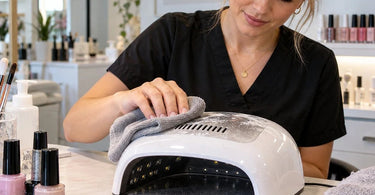
Better solutions for better outcomes... and sometimes those solutions start with figuring out why your nail lamps seem to attract dust like they have a secret side job as tiny vacuum cleaners. You wipe down your manicure station, organize your gel polish bottles, and make everything look beautifully professional, only to discover a fine layer of powder decorating your curing lamp before the day is over. If that sounds familiar, congratulations: you have experienced one of the most overlooked housekeeping challenges in a busy nail salon. Nail lamps collect dust faster than many technicians expect, and understanding why can help you protect your equipment, maintain a cleaner workspace, and keep your manicure services running smoothly.
That innocent-looking dust is not necessarily ordinary household dust. In professional nail environments, it can contain microscopic particles from filing, buffing, acrylic enhancements, gel products, and everyday salon activity. Combine those particles with a busy workstation and a lamp that gets handled throughout the day, and you have a surprisingly effective recipe for buildup.
Why Do Nail Lamps Collect So Much Dust?
The biggest reason is simple: nail lamps spend their working lives directly beside activities that generate fine airborne particles. Every time a technician files an enhancement, refines a nail shape, removes product with an e-file, or buffs a nail surface, tiny particles can enter the surrounding air. Some settle immediately, while others remain suspended long enough to travel across the manicure station.
Your curing lamp happens to be sitting right in the neighborhood. Unlike a bottle that gets returned to a drawer, the lamp often remains exposed for most of the workday. Its broad exterior, curved surfaces, openings, and underside provide plenty of opportunities for dust to settle.
Think of it as the salon equivalent of the one shelf in your house that somehow collects more dust than every other surface combined. You clean it, turn around, and apparently the dust has called a meeting.
The more filing and enhancement work performed at a station, the greater the opportunity for particles to accumulate on nearby equipment.
Fine Nail Dust Travels Farther Than It Looks
One of the most surprising things about nail dust is how easily fine particles move beyond the immediate filing area. Larger particles may fall onto the manicure table, but smaller airborne particles can circulate with movement and airflow before eventually settling.
This means dust generated during a service may land on a lamp even when filing takes place several inches away. Air conditioning, general room movement, and poorly positioned fans can influence where those particles travel.
Technicians working with Acrylic Nail Supplies, structured gel services, or frequent product removal may notice the problem particularly quickly because their services can involve substantial filing and refining.
Using professional Nail Files & Buffers is an essential part of nail preparation and finishing, but even excellent tools produce some dust when removing material. The objective is not to pretend dust can disappear entirely. It is to capture as much of it as practical and prevent unnecessary accumulation around the workstation.
The Hidden Role of Static Electricity
Static electricity can also contribute to the way dust clings to certain lamp surfaces. Depending on the materials used in a lamp housing, surrounding conditions, and friction from handling or cleaning, electrostatic attraction may make lightweight particles adhere more readily.
Plastic equipment housings can be especially noticeable in this respect. A surface that looks freshly wiped may develop a visible coating of fine particles as the workday progresses.
However, static electricity is only one possible contributing factor. Most dust accumulation around professional nail lamps can be explained by the amount of particulate matter produced nearby, how air moves around the station, and how often the equipment is exposed.
In other words, your lamp probably has not developed mysterious magnetic powers. It is simply living in a very dusty neighborhood.
Why Lamp Design Can Make Dust Harder to Remove
Not every nail lamp collects visible dust in exactly the same way. Equipment design influences where particles settle and how easy those areas are to clean.
A smooth exterior housing generally offers fewer places for debris to become trapped than a surface with numerous seams, textured sections, or recessed controls. Open-bottom designs can provide convenient hand placement but may also expose interior surfaces to particles already present on the workstation.
Other areas worth checking include:
- Ventilation openings: Dust may accumulate around air passages, particularly on models with active cooling fans.
- Buttons and display edges: Small gaps can collect fine particles that ordinary wiping may miss.
- Removable base plates: Dust can settle along attachment points and underneath accessible components.
- Interior reflective surfaces: Residue and powder can become more noticeable in areas that are difficult to reach.
- Power cord connections: Nearby crevices can trap debris, especially when cords remain on the manicure table.
These design features do not automatically make one lamp better or worse than another. They simply affect how much attention certain areas may require during routine maintenance.
Does Heat Make Nail Lamps Attract More Dust?
Professional UV and LED curing lamps generate some heat during operation, although the amount varies by equipment design and operating conditions. Heat can influence local air movement, and models equipped with cooling fans may move air through or around the housing.
That airflow can carry nearby particles toward vents and openings. However, warmth alone does not mean a curing lamp actively attracts dust, and a lamp without a fan should not be assumed to pull particles inside.
This distinction matters because technicians sometimes interpret visible dust as proof that their equipment is overheating or malfunctioning. Dust buildup by itself is not a reliable indication of either condition.
What deserves attention is whether buildup obstructs an intended airflow path, whether the lamp behaves abnormally, or whether the manufacturer identifies particular cleaning requirements. Unusual heat, odors, damaged wiring, or inconsistent operation should be addressed according to the equipment manufacturer's instructions.
Why Busy Gel Manicure Stations See the Problem So Quickly
Professional Gel Polish services often combine nail preparation, shaping, surface refinement, curing, and finishing at the same workstation.
That creates a natural overlap between dust-producing activities and equipment that needs to remain accessible throughout the appointment.
For example, a technician may begin with filing and cuticle preparation, apply a base coat, cure the nails, add color layers, and finish with a top coat. If the lamp stays on the table during preparation, it is exposed to whatever particles are created before the first curing cycle even begins.
Stations offering frequent enhancement maintenance or removal services may see even greater accumulation. Dust from previous appointments can also remain on surrounding surfaces if the workstation is not thoroughly cleaned between clients.
The important takeaway is that the lamp does not necessarily become dusty because it is being used to cure gel. It becomes dusty because curing takes place in an environment where other service steps generate airborne material.
Can Dust Affect Nail Lamp Performance?
A light coating of exterior dust does not automatically mean a nail lamp will perform poorly. However, neglected buildup can create maintenance concerns, especially when it accumulates in areas the manufacturer expects to remain unobstructed.
For lamps with ventilation openings, excessive dust may interfere with normal airflow. Debris on accessible interior surfaces may also make routine inspection and cleaning more difficult.
It is important not to assume that cleaning visible dust will correct improper gel curing. Reliable curing depends on the compatibility of the gel system and lamp, the required wavelength range, the lamp's actual output, product application thickness, exposure time, and manufacturer instructions.
A lamp can look spotless and still be unsuitable for a particular gel product. Likewise, visible dust on the exterior does not prove that a manicure has been inadequately cured.
If curing problems develop, review the gel and lamp manufacturers' instructions rather than simply increasing curing time or relying on how hard the coating feels. Improperly cured gel can leave reactive ingredients that increase the risk of skin sensitization.
The Smartest Way to Reduce Dust Is to Capture It at the Source
Cleaning your lamp more frequently is useful, but preventing dust from spreading in the first place offers a more effective long-term approach.
Professional nail dust collectors and suitable local exhaust ventilation can help capture particles close to the filing area before they spread across the workstation.
For salons providing acrylic enhancements, gel removal, or other filing-intensive services, dust-control equipment deserves serious consideration as part of the workstation setup.
Positioning matters. A collection system works best when used according to its manufacturer's guidance and arranged to capture dust near its point of generation. Filters and collection compartments also require regular maintenance to function as intended.
Remember that a tabletop dust collector does not automatically replace legally required salon ventilation. Local regulations may establish separate requirements for removing airborne contaminants, and filtration equipment should be selected with those obligations in mind.
A well-planned station can combine appropriate ventilation, effective dust capture, thoughtful equipment placement, and consistent cleaning practices.
How to Clean a Professional Nail Lamp Safely
The best cleaning method depends on the lamp's construction and manufacturer's instructions. Because curing lamps contain electrical components and specialized light sources, cleaning them requires more care than wiping down an ordinary countertop.
Start by turning the lamp off, unplugging it, and allowing it to cool as directed. Follow the manufacturer's approved cleaning procedure before applying any liquid or cleaning product.
For many models, an appropriate routine may include:
- Remove loose surface dust. Use a clean, soft, lint-free cloth or another manufacturer-approved method to gently lift particles from the exterior.
- Clean accessible surfaces. Follow the equipment instructions for wiping the housing, controls, and removable components.
- Inspect seams and openings. Look for visible accumulation without pushing dust deeper into the equipment.
- Address product residue. Remove gel smudges or other deposits only with products approved for that lamp's materials.
- Allow surfaces to dry. Make sure any permitted cleaning moisture has evaporated before reconnecting the equipment.
- Check operating condition. Inspect for visible damage and verify that the lamp functions normally before the next service.
Avoid spraying cleaning products directly into vents, controls, charging ports, or other electrical openings. Do not submerge the equipment, force cleaning tools into inaccessible areas, or disassemble components unless the manufacturer specifically permits it.
Compressed air should not be used automatically as a shortcut. It can disperse fine nail dust back into the surrounding air or push particles into parts of the equipment that are difficult to clean.
Also distinguish between cleaning and disinfecting. Removing powder and debris is a cleaning step; appropriate disinfection of required contact surfaces is a separate process governed by product instructions, equipment compatibility, and applicable salon rules.
Why the Right Cleaning Products Matter
It can be tempting to reach for the strongest cleaner available, especially when dust mixes with sticky product residue. Unfortunately, not every chemical is compatible with every nail lamp housing, display, reflective surface, or internal component.
Harsh solvents or unsuitable disinfectants may damage certain plastics, coatings, adhesives, or electrical areas. Even products widely used for manicures are not automatically appropriate for cleaning curing equipment.
Professional Cleaners & Disinfectants for Salons and Spas can support a comprehensive salon hygiene program, but always verify that the selected product is approved for the specific surface and intended use.
Keep suitable Professional Cotton, Sponges, and Wipes available for tasks where those supplies are appropriate. For the lamp itself, choose a lint-free material whenever recommended to avoid replacing one layer of dust with a festive new collection of fibers.
Rearranging Your Manicure Station Can Help
Sometimes the most useful dust-control improvement costs nothing more than a few minutes of thoughtful workstation organization.
Consider how dust travels during each service. Does the curing lamp sit immediately beside your filing area? Is an ordinary fan blowing dust toward the lamp? Do you place filing tools directly on top of or next to the equipment?
On appropriately sized Nail Tables and Manicure Stations, separating dusty preparation activities from clean application and curing areas may help minimize unnecessary contamination.
Where practical, keep the lamp outside the immediate filing zone until curing is required. Avoid positioning equipment in ways that interfere with a dust collector's intended airflow.
Organize your Nail Brushes & Tools so that used filing implements do not rest against freshly cleaned equipment. Store clean supplies away from active dust generation and keep product containers closed when not in use.
Small organizational changes repeated throughout the day can make a noticeable difference in how quickly work surfaces become dusty.
A Practical Nail Lamp Maintenance Schedule for Busy Salons
Rather than waiting until a curing lamp looks like it has been vacationing in a flour factory, establish a simple maintenance routine appropriate for the equipment and workload.
Between clients: Follow applicable cleaning and disinfection procedures for surfaces requiring attention between services. Remove visible filing dust and product debris from the workstation, including accessible lamp surfaces when permitted.
At the end of each day: With the equipment powered off and unplugged, inspect the housing, base, controls, and accessible openings. Perform manufacturer-approved cleaning and check for signs of excessive buildup.
Weekly or as directed: Review accessible components that may require more detailed maintenance. Check dust-collection equipment and filter maintenance schedules separately.
Periodically: Inspect cords, plugs, controls, and the overall condition of the lamp. Review any manufacturer maintenance or service requirements and assess whether the equipment is still suitable for the gel systems used in the salon.
These are practical planning intervals, not universal manufacturer requirements. Higher-volume stations may require more frequent cleaning, while individual equipment instructions may specify different procedures.
What to Look for When Shopping for a New Nail Lamp
If your existing equipment is difficult to maintain, cleaning accessibility is a worthwhile consideration when comparing replacement lamps.
Professional buyers should evaluate far more than appearance or advertised wattage. A lamp should be suitable for the intended gel systems, provide appropriate curing performance, and withstand the everyday demands of commercial use.
Useful considerations include:
- Gel-system compatibility: Confirm that the lamp is approved or recommended for the products being cured.
- Accessible design: Look for housing and base features that can be cleaned according to the manufacturer's instructions.
- Ventilation design: Identify any fan openings and understand their maintenance requirements.
- Interior access: Determine whether removable components make routine cleaning easier without compromising electrical safety.
- Durability: Choose equipment appropriate for repeated professional use and frequent handling.
- Service support: Consider warranty coverage, replacement components, and clear maintenance documentation.
Explore UV and LED Nail Lamps alongside other Professional Nail Care Collections to plan a workstation around your service menu instead of selecting equipment based on looks alone.
After all, a beautiful lamp is wonderful, but a beautiful lamp that is compatible with your products and practical to maintain is even better.
Is Dust on a Nail Lamp a Sign of a Dirty Salon?
Not necessarily. Some dust accumulation is expected in workplaces where filing, buffing, and enhancement removal occur regularly. The presence of fine particles does not automatically indicate poor housekeeping.
What matters is how the salon manages them. Effective source capture, appropriate ventilation, regular surface cleaning, equipment maintenance, and staff procedures all contribute to a better-controlled work environment.
Persistent heavy dust on equipment can be a useful signal to reevaluate the station layout or the effectiveness of existing collection methods. If dust visibly spreads across multiple work areas after every appointment, wiping down the lamp more often addresses only part of the problem.
Salon managers should also remember that visibly clean equipment is not the same as properly disinfected equipment or adequately controlled airborne exposure. Each requires its own procedures.
Common Nail Lamp Dust Mistakes Worth Avoiding
Even experienced technicians can develop habits that unintentionally increase buildup or complicate maintenance.
Leaving the lamp in the direct filing zone: This unnecessarily exposes the housing and interior openings to freshly generated particles.
Blowing dust off the table: Moving dust into the air merely gives it another opportunity to settle elsewhere.
Ignoring dust collector maintenance: Filters and collection components need attention according to their operating instructions.
Using aggressive cleaning chemicals: Products that are suitable for nail enhancements may be inappropriate for electronic equipment.
Assuming dust is harmless because it is fine: Some nail-service particles can be inhaled, making source capture and exposure control important beyond their housekeeping benefits.
Confusing clean equipment with properly cured gel: Lamp cleanliness supports maintenance, but appropriate curing still depends on the complete gel-and-lamp system.
Addressing these mistakes can make everyday cleaning easier while supporting a more organized service environment.
A Cleaner Lamp Starts With a Smarter Nail Station
Why nail lamps collect dust faster than you think comes down to a combination of fine airborne particles, constant exposure, workstation airflow, equipment design, and sometimes static attraction. The lamp is often simply the most visible place where the results of a busy manicure day appear.
For professional nail technicians and salon owners, the goal is not to eliminate every speck of dust from existence. That would be a remarkable superpower, although admittedly a very useful one during acrylic removal appointments.
The practical goal is to reduce unnecessary dust generation and spread, capture particles as close to their source as possible, maintain equipment according to manufacturer instructions, and create a cleaning routine that fits the salon's actual workload.
Pure Spa Direct helps spa and salon professionals source supplies and equipment for busy treatment environments. From Manicure Essentials and Nail Files & Buffers to Nail Salon Furniture and Nail Dust Collectors, selecting the right tools can support a more efficient professional workflow.
Give that hardworking nail lamp a little attention, review where your filing dust goes, and make maintenance part of the daily routine. Your equipment, your workstation, and the next client admiring that freshly finished gel manicure will all benefit from a cleaner, better-organized space.
