
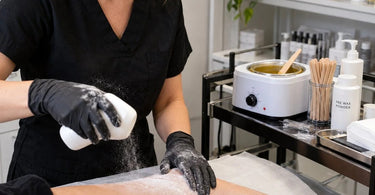
Quality matters in everything you do, especially when your client is lying on a treatment table expecting silky-smooth results and a relaxing experience. A little pre-wax powder can be a wonderful addition to your professional waxing routine, helping absorb excess moisture and prepare the skin for hair removal. But use a little too much, squeeze the container a little too enthusiastically, or let that powder drift across your workstation, and suddenly your beautifully organized waxing room looks like it hosted a tiny flour fight. Understanding why powder use before waxing can become messy fast helps professional estheticians maintain cleaner stations, improve application consistency, reduce unnecessary product waste, and keep appointments moving smoothly.
The good news? Powder itself is not the villain in this story. The real trouble usually comes from how much you apply, how you dispense it, and whether your waxing station is organized to keep loose product under control. With a few practical adjustments, you can enjoy the benefits of professional waxing powder without leaving a trail of white dust on every surface in sight.
Why Do Estheticians Use Powder Before Waxing?
Professional pre-wax powder is primarily used to absorb excess surface moisture and oil before wax application. This can be particularly helpful during treatments involving perspiration-prone areas, warmer treatment rooms, or clients whose skin becomes damp during their appointments.
For example, underarm waxing and bikini waxing can present moisture-related challenges even when the treatment area has been properly cleansed. A small amount of suitable powder may help create a more consistent surface for the chosen waxing technique.
Depending on the product formulation and waxing system, a light application may also help create a subtle buffer between the skin and the wax. However, the objective is never to coat the treatment area in a thick white layer. Too much powder can interfere with wax adhesion to the hair, potentially making removal less effective.
That is why experienced waxing professionals treat powder as a targeted preparation product rather than something that automatically needs to cover every inch of skin.
For a complete preparation routine, explore Pre & Post-Waxing Products alongside the appropriate cleansers, waxes, and application tools.
Why Powder Use Before Waxing Can Become Messy Fast
Powder is lightweight, easily dispersed, and capable of traveling farther than you might expect. Those characteristics make it convenient for a delicate dusting application, but they also explain why an otherwise tidy waxing station can become messy so quickly.
Several common habits contribute to the problem.
1. Dispensing Powder Directly From a Large Container
Picture this: You are preparing for a Brazilian wax, the client is positioned comfortably, and you reach for your powder bottle. You give it a quick shake, expecting a delicate dusting. Instead, an enthusiastic cloud escapes and settles across the treatment table, your gloves, and possibly your dignity.
Large openings, overfilled dispensers, and forceful squeezing can release more product than intended. Fine powder also becomes airborne easily when a container is shaken aggressively.
A more controlled approach is to dispense a small amount into a clean, suitable applicator or gloved hand before distributing it over the treatment area. Follow the manufacturer's instructions and your salon's hygiene procedures.
A dedicated powder dispenser may help regulate product delivery when it is designed for professional use and maintained appropriately.
The lesson is simple: You want a gentle dusting, not a weather event.
2. Applying More Powder Than the Skin Actually Needs
One of the biggest misconceptions about pre-wax powder is that more powder means better preparation. Unfortunately, the relationship is not that straightforward.
Professional waxing powder should generally be applied sparingly, with the exact technique determined by the manufacturer's directions and the condition of the treatment area.
Excessive powder can create several challenges:
- Visible residue can accumulate on the skin and surrounding surfaces.
- A thick layer may interfere with effective wax-to-hair adhesion.
- Loose powder can transfer onto gloves, applicators, towels, and table coverings.
- Additional cleanup may interrupt the service.
- Repeated overapplication increases product consumption and operating costs.
Instead of automatically covering the entire area, evaluate whether moisture control is needed. If the skin is already clean, dry, and properly prepared, additional powder may offer little benefit.
If you notice obvious white patches after application, you may have used more than necessary. Gently remove excess product using a hygienic technique before proceeding.
3. Powder Drifting Onto Waxing Equipment
Fine powder does not always stay where you put it. Once airborne, it can settle on nearby countertops, bottles, carts, and equipment.
This becomes particularly frustrating in busy waxing rooms where supplies are arranged close together.
Powder residue around Professional Wax Warmers for Salons & Spas may add unnecessary cleaning work. Open containers and exposed consumables should be protected from loose powder to avoid contamination.
The solution is thoughtful workstation organization. Keep powder application away from uncovered products and wax pots, maintain adequate space for dispensing, and close powder containers immediately after use.
Do not dispense loose powder over an open wax warmer. If powder contaminates wax or a product container, follow the applicable manufacturer's handling and disposal guidance rather than attempting to mix the material back into the product.
4. Powder Transferring Onto Towels and Treatment Tables
One moment your treatment table looks pristine. The next, a small powder trail appears on the linens, and your perfectly folded towel has acquired an unexpected powdered-donut aesthetic.
Because loose powder transfers readily between surfaces, even a modest amount can spread when the client changes position or the technician adjusts the treatment area.
Disposable protective coverings can make cleanup more manageable. Consider using Hygienic Table Paper for Waxing, Spa & Massage Tables to protect the treatment surface and support efficient turnover between appointments.
Keep clean High-Quality Towels stored away from the immediate dispensing area. Replace contaminated coverings as appropriate and follow your establishment's laundering and infection-control procedures.
A tidy treatment table helps create a professional impression, but it also makes practical sense. Less stray powder means fewer interruptions to address residue during service.
5. Using Powder Without Properly Cleansing the Skin First
Powder should not be used as a shortcut for appropriate skin preparation.
If lotion, deodorant, makeup, sunscreen, or other residue remains on the treatment area, adding powder can produce an uneven mixture rather than a properly prepared surface.
For professional waxing, begin by assessing the skin and cleansing the area according to your chosen waxing system's instructions. Allow the skin to dry completely before applying any optional powder.
When surface moisture is present, a small amount of compatible professional powder may be useful. However, it should complement the cleansing process, not replace it.
Consider selecting coordinated preparation products from ItalWax - Pre/Post or browsing pre-wax cleansers to support a more consistent routine.
How to Apply Pre-Wax Powder Without Making a Mess
The best way to keep powder under control is to make the application process intentional and repeatable. A simple professional protocol can help estheticians avoid unnecessary mess while maintaining consistent waxing preparation.
Step 1: Assess the treatment area. Inspect the skin for irritation, broken areas, recent treatments, or other reasons to postpone waxing. Review relevant client information and follow appropriate professional screening procedures.
Step 2: Cleanse the skin. Use a compatible pre-wax cleanser according to its directions. Remove surface residue and allow the treatment area to dry thoroughly.
Step 3: Determine whether powder is necessary. Evaluate moisture levels and the requirements of your waxing system. Not every treatment requires powder.
Step 4: Dispense a small amount. Rather than shaking powder directly across the treatment area, transfer a modest quantity onto a suitable clean applicator or gloved hand using a hygienic, single-client technique.
Step 5: Apply a light, controlled dusting. Distribute the product only where needed, avoiding unnecessary airborne clouds and visible buildup.
Step 6: Remove excess powder. Gently clear any obvious residue before applying wax, using a clean method that does not compromise skin preparation.
Step 7: Proceed with the appropriate waxing technique. Follow the wax manufacturer's instructions regarding skin preparation, application thickness, temperature, removal, and aftercare.
Step 8: Clean and reset the workstation. Remove disposable materials appropriately, clean affected surfaces, and prepare fresh supplies for the next appointment.
This approach helps transform powder application from an unpredictable step into a controlled part of professional service.
Does Too Much Powder Affect Wax Adhesion?
Yes. Excess powder can interfere with how effectively wax grips the hair, especially when it creates a noticeable layer between the wax and the treatment area.
Professional waxing depends on appropriate contact between the wax and the hair. Moisture, oil, and excessive preparation-product residue can all influence that contact.
With too much powder, you may notice that the wax does not grip hair as expected, more hair remains after removal, or additional passes appear necessary.
However, poor hair removal can also result from incorrect wax temperature, unsuitable hair length, application technique, or incompatible products. Do not automatically assume powder is responsible for every difficult waxing service.
Repeated waxing over the same area can increase skin irritation and is not an appropriate substitute for diagnosing the preparation problem. Follow the waxing system's instructions and prioritize skin safety.
Whether your team uses Professional Stripless Hard Wax or Soft Strip Wax for Effective Salon Hair Removal, maintaining the correct preparation routine is essential.
Hard Wax vs. Soft Wax: Does Powder Use Change?
Different waxing systems can have different skin-preparation requirements. This is an important reason not to adopt a universal powder rule across every product in your backbar.
Hard wax: Some professional hard wax protocols permit a light dusting of powder when moisture is present. Other systems recommend specific pre-wax oils or preparation products instead. Applying powder over an oil-based prep without manufacturer approval can create unwanted buildup.
Soft wax: Certain soft wax systems use a light powder application to address excess moisture and surface oil. Heavy powder application, however, can reduce effective contact with the hair.
Roll-on wax: With Efficient Roll-On Wax Cartridges for Quick Waxing, excessive loose powder may contribute to uneven application or transfer onto the cartridge exterior. Follow the cartridge manufacturer's preparation directions and keep equipment clean.
The guiding principle is compatibility. Choose preparation products based on the specific waxing formula, treatment area, and manufacturer's instructions rather than assuming every wax behaves the same way.
When Is Pre-Wax Powder Most Useful?
Although powder is not always necessary, there are situations where a carefully controlled application may help.
Underarm waxing: Perspiration can quickly affect the treatment area, particularly in warm rooms. Targeted powder use may help manage residual surface moisture after cleansing and drying.
Bikini waxing: Skin folds and naturally warmer areas may benefit from carefully applied moisture-control products when permitted by the waxing protocol. Avoid creating clouds of powder near the client's face or sensitive mucosal areas.
Back and chest waxing: Clients who perspire during larger-area treatments may need additional moisture management. Apply powder selectively rather than automatically covering the entire surface.
Warm, humid environments: Treatment-room conditions can influence skin moisture. Consistent temperature control, proper skin preparation, and selective powder use can help maintain predictable working conditions.
Clients with naturally oily skin: A compatible pre-wax preparation product may help address surface oil, although cleansing should remain the first step.
Facial waxing requires particular care. Avoid generating airborne powder around the eyes, nose, and mouth, and only use products specifically appropriate for the treatment area.
Choosing the Right Professional Pre-Wax Powder
Not every loose powder is designed for professional hair removal. Selecting a product intended for waxing can help your team establish a more predictable application process.
Look for clear manufacturer instructions, appropriate ingredients, manageable packaging, and compatibility with your chosen waxing system.
Pure Spa Direct carries professional beauty and waxing supplies from multiple manufacturers, allowing salons and estheticians to compare preparation products without assuming that one formula is ideal for every service.
For example, GiGi Pre Epilation Powder / 4.5 oz. is designed to help absorb skin oils and moisture before waxing, with instructions emphasizing a light, even application and removal of excess powder.
Another option is Amber Products Dusting Powder / 8 oz., a finely milled, unscented pre-wax preparation product intended to help manage oils and perspiration.
For treatment rooms with greater product consumption, Amber Products Dusting Powder / 16 oz. provides a larger package size for professional backbar use.
Evaluate ingredient information and suitability carefully, especially for clients with known sensitivities. A product being labeled for professional use does not eliminate the need to follow its warnings, directions, and hygiene requirements.
Simple Ways to Keep Your Waxing Station Cleaner
A clean workstation does not require a complicated system. Often, small changes to product placement and dispensing habits produce the biggest improvements.
Create a designated powder area. Store the powder container away from open wax pots, exposed applicators, and other products that should remain protected from contamination.
Use controlled dispensing. Avoid forceful squeezing, vigorous shaking, or pouring powder directly over a large treatment area.
Keep containers closed. Recap dispensers immediately after use to reduce accidental spills and protect the remaining product.
Prepare fresh supplies. Set out the applicators, gloves, strips, and other consumables needed for each client without exposing unnecessary inventory.
Protect the treatment table. Use appropriate disposable coverings and replace them between clients as required by your procedures.
Clean powder residue promptly. Use a compatible damp wiping method where appropriate instead of dry brushing or blowing powder into the air. Follow equipment care instructions and applicable salon sanitation requirements.
Train the entire team. Establish a standard preparation sequence so one esthetician is not applying a barely visible dusting while another is recreating a winter wonderland.
Keep suitable Professional Cleaners & Disinfectants for Salons and Spas and Professional Cotton, Sponges, and Wipes for Salons & Spas available for appropriate workstation maintenance.
Why Powder Control Matters for Salon Profitability
Product waste may seem minor when you look at one waxing appointment. Across a busy treatment schedule, however, inconsistent dispensing can increase supply consumption and cleanup time.
Imagine a salon performing 20 waxing services per day. If unnecessary powder spills or cleanup add just one minute to each appointment, that represents 20 minutes of avoidable work daily.
Over 25 operating days, the additional time reaches 500 minutes, or more than eight hours. That is a hypothetical example rather than a measured industry average, but it illustrates why small inefficiencies deserve attention.
Powder control can contribute to better cost management in several ways:
- Reducing unnecessary product consumption.
- Limiting avoidable workstation cleanup.
- Supporting more predictable appointment timing.
- Helping maintain consistent preparation standards across employees.
- Reducing the likelihood of application problems caused by excess product.
For salons purchasing Bulk Wax Deals and other professional backbar essentials, consistent product usage supports more accurate inventory planning.
It also helps salon owners identify when supplies need reordering without allowing excessive dispensing to distort normal consumption patterns.
Should You Replace Pre-Wax Powder With Pre-Wax Oil?
Not necessarily. Powder and pre-wax oil perform different functions, and their suitability depends on the waxing system.
Powder is generally used to absorb excess surface moisture and oil. Certain specialized pre-wax oils are designed to provide a very light protective layer when used with compatible hard wax formulations.
Neither product should be applied generously simply because a little is beneficial.
Some waxing manufacturers recommend specific oils rather than powder, while others incorporate powder into their professional preparation protocols. The two approaches are not automatically interchangeable.
Review the manufacturer's instructions before choosing between them. If a particular wax calls for a specific preparation product, following that protocol is generally preferable to improvising with whatever happens to be sitting on the shelf.
Explore Waxing Supplies for Professionals to compare the equipment and preparation products appropriate for your services.
Common Pre-Wax Powder Mistakes to Avoid
Even experienced waxing professionals can fall into habits that make an otherwise straightforward treatment unnecessarily messy.
Mistake: Applying powder to skin that has not been cleansed. Powder does not remove lotion, makeup, deodorant, or other residue. Proper cleansing must come first.
Mistake: Treating powder as mandatory for every client. Skin conditions vary, and some waxing systems do not require powder at all.
Mistake: Shaking the container directly over the treatment table. This can release more powder than intended and contaminate nearby surfaces.
Mistake: Using a thick coating to compensate for perspiration. Excess moisture should be addressed through appropriate cleansing, drying, and controlled preparation rather than repeated heavy dusting.
Mistake: Applying powder over incompatible products. Combining preparation formulas without manufacturer guidance may affect waxing performance.
Mistake: Sharing contaminated applicators. Powder containers and applicators must be handled to prevent cross-contamination between clients. Never return unused dispensed powder to its original container.
Mistake: Assuming all powders have the same ingredients. Professional formulations differ. Check ingredient lists, warnings, and intended uses, including whether a product contains talc or fragrance.
A written preparation checklist and regular staff training can help prevent these avoidable mistakes.
Building a More Efficient Professional Waxing Setup
Powder management works best as part of an organized service routine rather than an isolated technique.
Before each appointment, confirm that your wax is prepared according to manufacturer instructions, the station is properly cleaned, and necessary supplies are within easy reach.
Position your Professional Wax Spatulas and Applicators for Salons & Spas, Quality Wax Strips & Rolls for Effective Hair Removal, and Protective Gloves & Masks for Salon and Spa Professionals where they are accessible but protected from airborne residue.
Stock your treatment area with suitable Waxing Accessories & Removers for Professional Use to handle appropriate post-service cleanup without searching through cabinets while a client waits.
It is also helpful to keep frequently used products in consistent locations. Staff members should know exactly where the cleanser, powder, applicators, wax, and post-wax products belong.
Consistency becomes especially valuable in salons with multiple treatment rooms. A repeatable layout can make training easier and reduce the chance that individual technicians develop unnecessarily wasteful habits.
Frequently Asked Questions About Powder Before Waxing
How much powder should an esthetician use before waxing?
Use only the amount recommended by the powder and wax manufacturers. In many compatible protocols, a very light dusting is sufficient to address localized moisture. Visible excess should generally be removed before applying wax.
Can too much powder make waxing less effective?
Yes. A heavy layer may interfere with wax adhesion to the hair, resulting in less consistent removal. However, technique, temperature, and hair length should also be evaluated if results are poor.
Is powder necessary before every Brazilian wax?
No. The need depends on skin moisture, the waxing product, and the manufacturer's preparation instructions. Powder should never be applied automatically without assessing whether it is appropriate.
Can regular baby powder be used before waxing?
Do not assume ordinary baby powder is suitable for professional waxing. Formulations, ingredients, and intended uses vary. Choose a product specifically appropriate for the service and follow the relevant manufacturer's instructions.
How can estheticians keep powder off their wax warmers?
Keep powder containers away from uncovered equipment, dispense small quantities in a controlled location, and close containers promptly. Clean affected exterior surfaces according to equipment instructions.
Should powder go on before or after pre-wax cleanser?
When powder is part of the approved waxing protocol, cleansing and thorough drying generally come first. Apply powder afterward only where needed and according to the manufacturer's directions.
Can pre-wax powder replace proper sanitation?
Absolutely not. Powder absorbs surface moisture but does not disinfect skin, sanitize equipment, or replace salon infection-control procedures.
The Bottom Line: Less Powder, More Control, Better Waxing
Pre-wax powder can be a useful professional preparation product, but successful application is all about restraint. A carefully measured dusting may help address excess moisture, while an oversized cloud can create cleanup work, waste supplies, and potentially interfere with wax performance.
The secret is not finding the biggest powder container or applying more product. It is understanding when powder is appropriate, dispensing it carefully, protecting your workstation, and following the preparation requirements of your chosen waxing system.
At Pure Spa Direct, we help beauty professionals source the supplies they need to build efficient, well-organized treatment rooms. As a professional distributor, we offer access to waxing products, preparation essentials, applicators, equipment, and salon supplies from established manufacturers.
Browse our Pre & Post-Waxing Products, explore Complete Waxing Kits for Salons & Spas, or discover additional options from brands such as GiGi and Amber Products.
Because a little powder should help you deliver a beautiful waxing service, not make your treatment room look like someone dropped a bag of flour on the way to a baking competition.
