
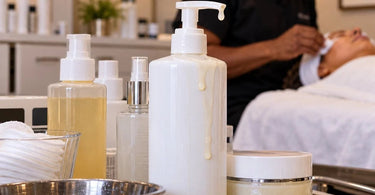
Elevate treatments with this winning product... or, more accurately, with a smarter way to keep your favorite professional skincare products from making a slippery escape down the sides of their bottles! If you have ever reached for a beautifully packaged serum, cleanser, or massage lotion only to discover a sticky little waterfall running from the dispenser to the countertop, welcome to one of the most surprisingly common annoyances in a busy facial room. Between back-to-back appointments, product layering, and keeping clients blissfully relaxed, the last thing an esthetician needs is a bottle that behaves like it has a personal vendetta against clean countertops. Fortunately, understanding why facial products drip, leak, and collect around bottle openings can help you reduce waste, improve hygiene, and create a more efficient treatment room without adding complicated steps to your day.
Those mysterious drips are rarely random. Product consistency, dispenser design, dispensing technique, bottle placement, temperature, and even the speed of your service routine can all contribute. The solution often involves small changes rather than replacing every skincare product in your treatment room. With thoughtfully chosen Bottles & Jars, better dispensing habits, and a little strategic organization, your facial station can look polished even during the busiest appointment schedule.
Why Do Facial Products Drip Down the Outside of Bottles?
The most common explanation is surprisingly simple: some product remains on the outside of the dispenser after each use. Instead of separating cleanly from the opening, that little bit of cleanser, lotion, gel, or serum clings to the nozzle, cap, or bottle neck. Gravity eventually takes over, drawing the residue down the container.
One tiny drip might not seem important. Multiply it by several applications per treatment, six or eight appointments, and multiple products sitting together on a facial cart, however, and the result becomes a remarkably sticky situation.
Several factors influence how often this happens:
- Product viscosity: Thick creams, slippery gels, lightweight oils, and fluid serums separate from dispenser openings differently.
- Nozzle design: Short spouts, wide openings, and certain pump shapes can leave residue near the bottle surface.
- Dispensing speed: Quick, forceful pumping can cause splashing or leave excess product hanging from the nozzle.
- Container position: Tilted bottles and crowded shelves make accidental drips more likely.
- Residual pressure: Some dispensing systems continue releasing a small amount of product after the user stops pressing.
- Handling: Product-covered gloves or fingers can transfer residue directly onto the bottle.
Identifying which factor is responsible makes it much easier to choose an effective solution. After all, replacing a perfectly good dispenser will not fix a habit of grabbing bottles with lotion-covered hands.
The Sneaky Problem of Product Clinging to Pump Nozzles
Professional facial rooms rely heavily on pump bottles because they offer convenient, controlled dispensing. But even a good pump can develop buildup around its opening.
During dispensing, product travels through the pump mechanism and exits through a relatively narrow opening. Depending on the formula and pump design, the final portion may remain attached to the nozzle instead of dropping into your palm or treatment bowl.
That leftover bead can gradually move toward the underside of the spout. If the nozzle is particularly short, the product may reach the pump collar and begin its slow journey down the bottle.
Thicker formulas can be especially deceptive. They may appear to stay perfectly in place immediately after dispensing, only to start moving several minutes later. Congratulations, your moisturizer has apparently decided to explore the neighborhood.
What helps? Look for dispenser designs with a spout that directs product away from the container. Position your palm or a clean dispensing vessel directly under the outlet, depress the pump smoothly, and allow the final portion to separate before moving the bottle.
Explore lotion pumps and pump bottles when evaluating replacement packaging. Remember that pumps should be compatible with the formula, container neck, and manufacturer's handling instructions.
Why Thick Creams and Gels Leave Messy Bottle Necks
Not all professional skincare products flow the same way. A lightweight toner may pour quickly, while a dense facial mask can stretch into a ribbon before finally breaking away from the container.
Thick creams often leave residue around the rim because they resist separating cleanly. Gel products may form strings between the dispenser opening and the receiving surface. Oils can spread into thin films that travel along smooth plastic or glass surfaces.
Formulation characteristics such as viscosity, surface tension, and flow behavior play a role. Some creams become easier to move when pressure or agitation is applied, while other formulas remain relatively thick throughout dispensing.
For busy estheticians, the practical takeaway is that packaging should suit the product rather than simply look attractive on a shelf.
A bottle that works beautifully for a watery toner may be frustrating when used for a dense cleansing cream. Likewise, a wide-mouth container may be convenient for certain products but inappropriate for others when hygiene or manufacturer packaging requirements are considered.
When purchasing professional Advanced Facial Treatment Products for Salons & Spas, pay attention to the original dispenser style and any instructions about product handling, storage, and application.
Overfilled Bottles Can Turn Small Drips Into Bigger Messes
Overfilling is another common reason product ends up around caps and bottle necks. When a container lacks sufficient headspace, inserting a pump assembly or closing a cap may displace product and force it toward the opening.
Temperature changes can also affect the contents and the air inside a container. In certain packaging systems, pressure changes or product expansion may encourage leakage, especially if the closure is loose or the seal is compromised.
The temptation to squeeze every last ounce into a smaller dispensing bottle is understandable. Professional skincare products are not inexpensive, and wasting inventory is about as appealing as discovering your last clean towel was used five minutes ago.
However, overfilling can create unnecessary cleanup and increase the possibility of product contacting surfaces that are difficult to keep clean.
Use manufacturer-approved fill levels when available. Do not transfer products into alternate containers unless the product manufacturer permits that practice and suitable, compatible packaging and labeling procedures are in place. Never assume that an attractive refillable bottle is automatically appropriate for every professional skincare formula.
Busy Hands Are Sometimes the Real Culprit
Here is a familiar facial-room scenario: You dispense a cleansing cream, begin working it across the client's skin, reach for another product, and notice that your fingertips are still coated with cleanser.
Without thinking, you pick up the next bottle. A little residue transfers onto the cap. Later, another product joins the party. Before long, the container is wearing a skincare cocktail nobody ordered.
Repeated handling with product-covered hands can make it appear that a bottle is leaking when the pump itself is functioning perfectly.
Develop a simple dispensing sequence that minimizes unnecessary bottle handling during active treatment steps. Set up appropriate products and clean dispensing vessels before beginning the service. Follow hand hygiene and glove-use protocols applicable to your treatments, and avoid touching dispensing openings with fingers, gloves, applicators, or used materials.
Convenient supplies such as Professional Cotton, Sponges, and Wipes for Salons & Spas can support an organized treatment station. Use suitable cleaning materials and procedures for packaging exteriors without introducing moisture or contaminants into the product itself.
Could Room Temperature Be Making Your Products Drip?
Temperature can influence how easily some skincare products flow. Certain oils, gels, and emulsions become less viscous as temperatures rise, making them more likely to move along a dispenser or container surface after application.
Facial rooms often contain equipment that produces localized warmth. Towel cabinets, warmers, steamers, and lighting can affect nearby surfaces, although the actual temperature impact depends on equipment design, distance, ventilation, and operating conditions.
A lotion bottle sitting next to a heat-producing device may behave differently than the same formula stored in a cooler, temperature-controlled cabinet.
That does not mean your Facial Steamers are secretly plotting against your skincare inventory. It means your setup should respect both product storage requirements and equipment safety clearances.
Keep professional skincare products away from unnecessary heat exposure and follow manufacturer-specified storage temperatures. Avoid storing bottles on or directly beside heated equipment unless the arrangement is expressly permitted. Do not warm products simply to make them dispense more easily unless their instructions support doing so.
How Bottle Placement Creates Unexpected Drips
Even the most carefully selected dispenser can become messy when it is stored awkwardly.
Crowded shelves, tilted carts, unstable trays, and bottles pressed tightly together can contribute to leakage or accidental product transfer. A nozzle resting against another container may deposit residue every time the pump is used. A poorly tightened closure can leak when a bottle is moved or knocked sideways.
Organize frequently used products so they remain upright, stable, and easy to reach. Leave enough space around each dispenser to operate it without bumping neighboring containers.
Position dispensers so their outlets extend over a clean dispensing area rather than pointing toward adjacent bottles, linens, or treatment equipment.
Choosing appropriately sized work surfaces and organizing tools from Spa Essentials for Professionals can make this arrangement easier to maintain.
Remember that an elegant facial room should be functional, not just photogenic. If an esthetician needs three hands and an advanced degree in countertop Tetris to access a serum, the layout probably needs improvement.
How to Tell Whether the Pump Is Actually Leaking
Before replacing the container, determine where the unwanted product is coming from. A simple inspection can separate a dispensing problem from an equipment defect.
Residue at the nozzle tip: This often indicates incomplete product separation after pumping. Evaluate dispensing technique and nozzle geometry.
Product around the pump collar: Check whether the closure is properly seated and whether the pump or neck components are cracked, damaged, or incompatible. Do not overtighten beyond the manufacturer's instructions.
Product appearing after the bottle sits unused: Look for damaged seals, changes in temperature, pressure-related behavior, or a malfunctioning dispenser.
Sticky fingerprints on multiple bottles: Handling and product transfer may be the primary problem.
Residue only when the bottle is tipped: Inspect the closure and determine whether that container is designed to be transported or stored in that position.
If a pump is cracked, continually leaks at the seal, or fails to dispense properly, remove the affected container from routine service until it can be assessed. Contact the product or packaging supplier when appropriate. Do not improvise repairs using adhesives or unrelated components that might contact the formula.
The Hygiene Issue Nobody Should Ignore
A drip on the outside of a bottle may look like a minor housekeeping inconvenience, but persistent product residue deserves attention in a professional treatment environment.
Sticky bottle exteriors can collect dust, lint, and material from repeated handling. Residue around dispensing openings can also make surfaces harder to clean properly.
Importantly, an exterior drip does not automatically mean the product inside the bottle is contaminated. However, damaged packaging, repeated contact with an opening, improper refilling, and poor handling practices can create opportunities for contamination.
Professional product handling should prioritize preventing contamination rather than simply making the outside of the container look shiny.
Follow manufacturer instructions for cleaning product containers and use suitable products from Professional Cleaners & Disinfectants for Salons and Spas on compatible treatment-room surfaces according to their labels. Cleaning a bottle exterior and disinfecting a treatment surface are not interchangeable procedures.
Do not spray cleaning chemicals directly into dispensing openings. Never return dispensed or spilled product to its original container, and never dilute a cosmetic with water to make it pump more easily unless the manufacturer specifically instructs you to do so.
Any product with suspicious odor, discoloration, unexpected texture changes, or questionable container integrity should be set aside and evaluated according to the manufacturer's guidance.
Choosing Better Dispensing Supplies for Professional Facial Rooms
If dripping is a recurring issue across several services, evaluating your dispensing supplies may offer a practical improvement.
Pure Spa Direct carries a variety of professional spa supplies, including Bottles & Jars for different storage and dispensing needs. As a distributor of professional products, Pure Spa Direct helps spa businesses find supplies suited to their workflows rather than manufacturing every product it offers.
When comparing packaging options, consider the following characteristics.
Longer dispensing spouts: A suitably designed spout can direct product farther from the pump body and reduce contact with the bottle exterior.
Controlled dispensing: Pumps that dispense predictable amounts can help estheticians avoid unnecessary product buildup and oversized portions.
Closure compatibility: The bottle neck, pump, gasket, and closure must work together correctly to minimize leakage.
Formula compatibility: Packaging materials and dispensing mechanisms should be suitable for the actual skincare product, including its viscosity and chemical characteristics.
Easy-to-maintain exteriors: Simple container shapes can make routine exterior cleaning less frustrating.
Appropriate capacity: A manageable bottle size can improve handling without encouraging improper refilling or storage.
For certain formulas, airless pump bottles may be worth investigating because their dispensing systems can reduce product exposure to ambient air. However, not every airless dispenser works with every formula, and no packaging design eliminates the need for proper hygiene.
Products should remain in their original packaging unless the manufacturer authorizes transfer. If an alternate container is approved, follow the required preparation, identification, batch tracking, expiration, and cleaning procedures.
Dispense Into a Bowl Instead of Fighting the Bottle
Sometimes the easiest solution is to change where the product lands.
For formulas that are intended to be portioned before application, a clean treatment bowl can provide a stable receiving surface. Instead of pumping a cream directly into an already slippery palm, the esthetician can dispense an appropriate amount into a designated vessel.
Professional Mixing Bowls and Applicators & Spatulas are useful categories to explore for treatment preparation.
Keep the dispenser outlet from touching the bowl or its contents. Use properly cleaned and disinfected reusable tools or appropriate single-use supplies according to their intended use and applicable sanitation requirements.
Dispense only what the treatment requires, discard unused portions that have been removed from the original container, and never scrape leftovers back into the bottle.
This approach can be particularly helpful during services involving multiple product stages, such as cleansing, exfoliation, masking, and facial massage.
How Much Money Can a Few Drips Really Waste?
The financial impact depends on product cost, the amount lost, and how frequently waste occurs. A small drip from an inexpensive cleanser may not have a noticeable effect on your purchasing budget. The same repeated loss from a premium professional serum can become more meaningful.
Consider a simple hypothetical example. Suppose a treatment room loses an average of 0.5 milliliter of one product per service, completes eight services per day, and operates 22 days per month.
That equals 88 milliliters of lost product each month from that single item.
If the professional product costs $2 per milliliter, the theoretical monthly waste would be $176. This is an illustration, not a typical industry waste rate. Actual losses may be dramatically lower or higher depending on the product and workflow.
The larger lesson is that small operational inefficiencies deserve attention when they occur repeatedly.
Product waste can also create extra cleaning work, interfere with inventory estimates, and make it harder to maintain an organized workspace.
Tracking usage alongside purchasing from Premium Skincare Products for Spas and Salons can help managers identify whether particular formulas or dispensers are creating avoidable expenses.
A Five-Minute Facial Room Drip Audit
You do not need an elaborate spreadsheet or a special committee dedicated to the mystery of the leaking lotion bottle. A short visual audit can reveal the biggest offenders.
- Inspect your most-used containers. Look for residue at nozzle tips, pump collars, lids, and bottle bases.
- Identify the location of each drip. Distinguish nozzle residue from closure leaks or product transferred by hands.
- Observe the dispensing technique. Notice whether the nozzle contacts a palm or bowl and whether excess product remains attached.
- Check storage conditions. Look for crowded spaces, unstable bottles, heat exposure, and damaged packaging.
- Review cleaning habits. Confirm that bottle exteriors receive appropriate attention during treatment-room turnover.
- Flag faulty dispensers. Separate consistently leaking or damaged packaging from normal residue that can be managed through better technique.
Repeat the inspection periodically, especially after introducing a new skincare line or changing the treatment-room layout.
When several estheticians share a workspace, establish consistent expectations so one person's beautifully organized station does not become another person's experimental lotion sculpture.
Build a Simple Between-Client Bottle Care Routine
Effective product management works best when it becomes part of the regular treatment-room reset.
Start by handling containers with clean hands as appropriate for the task. Examine frequently used pumps and caps for visible residue. Clean packaging exteriors in accordance with product and container instructions, using methods that avoid contaminating the dispensing opening.
Check that lids and closures are secure, bottles are upright, and no product is pooling on the work surface. Clean or disinfect countertops and reusable equipment as required for the treatment performed, following applicable regulations and product label directions.
Restock High-Quality Towels, appropriate disposable supplies, and other treatment essentials before the next client arrives.
This routine should complement, not replace, the sanitation procedures required for your facility. Exterior bottle cleanup alone is not a substitute for proper hand hygiene, instrument reprocessing, or treatment-surface disinfection.
Keep the process practical. The goal is to eliminate recurring messes without turning every facial-room reset into a full-scale cleaning marathon.
Common Mistakes That Make Dripping Worse
Some seemingly helpful shortcuts can create bigger problems than the original drip.
Wiping the nozzle with a used treatment towel: This can transfer material from the towel to the dispensing opening. Use only manufacturer-appropriate methods and clean materials.
Adding water to thick products: Dilution can alter the formula, compromise preservation, and change product performance. Never improvise this adjustment.
Using random replacement pumps: A pump may fit the bottle neck yet still have unsuitable seals, components, or dispensing characteristics.
Leaving product-coated caps open: Open containers can expose contents to unnecessary environmental contact.
Transferring formulas into unlabeled decorative bottles: Attractive packaging is not worth losing product identity, usage directions, traceability, or required safety information.
Assuming every drip means the formula is defective: The issue may arise from normal flow behavior, handling, dispenser compatibility, or container positioning.
Ignoring persistent leakage: Repeated leaking around a closure may indicate damage that requires supplier guidance or product replacement.
The best solution is one that respects the product's original formulation and the professional standards of your treatment environment.
Frequently Asked Questions About Dripping Facial Product Bottles
Why Does Lotion Keep Coming Out After I Stop Pumping?
Some pump mechanisms retain product near the outlet or continue releasing a small amount as pressure equalizes. Viscous formulas may also stretch and separate slowly. If excessive dispensing persists, check whether the pump is functioning correctly and compatible with the formula.
Why Does Facial Oil Run Down the Bottle Even With the Cap Closed?
Residual oil on the rim, cap threads, or bottle surface may continue spreading after the container is closed. A damaged seal or loose closure can also contribute. Clean the exterior appropriately and inspect the packaging for defects.
Are Airless Pumps Better for Professional Serums?
Airless systems can offer advantages for compatible products by limiting air exposure and supporting controlled dispensing. Their performance depends on the design and formula, however, so they should not be treated as universally leakproof or contamination-proof.
Can I Refill My Facial Cleanser Bottle From a Larger Container?
Only when the product manufacturer permits refilling and provides or supports appropriate procedures. Container compatibility, cleaning, labeling, product traceability, and preservation all matter. Pouring fresh product over old residue or using an inadequately prepared bottle can create avoidable contamination risks.
How Often Should I Clean the Outside of Facial Product Bottles?
Address visible residue promptly and incorporate suitable exterior cleaning into regular treatment-room maintenance. Follow manufacturer guidance, applicable sanitation requirements, and your facility's written procedures. High-touch packaging may need more frequent attention.
Does Product Dripping Mean the Skincare Formula Has Gone Bad?
Not necessarily. Dripping can result from product flow characteristics, packaging design, or handling. However, unexpected changes in texture, odor, appearance, or container integrity warrant further evaluation. If product quality is uncertain, stop using it until the manufacturer or supplier provides guidance.
Make Every Drop Work Harder in Your Facial Room
Professional facial treatments depend on precision, efficiency, and an environment where clients can relax without seeing the behind-the-scenes scramble. Keeping skincare containers clean and properly organized is a small but worthwhile part of delivering that experience.
Most exterior bottle drips can be investigated by examining the dispenser, product consistency, handling technique, storage conditions, and condition of the closure. Some problems disappear with a better dispensing habit. Others require a suitable replacement component, different approved packaging, or a conversation with the supplier.
Pure Spa Direct offers professional treatment-room supplies, from Bottles & Jars and Mixing Bowls to Spa Tools & Implements for Professionals, helping busy spas and salons source practical solutions for daily services.
Give your most frequently used bottles a closer look, improve the dispensing setup where needed, and establish a quick routine for keeping packaging exteriors tidy. Your products belong in the treatment, not slowly decorating the side of the bottle. And your facial room deserves better than an accidental moisturizer waterfall.
