
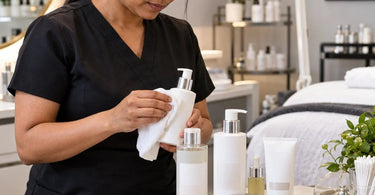
Success is built step by step... and sometimes one of those steps is wiping a fingerprint off a pump before you take the photo. For spa and salon professionals, product photography is often the first introduction a client has to a retail item, treatment add-on, customized product, or beautifully organized backbar setup. A clean bottle, jar, pump, cap, and label may sound like a tiny detail, but those tiny details become enormous when a camera turns them into a close-up image that clients can zoom in on while deciding whether something looks polished, professional, and worth purchasing.
The camera is wonderfully honest. Unfortunately, it is also the coworker who notices absolutely everything and tells everybody. Dried lotion around a pump collar, fingerprints on a glossy cap, a crooked label, adhesive residue, dust, product drips, and a slightly mangled corner that barely registers in person can suddenly become the star of the photo. And no, that is probably not the kind of influencer partnership anyone had in mind.
Why Product Photos Need Clean Pumps, Caps, and Labels
Professional beauty products are visual objects as much as functional ones. Whether you are photographing skincare, massage products, nail care, waxing supplies, hair products, or customized retail items, packaging communicates something before a client reads the description.
A clean pump suggests controlled dispensing and attentive handling. A spotless cap makes the package feel cared for. A straight, readable label gives the viewer immediate confidence about what they are seeing. Together, those elements create an organized presentation that lets the actual product remain the focus.
This matters especially for spas and salons because professionals frequently sell an experience alongside the item. Clients expect treatment rooms, retail displays, service stations, and the products used during services to reflect the same care they associate with the treatment itself. When your photography carries that same visual discipline, the images feel like a natural extension of the professional environment.
The Camera Magnifies What Your Eyes Ignore
Under normal room lighting, a tiny lotion smear might be practically invisible. Put the same bottle under a bright photography light and suddenly it has its own ZIP code.
High-resolution cameras exaggerate surface details. Glossy plastic can reveal fingerprints. Clear containers can show dust and tiny streaks. Metallic caps may reflect nearby clutter. Pumps often collect residue where the stem meets the collar, while jars can develop product buildup around the threads or rim.
Before photographing anything, inspect the package from several angles under good lighting. Rotate it slowly. Check the top, sides, bottom edge, pump nozzle, cap seam, and label corners. If you can see an imperfection with your naked eye, there is a good chance the camera will see it more clearly.
Start With the Pump
Pumps deserve special attention because they are frequently photographed from slightly above or at an angle that exposes the entire dispensing mechanism. The nozzle should look clean, dry, and free of old product.
Inspect the base of the pump as well. Creams, lotions, gels, and oils can migrate around the collar during repeated use. That little ring of residue may be harmless during a hectic treatment day, but it can look surprisingly messy in a product photo.
If you routinely dispense professional formulations into secondary containers, having dedicated photography containers can simplify the process. Explore Bottles & Jars when you need clean containers, dispensers, pumps, jars, or packaging for professional spa and salon organization.
A dedicated photo container also avoids the classic situation where somebody says, "Grab the nice bottle from treatment room two," only to discover that the "nice bottle" has survived approximately 400 facials and looks ready for retirement.
Caps Need Their Own Inspection
Caps can collect fingerprints, product residue, dust, and scratches, especially when they are handled throughout the day. Dark glossy caps and highly reflective finishes are particularly unforgiving.
Make sure the cap is seated correctly and aligned with the package. If the product has an overcap, check that it fits evenly rather than sitting slightly crooked. For jars, inspect the edge where the lid meets the container. A tiny amount of dried scrub, cream, mask, or oil around that seam can become obvious in close-up photography.
Use appropriate cleaning materials for the container material and formulation, and make sure everything is completely dry before photographing it. Moisture spots can be just as distracting as fingerprints.
Labels Should Look Like They Meant to Be There
A label communicates identity, product name, directions, organization, and professionalism. In photography, it should look deliberate rather than hurried.
Check that the label is straight, smooth, fully attached, and readable. Watch for bubbles, wrinkles, peeling edges, stains, oil marks, faded writing, or smeared ink. If the container is being used internally for a professional service, clear labeling also supports an orderly working environment.
This becomes particularly important when photographing multiple products together. A lineup of beautifully coordinated containers can look luxurious and organized, while one crooked label instantly pulls the eye away from everything else. It is the packaging equivalent of discovering one person in the group photo blinking. Suddenly, that is all you see.
If your spa or salon uses refillable or decanted products, consider keeping fresh labels and replacement bottles and jars available so worn containers can be refreshed when necessary.
Do Not Forget the Container Itself
Cleaning the pump while ignoring the bottle is like putting on fabulous lipstick and forgetting the rest of your makeup before picture day.
Look for fingerprints, dust, scratches, product streaks, water spots, and adhesive residue. Clear packaging should be especially clean because residue can show through from multiple angles. White containers can reveal scuffs, while black or dark packaging may highlight lint and fingerprints under bright lighting.
A soft, lint-free cloth is useful for final polishing. Keep one nearby during the shoot because repositioning products may create new fingerprints. Give each item another quick inspection immediately before the shutter clicks.
Clean Packaging Makes Retail Displays More Photogenic Too
Product photography is not limited to isolated bottles against a plain background. Spas and salons frequently photograph retail displays, treatment carts, shelves, seasonal promotions, reception areas, and service setups.
In these wider scenes, consistency matters. A collection of clean packages with labels facing forward looks intentional and easy to browse. Products with random orientations, crusty pumps, or mismatched handwritten stickers create visual noise.
If retail sales are part of your business, browse Must-Have Spa Retail Products for Enhanced Client Experience for ideas that can support professional retail merchandising alongside your service menu.
Prepare Products Before You Prepare the Camera
An efficient photo session starts before the lights come on. Build a simple prep routine so packaging cleanup does not interrupt every shot.
Choose the products you want to photograph and inspect each one. Remove unnecessary stickers or temporary markings that are not meant to appear in the image. Clean the container, pump, cap, and label. Check the fill level if the contents are visible. Make sure caps are secure and pump heads are aligned consistently. Then place the prepared products together in a clean staging area.
This approach works whether you are shooting one retail serum or an entire assortment of Premium Skincare Products for Spas and Salons. Preparing everything first also helps maintain consistent lighting and composition because you are not stopping every few minutes to perform emergency bottle surgery.
Pay Attention to the Background
Once the product itself is spotless, give the background the same treatment. Clean counters, shelves, trays, linens, and props before shooting. Dust on a shelf underneath a pristine bottle is still dust in the final image.
For professional spa photography, simple backgrounds often work beautifully because they allow packaging details to remain visible. Clean treatment-room surfaces, tidy retail shelving, neutral trays, folded High-Quality Towels, or organized treatment supplies can provide context without overwhelming the product.
Avoid putting unrelated items behind the package if they create awkward reflections or distracting shapes. Reflective bottles have an impressive talent for exposing everything you thought was safely outside the frame.
Consistency Makes a Product Line Feel More Professional
When several products are photographed together, try to maintain consistent label direction, cap orientation, spacing, and container cleanliness. If the pumps rotate, point them in the same direction unless the composition intentionally calls for something different.
This is particularly useful when creating images for social media, email marketing, treatment menus, online retail pages, staff education, or seasonal promotions. Consistent images are easier to reuse because they visually belong together.
The same principle applies to treatment areas. Organized Spa Essentials for Professionals, neatly arranged backbar products, and clean dispensers can make behind-the-scenes images feel welcoming rather than chaotic.
Know When a Package Is Too Worn for the Photo
Cleaning has limits. Sometimes the bravest thing a bottle can do is retire from modeling.
A badly scratched container, permanently stained pump, faded label, cracked cap, or cloudy bottle may never photograph well. If an item is heavily worn, replace the package if appropriate rather than spending excessive time trying to disguise damage.
This is especially worthwhile for reusable professional containers. Fresh packaging can improve not only photography but also the appearance of carts, stations, shelves, and retail displays. Keeping a small supply of replacement containers can make routine presentation upgrades quick and painless.
Turn Product Cleanup Into a Repeatable Photo Checklist
If your team regularly creates content, establish a simple pre-photo checklist. It does not need to become a 47-page operations manual guarded in a locked cabinet. Five minutes of organized preparation can prevent a surprising amount of editing later.
Check the pump nozzle and collar. Check the cap and lid seam. Straighten and clean the label. Wipe the entire container. Confirm the product is facing the correct direction. Inspect the background. Then take a quick test photo and zoom in before continuing.
The test-photo step is important because certain problems only become obvious on screen. You may discover a reflection, a tiny drip, or a label edge that looked perfectly fine from across the room.
Your Photos Are Part of the Professional Experience
Clients may never know how much preparation went into a clean product image, and that is exactly the point. Great presentation often feels effortless because the distracting details have already been handled.
Whether you are promoting a new service, showcasing treatment products, refreshing an online retail selection, or creating social content from the treatment room, clean pumps, caps, labels, and containers help keep attention where it belongs: on the product and the experience you provide.
Pure Spa Direct distributes professional products and supplies for spas, salons, massage professionals, nail technicians, estheticians, waxing specialists, barbers, and beauty businesses. From Bottles & Jars and Professional Cleaners & Disinfectants for Salons and Spas to retail, treatment, and service essentials, keeping the little visual details under control can make your workspace - and your photos - look every bit as professional as the services behind them.
