
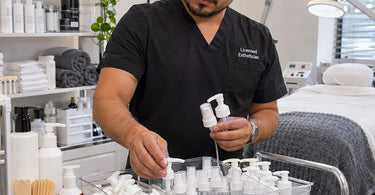
Tools that deliver, every time... that is the dream behind every beautifully organized salon, spa, and treatment room. But sometimes the smallest piece of equipment causes the biggest disruption, especially when a spray nozzle suddenly stops spraying or a lotion pump decides it has officially retired. Keeping replacement spray nozzles and pumps in your professional inventory is an inexpensive, practical way to prevent frustrating interruptions, reduce unnecessary waste, and keep your services moving without missing a beat. After all, your clients booked a fabulous treatment, not a front-row seat to your battle with a stubborn spray bottle.
Most salon owners carefully track their favorite shampoos, professional skincare formulas, waxing supplies, and nail products. Yet the humble dispensing components attached to those products rarely receive the same attention. That oversight can become surprisingly expensive when a perfectly usable container of product becomes difficult to dispense simply because its pump or sprayer has failed.
Whether you manage a busy hair salon, an intimate facial studio, a waxing business, a nail salon, or a full-service day spa, replacement dispensing accessories deserve a designated spot alongside your everyday professional spa essentials.
Why Small Dispensing Parts Create Big Salon Problems
Think about how many times your team reaches for a pump or spray bottle during an ordinary business day. Stylists use spray bottles to dampen hair before cutting. Estheticians may use approved misting products during facial services. Massage therapists dispense lotions and creams. Nail technicians rely on controlled application of certain liquids and cleansers. Waxing professionals frequently use pumps to dispense compatible pre-treatment and post-treatment products.
Now imagine that one of those dispensing mechanisms stops working during a fully booked Saturday.
Suddenly, someone is searching through drawers, borrowing equipment from another station, or attempting to transfer product into a different container. A seemingly insignificant failure can interrupt the rhythm of an otherwise efficient workplace.
Replacement pumps and spray heads help solve this problem before it begins. Rather than treating every dispenser failure as an emergency, your team can address compatible replacement needs quickly and return to serving clients.
The Hidden Cost of a Broken Spray Nozzle
A malfunctioning sprayer might appear to be a minor inconvenience, but the cost extends beyond the inexpensive plastic component.
Consider a salon with six stylists. If each stylist loses just three minutes during the day because of unreliable dispensing equipment, that represents 18 minutes of combined staff time. Over a five-day workweek, the total reaches 90 minutes.
That example does not mean every broken nozzle creates those exact losses. It illustrates how recurring small interruptions can accumulate in a service business where appointments, labor, and station availability all matter.
Other potential expenses include:
- Wasted product: Leaking pumps or poorly functioning sprayers may dispense more liquid than intended.
- Unnecessary container replacement: A reusable bottle might be discarded even though only its dispensing mechanism has failed.
- Interrupted services: Employees may need to leave their stations to locate working equipment.
- Inconsistent application: An unreliable pump can make it harder to dispense predictable amounts of product.
- Additional purchasing: Replacing an entire bottle and dispenser assembly may cost more than replacing a compatible component.
For purchasing managers, this makes replacement parts an inventory efficiency issue rather than simply another miscellaneous supply.
Which Salon Products Commonly Use Pumps and Spray Nozzles?
Dispensing systems appear throughout professional beauty environments. Understanding where they are used helps owners identify which replacement components deserve priority.
Hair Salons and Barber Shops
Spray bottles are essential tools at many haircutting stations. They allow stylists and barbers to dampen hair while maintaining control over the amount and placement of moisture.
Hair salons may also use compatible pumps for shampoos, conditioners, styling creams, and other professional liquids.
Explore professional hair salon and barber shop supplies when planning station essentials, and consider keeping replacement sprayer heads available for compatible reusable water bottles.
A broken trigger should not become the most memorable part of somebody's fabulous new haircut.
Facial Rooms and Esthetician Stations
Facial professionals frequently dispense cleansing products, lotions, and treatment preparations. Depending on the product, a manufacturer-approved pump may help provide consistent portions without repeatedly opening the main container.
For businesses purchasing professional skincare products, maintaining suitable dispensing accessories can support an organized treatment setup.
However, not every skincare formula belongs in a spray bottle or interchangeable pump container. Product compatibility, preservation requirements, contamination risks, and manufacturer instructions must guide these decisions.
Waxing Studios
Waxing specialists often work with pre-wax cleansers, skin preparation products, and post-wax lotions. Certain products are packaged with pumps designed to provide convenient dispensing during repeated services.
Studios that regularly purchase pre- and post-waxing products should identify which containers have replaceable pumps and which are intended to remain in their original packaging.
For example, a compatible replacement pump may help restore normal dispensing when the original component fails. The replacement must not compromise the product's safety, hygiene, or manufacturer-recommended storage conditions.
Massage Therapy Rooms
Massage professionals often dispense lotion or cream repeatedly throughout the workday. A pump that sticks, leaks, or delivers inconsistent amounts can slow down product preparation.
When selecting massage oils, lotions, and creams, pay attention to the container format and whether compatible replacement dispensers are available.
Thicker products may require different pump mechanisms than lightweight liquids. A pump suitable for a thin lotion may struggle with a dense cream, even if it fits the bottle opening.
Nail Salons and Pedicure Stations
Professional nail environments use various bottles and dispensing mechanisms for appropriate cleansing products, lotions, and other service supplies.
Well-maintained dispensing equipment can make a manicure or pedicure station easier to organize, especially when technicians move through multiple steps during each appointment.
When reviewing manicure essentials and pedicure supplies, inventory managers should identify reusable containers that require compatible replacement components.
Special care is necessary with solvents, disinfectants, and other chemicals. Some liquids can damage ordinary plastic pumps or require their original dispensing systems. Never assume a general-purpose sprayer is suitable for a professional chemical product.
Not All Replacement Pumps and Spray Nozzles Are Universal
Here is where salon inventory planning becomes slightly more technical. Two pumps can look almost identical and still be completely incompatible.
Before ordering replacement parts, check the following specifications.
- Neck finish: The bottle opening and dispenser closure must have matching dimensions and thread specifications.
- Dip tube length: The internal tube should reach an appropriate depth without bending excessively or interfering with proper operation.
- Liquid viscosity: Thin liquids, lotions, creams, and gels may require different dispensing mechanisms.
- Chemical compatibility: Pump materials, seals, and internal components must tolerate the product being dispensed.
- Output volume: Some pumps deliver small measured portions, while others dispense larger amounts.
- Spray pattern: Fine mist, stream, and adjustable spray mechanisms serve different purposes.
- Container compatibility: The replacement must attach securely without leaking or damaging the bottle.
Common pump and sprayer closures are identified using specifications such as 24/410 or 28/410. These numbers refer to particular neck-finish dimensions and thread designs, but matching the nominal specification alone does not guarantee complete compatibility.
Dip tube dimensions, product chemistry, pump construction, and manufacturer requirements still matter.
Before purchasing replacement components in quantity, test the exact combination of bottle, liquid, and dispensing mechanism under the product manufacturer's permitted use conditions.
How Replacement Parts Help Reduce Salon Waste
Beauty businesses go through considerable amounts of packaging over time. While some containers must be discarded for hygiene, chemical compatibility, or manufacturer requirements, others are designed for continued use.
Replacing a failed component instead of an otherwise functional reusable container may help reduce unnecessary purchasing and disposal.
For example, a durable refillable water bottle used at a haircutting station may remain in excellent condition even after its trigger sprayer wears out. If a suitable replacement head is available, the business may be able to continue using that bottle.
That is a practical form of waste reduction, not a reason to reuse every container indefinitely.
Containers that are cracked, contaminated, chemically damaged, or unsuitable for cleaning should be removed from service. Likewise, dispensing systems intended for single use or sealed product packaging should not be modified without manufacturer approval.
Browse bottles and jars for beauty professionals to explore professional storage and dispensing options when building a more organized supply system.
When Should a Salon Replace a Pump or Sprayer?
Dispensing components often provide warning signs before they fail completely. Recognizing those signs allows staff to replace worn equipment before it interrupts appointments.
Watch for:
- A trigger that sticks or fails to return smoothly.
- A pump that requires repeated pressing before dispensing.
- Liquid leaking around the closure or pump stem.
- An inconsistent spray pattern or unexpected splattering.
- A dip tube that has become disconnected or damaged.
- Visible cracks or deterioration in plastic components.
- A pump that no longer delivers a normal amount despite adequate product remaining.
- A sprayer that drips after use or fails to shut off properly.
Before deciding that a component is defective, check whether the nozzle is adjusted correctly and whether the product is appropriate for that dispenser.
Never attempt to force open, modify, or repair a pressurized or chemical-sensitive dispensing system. Follow the equipment and product manufacturers' instructions.
If there are signs of chemical damage or contamination, replace the affected equipment rather than improvising a repair.
How Many Spare Pumps and Spray Heads Should You Keep?
There is no universal quantity that works for every salon. The ideal spare inventory depends on the number of active stations, frequency of use, replacement lead times, and how often dispensing components fail.
A practical starting approach is to keep one or two compatible spare components for each frequently used dispenser type, then adjust based on actual usage.
For example, a salon with eight haircutting stations that all use the same reusable water bottle could initially maintain several spare trigger heads rather than purchasing eight complete backup bottle assemblies.
A treatment spa with different pump sizes may need a smaller number of spares for each specific compatible style.
The important detail is compatibility. Ten spare pumps that do not fit your containers are not useful inventory. They are simply a very organized collection of disappointments.
Track replacements for several months before establishing a permanent purchasing quantity. This helps prevent both shortages and unnecessary overstock.
Create a Simple Replacement Parts Inventory System
You do not need sophisticated inventory software to manage a small collection of dispensing accessories. A labeled storage bin and a basic inventory sheet can be surprisingly effective.
Start with these steps:
- Identify dispenser types: List the bottles and pump mechanisms used throughout the business.
- Record compatibility: Note manufacturer, closure size, product type, and any required replacement part number.
- Organize spare inventory: Separate spray heads, lotion pumps, and specialized components into clearly labeled compartments.
- Assign minimum stock levels: Establish a reorder point based on station count, replacement history, and supplier lead times.
- Designate responsibility: Have a manager or inventory coordinator review spare quantities during routine supply checks.
- Review failed components: Record recurring problems that might indicate an unsuitable dispenser or a larger equipment issue.
Store unused components in clean, dry conditions, preferably in their original packaging. Protect parts that contact products from dust, debris, and handling contamination.
For broader supply organization, explore must-have supplies for salon and spa business success.
Keep Cleaning and Disinfection Requirements in Mind
One important distinction deserves special attention: a replacement spray nozzle is not automatically suitable for dispensing disinfectant.
Professional cleaning and disinfecting products must be used according to their labels, including application methods, dilution instructions, required contact times, personal protective equipment, and container requirements.
Some disinfectants are intended for specific spray systems, while others require wipes, squeeze bottles, immersion containers, or alternative application methods.
Transferring a chemical into an unapproved container or attaching an incompatible spray head can introduce safety and performance problems.
Secondary containers must also carry appropriate labels and hazard information according to applicable regulations. State salon licensing requirements may impose additional rules.
Never mix chemicals, reuse an inadequately cleaned container for a different formula, or assume that a replacement pump is chemically resistant simply because it fits.
When stocking professional cleaners and disinfectants, match dispensing equipment to each product's approved instructions rather than treating nozzles as interchangeable accessories.
Buying Replacement Parts in Bulk: Smart or Excessive?
Bulk purchasing can make sense when a salon uses standardized containers and regularly replaces the same components.
For example, a multi-location salon group using identical water bottles at dozens of styling stations may benefit from maintaining a centralized supply of matching replacement spray heads.
However, bulk purchases become less attractive when a business uses many bottle designs or changes product lines frequently.
Before purchasing larger quantities, ask:
- How many compatible containers are currently in service?
- How frequently do their dispensing components fail?
- How long does replenishment normally take?
- Will the bottles or product formulations change soon?
- Can the parts be stored cleanly without damage?
- Does the purchase quantity reflect actual demand?
The best purchasing decision balances availability with inventory efficiency. A small collection of useful spare parts is usually more valuable than a mountain of components that nobody can identify.
Standardizing Dispensers Across Multiple Stations
One of the simplest ways to improve replacement parts management is to standardize suitable dispensing equipment wherever practical.
If several styling stations use identical reusable water bottles, staff only need to recognize and stock one compatible type of replacement trigger.
Similarly, a massage business using compatible manufacturer-approved lotion pumps across multiple rooms may find it easier to manage spare inventory.
Standardization offers several operational advantages:
- Fewer replacement part specifications to track.
- Simpler purchasing and reorder procedures.
- Less confusion when staff need a spare component.
- More consistent station organization.
- Easier training for new employees.
Standardization should never override product-specific packaging, hygiene, or chemical compatibility requirements. Different formulas may require different dispensing systems even when their containers appear similar.
Common Mistakes to Avoid When Purchasing Spare Dispensers
Even experienced salon managers can accidentally order the wrong replacement accessories. A few purchasing habits help avoid unnecessary returns and clutter.
Assuming every pump fits every bottle: Check exact neck dimensions and manufacturer compatibility before ordering.
Ignoring product thickness: A sprayer designed for water may not function with a thick lotion, gel, or oil.
Overlooking internal materials: Springs, seals, and dip tubes must be compatible with the intended formula.
Purchasing untested bulk quantities: Confirm that a sample works correctly before committing to substantial inventory.
Forgetting storage hygiene: Exposed components can collect dust or become contaminated before use.
Replacing only the obvious damaged part: If the bottle opening is cracked or the entire assembly is deteriorating, a replacement nozzle alone may not solve the problem.
A little verification before ordering can prevent a surprising amount of purchasing frustration.
Make Replacement Components Part of Your Routine Supply Order
Salon purchasing usually revolves around products that clients directly experience, such as skincare, massage lotions, waxing products, professional hair care, and nail treatments.
But the accessories that help employees dispense those products deserve attention too.
Consider adding a dispenser inspection to your regular inventory routine. Staff can check whether pumps operate smoothly, spray heads deliver consistent patterns, and containers remain in suitable condition.
During scheduled purchasing, review available replacement spray nozzles, replacement pumps, spray bottles, and lotion pumps to identify options that match your existing equipment.
You can also explore replacement parts for spa and salon equipment when reviewing other commonly overlooked maintenance needs.
Pure Spa Direct serves professional beauty businesses as a wholesale distributor, helping salons, spas, and service providers source supplies and equipment from professional product manufacturers. Verify individual product specifications and compatibility before selecting replacement dispensing components.
Frequently Asked Questions About Salon Spray Nozzles and Pumps
Are replacement spray nozzles universal?
No. Spray nozzles vary in closure size, thread design, dip tube length, spray pattern, and chemical compatibility. Always verify that a replacement matches the bottle and intended contents.
Can I replace a broken lotion pump without replacing the entire bottle?
Often, yes, when the original container is reusable and the manufacturer permits replacement. The new pump must fit correctly and remain compatible with the formula and hygiene requirements.
How do I know which pump size to order?
Check the bottle manufacturer's specifications, including the neck finish and recommended dispensing assembly. If that information is unavailable, contact the manufacturer or supplier before purchasing.
Should every styling station have a spare sprayer?
Not necessarily. If several stations use identical compatible bottles, a shared stock of replacement heads may be sufficient. Base your quantity on actual replacement needs and how quickly additional parts can be obtained.
Can I use any spray nozzle for salon disinfectant?
No. The disinfectant manufacturer's instructions determine approved dispensing methods. Some products require specialized containers or application techniques, and ordinary spray mechanisms may be unsuitable.
Is it better to purchase replacement pumps or complete backup bottles?
Both approaches can make sense. Replacement pumps may reduce costs and waste when containers remain suitable for reuse. Complete backup assemblies can be useful when bottle damage, cleaning requirements, or compatibility issues make component replacement impractical.
The Smallest Supplies Can Make the Biggest Difference
Salon success depends on hundreds of little details working together. A smoothly operating pump will never receive the same attention as a gorgeous hair transformation, a flawless manicure, or a beautifully executed facial treatment. Yet dispensing equipment plays a supporting role in all kinds of professional services.
Keeping a modest inventory of compatible replacement spray nozzles and pumps can help protect your schedule, support consistent product dispensing, and eliminate avoidable interruptions.
The goal is not to fill every cabinet with spare plastic components. It is to identify the small parts your business relies on, purchase replacements thoughtfully, and keep essential equipment functioning as intended.
As you prepare your next professional supply order, take a moment to review the dispensers throughout your salon or spa. Explore professional bottles and jars, compatible pump dispensers, and other spa essentials through Pure Spa Direct.
Because the best salon inventory is not just about having plenty of product. It is about having the right tools to use that product efficiently, reliably, and professionally. And if a tiny replacement nozzle can save your team from a mid-appointment equipment crisis, it absolutely deserves its own little spot on the supply shelf.
