
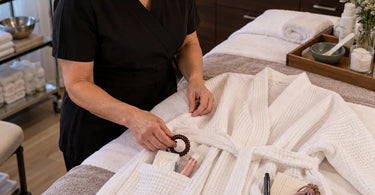
Do great work, effortlessly... until someone discovers three hair ties, a forgotten locker key, a damp tissue, and a mysterious peppermint candy inside yesterday's spa robe. Suddenly, your peaceful treatment room has become a tiny detective agency, and your laundry attendant is collecting evidence. Robe pockets are wonderful little conveniences for guests, but they also have a remarkable talent for becoming accidental lost-and-found bins. For spa owners, massage therapists, salon managers, and wellness professionals, understanding why this happens can help prevent laundry disasters, protect guest belongings, and keep the relaxation experience running smoothly.
The funny thing about spa robes is that their pockets seem harmless until the end of a busy treatment day. Guests slip something inside for just a moment, forget about it during their massage or facial, and walk away feeling wonderfully relaxed. Meanwhile, their belongings begin an unexpected journey toward the laundry room. Fortunately, a few thoughtful operational habits can turn this surprisingly common inconvenience into a much more manageable part of spa service.
Why Do Spa Guests Forget Things in Robe Pockets?
The biggest reason is simple: spa guests are temporarily stepping away from their normal routines. They arrive carrying phones, jewelry, hair accessories, locker keys, lip balm, tissues, and sometimes an impressive assortment of tiny personal necessities. Once they change into a robe, those familiar belongings suddenly have no obvious home.
Enter the robe pocket. Convenient, accessible, and apparently eager to accept responsibility for everything.
A guest might slip a locker key into a pocket before entering a treatment room. Another might remove a hair tie before a scalp massage. Someone preparing for a facial might tuck away a lip balm or a small piece of jewelry for safekeeping. Each decision makes perfect sense in the moment.
The trouble begins when the guest changes clothes again. Their attention shifts toward getting dressed, collecting belongings from a locker, paying for services, or making the next appointment. Because the robe is no longer part of their outfit, the contents of its pockets can disappear from their mental checklist.
Relaxation itself may contribute to the oversight. After an enjoyable massage or body treatment, guests are not necessarily thinking about inventory management. They are thinking about how lovely it would be to spend the next four hours doing absolutely nothing.
The Unexpected Treasures Found in Spa Robe Pockets
Not every forgotten object is valuable, but almost anything small enough to fit inside a robe pocket can eventually turn up there. Some items are merely amusing. Others create genuine operational concerns.
- Locker keys and access cards: These can interrupt locker availability and require additional attention from front desk employees.
- Hair ties, clips, and bobby pins: Small accessories frequently accompany guests into changing areas and treatment rooms.
- Jewelry: Rings, earrings, bracelets, and necklaces deserve immediate attention because of their financial or sentimental value.
- Tissues and paper: These can disintegrate in the wash and leave tiny pieces scattered across an otherwise perfectly clean load.
- Phones and earbuds: Electronic devices can be damaged by moisture, laundering, or careless handling.
- Cash and cards: Money, payment cards, and identification require secure handling and clear documentation.
- Product samples: Guests may tuck away skincare samples or promotional items and forget they are carrying them.
- Personal care products: Lip balm, cosmetics, and small containers can leak or leave residue on fabric.
The combination is almost impressive. A robe pocket may contain enough miscellaneous objects to stock a miniature convenience store, minus the snacks anyone actually wants.
Why Forgotten Pocket Items Matter to Spa Operations
It is tempting to dismiss forgotten items as harmless little accidents. However, their effects can extend beyond an amusing discovery during laundry sorting.
First, there is the possibility of damaged equipment or textiles. Metal accessories can snag fabric, while leaking cosmetics may create stains that require extra attention. Paper products can produce lint and debris, and certain objects may damage laundry equipment if they enter the wash unnoticed.
Second, misplaced valuables can become customer service challenges. A guest who cannot find an important ring may understandably become upset, especially if the robe has already moved into a shared laundry collection.
Third, staff members can lose valuable time searching through robes, laundry bins, treatment rooms, and changing areas. In a high-volume spa, even small interruptions can add up across multiple shifts.
Finally, there is the guest experience itself. Professional spa service depends on making clients feel comfortable and cared for. A thoughtful process for handling misplaced belongings helps preserve that confidence when something goes missing.
How Robe Design Influences the Lost-and-Found Problem
Not all robes are designed the same way. Pocket placement, depth, fabric, fit, and overall construction can influence how guests use them.
Deep pockets offer excellent convenience because they securely accommodate small belongings while guests move between treatment areas. The downside is that smaller objects may settle at the bottom and become easy to overlook.
Shallow pockets make contents more visible but may be less secure when guests sit, stand, or move between rooms. A pocket that easily releases its contents can create an entirely different lost-and-found problem.
Fabric also matters. Plush terry-lined robes, lightweight waffle fabrics, and soft microfiber designs provide different levels of structure and tactile feedback. Some pockets hang open visibly, while others blend into the robe and conceal their contents.
For example, the Microfiber Roll Collar Robe in White with Pockets combines a microfiber exterior with a soft terry-style lining, offering a comfortable option for professional spa environments. Its functional pockets provide guest convenience, although staff should still inspect them during robe collection.
The Microfiber Terry Lined Robe in Ecru features two front patch pockets, a shawl collar, and double belt loops. These details support comfort and practicality, but they also illustrate why pockets need to be included in the spa's textile handling routine.
For a lighter approach, the Lite Waffle Weave Kimono Robe in White offers a kimono-style design with two pockets and a self-tie belt. Lightweight styles can be useful in environments where a less bulky robe is preferred.
The takeaway is not that spa robes should never have pockets. It is that useful design features come with housekeeping considerations, and the right operating procedures make those features easier to manage.
Create a Simple Robe Pocket Inspection Routine
One of the most effective preventive measures is to make pocket checks part of the standard robe collection process. The goal is not to create another complicated checklist that employees dread. It is to establish a quick, repeatable habit.
Before a used robe enters the laundry collection, an assigned staff member should inspect both pockets and check for obvious belongings. If an item is found, it should be handled according to the facility's documented lost-and-found policy.
Staff should never assume that an inexpensive-looking object is disposable. A simple hair accessory might be unimportant, but a seemingly ordinary trinket could hold significant sentimental value.
For operational consistency, spas can establish a straightforward sequence:
- Collect the used robe from the designated changing or treatment area.
- Inspect each pocket before placing the robe into the appropriate laundry container.
- Set aside any discovered belongings without mixing them with unrelated items.
- Record relevant details when required by the facility's lost-and-found policy.
- Transfer valuables promptly to an authorized employee or secure storage location.
- Send the cleared robe to laundry using the facility's established linen handling procedures.
For shared robe collections, a second inspection at the laundry sorting stage offers an additional opportunity to discover overlooked items. Staff should follow established hygiene procedures when handling used textiles and should not reach blindly into pockets where sharp objects might be present.
Make the Changing Room Part of the Solution
A well-organized changing room can prevent some pocket-related problems before they start. Guests are more likely to use robe pockets for temporary storage when they do not see another convenient place for their belongings.
Secure spa lockers provide a practical alternative for personal items. Clear instructions about locker use can help guests understand where to leave jewelry, phones, accessories, and other belongings before treatments.
Positioning a small reminder near the changing area can also be useful. A friendly message encouraging guests to check their robe pockets before returning their garments is generally more welcoming than a stern list of warnings.
For instance, a spa might display a simple reminder asking guests to collect their personal items, check pockets, and confirm that their locker is empty before departure.
The message should feel like a thoughtful courtesy rather than an accusation. After all, forgetting a hair tie is hardly a crime worthy of a dramatic investigation.
Why Staff Communication Makes a Difference
Even the most carefully designed procedures can fail when responsibility is unclear. If everyone assumes someone else is checking the robes, nobody may actually do it.
Assigning responsibility at specific points in the guest journey helps solve that problem. Changing room attendants might inspect returned garments, while laundry personnel perform a final check before washing.
Front desk employees should also know whom to contact when guests report missing belongings. A clear communication pathway makes it easier to determine whether an item has been recovered and where it is being held.
For expensive or sensitive items, access should be limited to authorized personnel. A written record can include the date, general location where the item was found, a basic description, and information about its transfer or return.
Guest privacy matters, too. Staff should avoid publicly discussing the contents of a guest's pockets or making assumptions about ownership. A professional lost-and-found process should protect both the item and the person who misplaced it.
Preventing Laundry Problems Before They Start
Pocket inspections should be part of a broader textile care program. Robes, towels, sheets, and treatment linens experience regular handling and laundering, so consistent maintenance helps maintain their appearance and service life.
Facilities managing large volumes of professional spa towels and salon and spa bedding already depend on reliable sorting procedures. Robe pocket inspections can fit naturally into those same routines.
Separate textiles according to fabric care requirements and facility protocols. Review garment labels for washing and drying instructions, and avoid overloading laundry equipment. If a pocket contains a leaking cosmetic container or another substance, assess the affected fabric before placing it with cleanable items.
Do not assume that every forgotten item can be safely removed without extra precautions. Sharp objects, medications, or potentially hazardous materials may require special handling under workplace safety procedures.
Once an inspection routine becomes familiar, it often feels less like extra work and more like another standard part of preparing textiles for professional service.
Should Spas Choose Robes Without Pockets?
Eliminating pockets might appear to solve the problem instantly. No pockets, no forgotten belongings, right? Unfortunately, guest behavior is rarely that cooperative.
Without pockets, clients may place belongings on treatment counters, massage tables, shelves, or other nearby surfaces. Those items can still be forgotten, misplaced, or accidentally collected with linens.
Pocket-free designs can make sense for certain services, especially when guests do not need to carry anything between treatment areas. However, robes with pockets may be more convenient for facilities with locker rooms, lounges, relaxation spaces, and multiple treatment stations.
Instead of choosing solely according to pocket availability, evaluate the complete guest journey. Consider how long clients wear their robes, whether they move between rooms, what personal belongings they typically carry, and where secure storage is available.
Professional collections such as Professional Spa Apparel can help operators explore apparel options suited to their services and daily workflows.
Turn Lost-and-Found Moments Into Positive Guest Experiences
Finding a forgotten object does not have to become a stressful event. In fact, prompt and professional handling can demonstrate excellent customer care.
Imagine a guest realizing that her favorite earrings are missing after a massage. She contacts the front desk, expecting a frustrating search. Instead, an employee checks the lost-and-found record, confirms that the earrings were recovered during robe collection, and explains the facility's process for verifying ownership and arranging their return.
That experience creates confidence because it demonstrates attention to detail.
Of course, the procedure should include appropriate safeguards. Employees should verify ownership before releasing valuables, follow documented storage rules, and avoid promising recovery when an item has not actually been found.
Some facilities may also establish reasonable retention periods and procedures for unclaimed property, consistent with applicable local requirements.
Consistency is particularly valuable in spas where different teams handle changing rooms, treatments, reception, and laundry. A shared system reduces confusion and helps guests receive the same professional assistance regardless of whom they approach.
Choosing Spa Robes That Support Daily Efficiency
Robes do more than keep guests comfortable. They also influence the daily tasks of employees who distribute, collect, inspect, launder, fold, and restock them.
When evaluating new robes, consider fabric care instructions, construction quality, pocket accessibility, fit, and the number of garments needed to support busy appointment schedules.
Premium options such as the Boca Terry Microfiber Shawl Collar Robe offer details including generous pockets, double belt loops, and a soft terry lining. These features may suit facilities seeking comfortable guest apparel with a refined appearance.
Another option, the Luxurious Waffle Kimono Robe by The Turkish Towel Company, features Turkish cotton construction, two front pockets, and an inside hanging loop.
For professionals comparing multiple styles, the spa robe selection provides a convenient starting point for exploring materials and designs. Related collections from Boca Terry, Sposh, and The Turkish Towel Company can help operators compare options for their facilities.
Product selection should ultimately support the spa's actual service needs rather than appearance alone. A beautiful robe is wonderful, but a beautiful robe that fits comfortably, withstands appropriate laundering, and works well within daily operations is even better.
The Little Details Behind a Seamless Spa Experience
Guests rarely notice the systems that make a spa feel effortless. They simply appreciate the warm welcome, comfortable robe, organized changing room, clean treatment space, and smooth transition between services.
Behind those experiences are countless small operational decisions. Checking robe pockets may seem insignificant compared with scheduling appointments, maintaining treatment equipment, or managing product inventory. Yet details like these help prevent avoidable interruptions and demonstrate the care that distinguishes a professional facility.
Managers can make the process easier by incorporating pocket inspections into onboarding, reviewing procedures during team meetings, and ensuring that appropriate storage is available for recovered items. Periodic reminders can help reinforce expectations without turning a simple routine into unnecessary paperwork.
It is also worth paying attention to patterns. If staff consistently discover locker keys inside robes, the locker system or guest instructions may need improvement. If jewelry frequently appears, guests may benefit from clearer guidance about secure storage before treatments.
These observations can help facilities improve operations without sacrificing the welcoming atmosphere that clients expect.
Keep the Luxury, Lose the Pocket Surprises
Robe pockets become accidental lost-and-found bins because guests use them exactly as intended: as convenient places to carry small belongings. The problem is not the pocket itself. It is the transition between relaxation, changing clothes, and returning used apparel, when those belongings are easiest to forget.
By combining thoughtful robe selection, convenient secure storage, friendly guest reminders, staff training, and reliable laundry inspections, spa professionals can reduce misplaced items and simplify daily operations.
For facilities upgrading guest apparel or refining their textile systems, exploring Spa Essentials for Professionals alongside suitable robes and linens can support a more organized and comfortable environment.
Ultimately, the goal is simple: let your guests take home the wonderful feeling of their spa experience, not the mystery of where their favorite earrings disappeared. And let your laundry team discover beautifully maintained robes instead of another surprise collection of bobby pins, tissues, and peppermint candies. Because the only thing that should be hiding in a spa robe is a very relaxed guest.
