
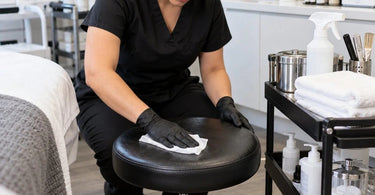
Pros choose this for stunning results... but sometimes the least glamorous piece of equipment in the treatment room deserves the most attention. A rolling stool quietly follows spa and salon professionals through facials, waxing services, lash appointments, manicures, massage treatments, and countless other appointments, collecting plenty of contact along the way. The seat may look perfectly innocent, but it can become one of those frequently touched surfaces that gets overlooked because nobody thinks of a stool as particularly exciting - unless it suddenly squeaks during a silent facial, in which case it becomes the star of the room.
Rolling stool seats deserve a deliberate place in the cleaning routine because they are touched in several different ways throughout a working day. Professionals sit on them, adjust them, reposition them with their hands, lean against them, and sometimes move them between treatment areas. Clothing, hands, product residue, perspiration, dust, hair, and other debris can all make contact with the upholstery or seat surface.
The solution is not complicated. It is simply recognizing the stool seat as working equipment rather than background furniture and cleaning it with the same thoughtful consistency given to other frequently used surfaces.
The Seat Is Basically a High-Traffic Intersection
Think about what happens during one busy shift. An esthetician sits down for a facial consultation, rolls closer for extractions, stands to reach supplies, sits again, turns toward the back bar, moves to another client, and repeats the entire dance. The stool may experience dozens of contact events without anyone consciously registering them.
Unlike a decorative chair sitting peacefully in the corner, professional seating is part of the service workflow. That means a stool used throughout appointments deserves a cleaning frequency that reflects how heavily it is actually used.
A simple rule helps: the more frequently a surface is touched, handled, or exposed during services, the more intentionally it should be included in the cleaning schedule. Your beautifully organized treatment room should not have one mysterious little vinyl island that somehow escaped the checklist.
Why Looking Clean Is Not the Same as Being Clean
A dark vinyl or polyurethane stool seat can hide a surprising amount of residue. Clear skincare products, light massage lotions, powder, tiny hairs, lint, and perspiration may barely be visible. That creates a psychological trap: if the seat does not look dirty, staff may assume it does not require attention.
Visible soil should certainly prompt immediate cleaning, but professional cleaning routines should not depend solely on what the eye can detect. A consistent schedule removes the guesswork.
This distinction also matters because cleaning and disinfecting are not identical tasks. In general, cleaning removes soil and debris from a surface, while an appropriate disinfecting step addresses microorganisms according to the disinfectant manufacturer’s directions. If visible residue is present, removing that soil first is important unless the product label specifically provides otherwise.
Keep suitable Professional Cleaners & Disinfectants for Salons and Spas conveniently located so the process is easy for staff to complete consistently.
Watch the Product Contact Time
Here is one sanitation detail that deserves more attention: a quick spray followed immediately by a quick wipe may not equal proper disinfection. Professional disinfectants have label directions that specify how they should be used, including compatible surfaces, dilution requirements when applicable, and required contact or wet time.
If the label requires the surface to remain visibly wet for a certain period, wiping the product away immediately can defeat the purpose. Follow the exact directions for the disinfectant being used rather than relying on the highly scientific salon method known as “that looks wet enough.”
It is also important to confirm that the product is appropriate for the stool’s upholstery or seat material. Manufacturers may specify particular cleaning agents or warn against chemicals that can damage finishes, discolor upholstery, dry out vinyl, or weaken seams. Furniture is an investment, so sanitation and material compatibility should work together.
Do Not Forget the Edge of the Seat
The center of the cushion gets most of the attention, but the edges may receive even more hand contact. Professionals commonly grab the side of a stool when pulling it closer or repositioning it during a treatment.
Clean the entire seat surface, including the perimeter, underside lip where appropriate, seams, adjustment controls, backrest if the stool has one, and other frequently handled areas. A pristine circle in the center surrounded by forgotten edges is not exactly the sanitation masterpiece we are aiming for.
If a stool has textured upholstery, tufting, stitching, or deep seams, periodically inspect those areas for accumulated residue. Smooth, intact surfaces are generally easier to maintain than damaged upholstery with cracks, splits, or peeling material.
Damaged Upholstery Is More Than an Appearance Problem
Rolling stools work hard. Constant movement, cleaning products, friction from clothing, and years of daily use can eventually wear down the seat material. Small cracks may grow, seams can separate, and upholstery can begin peeling.
Once a surface becomes damaged, cleaning it thoroughly can become more difficult. Product residue and debris may collect in openings that cannot be wiped as easily as a smooth surface.
Build furniture inspection into the routine alongside cleaning. If a seat is cracked, punctured, heavily worn, or otherwise difficult to maintain, consider whether repair or replacement is appropriate. Browse Top-Quality Equipment & Furniture for Spas & Salons or search for rolling stools when aging seating is ready for retirement.
Create a Cleaning Rhythm That Fits the Workflow
The best sanitation procedures are the ones that actually happen. A complicated protocol requiring staff to hunt through three rooms for supplies is unlikely to become a beloved part of the workday.
Keep approved cleaning materials accessible near treatment areas and define exactly when staff should clean shared seating. Depending on the service environment, that might include cleaning between clients, after contamination, when visibly soiled, when moving a stool between rooms, and during opening or closing routines. Your local regulations, facility policies, product instructions, and service type should guide the final procedure.
For disposable wiping materials, keeping Professional Cotton, Sponges, and Wipes for Salons & Spas close to the workstation can help streamline everyday cleaning tasks.
Consistency becomes much easier when every staff member follows the same expectations. Nobody should have to wonder whether Tracy cleaned the stool before lunch, after lunch, sometime Tuesday, or during the previous presidential administration.
Add the Stool to the Turnover Checklist
Many spas already have a treatment-room reset routine. Linens are changed. Implements are handled according to sanitation procedures. Surfaces are cleaned. Supplies are replenished. Trash is removed. Adding the stool takes only one extra line on that checklist.
A treatment-room turnover checklist might include the treatment table or chair, work surfaces, frequently handled equipment controls, trays, lamps, stool seat and controls, and any other touchpoints identified in the room’s actual workflow.
The key phrase there is actual workflow. Watch how professionals move through a service. Which surfaces do they grab without thinking? What gets adjusted while wearing gloves? What gets touched immediately after handling products? Observing a real appointment can reveal overlooked touchpoints much faster than designing a checklist from behind a desk.
Gloves Do Not Make the Stool Invisible
Protective Gloves & Masks for Salon and Spa Professionals play important roles in many services, but gloves do not magically transform everything they touch into a permanently clean surface. In fact, a gloved hand touching a stool adjustment lever, drawer handle, lamp, bottle, and workstation can transfer contamination between surfaces if glove practices and cleaning routines are not carefully managed.
Train staff to be conscious of what they touch during services. It can be surprisingly educational to mentally track one pair of hands through a treatment. Suddenly that innocent stool lever starts looking a lot more interesting.
Product Residue Can Become a Furniture Problem Too
Sanitation is not the only reason to clean stool seats regularly. Professional services involve oils, lotions, wax products, cleansers, creams, powders, polish, tint, and other materials that may accidentally reach furniture.
For example, massage professionals working with Massage Oils, Lotions, and Creams for Therapists may occasionally transfer product from hands, forearms, or clothing to nearby seating. Waxing professionals have their own sticky possibilities. Nail professionals encounter dust and product residue. Estheticians work with layers of skincare formulas throughout the day.
Allowing residue to remain can make a seat look dull, sticky, or stained and may contribute to premature wear depending on the material involved. Promptly handling spills and residue according to the furniture manufacturer’s cleaning instructions helps protect both appearance and longevity.
Do Not Spray Everything Like You Are Watering Houseplants
More disinfectant is not automatically better. Before saturating furniture, read both the disinfectant label and the equipment manufacturer’s care directions. Direct spraying may not be appropriate around some mechanical components, seams, pneumatic controls, electronics, or sensitive materials.
If the stool manufacturer recommends applying cleaner to a cloth rather than directly to the furniture, follow those instructions while still ensuring any disinfectant is used according to its own labeling. Compatibility matters.
Also avoid mixing cleaning chemicals unless the product directions specifically instruct you to do so. A treatment room is a spa, not an experimental chemistry lab.
The Wheels Need Their Own Moment
While the seat deserves extra attention, rolling stools have another notorious dirt collector: the casters. Hair, lint, dust, cotton fibers, and miscellaneous treatment-room confetti can wrap around wheels and accumulate underneath the base.
Periodically inspect casters and the lower stool assembly. Cleaning these areas supports the overall appearance of the room and may help the stool roll more smoothly. If wheels become damaged or difficult to operate, check whether replacement components are available through Bulbs & Replacement Parts for Spa and Salon Equipment or search for the appropriate equipment parts.
A stool that rolls smoothly is also much nicer than one that suddenly stops mid-scoot and sends you performing an accidental Pilates move in front of a client.
Make Clean Furniture Part of the Client Experience
Clients notice details. They notice crisp linens, tidy workstations, organized supplies, polished equipment, and clean furniture even when they cannot identify exactly why a room feels professional.
That perception matters. A beautiful treatment room filled with premium equipment can lose some of its impact if clients see stained upholstery, accumulated hair around stool wheels, or sticky residue on frequently used furniture.
Professional presentation is built from dozens of small details, and sanitation is one of them. Maintaining your Luxury Spa Furniture, treatment equipment, stools, and work surfaces reinforces the care you put into every service.
A Tiny Seat With a Surprisingly Big Job
Rolling stool seats are easy to overlook precisely because they are so ordinary. They are not the centerpiece of the facial room, the newest device, or the luxurious treatment your clients booked. They simply work beside you all day.
That constant use is exactly why they deserve attention. Treat the seat, edges, adjustment mechanisms, and other frequently touched portions of the stool as part of the regular cleaning routine. Follow applicable regulations, disinfectant labeling, and furniture manufacturer instructions, and inspect the upholstery periodically for wear that makes cleaning difficult.
Pure Spa Direct distributes professional Spa Essentials for Professionals, cleaning supplies, furniture, equipment, disposables, and thousands of other products designed for busy beauty and wellness businesses. Sometimes improving a treatment room does not require a dramatic overhaul. Sometimes it starts with looking down at the little rolling seat you have been sitting on all day and realizing, “Oh. You again.”
