
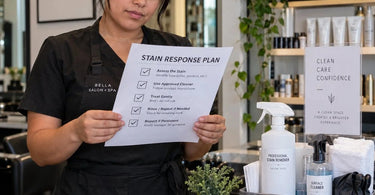
The choice of experts in the beauty and wellness industry is rarely a random accident. It comes from years of training, a passion for perfection, and a deep understanding that the little details make the biggest difference. But here is a truth that nobody talks about during your continuing education courses: the most professional thing you can do for your clients might just be knowing exactly how to handle a stain before it becomes a permanent souvenir. We spend hours perfecting our waxing angles, our color formulations, and our massage techniques, yet when a glob of ItalWax lands on the treatment table or a droplet of Professional Hair Color splashes onto our favorite smock, we freeze like a deer in headlights. It is time to change that narrative. Every salon and spa, whether it is a tiny one-room studio or a bustling mega-spa, needs a clear, written, and rehearsed stain response plan. Trust me, your furniture, your linens, and your sanity will thank you.
Let us be real for a second. Spills are not a matter of if; they are a matter of when. The beauty industry is a gloriously messy business. We work with pigments that could stain a concrete floor, oils that can seep into the most resilient fabrics, and waxes that seem to have a personal vendetta against anything upholstered. Without a plan, your staff is left to improvise, and improvisation in the face of a Professional Gel Polish catastrophe usually involves panic, a lot of paper towels, and someone inevitably grabbing the wrong cleaner, which just sets the stain deeper and possibly ruins the finish on your expensive equipment. A stain response plan is not just about cleaning; it is about preserving your investment in Luxury Spa Furniture and ensuring that your workspace remains a haven of tranquility, not a monument to last week's mishaps.
The Real Cost of a Red (Wine) Face: Why Wingin' It Fails
Let us talk dollars and sense, or rather, dollars and scents. When a client spills red wine from the relaxation lounge onto your waiting area couch, or when a stylist accidentally knocks over a bottle of Hair Bleaches and Lighteners, the cost is not just the product lost. It is the potential cost of replacing furniture, the labor hours spent scrubbing, and the subtle hit to your reputation when a client spots a mystery stain on their Massage Table Warmers or Toppers. Wingin' it is a recipe for disaster because every staff member has a different idea of what 'clean' looks like and what products are safe to use. One person might grab a bleach-based spray for a delicate fabric, while another might use an oil-based cleaner on a water-based stain. The result? A ruined surface, a hazardous chemical reaction, and a very unhappy salon owner.
Know Your Enemy: The Notorious S.T.A.I.N.S of the Beauty World
Before you can write a response plan, you need to understand the villains you are up against. In our world, stains fall into a few distinct, and frankly, obnoxious categories. First, you have the pigment predators: think Professional Hair Color, Nail Art Supplies, and Brow Henna. These are designed to adhere, so they are naturally clingy. Second, you have the oily offenders: Massage Oils, Lotions, and Creams, and Cuticle Oil. These are the ninjas of the stain world, silently soaking into upholstery and leaving a greasy shadow behind. Third, you have the wax and wax-adjacent menaces: ItalWax - Wax and Professional Stripless Hard Wax. These are the chunky, sticky, hot-mess villains that require a cool head and a cold pack. Finally, you have the everyday assassins: coffee, tea, and the occasional splash of acetone or nail polish. Knowing exactly what you are dealing with is half the battle. For instance, trying to wipe up hot wax is a fool's errand; you have to let it harden. Trying to scrub an oil stain with water is just a workout for your arms with zero results.
Building Your Salon's Stain Response Dream Team (and Plan)
Creating a plan does not have to be complicated, but it does need to be specific. The first step is to gather your arsenal. You would not go into a waxing service without your Professional Wax Spatulas and Applicators, right? The same goes for stain removal. Stock your utility closet with the essentials: a dedicated set of color-coded microfiber cloths, a gentle dish soap solution, rubbing alcohol, hydrogen peroxide, and a trusty bottle of CaviCide Disinfectant Cleaner for the final sanitization step. Next, assign roles. Who is the first responder? Who is in charge of laundering the Salon & Spa Bedding? Who handles the deep cleaning of the Pedicure Chairs after a particularly colorful polish change? When everyone knows their role, the chaos factor drops dramatically.
Your plan should include a quick-reference chart. For oils and lotions, blot and apply a sprinkle of cornstarch or baking soda before treating. For wax, freeze it, crack it, and peel it away. For color and pigment, act fast with a damp cloth and a mild soap solution, being careful not to spread the stain. And for the inevitable biohazard-adjacent spills, like blood or bodily fluids, your plan must include proper PPE, like Protective Gloves and Masks, and a hospital-grade disinfectant. Remember, a stain response plan is also a safety plan. You are not just protecting your furniture; you are protecting your team and your clients from cross-contamination.
The Unsung Heroes: Products That Make Stain Response a Breeze
You can have the best plan in the world, but if your tools are subpar, you are fighting a losing battle. This is where investing in the right supplies pays off dividends. One of the absolute game-changers for any salon is a stock of bleach-safe and stain-resistant linens. Products like those from Bleachsafe Towels are specifically engineered to withstand the harsh chemicals we use daily, meaning you can actually bleach out a stubborn hair dye stain without destroying the towel or washcloth. For your hard surfaces, having a product like Prevention One-Step Disinfectant Cleaner Wipes on hand is a lifesaver. These wipes are not just disinfectants; they are a quick and easy way to wipe up minor spills and messes between clients without dragging out a whole bucket of supplies. They are fast, safe for most surfaces, and make the cleanup feel less like a chore and more like a quick refresh.
Training Day: Practice Makes Perfect (and Less Panicked)
You practice your lash application and your balayage technique, so why would you not practice your spill drills? Once a quarter, during a team meeting, stage a mock spill. Grab an old towel, some water mixed with food coloring to simulate a pigment stain, and have your team walk through the response plan. This is not about being paranoid; it is about building muscle memory. When a real spill happens, and it will happen, your team will not have to think. They will just react. They will know exactly where the Hygienic Table Paper is stored, which cleaner is safe for the Stylish and Functional Nail Salon Furniture Essentials, and how to properly dispose of contaminated materials. Plus, it is a fun team-building activity that does not involve trust falls.
The Bottom Line: A Clean Space is a Happy Space (and a Profitable One)
Let us circle back to the beginning. The choice of experts is not just about the services you provide; it is about the environment you provide them in. A clear stain response plan is a sign of a professional, organized, and client-focused business. It shows that you care about the details, that you respect your investment in top-quality equipment from brands like Earthlite or Oakworks, and that you are committed to maintaining a hygienic space. So, gather your team, grab your supplies, and write that plan. Your future self, the one not scrubbing a stubborn wax stain at 9 PM on a Saturday, will be eternally grateful. And if all else fails, remember the golden rule: when in doubt, a little bit of humor and a whole lot of CaviCide can fix almost anything.
)