
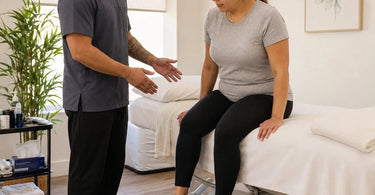
Smarter tools for brighter results... But let's be real, the brightest results in our industry don't just come from the latest advanced spa equipment or a perfect gel polish application. They come from the moments that make a client feel seen, safe, and incredibly well-cared for. And sometimes, the most critical of those moments happen before and after the actual service, when a client is getting on and off your treatment table. We've all been there—a client hesitates, struggles to get comfortable, or needs extra time to dismount gracefully. It's not an inconvenience; it's a clear signal. They are telling us something important about their needs, their comfort, and their trust in us.
Today, we're diving deep into the why behind this often-overlooked aspect of our services. We'll explore the many reasons why some clients simply need more time and, more importantly, how we as professionals can transform this potential point of anxiety into a hallmark of our exceptional care. From understanding physical limitations to choosing the right equipment, we're covering it all so that every client's journey—from the waiting room to the treatment room and back—is seamless, dignified, and utterly relaxing.
It's Not About the Time, It's About the Dignity
First, let's clear the air. This isn't about a client being 'difficult' or 'slow.' It's about recognizing that bodies come in all shapes, sizes, and states of mobility. For a huge portion of the population, a standard treatment table can feel like a daunting obstacle course. As professionals, our job is to remove that obstacle and make the experience empowering. It's about creating a spa environment that welcomes every body with open arms (and a stable, comfortable table). When we rush a client, we're not just potentially causing physical discomfort; we're chipping away at the trust and relaxation they came to us to find. Think of it this way: you wouldn't rush a client through their service, would you? The process of getting on and off the table is the first and last step of that service, and it deserves the same mindful attention.
The Many Reasons Why Clients Need That Extra Moment
Let's look at the diverse range of reasons that might explain why a client needs a bit more time and maybe a little more assistance.
1. The Obvious: Bigger Bodies Need Better Support
Let's address the elephant in the room—or rather, the client on the table. Many standard treatment tables are designed with a weight limit of around 250–300 lbs and a width of 28 inches or less. For a client in a larger body, this can be a recipe for anxiety and actual physical discomfort . They might worry if the table will hold them, feel cramped on a narrow surface, or struggle to find a comfortable position. This isn't just about weight capacity; it's about width and structural stability. Investing in a table with a higher working weight capacity (look for 500–800 lbs) and a wider surface (30–32 inches) is a game-changer . It sends a powerful message: "We were thinking of you, and we prepared for you." A client who doesn't have to stress about their body fitting on the table is a client who can finally relax. And let's be honest, a relaxed client is a repeat client. At Pure Spa Direct, we understand this fundamental need, which is why we offer a wide range of top quality massage tables designed for both comfort and robust support.
2. Mobility Challenges and Aging Gracefully
It's not just about body size. We serve clients of all ages and with varying degrees of mobility. A client with arthritis, a replaced hip or knee, or general age-related stiffness may not be able to easily swing their legs up onto a 30-inch-high table. A client who uses a cane or a walker might need a clear pathway and a sturdy arm to steady themselves. For these clients, the height of your table isn't just a comfort feature; it's an accessibility issue. This is where an electric lift massage table becomes more than a luxury—it becomes a necessity. Lowering the table to 18–20 inches can make transferring from a wheelchair or a sitting position a safe and dignified process . It allows the client to slide on rather than climb up. Think of the peace of mind this gives them—and the respect it shows.
3. The Unseen Health Conditions
We can't always see what's going on inside a client's body. Conditions like fibromyalgia, chronic pain, multiple sclerosis, or even severe anxiety can make movement difficult, painful, or just plain scary. A client with fibromyalgia might experience extreme pain from the pressure of getting onto a table. Someone with severe anxiety might need a moment to breathe and mentally prepare for the touch that's coming. A client with poor circulation or fluid retention might feel dizzy or unsteady when sitting up after a treatment . These are real, legitimate concerns that require our patience and empathy. A gentle, "Take all the time you need," followed by a steadying hand (with their permission) or a glass of water, can make all the difference. It turns a moment of vulnerability into a moment of connection.
4. Post-Service Relaxation and Vertigo
Have you ever been so relaxed after a massage that you felt like you were floating? Now imagine trying to sit up and get off a table when your body feels like a jellyfish. That's actually a sign of a job well done, but it also requires care. Many clients experience a drop in blood pressure or a sense of vertigo after a deeply relaxing session or a hot stone therapy . This is not the time to rush them off. This is the time to let them rest, sit up slowly, and reorient themselves. It's why many of us are trained to lower the table, ensure a client is stable, and perhaps even take their arm to guide them. It's a standard of care that protects them from a fall and leaves them feeling wonderfully cared for.
How to Create a More Inclusive Treatment Room
So, how do we turn this awareness into action? It starts with the choices we make for our treatment rooms and the way we interact with our clients.
The Right Equipment is Non-Negotiable
This is where you can truly make a difference. A treatment room that is set up for accessibility and inclusivity is a room that works for everyone. Let's look at some of the must-haves:
- Electric Treatment Tables: As we've touched on, this is a game-changer. The ability to smoothly and quietly adjust the height from 18 to 34+ inches allows you to meet your client where they are—literally. It's also an incredible ergonomic tool for you, the therapist, saving your back from strain. An electric lift table is the single best investment you can make for both client and therapist well-being.
- Wider Tables for Spacious Comfort: Standard tables are often 28 inches wide. But a 32-inch table offers a much more spacious and comfortable surface, especially for larger body types or for clients who like to shift positions during a treatment . It allows them to feel secure, not like they're on the edge.
- Portable Massage Tables with High Capacity: Even for mobile therapists, there are portable options that offer impressive weight capacities without sacrificing portability. Look for tables that are durable, stable, and provide a generous working weight capacity.
- Massage Bolsters, Wedges & Pillows: Never underestimate the power of a good bolster. For clients in larger bodies, standard cylindrical bolsters may not provide enough support for the neck, knees, or ankles. Keep a variety of wedges, rolled towels, and pillows on hand to customize positions for any body. A side-lying position may be more comfortable for some clients, and these supports make it possible .
- Massage Table Warmers & Toppers: Adding a plush, heated topper to your table enhances comfort for everyone. It's a small touch that makes a huge difference in relaxation and helps clients with sore muscles or poor circulation feel soothed and supported.
- Accessible Furniture & Layout: Is your waiting area accessible? Consider seating with sturdy arms to help clients stand up. Is there a clear, wide path to your treatment room and around the table ? A simple step stool or a wall-mounted grab bar near the table can also provide a huge amount of security for clients who need a little extra help .
The Art of the Approach
Equipment is only half the story. Your approach is equally important.
- Ask, Don't Assume: A simple, open-ended question like, "How can I best support your comfort today?" or "Is there anything I can do to make getting on the table easier for you?" empowers the client to tell you what they need. It shows you're paying attention and you care .
- Offer Assistance Gracefully: Instead of a general "Do you need help?" which can be met with a reflexive "No, I'm fine," offer a specific and gracious assist. "I have a step stool right here if you'd like it," or "Let me lower this table a bit for you so you can get comfortable more easily." This normalizes the help and makes it a standard part of your excellent service, not a concession.
- Draping with Dignity: A client who is worried about their body being exposed is not a relaxed client. Offer generous draping with large towels or sheets that feel secure. For facial or lash services, provide a wrap or wide towel across the chest to help clients feel covered . Having plus-size robes available and clearly visible (not hidden away) is another powerful signal of welcome .
- Watch for Non-Verbal Cues: A client's body language will tell you everything. If they look hesitant, grip the table tightly, or seem to be struggling, that's your cue to step in with an offer of support. Your observational skills are just as important as your technical skills.
This is Good for Your Business (and Your Heart)
You might be thinking, "This all sounds lovely, but won't it cost me more time and money?" The answer is a little bit, yes—but the return on that investment is massive. Clients remember how you made them feel. When you take the time and effort to ensure their physical and emotional comfort, especially in a moment of vulnerability, they will not only come back, but they will tell everyone they know about you. A reputation for being inclusive and deeply caring is priceless marketing. It sets you apart in a crowded market.
Moreover, investing in robust, accessible equipment like electric tables and high-capacity tables is investing in the longevity of your business and your own career. It reduces the risk of injury for you and your team, and it ensures you can confidently welcome a broader demographic of clients. It's the smart, sustainable way to build a thriving business.
At Pure Spa Direct, we believe in empowering you to provide the best possible care. From finding the perfect premium skincare products to selecting the right massage table, we're here to support your success. Creating an inclusive environment is a journey, not a destination. It's about being willing to learn, adapt, and always put the client's whole well-being first. So next time a client needs a little extra time to get on or off the table, see it not as a delay, but as an opportunity. It's your chance to show them that they are in the right place, with the right person, and that their comfort is your top priority. And honestly, isn't that exactly the kind of business we all want to run? Now, go forth and create a space where every body feels welcome, relaxed, and truly seen. You've got this.
