
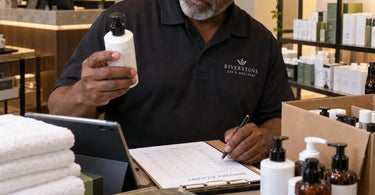
Put your results into overdrive... by figuring out why your spa inventory keeps playing hide-and-seek with your accounting system! You ordered 24 bottles of massage oil, your inventory software insists you have 11 left, and your treatment room cabinet contains exactly seven. Nobody is stealing, nobody is secretly operating a massage parlor out of their garage, and yet four bottles have apparently entered another dimension. Sound familiar? For spa owners, salon managers, nail professionals, and waxing studio operators, mysterious inventory discrepancies are surprisingly common. The good news is that most of these problems have perfectly ordinary explanations, and fixing them can save your business money without turning your break room into an interrogation room.
Inventory accuracy matters because every unaccounted-for glove, waxing applicator, facial serum, and ounce of massage lotion represents money your business has already spent. When the numbers are wrong, purchasing decisions become guesswork, popular products run out unexpectedly, and perfectly usable supplies get reordered unnecessarily. Understanding why spa inventory counts are wrong even when nobody is stealing is the first step toward creating a more organized, profitable, and much less frustrating operation.
1. Your Staff Is Using Products Without Recording Them
One of the biggest inventory problems in professional beauty businesses is also one of the most innocent: products are being used exactly as intended, but nobody records how much disappears during each service.
Consider a busy esthetician performing six facials in one afternoon. She uses cleanser, exfoliant, toner, massage cream, masks, and finishing products. Every application consumes inventory, but many spas track purchases without systematically tracking service consumption.
By the end of the week, your inventory software might confidently announce that you have plenty of professional skincare products. Unfortunately, your treatment room shelves have a very different opinion.
The solution is to establish a standard product usage estimate for each service. For example, identify the approximate number of milliliters of cleanser, mask, and moisturizer typically used during a signature facial. Record actual variations when appropriate, and incorporate these amounts into your inventory tracking process.
These estimates do not have to be perfect immediately. Consistency is far more valuable than pretending the products magically replenish themselves overnight.
2. Open Bottles Are Being Counted as Full Bottles
Here is a classic spa inventory trap: your team counts five bottles of massage lotion, but three are almost empty.
Technically, five bottles exist. Practically, you might have only enough product for two or three full bottles of treatments.
This distinction becomes especially important for professional products sold in larger containers, including Massage Oils, Lotions, and Creams for Therapists, facial cleansers, body scrubs, and liquid treatment products.
Inventory systems work best when they distinguish between unopened stock and partially consumed backbar supplies. If your software tracks fluid ounces, record quantities in fluid ounces. If it tracks full retail units, establish a consistent method for estimating partial units used for professional services.
For higher-cost products, measuring or weighing remaining contents when practical can improve accuracy. Just account for container weight and remember that fluid ounces and ounces by weight are not interchangeable without knowing the product density.
That little bottle with three drops remaining is not an entire bottle simply because it still has a cap.
3. Backbar Products and Retail Products Get Mixed Together
Many spas purchase products that serve two purposes: professional treatment use and retail sales.
A moisturizer might sit on a beautiful retail display one day and find itself working overtime in the facial room the next. If nobody records the transfer, your inventory records become inaccurate even though the product never left the building.
This issue is especially common with spa retail products that professionals also love using during treatments.
Separate professional-use inventory from retail inventory whenever possible. Create clearly labeled storage locations and record transfers between them. If a retail product becomes a treatment-room tester, remove it from available retail stock and document the change.
This separation also makes it easier to calculate service costs and retail profit margins accurately.
4. Everyone Has Their Own Secret Supply Stash
Every salon has that one incredibly organized technician who keeps emergency supplies in a drawer, a rolling cart, a cabinet, and possibly a mysterious fourth location known only to her.
There is nothing wrong with having backup supplies. Problems begin when those backups are forgotten during inventory counts.
Consider professional nail supplies. Nail technicians might store gel polish in wall displays, acrylic powder in drawers, nail files at individual stations, and extra disposables in the stockroom.
When inventory day arrives, counting only the central supply closet produces an incomplete picture.
Create a location map identifying every place inventory can be stored. Include treatment rooms, retail shelves, reception drawers, waxing stations, nail tables, mobile carts, laundry areas, and overflow cabinets.
Better yet, assign designated storage locations for different categories and teach employees to return unopened supplies to their proper homes.
Your spa should have treatment rooms, not archaeological excavation sites.
5. Your Receiving Process Is Creating Errors Before Products Reach the Shelf
Sometimes inventory discrepancies begin the moment an order arrives.
A shipment contains 12 boxes of supplies. Someone checks the packing slip, sees that 12 boxes were ordered, and records the delivery as complete. Unfortunately, one box contains the wrong item, another is short two units, and a third contains a different package size.
Now your inventory records are inaccurate before anyone has used a single product.
Every delivery should be checked against the purchase order and packing slip. Verify the actual items, quantities, sizes, and condition of the products received. Record shortages, damaged goods, substitutions, and backordered items before updating available inventory.
For busy operations purchasing Spa Essentials for Professionals, a simple receiving checklist can prevent repeated errors.
Assign responsibility for receiving whenever possible. Having a designated employee verify deliveries reduces confusion about who checked what and whether everything actually arrived.
6. Cases, Packs, Individual Items, and Ounces Are Being Confused
Few things can throw inventory numbers into chaos faster than inconsistent units of measurement.
Imagine ordering one case containing 12 packages of disposable waxing applicators. Your receiving employee enters 12 cases instead of 12 individual packages. Congratulations! Your software now thinks you have enough applicators to wax half the state.
Similar confusion happens with cotton products, facial sponges, disposable gloves, nail files, wax beads, and treatment creams.
Products from Professional Cotton, Sponges, and Wipes for Salons & Spas may come in different counts, sizes, and packaging configurations. Without standardized inventory units, an innocent receiving mistake can multiply your reported stock dramatically.
Choose one tracking unit for each product. For example, track gloves by box, applicators by package, bottled products by bottle, and bulk treatment products by weight or volume when appropriate.
Document the conversion between purchase units and inventory units. Train employees to use the same system every time.
7. Wax Usage Is Harder to Predict Than You Think
Waxing studios face a particularly interesting inventory challenge because product consumption varies with treatment area, technique, client needs, application thickness, and service volume.
One technician may use more Professional Stripless Hard Wax than another for the same general service category. Some variation is normal, but inconsistent measurement can create significant inventory discrepancies over time.
For example, suppose a waxing studio estimates that a particular service consumes 30 grams of hard wax, but the actual average is 40 grams. After 100 services, the difference reaches 1,000 grams of additional product consumption.
That is an entire kilogram of wax that your inventory projections failed to anticipate. Nobody stole it. Your services simply consumed more than expected.
Measure a representative sample of treatments and develop realistic usage standards for your team. Review those standards periodically, especially when introducing new waxing techniques, treatment protocols, or product formats.
Keep related consumables such as Professional Wax Spatulas and Applicators for Salons & Spas in the tracking system as well.
8. Damaged, Expired, or Contaminated Products Disappear Without Documentation
Professional spa products sometimes become unusable before their containers are empty.
A bottle leaks during shipping. A product passes its expiration date. A container becomes contaminated. Someone drops a jar of scrub. A lash adhesive becomes unsuitable for further use under its handling instructions.
These events are part of operating a professional treatment business, but they need to be documented.
Create a simple damaged-product and disposal log. Record the product, quantity, date, reason for disposal, and responsible employee. Update inventory promptly, and handle disposal according to product labels and applicable requirements.
Store products according to manufacturer instructions and rotate appropriate stock using a first-expiring, first-out approach.
Remember that clean, organized storage is not merely an aesthetic preference. It supports better product quality control and more dependable inventory records.
9. Testers, Samples, and Training Products Are Not Being Accounted For
Professional beauty businesses regularly open products for reasons unrelated to paying client services.
New estheticians practice application techniques. Nail technicians test unfamiliar shades. Reception employees demonstrate retail moisturizers. Managers evaluate new treatment protocols.
These are legitimate business activities, but they consume stock.
A bottle of Professional Gel Polish opened for staff training is no longer an unopened retail item. A skincare product used for demonstrations needs its own inventory classification.
Create categories such as training, samples, testers, and promotional use. Whenever an item changes purpose, record the movement.
Separating these expenses helps management understand the true cost of training and marketing without confusing those expenses with unexplained product loss.
10. Your Inventory Software and Actual Product Movements Are Out of Sync
Inventory software can be extremely helpful, but it cannot accurately track activities nobody enters.
A shipment arrives at 10 a.m. The receiving employee gets interrupted by a client question. Products are placed on shelves before the delivery is posted. Meanwhile, technicians remove supplies for afternoon appointments.
At 3 p.m., someone performs an inventory count. The physical quantities and software totals disagree because transactions are still waiting to be entered.
Timing differences are especially common when teams process purchases, sales, returns, transfers, and professional-use deductions at different times.
Establish a consistent order of operations. Receive products into the system before making them available for use. Record transfers promptly, and ensure sales and other stock movements are posted before comparing physical quantities with recorded balances.
During scheduled counts, temporarily pause movement of the products being counted when practical. If business must continue, track any movements occurring during the count so they can be reconciled correctly.
11. Similar Products and Packaging Are Being Counted as the Same Item
Picture a nail salon with 45 shades of pink polish. To an experienced nail technician, each shade has a distinct personality. To the exhausted manager counting bottles after closing, they are all simply pink.
That is how inventory identification errors happen.
Different sizes, fragrances, formulas, colors, and packaging configurations may represent different stock-keeping units, or SKUs. Accidentally combining them can make one item appear overstocked while another appears missing.
This is especially relevant for Professional Hair Color, nail polish, lash products, and specialty waxing supplies.
Use clearly labeled shelves and record the manufacturer's product identification alongside your internal SKU. Barcode scanning can help when supported by your inventory system.
When packaging changes, verify whether the underlying product and quantity have changed before combining old and new stock records.
12. You Are Counting Too Infrequently to Find the Real Problem
Many spa businesses perform a major inventory count only when their accountant needs updated numbers or when the supply closet looks suspiciously empty.
The problem with infrequent counting is that errors accumulate.
If you discover a shortage of 18 bottles of cleanser after six months, investigating the cause becomes difficult. The discrepancy could involve receiving mistakes, unusual treatment usage, undocumented testers, transfers, damage, or a combination of small errors.
Counting more frequently makes patterns easier to spot.
Instead of conducting a full inventory every week, use cycle counting. This means checking a manageable selection of products regularly while rotating through the rest of your inventory over time.
Count expensive or frequently used products more often. Lower-risk supplies can be checked less frequently based on your business needs.
For example, your spa might count facial serums every Monday, waxing products every Wednesday, and nail consumables every Friday. Over time, these smaller counts improve visibility without consuming an entire weekend.
How to Find the Real Cause of an Inventory Discrepancy
Before changing inventory quantities, investigate what actually happened. A discrepancy is evidence that two numbers disagree, not proof that products are physically missing.
Start by recounting the item, ideally with a second employee. Search all known storage locations, including treatment rooms and retail displays. Confirm the product's SKU, size, and unit of measurement.
Next, examine recent purchase orders, receiving records, retail sales, returns, internal transfers, service consumption, and disposal logs. Make sure the physical count and software balance refer to the same point in time.
For example, imagine your inventory system shows 20 jars of facial mask, but your physical count finds 16. You investigate and discover that two jars became training testers and two were transferred to another treatment room but were not included in the original count.
Your mystery shortage has now become two separate operational issues: an undocumented change of use and an incomplete location count.
Once you identify the cause, correct the records using your inventory system's adjustment procedures. Document why each adjustment was necessary and use appropriate approval controls for significant differences.
The objective is not merely to make the numbers match. It is to prevent the same error from repeating.
Create a Simple Spa Inventory System Your Team Will Actually Follow
The most effective inventory system is not necessarily the most complicated one. It is the one your employees can use consistently between client appointments.
Begin by organizing your essential salon and spa supplies into logical categories. Assign product identification numbers, designated storage locations, and standardized measurement units.
Then establish five straightforward habits:
First, verify every incoming delivery. Compare actual quantities against purchase orders before recording received stock.
Second, track products used during services. Use realistic treatment consumption estimates and record exceptions when actual usage differs significantly.
Third, document internal movements. Record supplies transferred between retail displays, backbar storage, treatment rooms, training, and sampling.
Fourth, record waste and unusable products. Do not allow damaged or expired items to disappear without an adjustment.
Fifth, perform regular cycle counts. Investigate discrepancies while recent transactions and product movements are still easy to reconstruct.
Clear written procedures are helpful, but employee involvement matters just as much. Explain that tracking supplies protects service quality, supports purchasing decisions, and helps the business remain profitable.
Make recording product usage quick and convenient. If updating inventory requires six screens, three passwords, and a minor miracle, employees are understandably going to postpone it.
Use Inventory Accuracy to Calculate Your True Service Costs
Accurate inventory counts are not only about preventing shortages. They also provide better insight into what your spa services actually cost.
Imagine your signature body treatment sells for $125. You originally estimate that each service uses $8 in professional products. After improving inventory tracking, you discover that the average actual consumption costs $12.
That additional $4 might seem insignificant during a single appointment. Across 250 treatments, however, it represents $1,000 in product costs that your original pricing assumptions did not capture.
That does not automatically mean you should raise prices. It means you now have better information for evaluating profitability, service protocols, purchasing quantities, and product choices.
Review the consumption of items such as Spa Body Treatments, massage creams, facial masks, exfoliants, and disposables alongside your treatment pricing.
Where appropriate, consider professional bulk sizes, consistent dispensing methods, and standardized service kits to simplify product management.
Reducing unnecessary waste should never compromise treatment quality, sanitation, or manufacturer directions. The goal is sensible efficiency, not asking an esthetician to perform a luxurious facial using half a teaspoon of everything and positive thoughts.
Smarter Purchasing Starts With Knowing What You Already Have
One of the most expensive consequences of inaccurate inventory records is unnecessary purchasing.
If employees cannot find existing supplies, they may assume those products are out of stock and request replacements. A manager places another order, and three weeks later someone discovers a forgotten case of products behind a stack of towels.
Duplicate purchasing ties up money, consumes storage space, and increases the risk of products expiring before they can be used.
Accurate inventory makes it easier to establish reorder points based on average usage, delivery lead times, upcoming appointments, and an appropriate safety-stock allowance.
For example, if your waxing studio typically uses four bags of hard wax each week and replenishment takes one week, you can plan purchasing around expected consumption and a reasonable buffer rather than waiting for the wax warmer to become an emergency.
Explore Bulk Wax Deals when volume purchasing makes financial sense, but consider product shelf life, available storage, and realistic consumption before ordering large quantities.
At Pure Spa Direct, our role as a professional beauty and wellness distributor is to help spas, salons, waxing studios, nail businesses, and massage practices access the supplies they need. Organized purchasing and accurate stock records help professionals make better use of those supplies once they arrive.
What to Do When Inventory Counts Keep Coming Up Wrong
If your spa consistently finds discrepancies, avoid immediately blaming employees or making unexplained adjustments to force the numbers to match.
Instead, look for patterns.
Do shortages appear primarily in treatment products? Review actual service usage. Are discrepancies concentrated in newly delivered stock? Examine receiving procedures. Do certain items repeatedly show inconsistent counts? Investigate packaging sizes, labels, storage locations, and measurement units.
Track both positive and negative discrepancies. Finding more inventory than the system expects is also a sign that something needs attention.
Consider measuring inventory accuracy as the percentage of counted SKU-and-location records that match the system within an appropriate tolerance. Review recurring causes rather than focusing only on the total dollar adjustment.
Most importantly, build a workplace culture where employees feel comfortable reporting mistakes. A technician who accidentally opens a retail product for treatment use should know how to record the transfer without fearing a dramatic investigation worthy of a television crime series.
The Bottom Line: Your Inventory Is Not Haunted, Your Process Just Needs Attention
Why spa inventory counts are wrong even when nobody is stealing usually comes down to ordinary operational details: unrecorded product consumption, partially used containers, missed transfers, inconsistent units, receiving mistakes, product waste, and infrequent counts.
These problems may seem small individually, but together they can distort purchasing decisions, inflate costs, and make your business less efficient.
The solution is not to count every cotton round with a magnifying glass or appoint someone the official guardian of the wax beads. It is to establish practical systems that make product movement visible and inventory information dependable.
Start with your highest-value and fastest-moving supplies, improve one tracking habit at a time, and encourage your team to participate. As your numbers become more reliable, you can purchase with greater confidence, reduce unnecessary waste, and better understand the true costs behind your services.
And when it is time to replenish your professional treatment room essentials, explore the extensive selection of professional spa supplies, waxing supplies, manicure essentials, and massage and wellness products available through Pure Spa Direct.
Because your supplies should be busy making clients feel fabulous, not starring in an unsolved inventory mystery.
