
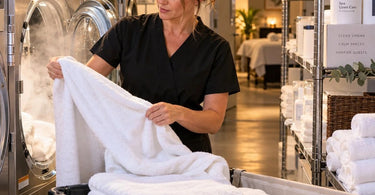
Tools that work as hard as you do... that is the dream for every busy spa professional. But while your spa towels and linens are working overtime to keep clients comfortable, your laundry room may be turning into an unofficial tropical rainforest. One minute you are enjoying the beautifully chilled atmosphere of your treatment rooms, and the next you are opening the laundry room door and getting hit with a wall of heat and humidity. Nobody ordered a complimentary steam bath for the staff! Understanding why spa laundry rooms get hotter and more humid than treatment areas is the first step toward creating a more comfortable, efficient, and manageable back-of-house operation.
Professional spas, massage studios, waxing salons, and wellness centers generate a remarkable amount of laundry. Between massage sheets, facial towels, bathrobes, treatment blankets, and reusable spa linens, the washing machines and dryers can operate for hours every day. All that cleaning comes with an often-overlooked consequence: heat and moisture buildup that can affect employees, equipment, linen storage, and the overall efficiency of your business.
Why Spa Laundry Rooms Feel Like a Sauna
The biggest difference between a treatment room and a laundry room is the amount of heat and moisture generated during daily operations. Treatment rooms are usually designed around client comfort. They may have dedicated temperature controls, carefully planned airflow, and minimal equipment running continuously.
Laundry rooms, on the other hand, contain equipment that uses substantial energy to heat water, tumble fabrics, and evaporate moisture. Washing machines, dryers, hot water pipes, and recently washed linens all contribute to the environment.
When that heat and moisture cannot escape efficiently, the room becomes increasingly uncomfortable. Add several consecutive laundry loads, limited ventilation, and a small enclosed space, and the result can feel considerably warmer than the rest of the spa.
Commercial Dryers Generate Significant Heat
Dryers are among the biggest sources of heat in a professional laundry room. Their job is to remove moisture from fabrics using heated air, mechanical movement, or a combination of drying technologies.
Even properly functioning dryers transfer some heat into the surrounding environment through their cabinets, motors, and nearby ductwork. When multiple machines operate simultaneously, that heat can accumulate quickly.
Traditional vented dryers are designed to carry moisture-laden air outdoors through an appropriate exhaust system. However, a damaged exhaust connection, blocked duct, or inadequate installation can allow excessive heat and moisture to remain inside the building.
Ventless dryers operate differently. Condenser and heat pump models remove moisture through an internal condensation process rather than conventional outdoor exhaust. They still require suitable installation conditions, airflow clearances, and condensate drainage according to manufacturer instructions.
If your dryer seems to be heating the entire room instead of simply drying your linens, the ventilation arrangement deserves professional attention.
Wet Towels Bring More Moisture Into the Room
A professional spa produces wet laundry throughout the day. Damp facial towels, massage linens, body treatment wraps, and towels used during hydrotherapy services can contain substantial amounts of water.
Even before these items enter a dryer, moisture begins evaporating into the surrounding air. Warm, damp towels release moisture more readily, particularly when they are left exposed in a warm environment.
Imagine a busy spa with six treatment rooms sending damp linens to one compact laundry area. The moisture load can build steadily, especially if used towels remain in open piles or overflowing baskets.
Using dedicated laundry baskets and an organized collection system helps keep the workspace manageable. Damp linens should be processed promptly rather than left sitting for extended periods, since prolonged moisture can encourage unpleasant odors and microbial growth.
Separate clean and soiled linen handling areas whenever possible. Clean towels should never have to compete for shelf space with a mountain of damp laundry waiting for its turn in the washer.
Ventilation Makes a Bigger Difference Than Many Owners Realize
One of the most common reasons laundry rooms become excessively hot is insufficient ventilation.
A treatment room generally benefits from conditioned air supplied by the building HVAC system. A laundry room may receive less cooling, have limited air circulation, or lack ventilation designed to accommodate its equipment.
Dryers also create a special airflow requirement. Conventional exhaust dryers move air out of the building, and that exhausted air must be replaced by an appropriate amount of incoming air, often called makeup air.
Without adequate makeup air, pressure imbalances can develop. This may reduce dryer performance, pull unwanted air from other parts of the building, and interfere with comfortable indoor conditions.
A qualified HVAC professional can evaluate whether the laundry room has sufficient supply air, exhaust capacity, and replacement air for its actual equipment. Adding a portable fan might help employees feel more comfortable, but it does not automatically solve inadequate ventilation or remove excess moisture.
Never disconnect dryer exhaust ducts or vent a conventional exhaust dryer directly into an occupied laundry room. Dryer installation and ventilation should follow the equipment manufacturer instructions and applicable local requirements.
Small Laundry Rooms Trap Heat More Easily
Many spas devote their most attractive square footage to revenue-producing treatment areas. That makes perfect business sense, but it sometimes leaves the laundry operation squeezed into a compact utility room.
Unfortunately, a small room has less space for heat to disperse. If washers, dryers, shelving, and linen carts occupy most of the available area, airflow can also become restricted.
Closets and narrow laundry rooms may have doors that remain closed during equipment operation. Without properly designed ventilation, heat accumulates while employees repeatedly enter and leave to transfer loads.
The solution is not necessarily a larger laundry room. Better equipment positioning, unobstructed air passages, and appropriate mechanical ventilation can make an existing space function more effectively.
Keep manufacturer-required clearances around equipment and avoid stacking storage containers against ventilation openings. A few extra inches of breathing room around equipment can be important, although the actual clearance requirements depend on the machine.
Hot Water Systems Add Another Layer of Heat
Washing heavily used spa linens often requires carefully selected wash temperatures, suitable detergents, and cycles appropriate for the fabric and soil load. Hot water systems can contribute additional warmth to a laundry area.
Uninsulated hot water pipes, nearby water heaters, and warm washing machine surfaces may release heat into the room. If the spa uses multiple hot water appliances, the combined impact can become noticeable.
Properly insulating accessible hot water piping where appropriate can reduce unwanted heat transfer and energy waste. Water heater placement and ventilation should always comply with applicable installation and safety requirements.
It is also worth reviewing whether every laundry load truly requires the hottest available wash setting. Follow the linen manufacturer washing instructions, detergent directions, and any applicable sanitation requirements. Increasing water temperature unnecessarily can use more energy and shorten the life of certain fabrics without providing a practical cleaning advantage.
Why Treatment Rooms Stay Cooler
Client-facing treatment rooms are usually managed differently from back-of-house spaces. Spa owners pay careful attention to comfortable temperatures, quiet airflow, attractive surroundings, and the relaxing atmosphere clients expect.
Even when equipment such as towel steamers, massage table warmers, and hot stone warmers is used during treatments, the equipment typically operates within an environment that has been designed or adjusted for client comfort.
Laundry rooms are different because they combine sustained equipment operation with repeated moisture-producing tasks. They may also be located near other utility equipment and receive less attention during HVAC planning.
This explains why a perfectly comfortable treatment area can exist only a few steps away from a laundry room that feels like summer in South Florida.
Humidity Can Affect More Than Employee Comfort
Excessive moisture is not simply an inconvenience. When humidity remains elevated for extended periods, it can create several operational problems.
Slow drying: Poor airflow, overloaded dryers, or equipment problems can make drying cycles longer than expected, creating delays during busy service days.
Musty odors: Damp laundry, moisture accumulation, and insufficient drying can contribute to unpleasant smells in storage areas.
Condensation: Moist air contacting cooler surfaces may cause visible water droplets on walls, windows, ceilings, or nearby equipment.
Storage concerns: Clean fabrics stored in a persistently damp environment may absorb moisture and develop an unpleasant odor.
Employee discomfort: High temperatures combined with humidity make physical tasks such as lifting laundry bags, loading machines, and folding towels more tiring.
Persistent condensation, visible mold, or a strong musty smell warrants prompt investigation. Address the source of moisture rather than covering the odor with fragrance.
Simple Ways to Reduce Heat and Humidity
Improving a spa laundry room does not always require a complete renovation. Start by evaluating the daily routine and identifying where heat, moisture, and unnecessary work are being generated.
1. Inspect dryer ventilation. Make sure dryer exhaust systems are professionally installed, properly connected, and maintained. Have restricted or damaged ductwork corrected by a qualified technician.
2. Clean lint filters consistently. Follow the dryer manufacturer instructions for lint filter cleaning, generally including cleaning after every load. Schedule additional professional inspection and cleaning of exhaust systems as needed.
3. Avoid overloading machines. Overfilled washers can leave laundry inadequately rinsed or spun, while overfilled dryers restrict fabric movement and may increase drying time.
4. Use appropriate washer spin settings. When permitted by the fabric care instructions, effective extraction during the final spin removes more water before laundry enters the dryer.
5. Evaluate HVAC performance. Ask an HVAC contractor whether the room needs improved ventilation, cooling, or dehumidification. Portable dehumidifiers may help some spaces, but they produce heat and must be sized and maintained appropriately.
6. Keep wet linens moving. Establish a practical collection and washing schedule to reduce long periods of damp linen storage.
7. Maintain equipment clearances. Keep airflow openings unobstructed and avoid storing supplies directly against heat-producing appliances.
8. Track temperature and humidity. A simple thermometer and humidity monitor can help identify patterns and reveal whether conditions worsen during specific operating periods.
A general indoor relative humidity goal of approximately 30% to 50% is often useful for moisture management, although appropriate conditions depend on the building, climate, and equipment. The goal is to avoid sustained excessive humidity, not to chase one perfect number at all times.
Better Linen Organization Can Reduce Laundry Room Workload
Organization cannot replace proper ventilation, but it can significantly improve how efficiently your team handles laundry.
Start by separating clean linen storage from used laundry collection. Designate clear spaces for sorting, washing, drying, folding, and restocking.
Choosing durable, professional-grade towels and spa bedding suitable for your services can also simplify laundering and inventory management.
For example, massage studios may benefit from maintaining separate inventories of massage sheets, face cradle covers, and treatment towels. Esthetic rooms may require smaller facial towels, while body treatment rooms may use larger bath towels and wraps.
Keeping the correct quantities readily available reduces emergency laundry cycles when a busy afternoon suddenly turns into a towel shortage.
Consider maintaining a linen par level based on actual service volume. A practical inventory should cover linens in use, items awaiting laundering, and clean supplies ready for upcoming appointments.
At Pure Spa Direct, professionals can explore spa essentials, professional spa apparel, and the linens and supplies needed to keep treatment rooms operating smoothly. We distribute professional products for spa and salon businesses, helping teams find practical supplies for daily service demands.
When Should You Call a Professional?
Some laundry room discomfort can be addressed through scheduling and routine maintenance. Other symptoms suggest an equipment or building issue that needs professional diagnosis.
Arrange an inspection if dryer cycles suddenly become much longer, the room develops persistent condensation, exhaust ductwork becomes excessively hot, or unusual odors appear during operation.
Repeated HVAC problems, inadequate replacement air, or moisture damage around walls and ceilings also deserve attention.
If a gas appliance produces signs of a combustion or exhaust problem, stop using it and contact a qualified professional. A carbon monoxide alarm or suspected gas leak requires immediate action according to emergency guidance. Never attempt to resolve combustion or exhaust concerns by improvising changes to the venting system.
Commercial laundry and HVAC technicians can evaluate equipment performance, ventilation design, duct condition, and whether the room is appropriately configured for the laundry volume.
Build a Laundry Schedule That Works With Your Spa
Timing can make a meaningful difference in how a laundry room feels throughout the workday.
Rather than running every available washer and dryer simultaneously, evaluate whether laundry cycles can be spaced throughout the day without delaying service preparation.
Some spas may benefit from completing part of their laundering during lower-demand periods. Others may need a continuous rotation to keep up with massage, facial, and body treatment appointments.
The right approach depends on treatment volume, available machines, staffing, and the capacity of the laundry ventilation system.
Track how many loads your team processes daily, how long drying takes, and when the room becomes most uncomfortable. Those observations can help determine whether a schedule adjustment is enough or whether the space needs mechanical improvements.
Most importantly, avoid treating extended dryer times or excessive room heat as unavoidable parts of spa life. These problems sometimes indicate opportunities to improve equipment efficiency, airflow, and maintenance.
A Comfortable Laundry Room Supports a Better Spa Operation
Why spa laundry rooms get hotter and more humid than treatment areas comes down to a combination of heat-producing equipment, wet fabrics, ventilation demands, room size, and daily operating habits. Treatment rooms are designed to keep clients comfortable, while laundry rooms often carry a heavy equipment workload behind the scenes.
By maintaining dryer ventilation, improving airflow, managing damp linens, and organizing laundry tasks effectively, spa owners can reduce unnecessary heat and moisture while supporting a more comfortable work environment.
And while your clients absolutely deserve those luxurious warm towels, your laundry team deserves a workspace that does not feel like the inside of the towel warmer.
Explore professional spa towels, salon and spa bedding, and salon and spa business supplies at Pure Spa Direct to keep your linen program organized, stocked, and ready for another fully booked day.
