
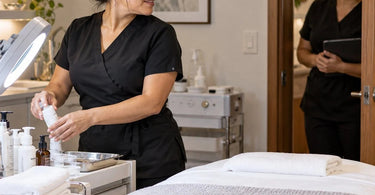
Take your results further... by paying attention to something that never appears on a treatment menu but can completely change a client's experience: sound. A beautifully prepared treatment room stocked with Spa Essentials for Professionals can feel wonderfully peaceful until a conversation from the hallway suddenly becomes part of the facial. Spa staff spend so much time inside the same environment that it is surprisingly easy to forget how clearly voices may travel through doors, corridors, ceilings, vents, reception areas, and neighboring treatment spaces.
That is why spa owners and managers should occasionally experience the business from the client's side of the door. Sit on the treatment table. Close your eyes. Listen. You may discover that the supposedly private conversation happening twenty feet away sounds considerably less private from inside a quiet treatment room.
Why Spa Staff Voices Carry Farther Than They Think
Professional spas are often intentionally quiet environments. There may be soft music, a humming towel warmer, gentle ventilation, and very little other background noise. That peaceful atmosphere is fantastic for relaxation, but it also means an unexpected voice can stand out.
A conversation that seems perfectly normal at the front desk can become noticeable down a quiet hallway. Two employees speaking behind a closed door may assume nobody outside can hear them, while a client waiting nearby can catch entire sentences. A staff member calling to a coworker from another room may unintentionally turn the spa into something resembling a very luxurious game of telephone.
The issue is not simply volume. Room layout, hard surfaces, door gaps, open ceilings, vents, hallways, and low background sound can all influence how noticeable speech becomes. Even relatively ordinary conversation may feel surprisingly prominent when a client is lying quietly during a massage or facial.
The Client Hears More When There Is Less Going On
Think about the difference between having a conversation in a busy restaurant and having the same conversation in a silent hallway. Background activity helps speech blend into the environment. In a spa, however, tranquility is part of the product.
Clients receiving massage, skincare, waxing, lash, brow, or body services may spend long stretches of time without speaking. During that quiet time, their attention becomes naturally tuned to the environment. A dropped bottle sounds louder. A cabinet door feels more dramatic. And the employee conversation outside suddenly earns an audience nobody invited.
This is especially important around massage rooms outfitted with Top Quality Massage Tables Chairs for Relaxation & Wellness, facial rooms, waxing suites, and other spaces where relaxation or discretion is expected.
Closed Doors Are Helpful, Not Magical
Closing a treatment room door is an excellent habit, but a closed door should not automatically be treated as a guarantee of acoustic privacy. Sound can pass through or around doors, particularly when there are gaps underneath or around the frame. It can also find less obvious routes through ceilings, ventilation pathways, and neighboring spaces.
This is why employees should operate under a simple professional rule: if a conversation would be embarrassing, inappropriate, confidential, or uncomfortable for a client to overhear, do not rely on a closed door to protect it.
Save sensitive discussions for an appropriate private area and keep everyday operational conversations at a moderate level. That small behavioral adjustment costs absolutely nothing, which may make it the rare spa improvement the accounting department enthusiastically approves.
Hallways Can Become Accidental Sound Highways
Long corridors are particularly sneaky. Voices can travel along them farther than employees expect, especially when the hallway contains hard flooring, smooth walls, glass, or other reflective surfaces.
Staff calling from one end of a hallway to another can disrupt several rooms at once. Instead of shouting, encourage employees to walk to the coworker, use an internal messaging system, or communicate through whatever discreet workflow your facility already uses.
The same principle applies to carts, cabinet doors, equipment, and supplies. Organizing frequently used items on appropriate spa carts or workstations can reduce unnecessary trips into the hallway and the conversations that tend to happen along the way.
Reception Deserves Special Attention
The reception desk is one of the busiest communication zones in the business. Phones ring. Appointments change. Clients check in. Employees ask questions. Retail recommendations happen. Someone inevitably needs to know where the extra towels went.
That activity is normal, but placement matters. If reception is directly beside treatment rooms, voices may travel much farther than expected. Consider spending a few minutes inside neighboring rooms during normal business hours and listening to what clients might hear.
If the reception area itself could use an operational refresh, thoughtful Reception Furniture, organized storage, and a cleaner workflow can help employees communicate without constantly calling across the room.
Watch Conversations Around Waiting Clients
Sometimes the privacy problem is not sound traveling through walls at all. It is simply employees forgetting that waiting clients are sitting nearby.
Conversations about schedules, coworkers, difficult appointments, client preferences, inventory problems, weekend drama, or the person who still has not replaced the empty coffee creamer may feel harmless behind the desk. To a guest sitting eight feet away, however, they become part of the spa experience.
A useful staff standard is to assume that anything said in reception can be heard by every client in reception. Keep workplace discussions professional, neutral, and appropriate for an audience.
Quiet Operations Support the Atmosphere You Are Selling
Sound management is not only about privacy. It is also about consistency.
A spa may invest in attractive Luxury Spa Furniture, plush Salon & Spa Bedding, comfortable High-Quality Towels, relaxing Aromatherapy Supplies, and carefully selected treatment products. Those details create an expectation of calm. Loud staff conversations can undo that atmosphere remarkably quickly.
Clients may forgive an occasional dropped applicator or ringing phone. Constant chatter outside the room, however, can make an otherwise premium environment feel busy and uncontrolled.
Train Staff to Use a Spa Voice
No, this does not mean everyone needs to whisper like they are sharing state secrets. Excessive whispering can actually feel awkward. The goal is simply controlled conversational volume.
During onboarding, show employees where voices tend to travel. Walk through reception, corridors, break areas, laundry spaces, treatment rooms, nail stations, and retail areas. Have one employee speak at an ordinary volume while another listens from different locations.
This simple exercise is often more effective than repeatedly saying, "Please keep it down." Once staff members actually hear how far speech carries, the reason for the policy becomes obvious.
Do a Client's-Ear Sound Check
A practical sound audit does not need to become a grand engineering expedition. Start during a typical business day and test the spaces where clients spend the most quiet time.
Lie on a massage table. Sit in a facial bed. Relax in a pedicure chair. Wait in reception. Stand inside the restroom. Then have staff conduct ordinary conversations in neighboring areas.
Listen specifically for understandable words rather than simply audible sound. Hearing a faint voice is different from clearly understanding a conversation. If sentences are easy to follow, investigate the path the sound is taking and determine whether workflow, staff volume, room arrangement, door sealing, added soft furnishings, or professional acoustic improvements might help.
Soft Surfaces Can Help a Room Feel Less Echoey
Hard surfaces are necessary throughout beauty and wellness businesses because they are durable and often easier to maintain, but rooms containing many reflective surfaces can feel acoustically lively.
Where appropriate for sanitation, safety, and the design of the facility, furnishings and other sound-absorbing elements may help reduce the sense of echo within a space. Even the overall arrangement of equipment and furniture can influence how a room sounds.
Of course, never compromise cleaning standards merely to make a room quieter. Professional environments still need surfaces, furnishings, and accessories suited to frequent cleaning and disinfection. Explore Professional Cleaners & Disinfectants for Salons and Spas when building cleaning protocols around client-facing areas.
Do Not Let Music Become the "Fix"
Turning the spa soundtrack up until it covers employee conversations is usually not the elegant solution it sounds like at 4:55 on a Friday afternoon.
Music should support the desired client experience, not compete with staff chatter. If employees have to speak louder because the music is louder, the business has entered an impressive little volume arms race that nobody wins.
Keep ambient sound comfortable and address the source of disruptive conversations instead. If a property has significant acoustic privacy concerns, a qualified professional can assess whether architectural treatments, door improvements, sound masking, or other measures are appropriate.
Protect Conversations About Clients
Staff should be particularly thoughtful when discussing client information. Appointment details, service concerns, personal preferences, payment issues, medical information provided for a service, and other sensitive matters deserve discretion.
Whenever a conversation involves something a client would reasonably expect to remain private, move it away from public and treatment areas whenever possible. Do not assume the door, music, or distance will prevent other people from hearing.
This habit protects professionalism while also strengthening trust. Clients may never compliment you for the conversations they did not overhear, but that is rather the point.
Small Workflow Changes Can Make a Big Difference
Many noise problems are actually workflow problems wearing tiny acoustic disguises.
If technicians constantly call across the spa asking where supplies are stored, improve organization. If staff repeatedly enter the hallway to find clean linens, reposition inventory or review linen par levels. If treatment rooms are interrupted because essential tools are missing, create standardized setup lists and stock stations more consistently.
Pure Spa Direct distributes professional products across spa, salon, nail, waxing, massage, barber, skincare, and wellness categories, making it easier for businesses to organize the tools and supplies their teams use every day. Reviewing Must-Have Supplies for Salon & Spa Business Success can also help identify items that support smoother room setup and daily operations.
A Quieter Team Can Make the Whole Business Feel More Premium
Luxury is often communicated through what clients do not notice. They do not notice staff scrambling for supplies. They do not hear an argument about lunch coverage. They do not learn which appointment is running fifteen minutes behind. They simply experience a calm, organized environment where everything appears to happen effortlessly.
That effortless feeling requires intentional systems behind the scenes.
Take a few minutes this week to perform a sound check from the client's perspective. Close the treatment room door, lie back, and listen while normal operations continue. You may be surprised by how much you can hear, and your staff may be even more surprised.
Once everyone understands why spa staff voices carry farther than they think, keeping conversations discreet becomes less about constantly reminding people to be quiet and more about building a professional culture that protects relaxation, privacy, and the polished client experience your business works so hard to create.
