
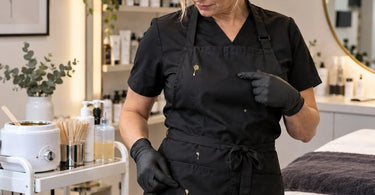
Simplify operations with this smart choice... take a closer look at your waxing aprons and the mysterious little wax spots that seem to appear out of nowhere. You finish a perfectly normal waxing appointment, glance down, and discover a dot of hard wax near your shoulder, another on your hip, and one on the back of your apron that practically requires a detective to explain. How did wax get there when your applicator never went anywhere near that spot? Professional waxing is a surprisingly active service, and even experienced estheticians can end up wearing tiny souvenirs from their appointments. Understanding how those spots travel can help you protect your workwear, maintain a cleaner treatment room, and spend less time wondering whether your apron has secretly developed a hobby.
The good news is that mysterious wax spots usually have perfectly ordinary explanations. The less exciting news is that preventing them requires paying attention to several tiny habits that are easy to overlook during a busy appointment. From applicator movements to apron pockets and treatment table edges, a few thoughtful adjustments can make a noticeable difference.
Why Wax Ends Up in Places That Make Absolutely No Sense
Wax has a remarkable talent for traveling farther than expected. It may begin as a tiny thread stretching from a spatula, a small drip on a glove, or a fragment left behind after removing a strip. By the time you notice it, that innocent little bit of wax has migrated to an entirely different part of your uniform.
One reason this happens is that wax changes consistency as its temperature changes. Depending on the formula, warm wax can stretch, drip, or form thin strings. As it cools, it becomes thicker and may cling to gloves, tools, fabric, or nearby surfaces.
Working with Professional Stripless Hard Wax creates different opportunities for stray wax than working with Soft Strip Wax. Hard wax may leave small cooled fragments or stretchy threads, while soft wax can leave tacky residue that transfers through contact.
Neither situation automatically means the waxing technique is poor. However, recurring spots in the same location can reveal where a workstation or service routine needs improvement.
The Tiny Wax String That Started the Whole Mystery
Picture this: you lift your applicator from the wax warmer, turn toward your client, and begin positioning your hand. A nearly invisible strand of wax stretches between the applicator and the warmer. You move, the strand breaks, and a tiny bit lands somewhere unexpected.
Congratulations. Your apron has just received its first decorative accent of the morning.
Wax stringing can become more noticeable when application habits, warmer settings, or product consistency are not well matched. The ideal working temperature varies by formula, so technicians should follow the wax manufacturer's instructions instead of assuming every product behaves identically.
Consistent temperature control matters. Explore Professional Wax Warmers for Salons & Spas and make sure the warmer is appropriate for the wax being used.
A useful habit is to rotate the applicator carefully and control excess product before moving away from the warmer. Avoid carrying an overloaded spatula across the treatment room. A controlled amount of wax helps reduce unnecessary drips and makes application more predictable.
Why Your Apron Pockets Become Wax Magnets
Apron pockets are convenient. They hold small workday essentials, keep frequently used items accessible, and make a busy esthetician feel wonderfully organized.
Unfortunately, they can also become collection points for wax residue.
Consider how often you reach into a pocket while wearing gloves. If a fingertip has even a small amount of wax on it, that residue can transfer onto the pocket opening. Repeated contact may spread the residue along seams and into surrounding fabric.
A pocket can also collect dried fragments from nearby work surfaces or contaminated items placed inside it.
For a cleaner setup, keep apron pockets reserved for items that do not contact wax, treated skin, or contaminated work surfaces. Never place used applicators or single-use treatment materials into pockets.
For hygienic organization, keep clean Professional Wax Spatulas and Applicators for Salons & Spas in a designated clean storage area and provide a conveniently positioned disposal container for used supplies.
Keeping pockets free of wax-related clutter helps preserve your apron and supports a more organized service environment.
The Glove-to-Apron Transfer Nobody Notices
One of the most common explanations for mysterious wax spots is simple contact transfer.
You adjust your apron strap. You smooth a wrinkle. You reach toward your pocket. You move the fabric away from your workstation. If your glove carries a small amount of wax, every touch creates another opportunity for a spot.
This is particularly easy to overlook during a fast-paced waxing schedule because these movements happen almost automatically.
Proper glove use helps protect both treatment hygiene and workwear. Keep appropriately selected Protective Gloves & Masks for Salon and Spa Professionals available, and change gloves when they become contaminated or when required by the service protocol.
Remember that wiping wax off a glove does not necessarily make that glove appropriate for continued client contact. Follow applicable infection-control requirements and professional procedures, particularly when moving between contaminated and clean tasks.
An excellent practical rule is to adjust your apron, hair, eyewear, and workstation before beginning the service whenever possible. Fewer unnecessary touches mean fewer opportunities for wax to transfer.
Why Wax Spots Appear on the Back of Your Apron
Front-facing wax spots make sense. Spots on the back of an apron? Those feel personal.
The explanation often involves contact with another surface rather than wax flying through the air.
Estheticians frequently lean against counters, brush past carts, turn beside treatment tables, or rest a hip near a workstation. If any of those surfaces has wax residue, the apron can pick it up without the technician noticing.
A wax drip on the edge of a rolling cart might transfer to your hip. A small residue patch on a counter can mark your apron tie. Even a seemingly clean treatment table edge can harbor a missed bit of wax.
The solution is to include high-contact surfaces in your routine cleaning checks. Inspect workstation edges, cart handles, warmer exteriors, counter corners, and storage areas regularly.
Use appropriate Professional Cleaners & Disinfectants for Salons and Spas according to their labels and surface compatibility. Remove visible wax residue using a compatible method before completing any required cleaning and disinfection steps.
Clean surfaces are not just about appearance. They help prevent unwanted residue from transferring between tools, uniforms, and work areas.
Hard Wax and Soft Wax Leave Different Types of Apron Spots
Not every wax mark behaves the same way. The type of wax involved can influence how the stain forms and how difficult it is to remove.
Hard wax: Small drops may cool into raised spots that sit partly on the fabric surface. Flexible formulas may also leave fine threads that settle into fabric texture before hardening. Some cooled material can sometimes be lifted mechanically, although residue or color may remain.
Soft wax: Sticky residue can smear into fibers or transfer through repeated contact. Because many soft wax formulations remain tacky, a seemingly minor spot can collect lint and spread to other surfaces.
Roll-on wax: Efficient Roll-On Wax Cartridges for Quick Waxing can support controlled application, but residue around a cartridge head, holder, or work surface can still transfer to clothing.
Wax formulation, colorants, oils, fabric composition, and temperature all influence the final mark. Darkly colored wax may leave visible pigment even after the bulk wax is removed.
Professionals using multiple wax formulas should compare their individual cleanup instructions rather than applying one cleaning method to every spill.
Your Apron Fabric Makes a Bigger Difference Than You Think
A beautiful apron is wonderful. A beautiful apron that survives a fully booked Saturday is even better.
Apron material influences how wax adheres, how easily residue can be removed, and how the garment should be cleaned.
Smooth, coated surfaces: Certain protective coatings may allow easier removal of surface residue. However, not every coating tolerates oils, solvents, aggressive scrubbing, or machine washing.
Cotton and cotton blends: These fabrics can offer comfort and breathability, but wax may penetrate their woven fibers. Removing the surface deposit does not always remove the remaining oily or colored stain.
Polyester and synthetic blends: Some synthetic fabrics resist certain types of staining, but they can be sensitive to heat. Excessive heat may damage fibers or protective finishes.
Disposable protective aprons: These may be appropriate for certain services or workflows, depending on their design and intended use. They must be discarded as directed and are not a substitute for proper glove use or cleaning practices.
When shopping for Professional Spa Apparel, look beyond appearance. Consider coverage, adjustable straps, pocket placement, comfort, durability, and manufacturer-provided care instructions.
An apron that fits well and stays in place may also reduce the constant adjusting that contributes to contact transfer.
How to Remove Wax Spots From a Waxing Apron Without Making Things Worse
Finding wax on your favorite apron is annoying. Discovering that your enthusiastic cleaning attempt turned one tiny spot into a larger stain is considerably more annoying.
The safest approach depends on the wax formula and apron material. Always check the garment care label and the wax manufacturer's cleanup recommendations before selecting a treatment.
Step 1: Stop the spread. If a fresh wax spot appears, avoid immediately rubbing it into the fabric. Keep the affected area away from other clothing and clean treatment surfaces.
Step 2: Allow appropriate wax to firm up. For wax formulas that harden on cooling, let the deposit cool before attempting gentle removal. Do not touch or scrape hot wax.
Step 3: Remove loose material carefully. If the apron fabric permits it, a blunt, non-sharp edge may help lift hardened surface wax. Work gently to avoid fraying fabric or damaging protective coatings.
Step 4: Address remaining residue. Select only a cleaning method approved for the wax and the garment. Some manufacturers recommend specific wax-removal products, while certain washable fabrics may allow pretreatment with a suitable laundry detergent. Do not assume that oil-based wax removers are safe for every apron, and never apply professional wax remover to fabric unless its label expressly permits that use.
Step 5: Launder only when permitted. Follow the apron care label for washing instructions, water temperature, and detergent selection. Wipe-clean protective garments may require a completely different procedure.
Step 6: Inspect before heat drying. If the garment is washable, check for remaining wax or oily staining before putting it in a dryer. Heat can make some residues harder to remove and may damage sensitive coatings.
Never use harsh solvents, open flames, or improvised high-heat methods on professional apparel. A garment that becomes damaged, remains visibly soiled, or cannot be cleaned as required should be removed from service.
The Five-Minute Workstation Reset That Helps Prevent Wax Spots
Prevention does not require turning every appointment into a laboratory experiment. A repeatable workstation reset can reduce unnecessary mess while supporting the smooth service flow clients appreciate.
Before the appointment: Inspect your apron and confirm it is clean and service-ready. Check the warmer exterior, cart edges, treatment table, and frequently touched surfaces. Organize supplies so clean materials are easy to reach.
During setup: Position the warmer close enough for efficient, safe application without creating an awkward carrying path. Keep cords secured and prevent the workstation from becoming overcrowded.
During application: Use an appropriate amount of wax on each applicator, maintain the manufacturer's recommended working temperature, and avoid unnecessary sweeping movements between the warmer and treatment area.
After the service: Dispose of single-use materials appropriately, handle reusable tools according to applicable reprocessing requirements, and address visible residue before it spreads.
Before the next client: Complete the required cleaning, disinfection, and setup procedures. Check apron areas that frequently brush against counters and carts.
For convenient room setup, organize essential items from Waxing Supplies for Professionals in a way that supports your established workflow.
The objective is not to rush. It is to make good habits automatic.
Small Workstation Changes That Make Apron Cleanup Easier
Sometimes the best way to keep an apron clean is to change the environment around it.
Start by observing where your hands travel during application. If reaching for supplies repeatedly requires crossing in front of the warmer, consider relocating those supplies to a more convenient position.
Keep a properly positioned waste container nearby so used applicators and waxing materials can be discarded without unnecessary travel across the room. Avoid placing disposal containers where they could interfere with movement or become a tipping hazard.
Use suitable treatment table protection, including Hygienic Table Paper for Waxing, Spa & Massage Tables, according to the service requirements. Protective coverings can help contain routine mess, but they do not replace cleaning and disinfection.
Store clean applicators and other supplies away from splash-prone zones. Keep warmer lids, containers, and surrounding surfaces free from unnecessary buildup using manufacturer-approved cleaning methods.
For routine waxing room maintenance, the Waxing Accessories & Removers for Professional Use collection is a helpful category to review when selecting products appropriate for compatible equipment and surfaces.
Thoughtful workstation organization can reduce both apron staining and the little interruptions that make busy schedules feel chaotic.
Why Apron Fit Matters More Than You Might Expect
An apron that constantly shifts, twists, or rides up creates more opportunities for accidental contact with wax.
Loose fabric can brush against work surfaces. Long ties may swing into nearby areas. Oversized pockets may stick out and touch counters, while an uncomfortable neckline can encourage constant adjustments.
That does not mean every waxing professional needs the same apron design. Coverage requirements, individual comfort, body proportions, and service techniques all matter.
Look for secure ties or adjustable straps, sufficient torso coverage, and a silhouette that allows comfortable movement without excessive loose fabric.
Test apron fit while standing, reaching, and moving around the treatment table. A garment might look wonderful in the mirror but behave very differently during an extended appointment.
If your team wears coordinated uniforms, consider evaluating different sizes and fits rather than automatically ordering one style for everyone.
Comfort is not a luxury during back-to-back services. It is part of creating a practical working environment.
Should Every Waxing Professional Have a Backup Apron?
For busy waxing businesses, keeping a spare clean apron available is a practical idea.
A backup makes it easier to replace a garment that becomes heavily soiled, damaged, or unsuitable for continued service. It also reduces the pressure to attempt questionable spot-cleaning methods in the middle of an appointment schedule.
Multi-provider spas may benefit from having enough appropriately sized aprons to support scheduled laundering or replacement without disrupting appointments.
The ideal quantity depends on team size, daily service volume, laundry turnaround, and the durability of the selected garments.
A simple inventory approach might include one apron in active use, another clean and ready for rotation, and additional backup stock where appointment volume justifies it.
For managers reviewing uniform purchases, consider aprons alongside other frequently replenished items in Spa Essentials for Professionals.
Buying a backup apron may not be the most glamorous business decision of the year, but neither is discovering a spectacular wax stain five minutes before your next client arrives.
Can Your Waxing Technique Help Keep Your Apron Cleaner?
Absolutely. Technique, product handling, and workstation organization all influence how often wax reaches areas outside the intended application zone.
Use controlled applicator movements instead of quick flicking motions. Work with the amount of product appropriate for the treatment area. Avoid overloading applicators, and monitor how the wax behaves as you lift it from the warmer.
Maintain the formula-specific working temperature recommended by the manufacturer. Overheating wax can create safety concerns, while poorly controlled product consistency can complicate application.
Some professional wax formulas handle differently from others. Exploring options from collections such as ItalWax - Wax, Berodin, and Cirepil can help businesses evaluate professional products for their preferred service techniques.
Choose formulas based on intended treatment areas, manufacturer instructions, training, client needs, and operational preferences rather than assuming any particular wax will eliminate drips or residue.
A good product paired with careful technique can support a cleaner and more consistent application process.
What Those Random Wax Spots Can Tell You About Your Workflow
Here is an unexpectedly useful idea: your apron can sometimes reveal patterns in how you work.
Repeated spots near the lower front may suggest contact with the treatment table edge or a consistent applicator drip path. Marks around the pockets may point to frequent glove contact. Wax on the sides or back may indicate contact with a counter or rolling cart.
None of these patterns proves a specific cause, but they can guide a quick observation exercise.
If stains keep appearing, note where they occur and which services were performed. Then observe your workstation movements during a normal appointment while maintaining appropriate attention to client comfort and safety.
Consider whether your equipment positioning, apron fit, applicator handling, or cleaning routine could be improved.
Small operational refinements are especially valuable in high-volume waxing studios where tiny inefficiencies are repeated many times throughout the day.
The goal is not to achieve a magically spotless apron during every appointment. The goal is to reduce avoidable residue, maintain professional hygiene, and make cleanup manageable.
Keep the Wax on the Client's Treatment Area, Not Your Workwear
Wax spots in strange places are part of the occasionally hilarious reality of professional waxing. They happen because warm products move, hands touch surfaces, fabric brushes against equipment, and tiny residues travel through ordinary workday contact.
Fortunately, a cleaner apron is often the result of manageable improvements rather than a completely new service routine. Proper wax temperature, controlled applicator handling, clean work surfaces, appropriate glove practices, well-fitting protective apparel, and garment-specific cleaning procedures all contribute.
For salon owners and spa managers, these details can also make purchasing decisions easier. Stock appropriate Professional Spa Apparel, dependable waxing essentials, and compatible cleanup supplies that fit the needs of your actual service menu.
Pure Spa Direct offers a broad selection of professional supplies from established industry brands, making it easier to compare options for waxing rooms, treatment areas, and staff essentials.
And the next time you discover a random speck of wax near the back of your shoulder, do not automatically blame your apron. It probably did not wake up that morning planning to become abstract art. Somewhere between the warmer, your gloves, and the treatment cart, a tiny wax adventure simply got out of hand.
