
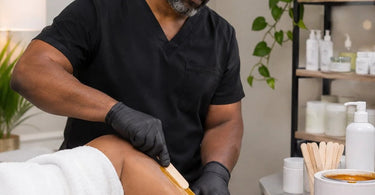
Stand tall with the right tools... and know exactly how much of those tools your waxing services are actually consuming! Running a successful waxing business requires more than flawless technique, happy clients, and a wax warmer that never seems to get a day off. Behind every beautifully shaped brow, silky-smooth leg, and expertly performed Brazilian is a collection of professional products that directly affects your bottom line. Understanding how much wax, how many applicators, and how many disposable supplies each service consumes can transform the way you price treatments, order inventory, and manage profitability. Because while smooth skin is the goal for your clients, smooth financial operations should be the goal for your business.
For waxing professionals, product consumption tracking is one of the simplest ways to uncover hidden expenses. A brow wax and a full-leg wax clearly require different quantities of product, but the differences become much more interesting when you compare individual service categories, waxing techniques, and employee habits. Without accurate tracking, even a busy studio can underestimate its supply expenses and wonder why the appointment calendar is overflowing while the profits seem to have disappeared on vacation.
Why Tracking Wax Consumption by Service Type Matters
Every waxing service has a unique supply profile. Eyebrow shaping typically uses relatively small amounts of wax and several precision applicators. Underarm waxing may require additional passes depending on hair growth patterns. Brazilian waxing can involve specialized hard wax techniques, additional disposable supplies, and varying appointment lengths. Full-leg waxing covers significantly more surface area and may require substantial quantities of soft wax and removal strips.
Tracking all these services under one general waxing supply expense hides important differences. A salon might know that it purchased 20 pounds of wax during the month without knowing which treatments consumed most of that inventory. That information is useful for bookkeeping, but it does not explain whether individual services are priced appropriately.
Separating consumption by treatment category helps professionals identify which services use the most product, calculate more realistic treatment costs, detect unexpected waste, and forecast purchasing needs. It also creates a reliable foundation for evaluating different professional waxing supplies without relying entirely on package prices.
Different Waxing Services Have Different Product Requirements
A professional waxing menu may contain dozens of treatments, but each service should have its own expected supply consumption. Start by grouping appointments into practical categories that match your booking system.
Facial waxing: Eyebrows, upper lips, chins, and other small facial areas generally require limited wax quantities but may involve multiple small applicators, cleansing products, and finishing supplies. Precision matters more than covering a large surface area.
Underarm waxing: This service typically covers a modest area, but hair density, growth direction, and client-specific needs can influence the amount of wax used.
Bikini and Brazilian waxing: These treatments often involve specialized hard wax application, several sections of removal, and additional protective supplies. Differences in hair density, treatment boundaries, and technique can make consumption vary considerably.
Arm and leg waxing: Larger treatment areas may consume more wax, particularly when using soft strip wax with disposable removal strips.
Back and chest waxing: Large treatment areas, variable hair density, and occasional additional passes can affect both product consumption and appointment duration.
Each category deserves a realistic consumption benchmark based on actual services rather than a universal guess. Your brow wax should not be carrying the same supply allowance as a full-leg treatment. That would be like charging every restaurant customer for an entire birthday cake because somebody ordered dessert.
How to Measure Wax Usage Accurately
Fortunately, establishing useful consumption measurements does not require an elaborate software system. A digital scale, a simple tracking sheet, and a consistent process are enough to get started.
For hard wax beads, a practical approach is to record the weight of wax added to the warmer and reconcile that quantity against completed treatments and remaining inventory. For a controlled trial, weigh a dedicated supply of beads before preparing a service, then record how much was actually introduced into the treatment process.
Measuring the changing weight of an operating wax warmer can introduce errors because residue, temperature, and refill practices complicate the calculation. Measuring product added or dispensed under controlled conditions generally provides more useful information.
For soft wax, estimate consumption by recording container quantities over a defined group of appointments. If a treatment room begins with a measured quantity and ends with a known remaining amount, the difference can help establish average usage after accounting for spills, discarded product, and other losses.
Track the number of completed appointments in each category and calculate average consumption per treatment. Repeat the process across enough services to capture normal differences among clients rather than relying on one unusually demanding appointment.
Remember that wax is only one expense. Include applicators, strips, gloves, cleansing products, finishing products, and disposable table coverings in the measurement process.
Calculate the Real Product Cost of Each Waxing Service
Once consumption data is available, estimating direct product expenses becomes straightforward.
Consider a hypothetical hard wax purchased for $48 per 2,000 grams. The product costs $0.024 per gram, excluding shipping, taxes, and other applicable purchasing expenses.
If a particular waxing treatment uses an average of 75 grams, the wax portion of the service costs approximately $1.80. Add $0.60 for applicators, $0.45 for gloves, $0.35 for preparation and finishing products, and $0.40 for disposable coverings. The total estimated direct consumable expense becomes $3.60.
Now consider another service that uses 150 grams of the same wax and $2.10 in other disposable supplies. Its estimated direct consumable cost is $5.70.
These numbers are illustrative, not universal industry benchmarks. Actual expenses depend on product selection, technique, client requirements, supplier pricing, and sanitation procedures.
The essential formula is simple: direct consumable cost per service equals wax quantity multiplied by unit cost, plus the cost of other consumables used during that treatment.
For a more complete profitability calculation, add technician compensation, payroll expenses, allocated overhead, payment processing fees, and other relevant operating costs. Product consumption tracking does not replace complete service costing. It makes that calculation more accurate.
Hard Wax Versus Soft Wax: Compare Cost Per Completed Service
One common purchasing mistake is assuming that the wax with the lowest package price automatically delivers the lowest service cost.
Hard wax and soft wax have different application requirements. Hard wax generally sets before removal and does not require a separate removal strip. Soft wax is applied thinly and removed with an appropriate strip. Product formulation, body area, hair characteristics, and technician technique all influence consumption.
For smaller or more sensitive areas, professional stripless hard wax may be appropriate. For larger areas, soft wax systems may offer a practical workflow, depending on the product and service protocol.
To compare the systems fairly, evaluate wax consumed, strips used, applicator quantities, average treatment time, and the number of applications required to complete the service successfully.
A more expensive wax may prove economical if it delivers consistent results with appropriate product consumption. Conversely, a lower-cost wax may still be the better choice for certain treatments when performance and total service expenses justify it.
Professional waxing collections such as ItalWax hard and soft wax provide options for evaluating different treatment requirements. The goal is not to choose one formula for every appointment. It is to understand how each formula performs within your actual service menu.
Do Not Forget Applicators, Strips, and Disposable Supplies
Wax receives most of the attention because it is the star of the treatment, but disposable supplies can quietly become supporting characters with surprisingly expensive contracts.
Consider the cumulative expense of wooden spatulas, precision applicators, gloves, waxing strips, cotton, protective coverings, and cleansing materials. A small difference in per-service usage can become meaningful over hundreds of appointments.
For example, using three additional applicators per appointment across 500 monthly appointments results in 1,500 additional applicators. If each costs $0.03, the difference is $45 per month, or $540 over twelve months.
That does not mean technicians should use fewer applicators than hygienic application requires. Absolutely not. Instead, tracking helps distinguish necessary consumption from avoidable waste.
Maintain appropriate quantities of professional wax spatulas and applicators and wax strips and rolls for each treatment type.
Never reuse single-use applicators or compromise sanitation to lower expenses. Follow applicable state and local regulations, product instructions, and professional infection-control requirements. A wax applicator that has touched a client must not be reintroduced into a shared wax supply. Disposable supplies should be included in service pricing as a normal cost of performing treatments safely.
Use Consumption Data to Improve Waxing Service Pricing
Once a studio understands its direct supply expense by treatment, pricing decisions become much more informed.
Imagine two services priced at $45. Service A takes 20 minutes and uses $2.50 in consumables. Service B takes 40 minutes and uses $5.50 in consumables. Before accounting for labor and overhead, Service A retains $42.50 after direct product expenses, while Service B retains $39.50.
The difference becomes more significant when appointment duration is considered. Service A generates $127.50 per occupied service hour after direct consumable expenses, assuming consecutive bookings without gaps. Service B generates $59.25 on the same basis.
Neither figure represents actual profit because labor, overhead, and other expenses remain unaccounted for. However, the comparison clearly demonstrates why identical menu prices do not necessarily produce comparable financial results.
Use consumption records alongside appointment duration and full operating costs to assess whether individual services support the business financially.
A pricing adjustment may be appropriate when a treatment consistently requires more supplies or time than originally estimated. Other solutions might include changing appointment scheduling, offering carefully defined service upgrades, or adjusting the menu descriptions to reflect different treatment scopes.
Spot Product Waste Without Micromanaging Your Team
Tracking product consumption should improve operations, not turn the treatment room into an interrogation scene starring a half-empty wax container.
Differences in usage can occur for legitimate reasons. Client hair density, treatment area, product formulation, and practitioner technique all affect consumption. The purpose of tracking is to identify patterns and opportunities for refinement.
If one technician consistently uses considerably more wax for comparable services, review the circumstances before drawing conclusions. Perhaps their appointment mix includes more challenging treatments. Perhaps their preferred application thickness differs from the manufacturer's recommendations. Or perhaps they need additional training on controlling product placement.
Useful coaching topics include appropriate application thickness, selecting the correct applicator size, preparing only the amount of product needed, using efficient treatment sections, and following manufacturer instructions.
Track performance in context rather than establishing rigid limits that interfere with service quality or safety. A good benchmark provides guidance while recognizing that clients are individuals, not identical pieces traveling down an assembly line.
Build a Simple Wax Consumption Tracking Sheet
A practical tracking system does not need dozens of columns. Start with the following information:
Service type: Record the actual treatment performed, such as brow shaping, underarms, Brazilian, half-leg, or full-leg waxing.
Wax type: Identify the hard wax, soft wax, or other approved product used.
Quantity consumed: Record grams, ounces, milliliters, or another appropriate measurement consistently.
Disposable supplies: Note applicators, strips, gloves, and other significant single-use materials.
Service duration: Record the actual treatment time, including relevant preparation and cleanup.
Technician: Identify the professional completing the service to support training and operational analysis.
Exceptions: Note unusual circumstances, such as significant hair density, additional treatment sections, product spills, or a service that could not be completed.
Once the studio has collected enough observations, calculate an average and typical range for each service category. If appointments vary substantially, consider using the median as an additional benchmark so unusually high-consumption services do not distort the normal expectation.
Review results regularly and update benchmarks whenever formulas, techniques, or service definitions change.
Turn Consumption Records Into Smarter Inventory Orders
Product tracking becomes especially valuable when it informs purchasing decisions.
Suppose a studio expects to complete 120 Brazilian waxing appointments next month and its established average is 85 grams of hard wax per appointment. That category alone requires approximately 10,200 grams of wax before accounting for expected waste, replenishment lead times, and safety stock.
Rather than ordering based on a vague feeling that the supply cabinet looks suspiciously empty, management can calculate projected demand from appointment forecasts and actual consumption.
Repeat the process for facial waxing, arms, legs, and other categories. Combine the estimates for products used across multiple services while keeping different formulas separate where necessary.
This approach makes it easier to plan purchases of bulk wax supplies without automatically overstocking.
Bulk pricing can improve the unit economics of frequently used products, but larger orders are only advantageous when the savings justify storage requirements, cash tied up in inventory, and the risk of product expiring or deteriorating before use.
Review minimum order quantities, package sizes, shelf life, storage instructions, delivery costs, and expected usage before committing to a larger purchase.
Track Pre-Wax and Post-Wax Products Too
Wax is only part of the professional treatment protocol. Cleansers, preparation products, soothing lotions, oils, and approved finishing products also contribute to direct service expenses.
Some treatments use more preparation product because of their surface area. Others require specialized finishing protocols or client-specific product selections.
Tracking the approximate amount used for different service categories helps prevent finishing products from disappearing into a generic overhead category.
For consistent purchasing and service planning, explore professional pre-wax and post-wax products that match the salon's established protocols.
Choose products based on their intended use, manufacturer directions, client suitability, and compatibility with the waxing system. Consumption measurements should support the protocol rather than dictate how little product a technician can get away with using.
Reduce Unexpected Inventory Shortages During Busy Seasons
Waxing demand often changes with appointment trends, vacations, special occasions, and seasonal preferences. Studios that know their average consumption per service can respond more effectively when bookings increase.
For example, a rise in leg waxing appointments may increase soft wax and strip consumption without significantly changing the amount of hard wax used for facial services.
If a business only tracks total waxing appointments, it may miss that shift until a busy treatment day reveals a shortage.
Service-specific forecasting allows managers to match incoming bookings with the supplies those bookings actually require.
Establish reorder points using projected consumption during supplier lead time plus a reasonable safety stock allowance. Increase that allowance when supplier availability is uncertain or appointment demand fluctuates considerably.
For frequently used supplies, perform periodic physical inventory counts and reconcile them against purchasing and consumption records. This helps identify recording errors, unexplained losses, and discrepancies between expected and actual inventory.
Use the Numbers to Evaluate New Waxing Products
Introducing a new wax formula can feel exciting, particularly when a product promises an appealing texture or a different application experience. However, purchasing decisions should consider more than the initial cost of the container.
When testing a new professional wax, compare it with the existing formula across similar service categories. Record product consumption, treatment duration, application consistency, removal performance, and any changes in the quantity of supporting supplies.
Consider client comfort and technician feedback while following all manufacturer recommendations and appropriate contraindication screening.
A wax that costs more per pound might reduce consumption in certain applications. Another might offer a lower purchase price while requiring additional product or treatment time. Without measurement, those differences remain assumptions.
Professional collections such as Berodin, Cirepil, and Starpil give waxing businesses additional product options to evaluate according to their treatment needs.
The most meaningful comparison is not simply price per package. It is total cost per successfully completed service, considered alongside safety, performance, and client experience.
Common Mistakes to Avoid When Tracking Waxing Supplies
Using one average for every service: A single studio-wide consumption figure hides important differences between small facial treatments and larger body waxing appointments.
Ignoring product waste: Spills, unused dispensed product, expired inventory, and contaminated wax all affect actual purchasing expenses. Record these losses separately so they do not get mistaken for necessary treatment consumption.
Forgetting supporting supplies: Applicators, strips, gloves, preparation products, and protective coverings can meaningfully affect the cost of a service.
Comparing technicians without context: Service complexity, client characteristics, and technique differences must be considered before interpreting individual consumption figures.
Confusing supply cost with profitability: Product expenses are only one part of the financial picture. Labor, occupancy costs, administrative expenses, and appointment availability matter too.
Reducing sanitation supplies to meet a target: Hygiene requirements are nonnegotiable. Tracking should never encourage double-dipping, reuse of single-use supplies, or inadequate cleaning procedures.
Failing to update benchmarks: Changing a formula, introducing a new treatment, or modifying a service protocol can make older consumption measurements unreliable.
How Often Should Waxing Studios Review Consumption Data?
For a new tracking program, collect measurements across several weeks of normal appointments. Aim for enough observations within each service category to capture meaningful variation.
During the first month, review records weekly to identify missing information, inconsistent measurements, or service categories that need clearer definitions.
After the process becomes established, a monthly review may be sufficient for many studios. Compare consumption trends against product purchases, treatment volume, and inventory counts.
Quarterly reviews can help identify larger opportunities involving pricing, purchasing arrangements, menu structure, and technician training.
Reassess sooner when supplier costs change significantly, a new wax formula is introduced, or a particular service begins consuming noticeably more product than expected.
Most importantly, make the system practical for busy professionals. A tracking method that requires ten minutes of paperwork after a fifteen-minute brow wax is probably not going to become everyone's favorite salon ritual.
Make Product Tracking Part of a More Profitable Waxing Business
Successful waxing operations balance professional technique, client experience, consistent sanitation, and financial discipline. Product consumption tracking connects those priorities by helping owners understand what each treatment actually requires.
Start with your most frequently booked services. Establish realistic benchmarks for wax and other consumables, compare the findings with existing prices, and use the results to guide purchasing decisions.
As the information becomes more reliable, expand the process across the complete waxing menu. Encourage technicians to participate in identifying waste, improving workflows, and maintaining consistent treatment standards.
Pure Spa Direct supports professional waxing businesses with a broad selection of wax formulas, applicators, strips, warmers, preparation products, and other salon essentials. Whether you are evaluating professional wax warmers or replenishing everyday supplies, understanding your service-specific consumption helps you purchase with greater confidence.
The ultimate goal is simple: deliver excellent waxing services, maintain professional hygiene standards, and make informed decisions about where every supply dollar goes. Your clients should leave beautifully smooth, and your inventory planning should feel just as polished. After all, the only thing that should be getting unexpectedly stripped away during a waxing appointment is unwanted hair, not your profit margin!
