
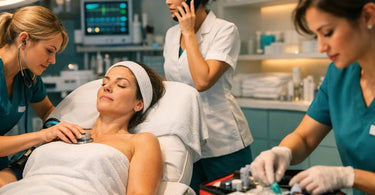
Invest in tools that work as hard as you do, but invest even more in the knowledge of what to do when things don't go as planned. Let's be honest for a hot second: we've all had that heart-sinking moment. A client flinches differently. A patch of skin looks angrier than a toddler denied candy. A faint rash appears where there should only be smooth, hair-free bliss. In the world of waxing, advanced facials, lash lifts, and chemical peels, adverse reactions—while rare with proper protocols—are a reality of the job. The difference between a minor hiccup and a full-blown professional nightmare isn't just the products you use, like top-tier ItalWax or gentle sugaring paste, it's what you and your team do in the first critical 10 minutes. Having a clear "adverse event playbook" isn't about expecting the worst; it's about projecting the ultimate confidence that you can handle anything. It turns panic into procedure and protects your client, your reputation, and your peace of mind.
Think of this playbook as your spa's secret superhero protocol. No capes required, just clear roles and swift action. When every second counts, confusion is your biggest enemy. So, let's break down exactly "who does what" from T-minus 1 second to T-plus 10 minutes. Consider this your go-to guide for keeping calm and carrying on (professionally, of course).
The 10-Minute Countdown: Your Spa's Emergency Huddle
Minute 0: The "Oh, Snap" Moment (Service Provider)
You're the one holding the wax spatula or the high-frequency electrode. You see it first. Your immediate actions:
1. STOP THE SERVICE. Do not pass go, do not apply another drop of product. This is non-negotiable.
2. ASSESS SAFELY. "Jane, I'm going to pause right here. I'm noticing some redness. How are you feeling?" Keep your voice calm and low. Ask specific questions: Is it burning? Itching? Can you feel any tightness in your chest or throat? (The last one is key for allergic reactions).
3. INITIATE FIRST AID. For a superficial skin irritation from wax, gently remove any product residue with a neutral oil like post-wax oil and apply a cool, damp compress using clean cotton pads or a compressed sponge. Do not use anything scented or active!
Minute 1: The Signal (Service Provider)
Without alarming the client, you need backup. Have a discreet code phrase. "Could you please grab me a fresh bottle of saline from the back?" might signal to your front desk that you need the manager. Or use a silent button if you have one. The goal is to get help without announcing an emergency to the entire relaxation room.
Minute 2-3: The Calm Commander Arrives (Manager/Salon Owner)
This is you, boss. You stride in, not sprint. Your energy sets the tone.
1. TAKE CHARGE GENTLY. "Hi Jane, I'm Sam, the manager. I'm here to help [Therapist's Name]." You immediately relieve the service provider from decision-making pressure, allowing them to focus on client care.
2. SECONDARY ASSESSMENT. Quickly get the facts from the therapist in a low voice. Visually assess the client. Is the reaction localized or spreading?
3. DECISION POINT: Is this a "we manage in-house" situation (minor localized redness, slight itching) or a "we need medical help NOW" situation (hives spreading, swelling of lips/eyes, difficulty breathing, severe pain)?
The Two Paths Forward: In-House Care vs. Medical Emergency
Path A: Managing a Minor Reaction In-House (Minutes 3-10)
Manager's Role: Oversee care, document everything, and manage the environment.
Service Provider's Role: Execute care: continue cooling, apply a approved calming product like Amber Products aloe gel or Ayur-Medic soothing cream.
Front Desk/Support Staff Role: Become a buffer. Gently reschedule any next client in that room. Answer phones quietly. Ensure privacy. Prepare a calm area for the client to sit afterwards, perhaps with a cup of water.
Path B: A Medical Emergency (Minutes 3-10 – This is FAST)
Manager's Role (The Most Critical):
1. DIRECT SOMEONE TO CALL 911. Be specific. "Alex, call 911 now. Tell them we have a potential allergic reaction with [state symptoms]. Our address is [say it clearly]."
2. SEND SOMEONE TO WAIT FOR EMS. "Jordan, please go to the front entrance to flag down the paramedics and bring them straight back."
3. STAY WITH THE CLIENT. Reassure them. Help them into a comfortable position (lying down if dizzy, sitting up if breathing is labored). If they have an epinephrine auto-injector (EpiPen) and know how to use it, assist them.
Service Provider's Role: Follow the manager's lead. Gather the used products and their packaging for EMS. This is crucial information for medical personnel.
Support Staff Role: The person not calling 911 or guiding EMS should quietly clear the pathway from the entrance to the treatment room. Discreetly manage other clients, perhaps offering a complimentary refreshment in the retail area to minimize distress or curiosity.
The Paper Trail: Documentation on the Fly
While managing the situation, the manager must mentally note or have a support staff member start an incident report. This isn't about blame; it's about a factual record. Note: Client's name, service (brow lamination, lash lift, Brazilian wax), exact products used (brand, batch if possible, like Lycon Pink Film Hard Wax), time of reaction, description of symptoms, actions taken (cool compress, Benadryl, 911 call), and names of all staff involved.
The Aftermath & The Rebuild (Starting at Minute 11)
Once the immediate crisis is over, the playbook continues.
For the Client: Follow up with genuine concern. For a minor reaction, a call the next day. For a medical event, a call or card once they're home from medical care. Have a pre-determined policy for refunds or future service credits. This is where you turn a bad experience into proof of your integrity.
For Your Team: Hold a brief, blame-free debrief within 24 hours. "What did we do well? What could we do smoother next time?" This is a learning moment, not a shaming moment. Ensure your cleaning protocols are followed for the room.
For Your Business: Review your must-have supplies. Is your first aid kit stocked? Do you have ample cooling compresses and hypoallergenic barrier creams? Do you have client history forms that thoroughly ask about allergies and medications?
Your Proactive Prevention Toolkit
The best adverse event playbook is the one you rarely need. Stack the deck in your favor with these tools:
1. Patch Test, Patch Test, Patch Test. For tints, Refectocil or Intensive Tint, chemical exfoliants, even new wax brands like Starpil or Waxness—just do it. It's a 48-hour insurance policy.
2. Invest in Top-Tier, Consistent Products. Using reputable, professional-grade products from brands like Cirepil for waxing, Biotone for massage, or Tuel Skincare for facials minimizes unpredictable variables.
3. Train Relentlessly. Role-play these scenarios! Make sure everyone knows where the first aid kit, phone, and emergency exits are.
4. Equip Your Space. Have a towel steamer for quick, clean warm compresses? Great. Also have a fridge with cold packs and sealed sponges. Ensure your treatment tables and pedicure chairs allow for easy client movement if needed.
Building this protocol shows your team and your clients that you are a true professional. You're not just playing with pretty products; you're running a safe, responsible business. So, take an hour this week, gather your crew, order some pizza, and write your playbook. Then sleep better knowing you're prepared, because in our world of beauty and wellness, confidence isn't just about a perfect brow shape—it's about knowing you can handle the unexpected with grace and competence.
