
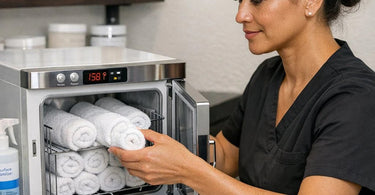
Quality matters in everything you do, but when it comes to the towels you press against a client's freshly cleansed face, quality isn't just important—it's everything. Picture this: you have a client relaxing on your Portable Massage Table, eyes closed, breathing deeply, fully zen. You reach for a towel from your warmer, and instead of that heavenly cloud of soft, warm perfection, you're hit with a musty smell that screams 'basement laundry' rather than 'luxury spa.' Cue the silent panic. We've all been there, and spoiler alert: it's usually mold. That unwelcome guest crashes the party when moisture and heat hang out too long without proper protocols. But fear not, because we're diving deep into the best methods for heating facial towels without developing mold, and trust me, your nose (and your clients) will thank you.
Let's get one thing straight right now: mold on facial towels isn't just gross—it's a professional nightmare. You wouldn't serve a Facial Steamer that hasn't been cleaned in a year, right? Same logic applies to your towels. When you combine moisture, heat, and organic fibers, you've basically rolled out the red carpet for mold spores. They're tiny, sneaky, and they LOVE a warm, damp environment. But here's the good news: with a few smart tweaks to your workflow, you can keep your towels smelling like fresh linen instead of a science experiment gone wrong. We're talking about protecting your professional reputation, your clients' skin health, and your own sanity. Because nobody's got time for a musty towel meltdown in the middle of a 90-minute facial.
Why Your Current Towel-Heating Setup Might Be a Mold Magnet
Okay, let's play detective for a minute. You're probably using a Towel Steamer or warmer, and you're doing it because you're awesome and you want your clients to feel pampered. But if you're just tossing wet towels in there at the end of the night and shutting the lid, you're basically tucking mold in for a good night's sleep. The warm, dark, moist interior of a towel cabinet is like a five-star resort for fungi. When you leave damp towels sitting for hours, especially overnight, you're giving mold a head start. And let me tell you, once that musty smell sets in, it's a beast to get out. You might even be tempted to crank up the heat to compensate, but that can sometimes make things worse by creating condensation. The real enemy here isn't the heat itself—it's the lingering moisture that doesn't have a chance to escape. Heat is actually your friend when used correctly because it speeds up evaporation. The problem is when towels go in wet and stay wet. That's where the trouble begins.
The Golden Rule: Start with a Damp (Not Soaking) Towel
Here's the number one mistake I see spa owners make: they wring out a towel once and call it a day. Honey, no. You need to wring that towel like it owes you money. The towel should be damp, not dripping. If you can squeeze water out of it, it's too wet. When you put a sopping wet towel into a steamer, you're adding excess humidity to the closed environment. That extra water has nowhere to go, so it just hangs out, soaking into the fibers and creating that swampy condition mold craves. Think of your towel warmer as a tool for heating and holding, not for drying. The drying should happen before the towel ever touches the steamer rack. Use a high-quality, absorbent High-Quality Towel made of 100% cotton. Cotton retains heat beautifully and wicks moisture better than synthetic blends. After you wash and dry your linens, lightly mist them with distilled water before placing them in the warmer. Yes, you read that right. They should be barely damp. This gives you that perfect steamy effect without flooding the machine. It's a game changer, I promise.
Daily Habits That Kill Mold Before It Starts
Consistency is key here. You wouldn't skip sanitizing your Pedicure Chairs/Spas between clients, so don't skip your towel warmer maintenance. The absolute best method for preventing mold is to never let wet towels sit in a cold, turned-off machine. At the end of every single shift, take out all the towels. Leave the door of the warmer open so the interior can air out completely. I know, I know, you're tired, you want to go home, and leaving the door open feels weird. But trust me on this. Air circulation is the enemy of mold. If your steamer has removable racks, take them out and wipe them down. Give the interior a quick swipe with a disinfectant wipe designed for salon use. Check out our Professional Cleaners & Disinfectants for Salons and Spas to find the perfect option. This nightly ritual takes less than two minutes, but it saves you from the horror of discovering a science experiment growing in your cabinet on Monday morning. Also, make it a policy to never reheat a towel that was already warmed and then cooled down. Once a towel cools, any bacteria or mold spores that were present have had a chance to wake up. Fresh towels only, please!
The Vinegar Solution: Your New Best Friend
Sometimes, despite your best efforts, life happens. Maybe someone left the lid closed on a humid day, or a new team member didn't know the rules. If you catch a whiff of mustiness, don't panic. White vinegar is about to become your hero. Unplug your Stainless Towel Steamer or warmer and let it cool down completely. Remove all towels. Wipe out any loose debris. Then, mix a solution of equal parts white vinegar and distilled water. Use a clean cloth to wipe down the entire interior. For a deeper clean, you can even run the steamer with this solution for a cycle (check your manufacturer's instructions first—we love our Spa Masters and Prosana models for this). The acetic acid in the vinegar kills mold spores and neutralizes the musty smell without using harsh chemicals that could linger and irritate your clients' skin. Run a rinse cycle with just distilled water afterward to clear out the vinegar scent. It's simple, it's cheap, and it works like a charm. For those of you using ItalWax - Wax and post-wax oils, you know how sensitive skin can be. You don't want to introduce chemical residues right before a service. Vinegar is gentle enough to leave your equipment sterile but safe.
Upgrade Your Equipment for Better Airflow
If you're running a high-volume salon or spa, you might be fighting a losing battle with a consumer-grade warmer. Professional equipment is designed differently. High-capacity units like our Towel Steamers are built with better seals and ventilation systems that manage humidity more effectively. Some of the newer models on the market actually have features that help regulate internal moisture, not just heat. Look for units with adjustable temperature settings. You don't need to blast towels at the highest setting all day. Find the sweet spot—usually around 150°F to 170°F—where the towels are warm and cozy but the environment isn't so steamy that condensation pools at the bottom. Also, think about capacity. If you're cramming 50 towels into a 30-towel warmer because you're too busy to do laundry, you're restricting airflow inside the unit. Overcrowding traps moisture. It's better to do smaller, more frequent loads of towels than to stuff the machine to the brim. Your towels will be warmer, and they'll last longer. Pair your steamer with luxurious linens from brands like Boca Terry or Turkish Towel Company, which are designed to withstand frequent high-heat use without breaking down.
Sanitization Schedules: Weekly and Monthly Deep Cleans
Look, wiping down the machine at night is the minimum. To truly win the war on mold, you need a battle plan. Once a week, you should do a vinegar soak as described above. But once a month, you need to go full "spa surgeon." Unplug the unit. Take apart any removable components—racks, water reservoirs, drip trays. Wash these parts with hot, soapy water. For the main heating chamber, use a soft brush (an old toothbrush works wonders) to get into the crevices and corners where mold loves to hide. Pay special attention to the door seal or gasket. Moisture gets trapped in those rubber folds, and if you ignore it, you'll get that pink slime (which is actually a bacteria, not mold, but equally gross). Rinse everything thoroughly with distilled water. Dry everything completely before reassembling. This monthly reset ensures that no biofilm or mineral scale builds up to protect mold spores from your daily cleaning efforts. While you're in cleaning mode, don't forget about your other equipment. A clean High Frequency Machines and sanitized Professional Wax Spatulas and Applicators for Salons & Spas all contribute to the overall professional vibe.
Choosing the Right Towels Matters More Than You Think
Let's talk fabric for a minute because not all towels are created equal. Those cheap, thin towels you bought in a bulk pack? They're likely part of the problem. Thin towels don't hold heat well, so you crank up the steamer. They also tend to compact and trap moisture in their core while feeling dry on the surface. You pull out a towel that feels warm and dry, but inside the fold, it's a damp mess. That's mold waiting to happen. Invest in high-GSM (grams per square meter), 100% cotton towels. They are more absorbent, they wick moisture away from the surface faster, and they retain heat beautifully. Our High-Quality Towels collection has options specifically designed for professional use. Also, consider color. White towels are your best friend because you can bleach them. Bleach is a powerful mold killer. If you use colored towels, you're limiting your ability to sanitize aggressively. And please, for the love of all things holy, do not use fabric softener on your spa towels. Fabric softener coats the fibers with a waxy film that reduces absorbency. If your towels can't absorb moisture, that moisture just sits on the surface, creating that damp environment mold craves. Use white vinegar in your rinse cycle instead—it naturally softens fabric and removes detergent residue.
The "Dry Heat" Alternative for Sensitive Services
Did you know you don't always need wet steam? For some services, like Dermaplaning or Brow Lamination Supplies for Perfect Brows, dry heat might actually be preferable. Towel warmers that use radiant, dry heat (as opposed to steam) significantly reduce the risk of mold because they aren't introducing water vapor into the environment. These units work like a tiny, gentle oven, warming the towels without making them wet. You can even warm dry Compressed Sponges or cotton rounds for makeup removal without the dampness. If you are dead set on the wet towel experience, consider a cabinet that has a "dry" mode or a "hold" mode. Use the steam function right before the service to generate the moist heat, then switch it to dry hold. This reduces the cumulative moisture exposure over the course of a long day. It's a subtle shift, but it makes a world of difference for the longevity of your equipment and the freshness of your linens.
Handling Client Reactions and Skin Sensitivity
Here's a reality check: some clients are allergic to mold. Even if you can't smell it, microscopic mold spores can trigger reactions—rashes, sneezing, itchy eyes. If you have a client who seems unusually sensitive during facials or massages, your towels might be the culprit. Regularly sanitized, properly dried towels are hypoallergenic. Musty towels are not. This is especially critical when you're using products that open up the pores, like a Facial Steamer. If you steam a face and then slap a moldy towel on it, you're inviting contaminants directly into the open pores. Yikes. That's how you get angry red bumps and complaints. On the flip side, a perfectly heated, fresh towel enhances product penetration and soothes the nervous system. It sets the stage for the Premium Skincare Products for Spas and Salons you're about to apply. Don't let a musty towel ruin the investment you've made in top-tier serums and masks.
Wrap Up (Literally) and Final Tips
So, let's recap because I know you're busy running an empire. Best methods for heating facial towels without developing mold boil down to three things: Start dry (or barely damp), clean daily, and ventilate always. Don't let wet towels sit overnight. Use distilled water to avoid mineral buildup that traps bacteria. Wipe down your Towel Steamers every single day. Do a vinegar deep clean weekly. And when that warmer finally gives up the ghost after years of loyal service, replace it with a professional-grade unit that can handle the heat—literally. Your clients deserve that cloud-like experience without the hidden ick factor. Now go forth, crank up those steamers, and make the world a softer, warmer, mold-free place. And if you need new towels, warmers, or just want to browse our massive selection of Spa Essentials for Professionals, you know where to find us. Happy steaming, you beautiful hygiene heroes!
