
Boost sales with this smart addition... Let's be real for a second. You and I both know that the secret sauce to our professional-grade products isn't just the fancy packaging or the pretty color—it's the science. It's the potency, the power, the professional product concentration that makes a $12 retail moisturizer gather dust compared to the one you're using on your clients. But here's the million-dollar question: how in the world do you explain that to your client without their eyes glazing over faster than a glazed donut at a cop convention? They don't need a chemistry lecture; they need to understand why your Premium Skincare is the hero their skin has been waiting for. We're going to ditch the jargon and find the human story in the science.
The moment a client asks, "Why is this one so much more expensive?" you have a golden opportunity. It's not about defending your price point; it's about educating them on the value. And the core of that value, nine times out of ten, is concentration. But if you start throwing around percentages, molecular weights, or active ingredient ratios, you might as well be speaking Klingon. Your goal is to make them feel smart for choosing you and your products, not to make them feel like they're back in high school chemistry class, desperately hoping the bell will ring.
What Exactly Is Product Concentration, Anyway? (We Promise, No Pop Quiz)
At its most basic level, professional product concentration is simply the amount of the active, beneficial ingredients packed into a formula versus the filler. Think of it like your morning coffee. A regular cup from a gas station might get the job done, but it's mostly water. A concentrated shot of espresso from your favorite coffee shop? That's a flavor bomb that actually does something. It's the same principle here. Professional products, the kind you buy from Spa Masters and other top brands we carry, are designed to deliver a higher percentage of the ingredients that actually solve skin and hair problems. This means you need less product to achieve better results, saving you money in the long run. You're paying for the performance, not the packaging or the water weight .
When a product has a low concentration of active ingredients, it's often just a pleasant-feeling lotion. It smells nice and might feel good going on, but it's unlikely to make a real difference in your client's skin texture, tone, or firmness. That's why a product with, say, a 20% Vitamin C serum is more effective for brightening than a 5% one. But—and this is a big but—a higher concentration doesn't always mean "better" for every client. That's where you, the expert, come in. You're the one who can assess their skin and know that a gentle 5% is perfect for their sensitive skin while their bestie needs the 20% powerhouse to fight hyperpigmentation. It's about being a professional, not a human instruction manual .
Ditch the Jargon: How to Talk Benefits, Not Molecules
The biggest mistake we can make is using industry shorthand that our clients don't understand. We know what "L-ascorbic acid" is, but they just hear "something that sounds scary." So, stop talking about ingredients and start talking about results. Instead of saying, "This serum has a 15% concentration of AHAs," try saying, "This is our gentle exfoliant. It uses a higher dose of fruit acids to clear away the dull, dead cells sitting on the surface of your skin, revealing the brighter, smoother layer underneath. It's like giving your face a shiny, new start without any harsh scrubbing." That paints a picture. It's emotional, it's visual, and it connects a complex idea to a simple, desired outcome. It's a core storytelling principle that makes complex topics memorable .
Another powerful strategy is to use analogies from everyday life. It's the fastest way to build a bridge of understanding. Think about how you'd explain the difference between your professional professional hair care products and something a client can buy at the drugstore. You could say, "Imagine the store-bought shampoo is like a cup of weak tea. It has some good stuff in it, but it's mostly water. Our professional treatment is like a double shot of espresso. It's concentrated, so a little bit goes a long way to actually wake up and strengthen your hair." Or for waxing, you can explain that a higher-quality hard wax like ItalWax has a higher resin concentration, meaning it grips the hair, not the skin, for a less painful, more thorough service .
If you want to truly empower your clients and build a reputation as a trusted expert, turn education into a story. Instead of rattling off a list of ingredients, tell a mini-story about how it works. For example: "Your skin is a lot like a garden. This product is like a concentrated, superfood fertilizer. It doesn't just water the surface; it feeds the roots, so your skin can grow stronger, healthier, and more resilient on its own." Stories are sticky. They are much easier to remember than a list of chemical names. People remember the feeling a story gives them, and that's what builds loyalty. In the wellness and beauty industry, a connection based on trust and understanding is the most powerful tool you have .
Show, Don't Tell: The Visual and Practical Sell
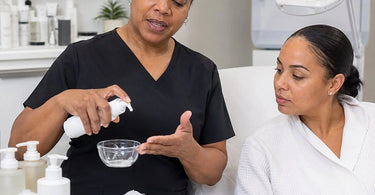
Sometimes the best explanation is a demonstration. Let your client see the product in action. For example, show them a pump of a cheap, watered-down lotion next to a pea-sized amount of your concentrated professional cream. Which one looks richer? Which one feels more substantial? You can let them feel a drop of high-quality massage oil on their hand and explain that it's highly concentrated, so a small amount provides a glide that lasts through the entire treatment. This not only explains the concentration but also highlights the practical advantage: using less product per client means your supplies last longer, which saves you money.
Use visual aids to reinforce your point. A simple magnifying glass can be a fun, low-tech prop to show a client the difference in texture between a diluted and a concentrated product. You can even point to the ingredient list on the packaging. Instead of reading the long, scientific names, just say, "See how the first ingredient listed is this active component? Ingredients are listed in order of how much is in the product, and because this active ingredient is listed first, you know it's the star of the show, not an afterthought." You're not trying to teach them to read a label; you're simply showing them the proof of your claims. It's a subtle but powerful way to build credibility without getting into the weeds of cosmetic chemistry .
Ultimately, the art of explaining product concentration is the art of translation. It's about taking a highly complex, scientific concept and converting it into the language of your client's goals. It's about making them feel like a VIP who is getting access to the inside scoop. When you share your knowledge in a warm, relatable, and even funny way, you demystify the magic of your services. It doesn't just make you look like an expert; it makes the client feel confident, cared for, and excited about the transformation you're about to deliver together. And that, my friend, is the secret to turning a one-time visitor into a lifelong client.
So, the next time a client asks, "Why does this cost more?" embrace it. Don't shy away. It's your moment to shine and share your expertise. Put your hand on your hip, give a little wink, and say, "Oh, honey, let me tell you why you're about to get the best facial of your life." You've got this. Now, go forth and make your clients smarter about their skincare. They'll thank you for it, and your appointment book will, too. And always remember, all the top-tier brands with the perfect concentration to deliver results are right here at Pure Spa Direct.
)