
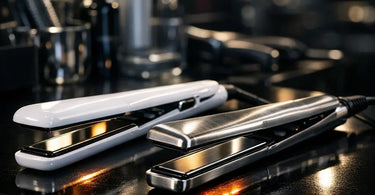
The right products for every professional... are the ones that don't fight you back. You know the feeling: you're in the zone, the client is ready for their transformation, and your flat iron decides to have a personality crisis. It snags, it frizzes, it makes that sad little hiss of defeat on a stubborn cowlick. That's why the great debate between ceramic and titanium flat irons isn't just salon gossip—it's a foundational choice for your service quality and speed. Choosing the wrong one is like trying to do a precision waxing job with a butter knife: messy, painful for everyone, and frankly, unprofessional. So, let's end the confusion and break down these two heavyweight champions of the styling world, so you can arm your station with the right tool for every head of hair that walks in.
Think of your flat iron as an extension of your hands. It needs to be reliable, responsive, and get the job done beautifully without unnecessary drama. Whether you're stocking up for a busy salon or a mobile suite, understanding the core differences between ceramic and titanium plates is key to building a versatile, client-pleasing toolkit. We're diving deep into heat conductivity, glide, finish, and which hair type each one secretly adores (because tools have preferences, too).
The Contender in White: Ceramic Flat Irons
Ah, ceramic. The classic, the steady Eddie, the 'ol' reliable' of the flat iron world. Ceramic plates are made from a clay-based material that's heated evenly and emits far-infrared heat. This is a fancy way of saying it heats the hair from the inside out, which is much gentler. It's like the difference between a relaxing session under a soothing body wrap blanket versus a sudden blast from a blow torch.
Ceramic irons are the peacekeepers. They distribute heat evenly across the plate, minimizing hot spots that can cause sudden damage and those annoying 'zzzt' sounds. The surface tends to have more texture, which provides a gentle grip on the hair. This is fantastic for creating smooth, shiny, frizz-free results without needing to clamp down with the force of a hydraulic press. If your client's hair has ever whispered words like 'dry,' 'brittle,' 'color-treated,' or 'fine,' a ceramic flat iron is your new best friend. It pampers the hair shaft, seals the cuticle for shine, and is generally more forgiving. It's the essential tool for the stylist who specializes in transformations that look healthy, not just straight.
The Challenger in Silver: Titanium Flat Irons
Enter titanium: the sleek, high-tech speed demon. Titanium plates are made from a super-light, incredibly durable metal that heats up blindingly fast and gets seriously hot. Its heat conductivity is off the charts, making it the undisputed champion for thick, coarse, stubborn, or densely curly hair types. Where ceramic gently persuades, titanium commands.
The surface of a titanium plate is ultra-smooth and slick, allowing the hair to glide through with almost zero resistance. This means you can often achieve a pin-straight or super-sleek look in fewer passes, which is a game-changer for time management in a busy chair. However, with great power comes great responsibility. That intense, direct heat can be too much for fine or damaged hair, potentially leading to moisture loss if you're not careful. Using a titanium iron requires confidence and skill—it's the sports car of flat irons. It also pairs beautifully with other high-performance tools, like the sleek efficiency you get from ItalWax hard wax or the quick-drying power of a professional LED nail lamp.
Round-by-Round: The Stylist's Scorecard
Let's get into the nitty-gritty. Imagine these two flat irons stepping into the ring. Here's how they match up on key points for the working professional.
Round 1: Heat-Up Time & Temperature Range
Titanium wins on pure speed. It can reach 400°F+ in what feels like seconds, perfect for back-to-back clients. Ceramic heats evenly but often takes a bit longer to reach its max temp. Both types from quality brands like BaBylissPro or Fromm offer wide, adjustable temperature ranges, so you can dial in the perfect heat for any service.
Round 2: Glide & Maneuverability
This is about feel. Titanium offers a buttery-smooth, frictionless glide. Ceramic provides a slight, controlled grip. The 'best' glide depends on your technique and the hair type. For super-tight curls you're combing through, titanium's glide is a lifesaver. For smoothing wispy layers on fine hair, ceramic's grip offers more control.
Round 3: Hair Finish & Shine
Ceramic is the shine king. Its far-infrared heat seals the cuticle tightly, reflecting maximum light. Titanium can produce a stunning, glossy finish on suitable hair types, but its intense heat requires a good heat protectant to lock in that shine and not just cook the hair. It's as crucial as using a great cuticle oil after a manicure to seal in the perfection.
Round 4: Durability & Maintenance
Titanium is nearly indestructible. It's scratch-resistant and can handle being knocked around in a busy salon or kit. Ceramic plates are more prone to chipping if dropped. Both require regular cleaning with appropriate solutions to prevent product buildup—think of it as important as disinfecting your waxing supplies.
The Verdict: Which One Belongs in Your Salon?
The boring answer is: it depends. The smart answer is: probably both. A well-equipped salon has options, just like you have both salt scrubs and sugar scrubs for different skin needs.
Invest in a Ceramic Flat Iron If:
Your clientele leans toward color-treated, fine, dry, or naturally wavy hair. You prioritize hair health, shine, and a forgiving tool. It's also a fantastic starter iron for new stylists building their technique. Look for quality options in our Hair Styling Tools collection.
Invest in a Titanium Flat Iron If:
You see a lot of thick, coarse, curly (Type 3 & 4), or resistant hair. Speed and efficiency in your services are non-negotiable. You want a durable, low-maintenance workhorse that can handle the pace of a fully-booked day.
The Power Move: Have both. Designate a ceramic iron for your color and delicate clients, and a titanium for your texture transformations. It signals professionalism and allows you to tailor every service for the best possible outcome. It's the same logic behind having both a facial steamer for deep cleansing and a microdermabrasion machine for advanced exfoliation—different tools for different goals.
Pro Tips for Flat Iron Mastery (No Matter the Plate)
1. Always Use a Heat Protectant: This is non-negotiable, like wearing gloves during a lash lift service. It's your primary defense against heat damage.
2. Find the Right Temperature: Fine/damaged hair (250-300°F), Normal/medium (300-350°F), Thick/coarse/curly (350-400°F). Start low and go up as needed.
3. Keep it Clean: Wipe down cooled plates regularly with rubbing alcohol or a specialized cleaner to remove product residue. A dirty iron drags and damages hair.
4. Section, Section, Section: Work with small, clean sections for even heat distribution and maximum straightness. This is the stylist's mantra.
5. Store with Care: Use a heat-resistant pouch or mat. Don't just throw it in a drawer with your nail art rhinestones (tempting, but disastrous).
Ultimately, whether you team Ceramic or pledge allegiance to Titanium, the goal is client satisfaction and hair that looks as good when they leave as it does in your chair mirror. Your tools are an investment in your artistry and your business. Ready to equip your station for success? Explore our curated selection of professional-grade flat irons and every other must-have supply you need to run a thriving, efficient, and client-adored salon or spa.
