
Boost your bottom line with ease, because nothing says "I'm a nail wizard" quite like a set of extensions that stay flawlessly put for weeks on end. We've all been there—you pour your heart and soul into a beautiful set of sculpted acrylics or a glossy gel polish masterpiece, only to get a text from a client three days later with a photo of a wayward nail that decided to embark on its own adventure. It's the absolute worst, right? Before you blame the nail products or your technique (which is probably fabulous, by the way), let's get real about the true foundation of nail extension longevity: the prep work. It's not the most glamorous part of the service, but it is the unsung hero, the backstage crew that makes the star of the show shine. Mastering the science and art of nail prep—specifically using the right dehydrators, primers, and sending clients home with a solid aftercare plan—is the secret sauce to transforming your work from "pretty good" to "holy cow, how did you make these last a month?" So, grab your favorite nail file, put on your learning ears, and let's dive into the ultimate guide that will banish premature lifting to the history books.
Think of your client's natural nail plate as a slightly fussy, high-maintenance celebrity. Before you can apply a stunning, long-lasting enhancement, you need to prep the red carpet perfectly. This means creating a surface that's clean, dry, and slightly textured—basically, the opposite of what most of us want for our skin! The entire process, from the initial cuticle push to the final primer application, is a carefully choreographed dance designed to maximize adhesion. Skipping a step is like forgetting to put the batteries in a toy; it looks the part, but it's not going to function for long. We're going to break down this dance into its essential moves, ensuring you and your clients are always in perfect sync for results that truly wow.
The Holy Trinity of Nail Prep: Dehydrators and Primers
Before we even think about opening a pot of acrylic monomer or a bottle of builder gel, we have to address the elephant in the room—or rather, the oils and moisture on the nail plate. These invisible enemies are the number one cause of lifting and poor adhesion. Our weapons of choice in this battle are the dynamic duo of dehydrators and primers. While often used in tandem, they have distinctly different jobs. Think of the dehydrator as the meticulous housekeeper, sweeping away every last trace of dust, oil, and moisture. Then, the primer steps in as the strategic partner, creating a sticky, grabby surface that ensures your enhancements lock on tight and refuse to let go .
Nail Dehydrators: The Ultimate Oil-Control Squad
A nail dehydrator is typically a fast-evaporating, solvent-based solution (often containing alcohol or acetone) that is applied after buffing and cleaning the nail. Its sole purpose is to banish surface moisture and temporarily dehydrate the natural oils secreted by the nail bed . Some clients are like little oil rigs, and for those with hyperhidrosis (excessively sweaty hands), a dehydrator isn't just a good idea—it's an absolute necessity to ensure any product, from soft strip wax to hard gel, actually sticks .
How to Apply It Like a Pro: After you've shaped the nail and removed the shine with a gentle buff, whisk away every speck of dust with a dedicated lint-free wipe. Then, apply your dehydrator to the entire nail plate, getting just close enough to the eponychium without flooding the cuticle. It should dry in seconds, leaving behind a completely clean, matte surface . If your client' nails are particularly oily, a second application never hurts—better safe than sorry!
Nail Primers: Creating the Ultimate Bond
If the dehydrator is the housekeeper, the nail primer is the super-strong, double-sided tape. Applied after the dehydrator, its job is to create a chemical bond between the natural nail plate and the enhancement product (acrylic, gel, etc.) . Primers work by microscopically etching the surface of the nail to provide an even stronger grip . There are generally two types you'll encounter in the professional world, and knowing the difference is key.
Acid-Based Primers: These are the old-school heavy hitters, typically containing methacrylic acid. They create an incredibly strong bond by aggressively etching the nail plate. However, they can be harsh and drying, and they must be used with extreme caution to avoid skin contact, as they can cause burning and irritation . They're powerful, but these days, many pros are switching to gentler options.
Acid-Free Primers: Also known as non-acid primers, these are the modern, gentler, and often preferred choice for many techs, especially when working with gel systems . They promote adhesion without the harsh etching, making them ideal for clients with sensitive nails or thin, damaged nail plates . Brands like Young Nails Pro Bond and the Aprés Non-Acidic Gel Primer are fantastic examples of this technology, creating a tacky surface for superior adhesion without the potential for irritation .
How to Apply It Like a Pro: Less is absolutely more with primer. You want a whisper-thin coat. Dip your brush, wipe off almost all the product on the inside of the bottle, and then gently apply it to the dehydrated nail plate, avoiding the skin and cuticle at all costs. Allow it to air-dry completely—it should look completely dry and not feel tacky to the touch (though some gel primers are designed to leave a tacky layer) . Now, your canvas is perfectly prepped and ready for your artistry.
The Step-by-Step Prep Routine for Maximum Retention
Alright, let's put it all together into a foolproof, step-by-step routine that will become your new gold standard. This is the roadmap to extensions that last and last .
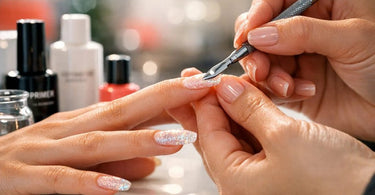
- Step 1: The Perfectly Clean Canvas: Begin with a dry manicure. Gently push back and remove any non-living tissue from the cuticle area. You can use a cuticle pusher or an e-file if you're trained. The goal is a clean nail plate with no pterygium or dead skin stuck to it .
- Step 2: Shape and Dehydrate: Use a 180-grit file to shape the free edge and, crucially, gently buff the entire surface of the nail plate to remove its natural shine. You're not trying to thin the nail, just creating micro-abrasions for grip . Brush away ALL dust with a clean brush .
- Step 3: Apply Dehydrator: Saturate a lint-free wipe with your dehydrator and wipe every nail, ensuring you get the edges. This removes any final traces of oil and dust .
- Step 4: Apply Primer: Following the manufacturer's instructions, apply a thin, even coat of your chosen primer (acid-free is our go-to for most clients) to the natural nail only. Allow it to dry completely .
- Step 5: Apply Your Enhancement: Now, and only now, are you ready to apply your chosen system, whether it's acrylic, builder gel, or a full-cover soft gel tip .
The Client's Role: Aftercare for the Win
You've done your part, creating a masterpiece on a perfectly prepped foundation. But the journey doesn't end when the client walks out the door. Their aftercare habits play a HUGE role in how long those nails last. It's your job to send them home with the knowledge and tools they need to protect your work (and their investment!). This is where you become not just a nail tech, but a nail educator .
The Golden Rule of Aftercare: Hydration! The most important product you can send a client home with is a high-quality cuticle oil . Explain it like this: Your natural nails are like a sponge. When they get dry and brittle, they can flex and move differently than the enhancement, causing the bond to break down and leading to lifting. Hydrated nails are flexible nails. Oiling the cuticles and the underside of the nail 2-3 times a day (or more!) keeps the natural nail plate healthy and flexible, allowing it to move in sync with the enhancement .
What to Tell Your Clients (The Do's and Don'ts):
- DO wear gloves: Whenever doing the dishes, cleaning with chemicals, or gardening. Harsh chemicals are kryptonite for nail enhancements .
- DON'T use your nails as tools: This is a big one. No opening soda cans, picking at labels, or scratching off stickers. Your nails are for looking pretty, not prying .
- DO come in for fills every 2-3 weeks: Regular maintenance isn't just about length; it's about maintaining the structural integrity of the enhancement and preventing lifting that can trap moisture .
- DON'T pick or peel: If an extension feels loose, or if you just can't resist a chip, DO NOT PICK IT OFF. This can rip off layers of the natural nail, causing significant damage. They must come back to you for a safe, professional removal .
By empowering your clients with this knowledge and the right retail products—like a beautiful cuticle oil from our collection—you're not just extending the life of your nail art; you're building a partnership. They'll see you as the expert who cares about the long-term health of their nails, which means they'll keep coming back to you and singing your praises to all their friends. And that, my friend, is how you turn a simple nail service into a thriving, loyal client base.
)