
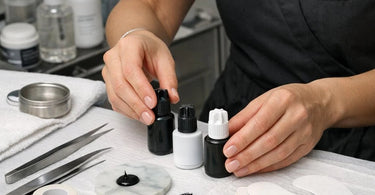
Better work starts with better tools, but even the fanciest lash extensions in the world won't stay put if you're using the wrong glue. It's like trying to build a sandcastle during high tide—frustrating, messy, and ultimately a waste of your talent. We feel your pain. You've got a client who wants bombshell volume, but if that adhesive isn't bonding, you might as well be whispering sweet nothings to a feather. Let's be real: nailing the perfect lash look isn't just about the fluff; it is scientifically, emotionally, and professionally all about the glue. At Pure Spa Direct, we distribute the industry's heaviest hitters, so we know that the difference between a 3-week retention and a 6-week obsession is literally a drop of adhesive.
So, grab your favorite sticky beverage (coffee, tea, or a protein shake—no judgement here), and let's dive into the drama of drying times, the science of humidity, and the art of picking the perfect lash adhesive for every single scenario in your salons or spas. By the time we're done, you'll be a glue guru, and those pesky retention complaints will be a thing of the past.
Why Your Lash Glue Choice Matters More Than Your Morning Coffee
Look, we know you have options. But here is the hard truth bomb for today: not all glues are created equal. You wouldn't use a wrench to hammer a nail, and you shouldn't use a super-speed glue on a shaky-handed beginner. Lash and brow adhesives are highly sensitive chemical formulations. They react to the air, the moisture in the room, and the natural oils on your client's eyelids. Choosing the wrong viscosity or speed can lead to snapping lashes, poor retention, or (gasp) allergic reactions that make your client look like they've been chopping onions for three hours straight. We are here to save you from that teary-eyed disaster.
Speed Demons vs. The Tortoises: Understanding Drying Times
The first major fork in the road (or should we say, lash line) is drying time. This is usually measured in seconds, and those seconds define your entire application style.
The Need for Speed (0.5 – 1 Second): These are the Ferraris of the lash world. If you have been lashing for years, have flawless isolation, and move like a ninja, these glues are your besties. However, if you are still getting the feel for fanning or take a moment to place your lash perfectly, a 0.5-second glue will dry before the lash even hits the natural lash, resulting in a weak bond. Brands like Lash Perfect offer these rapid-dry formulas for the pros who need maximum retention on volume sets .
The Steady Eddy (2 – 4 Seconds): Ah, the sweet spot. This is where most intermediate lash artists live. A glue that dries in 2-4 seconds gives you just enough time to adjust the lash, fan it out, and ensure a perfect base connection without rushing. Satin Bond is a classic example of a glue that offers that beautiful balance of strong hold and workable time . It's like the reliable sedan of the lash world—not flashy, but it gets the job done perfectly every single time.
The Slow Dancer (5+ Seconds): If you are a newbie, or if you are working on a client who blinks like a hummingbird (we see you, nervous first-timers), a slower glue is your saving grace. These are often marketed as "sensitive" glues because they emit fewer fumes, but really, they just give you the grace period you need. The Nacach or Stacy Lash sensitive formulas allow for a 5-6 second dry time, letting you breathe easy and place with precision without the panic .
The Humidity Factor: Why You Need a Hygrometer (Seriously, Go Buy One)
If you ignore everything else, do not ignore this. Your room's humidity changes everything. Lash glue is a moisture-sensitive cyanoacrylate. It needs water vapor in the air to cure (harden). But it's a Goldilocks situation: it cannot be too much or too little.
Most professional adhesives thrive between 40% and 70% relative humidity . If your room is dry (like in the dead of winter with the heater blasting), your glue will dry too slowly, or not at all. If it is humid (think a rainy Florida afternoon or a steamy treatment room next to the towel steamers), that glue will dry in the blink of an eye. We recommend investing in a hygrometer and keeping a dehumidifier or humidifier in your salon kit. Your facial treatment room might be a swamp, but your lash room needs to be just right.
Reading the Fine Print: Sensitive Eyes and Low Fume Formulas
We have all had that client. You know the one. She wants the mink volume look, but she warns you that her eyes "react to everything." Don't panic. Reach for a low-fume or odorless adhesive. These glues are formulated to have less of the harsh vapor that causes those stinging, watering reactions .
However, a little industry secret: often, the "sensitivity" isn't an allergy to the glue ingredients (like Latex or Formaldehyde, which you should avoid anyway), but an irritation from the fumes hitting the eye's moisture. Brands like Refectocil and brow lamination suppliers also emphasize that clean lashes are key. If the natural lash is covered in residual makeup or cleanser, the glue won't bond to the lash—it bonds to the dirt. That causes the glue to slip down and touch the skin, which is a major no-no. Always, always, always use a Lash Shampoo and Primer before you start. Clean lashes are happy lashes .
The Art of Storage: Don't Kill Your Glue Before You Use It
I cannot tell you how many times I've seen a lash artist cry because their expensive glue turned into a thick, stringy mess. You spent good money on that bottle; treat it like the royalty it is!
- Shake It Up: Before you use it, you need to shake that bottle like a polaroid picture. We are talking about 60 seconds of vigorous shaking to mix the carbon black and polymers .
- Wipe the Nozzle: After you dispense a drop, wipe the tip with a clean, lint-free wipe. If you let glue cure in the nozzle, you will never get the cap back on properly, and air will ruin the rest of the bottle.
- Cool and Dry: Humidity is the enemy. Store your glues in an airtight container with silica gel packets. Some techs even store them in the fridge (but if you do that, let them come to room temperature before opening, or you'll get condensation inside the bottle!).
Product Spotlights: Our Favorite Sticky Solutions
At Pure Spa Direct, we don't play games with quality. We stock the brands that make your life easier and your retention rates higher. While you are browsing our cotton rounds and high-quality towels, make sure to add one of these lash lifesavers to your cart.
For the Newbie: Look for glues with a 2-3 second dry time. They forgive small mistakes. The Lash Perfect Ultimate I is a favorite because it offers a strong bond but allows that extra second to perfect your placement .
For the Volume Queen: When you are laying down those mega fans, you need a fine-viscosity glue that won't drown the base. Lash Perfect Ultimate Russian is specifically designed to have a "wet" consistency that holds the fan shape while drying .
For the Allergy Worrier: We love the NovaLash Sensitive Eyes adhesive. It is physician-developed and medical-grade, offering a fume-free experience that keeps even the most anxious client calm and collected .
Application Hacks for Maximum Retention
You have the perfect glue. Your humidity is 55%. Why are the lashes still falling out? Let's troubleshoot.
1. The Dip: You only need a tiny amount of glue at the base of the extension. If you see a bulb of glue, you used too much. That bulb will take forever to dry and will irritate the eyelid.
2. The Tack: Wait 10-15 seconds after dispensing your drop of glue before you start dipping. This allows the adhesive to become "tacky." Super wet glue is slippery and slides on the natural lash. Tacky glue grabs on like a pitbull.
3. The Seal: Do not use a nano mister until you have finished both eyes AND the glue has had time to set. Blasting wet glue with water (misters) can cause "shock polymerization," which turns the glue white and brittle. Wait 2-3 minutes before misting.
Final Thoughts: Don't Be Glue-Shy
Navigating the world of professional lash adhesives can feel intimidating, but it is truly the secret sauce to a thriving lash business. Your clients might not know the difference between ethyl cyanoacrylate and polymethyl methacrylate, but they will definitely notice when their lashes look flawless for six weeks straight.
Whether you are a beginner just breaking into the beauty industry or a master stylist running a busy spa suite, taking the time to match your glue to your speed and environment is a game-changer. So, take a deep breath, check your hygrometer, shake that bottle, and get to lashing. And remember, whenever you need a restock on the good stuff—from bulk wax deals for the room next door to the tiniest nail polish for a manicure—Pure Spa Direct has your back (and your glue).
