
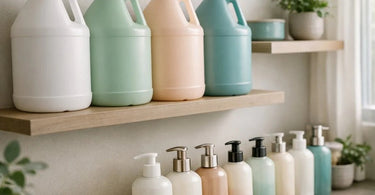
Transform your services with a simple shift in your shampoo strategy, and watch your bottom line transform right along with it. Let's be real—running a salon, spa, or barbershop means constantly juggling client satisfaction, team morale, and that pesky little thing called profit. In the whirlwind of daily appointments, inventory decisions (like whether to buy salon shampoo by the gallon or the bottle) often get made on autopilot, fueled by a mild panic that you'll run out mid-highlight. But what if the secret to less stress and more cash wasn't a miracle treatment, but a simple calculator and a little forethought? We're diving deep into the great shampoo showdown: the cost-benefit analysis of bulk buying versus small batches. Grab your favorite coffee (you'll need it), and let's figure out which approach will have you swimming in savings—not drowning in surplus product.
Think of your shampoo inventory like your favorite pair of shears. You need them reliable, ready, and not costing you an arm and a leg every time you turn around. The debate between bulk and small-batch buying is essentially a tug-of-war between upfront cost and long-term flexibility. One promises legendary per-unit savings; the other offers the agility of a ninja. But which one is right for your unique business? Spoiler alert: there's no one-size-fits-all answer, but by the end of this, you'll know exactly which size fits YOU.
The Allure of the Big Bucket: Pros of Bulk Buying
Let's start with the elephant in the room—or rather, the giant drum of shampoo in the storage closet. Buying in bulk is the classic "wholesale" play, and for good reason. The primary benefit hits you right in the spreadsheet: significant cost savings per unit. When you purchase a 5-gallon tub of a trusted professional shampoo versus a case of 12 individual liters, the price per ounce often plummets faster than a bad haircut. This direct saving goes straight to improving your profit margin on every wash, rinse, and repeat.
Then there's the convenience factor. A major bulk order from a supplier like Pure Spa Direct means you're placing fewer orders overall. This translates to less time spent managing inventory, fewer shipping fees to absorb (or pass on), and a dramatically reduced risk of that heart-stopping moment when you realize you're out of the clarifying shampoo right before a busy Saturday. Your backstock becomes your safety net. Plus, there's a certain psychological peace that comes with a well-stocked supply room. It whispers, "You've got this. Business is booming."
The Shadow Side of the Stockpile: Cons of Bulk Buying
But before you rent a warehouse, let's talk about the potential pitfalls. Bulk buying requires a larger upfront financial investment. That cash you tie up in 50 gallons of moisturizing shampoo is cash you can't use to refresh your nail art supplies or invest in a new facial steamer. It demands storage space—real, valuable square footage that could be used for another treatment room or retail display.
The biggest risk, however, is commitment. What happens if a line is discontinued, your clients' preferences change, or you simply want to try that amazing new sulfate-free formula everyone's raving about? You're stuck with a mountain of the old stuff. There's also the risk of product expiry or degradation before you can use it all, especially with natural or organic lines. It's the business equivalent of buying a lifetime supply of your favorite skinny jeans—risky business.
The Nimble Approach: Pros of Small Batch Buying
Enter the agile, adaptable world of small-batch purchasing. This is the method for the innovator, the trend-setter, or the business that's still fine-tuning its menu. The supreme advantage here is flexibility. You can test new brands, like those from the Rusk or Quantum collections, with minimal financial risk. You can easily adapt to seasonal shifts (more volumizing shampoo in wedding season, more color-safe formulas after the holidays).
Small batches also free up your cash flow and storage space. Your money isn't locked away in inventory, allowing you to pivot quickly—maybe to snag a deal on a stunning pedicure chair or a set of massage lotions. It's a lower-commitment relationship with your supplies, which can be incredibly liberating. Plus, it reduces waste and ensures your clients are always getting products at their peak freshness.
The Flip Side of Flexibility: Cons of Small Batch Buying
Of course, this agility comes at a price—literally. The higher cost per unit is the most obvious drawback. Over a year, paying "retail-style" prices for your professional supplies can eat a noticeable hole in your profits. You're also inviting more frequent administrative tasks: more time spent placing orders, more delivery boxes to break down, and more invoices to track.
Most critically, you live closer to the edge of stock-outs. Running out of a key product during a client service is unprofessional and stressful. While small batches can be reordered quickly, you're at the mercy of shipping times and supplier stock levels. This approach requires meticulous, almost obsessive, inventory tracking to avoid disaster.
The Grand Showdown: Running the Numbers for Your Business
Okay, time for the fun part. Let's move past theory and into your reality. A true cost-benefit analysis means crunching your numbers. Start by tracking your shampoo usage for a typical month. How many ounces do you truly use of your core brands? Don't guess—measure.
Next, get quotes. Compare the unit price of your go-to color care shampoo in a single 1L bottle versus a 1-gallon jug versus a 5-gallon drum from your wholesale supplier. Calculate the annual cost difference. Now, factor in the "hidden" costs: the value of your storage space (could it generate income otherwise?), the cost of your time spent ordering, and potential finance charges if you'd need to borrow to make a large bulk purchase.
Finally, score the intangibles. On a scale of 1-10, how important is product flexibility to you? How devastating would a stock-out be? How stable is your client demand? Your answers will point you in the right direction.
The Hybrid Hero Strategy: Getting the Best of Both Worlds
Why choose one when you can strategically use both? Many successful salons operate on a brilliant hybrid model. Here's the playbook:
Bulk Buy Your "Hero" Products: Identify the 2-3 workhorse shampoos that account for 80% of your usage. The gentle cleanser for every service, the clarifying shampoo for every chemical treatment—these are your safe bets. Buy these in the largest, most cost-effective size you can store and use before expiry. Trusted brands like Wella or Biotone (for body washes) are perfect for this.
Small-Batch Your "Specialists" & Testers: Use smaller bottles for specialized formulas—like intense moisturizing, keratin, or scalp treatment shampoos—that see less frequent use. Also, always buy new or trendy products in the smallest size first. It's a low-risk way to see if your clients (and stylists) love it before you commit to a drum.
Leverage Your Wholesaler's Deals: A great B2B partner like Pure Spa Direct will offer promotions on bulk purchases or bundle deals. Keep an eye out for specials on your hero products and stock up strategically during sales, especially on staples that never go out of style, much like professional towels or compressed sponges.
Beyond Shampoo: Applying This Wisdom to Your Entire Business
Once you've mastered the shampoo equation, apply this same analytical mindset across your inventory. The logic holds true for hard wax, gel polish, massage lotion, and even applicators. For instance, you'd likely bulk buy universal soft wax but small-batch a new brow henna shade. Consistency is key: bulk buy the cuticle oil you use in every manicure; sample the new sugar scrub scent before committing.
The goal is to create a supply chain that supports your art, not stifles it. It should feel less like a chore and more like a strategic advantage. After all, every dollar saved on smart inventory management is a dollar you can reinvest in your team, your space, or that stunning new spa lounge chair you've been eyeing.
So, will you be a bulk buyer, a small-batch sampler, or a hybrid hero? The power is in your hands—and your calculator. Make your choice, place your order with confidence, and get back to what you do best: making your clients look and feel amazing. Now, if you'll excuse me, I have a gallon of my favorite shampoo to go use up before I'm tempted by something new.
)