
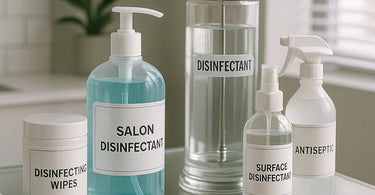
Because quality never goes out of style... and neither does the absolute trust your clients place in you every time they sit in your chair. That trust is built on a thousand details, but none is more critical than your unwavering commitment to cleanliness and safety. Navigating the world of salon disinfectants, with its confusing acronyms and regulatory lists, can feel less like a science and more like deciphering ancient runes. Let’s shed some light and cut through the fog of misinformation. Today, we’re cracking the code on EPA List N and the disinfectants you use every day, turning you from a confused label-reader into a sanitation superstar. Your clients (and your state board inspector) will thank you!
Think of this as your no-nonsense, slightly sassy guide to understanding what those government lists really mean, how they differ from the claims on your bottle of Barbicide, and how to choose and use products that keep your business not just sparkling, but legally and medically safe. Spoiler alert: "hospital-grade" is a great start, but it's not the whole story.
EPA List N Unmasked: It's Not a Disinfectant Hall of Fame
First things first, let's demystify the famous (or infamous) List N. Created by the U.S. Environmental Protection Agency (EPA) during the COVID-19 pandemic, List N is a tool that identifies disinfectant products expected to be effective against SARS-CoV-2, the virus that causes COVID-19. The key word here is "expected." Being on List N does not mean the EPA has personally tested that exact bottle against the virus and given it a gold star.
Products qualify for List N in one of three ways:
- Tested & Proven: The product has been lab-tested and proven to kill SARS-CoV-2.
- Harder-to-Kill Pathogen: The product has been proven to kill a pathogen that is harder to destroy than SARS-CoV-2 (like norovirus or rhinovirus). The logic is, if it kills the big bad, it can handle the coronavirus.
- Similar Coronavirus: The product has been proven effective against a different human coronavirus similar to SARS-CoV-2.
The most important takeaway? List N is a helpful guidance tool, not the final word. A product can be perfectly effective and not be on List N, simply because the manufacturer hasn't gone through the process to get it added. Conversely, a product on List N might not be suitable for your specific salon tools or surfaces. The list doesn't tell you if a product is tuberculocidal (a common state requirement) or safe for metal tools. For that, you must become a master of... The Label.
Your Disinfectant Label: The Real Source of Truth (No, Really)
If List N is the movie trailer, the product label is the full-length director's cut with all the special features. The EPA regulates disinfectants as pesticides and mandates that all critical information be on this label. Ignoring it is like performing a lash lift without checking the processing time—you're just asking for trouble. Here's what to hunt for on every bottle, tub, or wipe package:
1. The EPA Registration Number: The Product's Social Security Number
This is the unique identifier. It might look like 12345-12 or 12345-12-678. If you're checking List N, you compare the first two sets of this number. If they match a number on the list, you're good on the COVID-19 front. This number is how you confirm you're getting the real deal, not a look-alike.
2. "Kills" or "Effective Against" List: The Pathogen Hit List
This is the most critical section for salon compliance. You must see the specific pathogens the product is registered to kill. For most state boards, "tuberculocidal" activity is non-negotiable for disinfecting multi-use tools like tweezers, clipper blades, and nippers. This means it kills the bacteria that causes tuberculosis, which is a benchmark for a "high-level" disinfectant suitable for tools that contact mucous membranes or non-intact skin. Don't just see "hospital-grade"; see "effective against Mycobacterium tuberculosis."
3. Directions for Use: The Sacred Script
This isn't suggestions; it's law. The EPA verifies the product works only when used exactly as directed here. This section holds the secrets to efficacy:
- Dilution Ratio: Is it ready-to-use (RTU) or a concentrate? With a concentrate like Lucas-Cide, using too little water makes it harsh and potentially damaging; using too much makes it useless. Measure!
- Contact Time (Dwell Time): This is the granddaddy of all label instructions. This is how long the surface must remain visibly wet to achieve disinfection. It can range from 30 seconds to 10 minutes. Setting a timer is not optional. If it dries before time's up, you must reapply and restart the clock.
- Application Method: Should it be sprayed, soaked, or wiped? For tool disinfection, immersion in a covered disinfectant jar is typically required to ensure full contact for the full time.
High-Level vs. Low-Level: Choosing the Right Soldier for the Battle
Not all disinfectants are created equal, and using the wrong one is a major compliance misstep. Let's break it down:
- High-Level Disinfectants: These are your heavy hitters. They are tuberculocidal and kill a broad spectrum of pathogens, including viruses, fungi, and bacteria. Use these for all non-porous, multi-use tools that touch clients: metal implements (tweezers, scissors, clipper blades), facial tools, and some plastic combs. Products like Barbicide (when mixed for 10-minute disinfection), CaviCide, or Prosana concentrates fall here.
- Low-Level Disinfectants: These kill many germs but are not tuberculocidal. Use these for environmental surfaces: chairs, nail tables, massage tables, countertops, and doorknobs. Many ready-to-use sprays and wipes are low-level. Using a low-level disinfectant on your shears is a big no-no.
Remember: Porous items like sponges, emery boards, and buffer blocks cannot be truly disinfected. They are single-use only and must be discarded after each client.
The Salon Pro's Step-by-Step Disinfection Protocol
Let's translate this knowledge into action. Here's your fail-safe routine between every single client:
- Pre-Clean: Wipe or scrub tools to remove all visible debris, product, and hair. Disinfectants can't penetrate gunk.
- Wash: Use soap, water, and a brush to give tools a thorough scrub, then rinse and dry.
- Disinfect: Immerse tools completely in an EPA-registered, tuberculocidal, hospital-grade disinfectant solution in a covered, labeled jar. SET A TIMER for the full contact time listed on the label (often 10 minutes).
- Rinse & Dry (if required): Check the label! Some products require a rinse with clean water after soaking; others do not. Dry tools thoroughly with a clean towel.
- Store: Place disinfected tools in a clean, dry, covered container like a UV cabinet or a sealed bag until their next use.
- Surfaces: Wipe down all table surfaces, armrests, headrests, and any touched area with an appropriate low-level disinfectant, ensuring the required dwell time.
Pro Tip: Your disinfectant solution in jars must be changed every day, even if it looks clean. It loses potency. And always, always wear gloves when handling chemicals and dirty tools.
Beyond List N: Building Your Salon's Sanitation Toolkit
Your disinfectant is your MVP, but it needs a supporting team. Here's what else you need in your arsenal:
- Designated Dirty & Clean Areas: Never cross the streams! Have a clearly marked container for used tools and a separate, sanitized storage area for clean ones.
- Quality Tools & Furniture: Non-porous, seamless surfaces on your pedicure spas and massage tables are easier to clean and disinfect properly.
- Ample Supply of Single-Use Items: Stock up on cotton, applicators, spatulas, and files. Using them twice is never worth the risk.
- Professional-Grade Products: As a distributor, we at Pure Spa Direct carry the trusted brands professionals rely on. From ItalWax pre-wax cleansers to the complete Lucas-Cide line of disinfectants, we supply what you need to build a safe, compliant, and successful business.
Mastering your disinfectants is more than a chore; it's a cornerstone of your professional integrity. It protects your clients from harm, protects you from liability, and builds the unshakable trust that turns first-time visitors into lifelong loyalists. Now go forth, read those labels with confidence, and create a space that's as safe as it is beautiful.
