
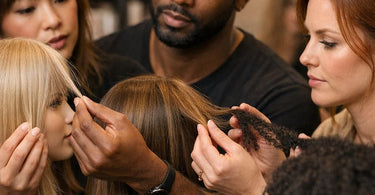
Stay ahead of trends and client questions by mastering one of the most common mix-ups in the styling chair: the difference between hair texture and hair density. If a client walks in complaining her "thick" hair is unmanageable, but it turns out she actually has a high number of fine strands, your entire product recommendation and cut strategy changes. Understanding this distinction isn't just salon trivia—it's the key to unlocking truly personalized service, fewer styling frustrations, and clients who feel deeply understood. Let's untangle these terms so you can deliver cuts and consultations with confidence.
Think of it this way: hair texture is about the individual soldier, while hair density is about the size of the entire army on the scalp. Texture refers to the diameter of a single strand of hair—whether it's fine, medium, or coarse. You can assess this by feeling a single, dry strand between your fingers. Can you barely feel it? That's fine texture. Does it feel strong, thick, or almost wiry? That's coarse texture. Density, however, is all about numbers. It's the count of hair strands packed into one square inch of the scalp, classified as low, medium, or high density. A client can have fine-textured hair (delicate strands) but high density (a ton of those delicate strands), creating a full, voluminous look that behaves very differently from coarse, low-density hair.
The Texture Trio: Fine, Medium, and Coarse
Getting texture right dictates everything from processing times to product weight. Here’s your quick-reference guide:
Fine Hair Texture: The most delicate of the three. Each strand has a small diameter and often lacks a central medulla layer, making it fragile and prone to damage from chemical services. It gets oily faster, can struggle to hold a style, and is easily weighed down by heavy products. The golden rule? Less is more. Start with pea-sized amounts of lightweight, volumizing formulas.
Medium Hair Texture: Your most versatile and common texture. It has more body than fine hair and is easier to process and style. It strikes a balance, not being too fragile or too resistant, and typically holds styles beautifully.
Coarse (or Thick) Hair Texture: Don't let the word "thick" confuse you here—this is about strand width, not scalp coverage. Coarse strands have the largest diameter and a robust three-layer structure (cuticle, cortex, and medulla). This makes them resilient to heat and breakage but also more resistant to chemical processes like color or relaxers. They can hold a curl like a dream but may be prone to dryness and frizz. This hair can handle—and often needs—richer, more emollient products.
Decoding Density: The Ponytail Test and Beyond
While a professional consultation involves sectioning and assessing scalp visibility, there's a simple trick you can teach clients: The Ponytail Test. Have them gather all their hair into a low, smooth ponytail. Measure the circumference:
- Less than 2 inches: Likely low density.
- 2 to 4 inches: Typically medium density.
- More than 4 inches: Probably high density.
In the salon, your assessment is more precise. On dry, styled hair, gently part a section. How much scalp is visible? The more scalp you see, the lower the density; the less scalp, the higher the density. This quick visual is a game-changer for planning cuts.
Why This Distinction is Your Secret Weapon for the Perfect Cut
This knowledge directly translates to your shears. Your approach changes completely based on the combination of texture and density.
For Fine, Low-Density Hair: The goal is to create the illusion of fullness. Avoid over-layering, which can make hair look wispy and thinner. Blunt cuts maintain weight at the ends, adding the appearance of substance. Long, minimal layers can add movement without sacrificing precious volume.
For Coarse, High-Density Hair: Here, the mission is to remove bulk and weight while shaping. Layering is your best friend. Techniques like point cutting, slide cutting, or using thinning shears strategically can soften the ends and reduce heaviness without creating a choppy look.
For the "Mismatched" Combinations: This is where expertise shines. Fine, High-Density Hair needs careful texturizing to reduce weight without making it look flat. Coarse, Low-Density Hair benefits from longer layers that add movement without removing too much of the already-limited weight. Every combination requires a tailored strategy.
Transforming Your Consultation & Product Recommendations
Elevate your consultation by making this assessment standard practice. Explain the difference to clients—it empowers them and builds trust. This analysis should guide your product prescriptions like a map.
For High-Density Hair: Recommend moisturizing shampoos and conditioners to hydrate a large volume of hair. Leave-in conditioners and anti-frizz serums or oils help manage the collective mass. Styling creams with hold can define without crunch.
For Low-Density Hair: Lightweight, volumizing shampoos and conditioners are key. Root-lifting sprays or mousses add lift at the scalp. Avoid heavy butters or creams that will collapse the style.
Texture-Specific Pairings: Fine hair needs protein-rich bond-building treatments and heat protectants. Coarse hair craves intense moisture masks and sealing oils. Always direct clients to professional-grade products for real results. Explore our Premium Hair Care collection for solutions tailored to every need.
Beyond Texture & Density: The Full Hair Health Picture
A master stylist considers the entire spectrum. During the consultation, also assess:
- Porosity: The hair's ability to absorb and retain moisture. Does it repel water (low) or soak it up instantly and feel dry minutes later (high)? This dictates which moisturizers and proteins will work.
- Elasticity: The strength and stretch of the hair when wet. Good elasticity means healthy, strong bonds. Poor elasticity signals damage and requires gentle care.
- Curl Pattern: Use the Type 1 (straight) to Type 4 (coily) system as a starting point to understand the shape you're working with. Remember, most people have multiple patterns on one head!
Equip Yourself for Expert Consultations
Providing this level of customized care requires the right tools and environment. Ensure your station is equipped with a magnifying light for detailed scalp and strand analysis. Use only the finest professional brushes and combs designed for detangling and styling different textures without damage.
Your consultation area should be comfortable and private. Invest in quality salon furniture that makes clients feel at ease as you discuss their hair's unique story. For every service, maintain the highest standards of cleanliness with hygienic table paper and professional disinfectants.
The Bottom Line for Your Business
Distinguishing between texture and density is more than technical knowledge—it's a client-retention tool. It transforms you from a stylist into a trusted hair expert. When you can diagnose why a client's past style failed ("They layered your fine, low-density hair too much!") and prescribe the exact solution, you create undeniable value. This leads to better styling results, satisfied clients, and a thriving, appointment-book.
Ready to outfit your salon for success? Pure Spa Direct is your partner. From the shears in your hand to the luxury towels on your chair, we supply everything you need to build a professional, profitable, and client-adored business. Explore our vast selection today and see the difference expertise—and the right tools—can make.
