
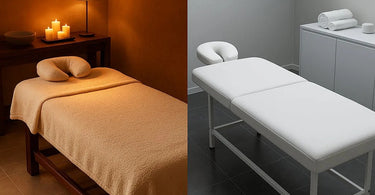
Elevate every service with the perfect table temperature – because nothing says ‘luxury’ like not making your clients shiver during their relaxation time. Choosing between heated and unheated tables is one of those decisions that can make or break your client experience, and let’s be honest, we’ve all had that moment of panic when we see goosebumps forming during a supposedly relaxing massage. It’s like serving champagne in a plastic cup – the content might be good, but the experience is seriously compromised. Whether you’re running a professional massage practice, a brow and lash studio, or a full-service spa, the table you choose becomes the foundation of your client’s entire experience.
This comprehensive pro/con list will help you navigate the warm waters of table selection without getting burned – or leaving your clients cold. We’ll break down everything from muscle relaxation benefits to those ‘oh no’ moments when someone accidentally turns the heat to ‘lobster’ setting.
The Cozy Controversy: Why Table Temperature Matters More Than You Think
Before we dive into the heated debate (see what we did there?), let’s acknowledge the elephant in the treatment room: cold clients are tense clients. When someone’s body is fighting to stay warm, their muscles contract, making your job harder and their experience less therapeutic. It’s like trying to knead cold butter versus softened butter – one requires actual effort while the other spreads smoothly.
Table temperature isn’t just about comfort; it’s about therapeutic efficacy. Warmth increases blood flow, which means better product absorption during facial treatments, more effective muscle release during massages, and generally happier clients who keep coming back. But is heated always better? Let’s find out.
Heated Tables: The Warm Embrace Your Clients Crave
Heated tables are like that cozy electric blanket your grandma had, but professional-grade and without the questionable 1970s floral pattern. They’ve become increasingly popular in luxury spa settings for good reason – when done right, they transform a good service into an unforgettable experience.
The Pros: Why Heat Wins Hearts (and Muscles)
Enhanced Muscle Relaxation: Heat is nature’s muscle relaxant. A warmed surface helps muscles release tension faster, making your massage techniques more effective with less effort. It’s like having a silent assistant prepping the tissue before you even lay hands on the client.
Client Comfort Level: Let’s be real – nobody enjoys that initial shock of cold vinyl or leather. A heated table eliminates the ‘table gasp’ and helps clients relax immediately. This is especially valuable during services like waxing where clients are already anxious.
Therapeutic Benefits: Beyond comfort, heat provides legitimate therapeutic value. It increases circulation, which can enhance the effects of your aromatherapy blends and body scrubs. For clients with chronic pain or stiffness, that extra warmth can mean the difference between ‘meh’ and ‘miraculous.’
Seasonal Appeal: During colder months, a heated table becomes your secret weapon against cancellations. When it’s freezing outside, the promise of 60-90 minutes of warmth is often enough to get clients through the door.
Premium Perception: Heated tables scream luxury. They tell clients you’ve invested in their comfort and are committed to providing a superior experience. This perception allows for premium pricing – because let’s face it, people will pay more not to be cold and naked.
The Cons: When Things Get Too Hot to Handle
Cost Considerations: Quality heated tables come with a higher price tag than their unheated counterparts. You’re paying for the heating elements, additional wiring, and often more sophisticated construction.
Maintenance Matters: More components mean more potential failure points. While modern heated tables are generally reliable, when they do need repair, it’s typically more complex and expensive.
Temperature Troubles: Not all clients want the same level of heat. Some prefer a gentle warmth, while others want ‘sauna adjacent.’ Finding the sweet spot requires communication and sometimes mid-service adjustments.
Safety Considerations: Proper electrical setup is crucial. You’ll need accessible outlets and should follow all manufacturer guidelines to prevent any electrical issues, especially in moist spa environments.
Limited Portability: While there are portable heated options, they often require power sources that might not be available for outdoor events or home visits.
Unheated Tables: The Classic Workhorse That Never Fails
Unheated tables are the reliable Toyota Camry of the spa world – they might not have all the bells and whistles, but they get you where you need to go without drama. Many practitioners swear by them for their simplicity and reliability.
The Pros: Keeping It Cool and Simple
Budget-Friendly: Unheated tables are significantly more affordable, making them ideal for new practitioners, multi-table setups, or facilities watching their bottom line.
Low Maintenance: Fewer parts mean fewer things that can break. An unheated table is essentially a sturdy surface with legs – the spa equivalent of a rock-solid relationship.
Universal Compatibility: Unheated tables work seamlessly with add-ons like table warmers and toppers, giving you flexibility without commitment. It’s the spa version of ‘friends with benefits.’
Easy Transportation: For mobile practitioners, unheated portable massage tables are lighter and don’t require access to power during transport or setup.
The Cons: When Simple Becomes Too Simple
The Initial Chill: That first moment of skin meeting unheated surface can jolt clients out of their relaxation zone. It’s the therapeutic equivalent of a cold toilet seat – universally disliked.
Limited Therapeutic Warmth: While you can use external heating methods, they’re often not as consistent or encompassing as built-in table heating.
Additional Accessories Needed: To compensate for lack of heat, you might need to invest in towel warmers, table warmers, or heated blankets, which adds to your equipment list and setup time.
Perception Issues: In high-end markets, clients might perceive unheated tables as less luxurious, potentially affecting your ability to command premium prices.
Seasonal Limitations: During winter months, keeping clients comfortable requires more effort and potentially additional utilities like room heaters.
The Hybrid Solution: Table Warmers and Toppers
Can’t decide between heated and unheated? Welcome to the wonderful world of massage table warmers and toppers – the relationship counselors of the table temperature debate. These brilliant accessories let you have your cake and eat it too.
Table warmers transform any standard table into a heated surface, giving you the flexibility to add warmth when needed without the permanent commitment or higher upfront cost. They’re perfect for practices that see seasonal fluctuations or want to offer heated services without investing in dedicated heated tables for every room.
The benefits are clear: cost-effectiveness (one warmer can service multiple tables), flexibility (remove it when not needed), and client satisfaction (all the warmth without the permanent investment). Brands like Prosana and Bon Vital offer excellent options that integrate seamlessly with most table brands.
Special Considerations for Different Services
Not all services are created equal when it comes to table temperature. Here’s how heat plays out across different specialties:
Massage Therapy: Heated tables are generally preferred, especially for modalities like Swedish, deep tissue, and hot stone massage. The warmth complements muscle work and enhances relaxation. For sports massage or certain clinical approaches, therapists might prefer unheated tables with spot heating as needed.
Esthetic Services: During dermaplaning or hydrodermabrasion, clients are typically draped and moving through different stages, making consistent table heat less critical. However, for longer facial services, subtle warmth can enhance relaxation.
Waxing Services: This is where things get interesting. Some practitioners swear by heated tables for client comfort during soft strip wax services, while others find it makes clients perspire, potentially affecting wax adherence. It often comes down to room temperature and client preference.
Lash and Brow Services: Since these services involve precise work and clients are fully clothed, table heat is less critical. However, a gently warmed surface can make two-hour lash extension sessions more comfortable.
Making the Right Choice for Your Business
So how do you decide? Ask yourself these crucial questions:
What’s your primary service? If you’re primarily doing massage, heated tables or warmers are worth serious consideration. For quick services like brows or lashes, they might be overkill.
What’s your climate? Practitioners in colder regions will get more use from heated tables than those in tropical climates.
What’s your budget? If funds are limited, start with quality unheated tables from brands like Earthlite or Oakworks and add warmers later.
How many tables do you need? For multi-room facilities, consider mixing heated and unheated tables to meet different needs and manage costs.
What’s your client demographic? Luxury clients expect heated comfort, while clinical settings might prioritize function over warmth.
The Final Verdict: Which Table Temperature Reigns Supreme?
After weighing all the evidence, here’s the bottom line: heated tables generally provide superior client comfort and therapeutic benefits, making them worth the investment for massage-focused practices and luxury spas. The initial cost is often recouped through increased client retention and the ability to charge premium prices.
However, unheated tables remain the practical choice for budget-conscious startups, multi-service facilities, and practitioners who value simplicity and reliability. When paired with quality table warmers, they offer fantastic flexibility without breaking the bank.
Remember that your table is quite literally the foundation of your client experience. Whether you choose heated, unheated, or a flexible combination, prioritize quality construction from reputable brands like Living Earth Crafts, Custom Craftworks, or Earthlite. A well-made table will serve you and your clients for years, regardless of its temperature settings.
At the end of the day, the best table is one that supports both your therapeutic goals and your business objectives. Because whether it’s heated or unheated, what really warms your clients’ hearts (and keeps them coming back) is exceptional service delivered on a comfortable, professional surface.
