
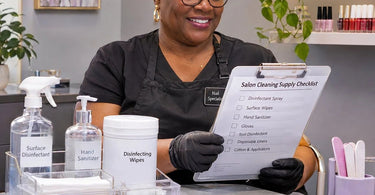
Start every task with confidence... especially when that task involves keeping shared salon equipment clean, organized, and ready for the next client! A busy salon is a beautiful whirlwind of blow dryers, nail dust, facial treatments, waxing appointments, and approximately seventeen people asking where the disinfectant went. When multiple professionals share tools, workstations, and treatment equipment, even the most organized salon can experience cleaning supply shortages, overlooked surfaces, and confusion about who cleaned what. Building a practical cleaning supply checklist for shared salon equipment helps eliminate those little disasters before they become expensive problems. With the right professional salon cleaners and disinfectants, clear responsibilities, and an easy-to-follow system, your entire team can spend less time hunting for supplies and more time delivering exceptional services.
The secret is not buying every cleaning product ever invented. It is choosing appropriate supplies, placing them where professionals actually need them, and establishing consistent procedures that fit your salon's services, equipment, and daily schedule.
Why Shared Salon Equipment Needs Its Own Cleaning Checklist
Shared equipment creates a different sanitation challenge than tools assigned to one professional. A rolling cart might move between three treatment rooms. A facial steamer might serve several estheticians. A nail drill could be used at multiple manicure stations, while styling chairs, shampoo bowls, and electrical tools pass through a constant rotation of clients and employees.
Without a standardized cleaning procedure, everyone may assume somebody else handled the equipment. Unfortunately, somebody else is often very busy looking for the missing tweezers.
A dedicated checklist helps salon owners and managers establish consistent cleaning procedures, ensure necessary supplies remain available, prevent cross-contamination, protect equipment, and clarify accountability between appointments.
It also supports employee training and makes routine sanitation inspections easier to manage. However, every checklist must reflect applicable state and local cosmetology regulations, disinfectant label directions, and equipment manufacturer instructions. A convenient checklist cannot replace those requirements.
Step 1: Inventory Every Piece of Shared Salon Equipment
Before purchasing supplies, walk through your salon and identify equipment used by more than one person or client. Organize your inventory by service category rather than creating one enormous, confusing list.
Hair salons and barber stations: Include styling chairs, shampoo bowls, brushes, combs, scissors, clipper guards, trimmers, styling appliances, rolling carts, and other shared implements. Review your existing professional hair salon and barber shop supplies to identify reusable items requiring cleaning or disinfection.
Nail salons: List manicure tables, reusable metal implements, nail drill handpieces and approved removable bits, task lights, armrests, pedicure equipment, and shared product containers. Include surfaces throughout your nail tables and manicure stations.
Facial and esthetics rooms: Inventory treatment beds, magnifying lamps, facial steamers, reusable bowls, compatible machine attachments, carts, and high-touch controls. Specialized advanced spa equipment may have additional manufacturer-specific cleaning requirements.
Waxing rooms: Include treatment beds, carts, wax warmer exteriors, countertops, reusable approved implements, and frequently touched storage surfaces. Review the equipment used alongside your professional waxing supplies.
Massage and body treatment rooms: Account for treatment tables, face cradle components, bolsters, equipment controls, reusable accessories, and any surfaces that contact clients.
For each item, record its location, material, cleaning requirements, disinfection requirements, responsible employee, and required frequency. This equipment inventory becomes the foundation of your checklist.
Step 2: Separate Cleaning, Disinfecting, and Sterilizing
These terms are related, but they do not mean the same thing. Understanding the difference is essential when selecting supplies.
Cleaning removes visible dirt, oils, hair, dust, product residue, and other debris using an appropriate cleaning product and method. Cleaning is generally required before disinfection.
Disinfecting uses an appropriate registered chemical product or validated process to inactivate specified microorganisms on compatible surfaces. Effectiveness depends on the product's approved uses, proper application, dilution when required, and full labeled contact time.
Sterilizing is a separate, more intensive process intended to eliminate all forms of microbial life, including bacterial spores, when performed using validated methods. Ordinary disinfectant jars, UV storage cabinets, and towel warmers should not automatically be considered sterilizers.
Your checklist should identify the required procedure for each equipment category. Do not assume that a general-purpose household cleaner, a quick alcohol wipe, or a pleasant-smelling spray satisfies professional disinfection requirements.
For reusable implements and surfaces requiring disinfection, select EPA-registered products approved for the intended use and consistent with applicable regulations. Always follow the product label.
Step 3: Build Your Essential Salon Cleaning Supply Checklist
Now for the shopping list! Rather than stuffing a cabinet with mystery bottles and hoping for the best, organize supplies into functional categories.
Cleaning and disinfection essentials:
- Appropriate EPA-registered disinfectants for approved salon tools and surfaces
- Compatible cleaning detergents or surface cleaners
- Disinfectant wipes approved for applicable equipment and surfaces
- Clearly labeled, appropriately sized, covered immersion containers where required
- Measuring tools for concentrates requiring dilution
- Cleaning brushes designated for removing debris from reusable implements
- Clean disposable towels or compatible reusable cleaning cloths
- Clearly identified containers for clean and used implements
Start with the Professional Cleaners & Disinfectants for Salons and Spas collection to explore cleaning and disinfection products for different professional applications. Verify each product's label, registration, compatibility, and required contact time before including it in your salon protocol.
Personal protection and hygiene essentials:
- Appropriate disposable protective gloves
- Protective eyewear or additional PPE when required by product labeling
- Hand soap and accessible handwashing supplies
- Disposable paper towels
- Suitable waste receptacles and replacement liners
- Supplies for safely handling and disposing of contaminated materials
Browse protective gloves and masks for salon and spa professionals when stocking your cleaning stations. Select gloves according to the chemical manufacturer's safety directions rather than assuming every disposable glove provides adequate protection against every cleaning chemical.
Organization and replacement essentials:
- Durable labeled storage containers
- Supply inventory sheets or digital tracking forms
- Replacement disposable implements
- Clean storage trays for disinfected tools
- Equipment-specific replacement parts and accessories
- Extra cleaning supplies for high-volume appointment days
Professional bottles and jars may be useful for compatible storage applications, but disinfectants must remain in appropriate labeled containers and be handled according to their labels. Never transfer chemicals into unlabeled bottles or containers that could be mistaken for beverages or cosmetic products.
Step 4: Create a Cleaning Checklist for Every Service Area
A successful checklist tells employees exactly what to clean, when to clean it, and which products to use. Generic instructions such as keep the salon tidy are about as helpful as telling a nail technician to just make the nails pretty.
Hair styling and barber stations: Remove hair and visible residue from reusable implements after each client. Clean and disinfect tools using methods appropriate to their construction and applicable regulations. Clean shared chair contact surfaces, workstation surfaces, and equipment handles at the required frequency. Electrical tools need particular attention because liquid immersion can damage equipment and create hazards.
Keep appropriate products near your professional shears, clippers, and trimmers, but use only manufacturer-approved cleaning and disinfection methods. Detachable parts may require different procedures than powered tool housings.
Nail stations: Remove filing dust and product debris before applying appropriate disinfectants. Reprocess reusable metal implements between clients according to applicable rules, and discard single-use items after use. Many porous nail files and buffers cannot be adequately disinfected for reuse.
Review your nail files and buffers inventory so employees can distinguish disposable products from reusable implements specifically designed and permitted for reprocessing.
Facial rooms: Clean treatment surfaces and reusable accessories between clients as required. Disinfect compatible equipment handles and touchpoints. Follow device-specific instructions for facial steamers, electrical attachments, and water reservoirs, including recommended emptying, descaling, and maintenance procedures.
Waxing rooms: Remove disposable applicators after each use and never double-dip an applicator into wax intended for subsequent clients. Clean treatment furniture and frequently touched surfaces according to salon regulations. Follow manufacturer instructions for cleaning wax warmer exteriors after the equipment has been safely powered down and cooled as appropriate.
Keep disposable applicators stocked from your professional wax spatulas and applicators supplies. The goal is to avoid situations where an employee feels tempted to reuse something because the replacement box is empty.
Massage rooms: Replace used linens between clients, clean treatment surfaces, and reprocess reusable accessories appropriately. Store clean and used linens separately. Keep sufficient salon and spa bedding available for appointment turnover.
Step 5: Make Contact Time Part of the Checklist
One of the most important details in professional disinfection is contact time. This is the period during which a disinfectant must remain in contact with the surface, usually visibly wet, to achieve the claims specified on its label.
A quick spray followed by an immediate wipe may not provide the labeled disinfection result. Likewise, a disinfectant does not become more effective simply because someone gives the bottle a particularly enthusiastic shake.
Your checklist should identify the approved product, required concentration if applicable, application method, contact time, and any required rinsing or drying steps.
Different disinfectants can have significantly different contact times. Never create a universal one-minute or ten-minute rule without checking the exact product label and applicable salon regulations.
For immersion disinfectants, ensure reusable implements are fully submerged where required and permitted. Replace solutions according to label instructions and applicable regulations, including whenever contamination makes replacement necessary.
For surfaces, verify that the material can tolerate the disinfectant and that sufficient product is applied to maintain the necessary wet contact period. Never mix cleaning or disinfecting chemicals unless the manufacturer explicitly directs that combination.
Step 6: Organize Supplies Into Clearly Labeled Cleaning Zones
Even a perfect cleaning checklist fails when the appropriate supplies are stored three rooms away behind a mountain of holiday decorations.
Create convenient cleaning zones near shared equipment while maintaining safe chemical storage practices.
Each zone should contain the supplies needed for its assigned tasks, access to the relevant procedures, and an appropriate method for separating used items from cleaned and disinfected items.
Consider a small dedicated supply cabinet for hair stations, a designated reprocessing area for reusable nail implements, and separate cleaning supplies for treatment rooms.
Use labels that clearly identify the purpose of each container. Examples include Used Implements, Clean Implements, Disposable Supplies, and Cleaning Supplies.
Keep clean implements protected from contamination after reprocessing. Do not return disinfected tools to a dirty drawer or place them on a workstation covered in hair or nail dust.
Storage should also prevent accidental exposure to concentrated chemicals. Keep product labels intact, provide any required safety information, and separate incompatible materials.
Step 7: Establish Between-Client, Daily, and Weekly Tasks
Different cleaning tasks belong on different schedules. A structured schedule prevents important work from being forgotten while avoiding unnecessary duplication.
Between clients: Remove debris and dispose of used single-service items. Clean and disinfect reusable implements and relevant client-contact surfaces as required. Replace used linens and table coverings. Replenish essential supplies and confirm that shared equipment is ready for the next service.
Daily opening: Check that cleaning products, protective supplies, and disposable implements are adequately stocked. Inspect equipment and verify that required disinfectant solutions are properly prepared and labeled. Confirm that cleaning stations and clean storage areas are ready for service.
Daily closing: Complete required workstation and equipment cleaning, properly handle reusable implements, dispose of waste, process used linens, and clean reusable cleaning containers according to established procedures. Replace disinfectant solutions as required and document supply shortages.
Weekly: Inspect storage areas, review product expiration dates and inventory levels, check equipment for maintenance needs, and audit completed cleaning records. Deep-clean compatible carts, drawers, and other surfaces according to their requirements.
Monthly: Review employee training, update cleaning procedures when equipment or products change, and evaluate whether supplies are being ordered in appropriate quantities.
These schedules provide an organizational starting point. Equipment instructions and local regulations may require additional cleaning or disinfection at specific intervals.
Step 8: Assign Responsibility So Nothing Falls Through the Cracks
Shared equipment needs clearly assigned responsibility. Otherwise, the classic workplace question appears: Who was supposed to clean this?
For each shared equipment category, identify who performs cleaning after use, who checks supplies, who maintains records, and who handles periodic maintenance.
A simple responsibility system might assign each technician to reprocess the equipment they use, a designated closing employee to inspect common areas, and a manager to monitor inventory.
Use a physical checklist, laminated station card, or digital form to make the process consistent. Include the date, equipment or area, completed task, responsible employee, and any problem requiring follow-up.
Employees should receive practical training rather than simply being handed a checklist and wished good luck. Demonstrate proper cleaning, product dilution, contact time, PPE use, and clean-tool storage. Refresher training is especially important when new products or equipment enter the salon.
Step 9: Calculate How Much Cleaning Supply Inventory You Actually Need
Running out of disinfectant during a fully booked Saturday is not a charming salon adventure. It is a purchasing problem that can interrupt services.
Estimate cleaning supply consumption using appointment volume and actual product usage.
For example, imagine a salon completes 40 appointments per day and uses an average of two disposable cleaning wipes per appointment. That represents approximately 80 wipes per day, or 480 wipes across six operating days.
If the salon wants a 25 percent reserve for unexpected demand, the weekly planning target becomes 600 wipes.
This is only an inventory example, not a disinfection recommendation. Some surfaces require more than one wipe to remain wet for the full labeled contact time, while other equipment requires different products and processes.
Track actual consumption for several weeks and adjust purchasing quantities accordingly.
For concentrated products, calculate purchasing needs using the labeled dilution ratio and the volume of correctly prepared solution consumed. Include allowances for required solution replacement, spills, and other legitimate operational waste.
Use a reorder point based on average daily usage, supplier lead time, and safety stock. For example, if your salon uses one bottle of a particular product every three days and supplier delivery normally takes six days, you need enough inventory to cover that lead time plus a reasonable reserve.
Pure Spa Direct offers a broad selection of salon and spa business supplies that can help professional buyers consolidate routine purchasing needs.
Step 10: Include Equipment-Specific Cleaning and Maintenance
Not all salon equipment responds well to the same chemicals or cleaning methods. A product suitable for a stainless steel implement may damage upholstery, plastic housings, electronic controls, or specialty coatings.
Pedicure equipment: Follow the applicable cleaning and disinfection requirements for your particular foot spa or basin, including any required procedures for screens, jets, removable components, and internal circulation systems. Different designs may require different procedures. Operators using pedicure chairs and spas should maintain equipment-specific instructions at the station.
Electrical equipment: Power down and disconnect devices when instructed before cleaning. Never immerse powered equipment or allow liquids into electrical housings unless the manufacturer specifically permits the procedure. Follow approved instructions for removable attachments.
Massage equipment: Check the compatibility of disinfectants with upholstery and face cradle materials. Maintain protective coverings and replace damaged components that cannot be adequately cleaned.
Wax warmers: Use appropriate wax residue removal procedures on compatible surfaces, and avoid introducing water or cleaning chemicals into electrical components. Browse waxing accessories and removers for relevant professional cleaning and maintenance supplies.
Reusable tools: Inspect implements for corrosion, cracks, damaged surfaces, and other conditions that interfere with effective cleaning. Remove damaged items from service instead of repeatedly attempting to disinfect them.
Maintain a separate maintenance log for repairs, filter replacements, mechanical servicing, and manufacturer-recommended procedures. Routine disinfection and equipment maintenance serve different purposes, and both deserve attention.
Common Salon Cleaning Checklist Mistakes to Avoid
Even established salons can develop habits that make sanitation less reliable. Watch for these common mistakes.
- Disinfecting visibly dirty equipment: Remove debris and complete required cleaning before applying disinfectant.
- Ignoring contact time: Follow the labeled wet contact period rather than immediately wiping the product away.
- Using the wrong disinfectant: Confirm registration, approved applications, surface compatibility, and local requirements.
- Reusing disposable implements: Discard single-use products after their intended use.
- Mixing clean and used tools: Maintain separate, clearly identified storage.
- Using unmarked chemical containers: Keep required product labels and identification in place.
- Overlooking cleaning tools: Reprocess or replace reusable brushes, containers, and cloths as appropriate.
- Assuming UV cabinets replace disinfection: Do not treat a storage device as a validated disinfection or sterilization method unless its intended use and applicable requirements support that claim.
- Forgetting employee training: Make sure every professional understands the same documented procedures.
The most useful cleaning checklist is the one your team can consistently follow without sacrificing required sanitation steps.
A Ready-to-Use Shared Salon Equipment Cleaning Checklist
Use this sample as a starting point for your salon's customized procedures. Add the required disinfectant, contact time, cleaning method, and responsible employee for each equipment type.
Before opening:
- Confirm that cleaning and disinfecting products are stocked.
- Check labels, expiration dates, and required solution preparation.
- Restock protective gloves, towels, and disposable implements.
- Verify clean and used equipment storage areas are properly separated.
- Inspect shared equipment for damage or maintenance problems.
After each applicable client service:
- Remove used disposable items and visible debris.
- Clean reusable implements and relevant contact surfaces.
- Apply the approved disinfectant using the required method.
- Observe full contact time and complete required rinsing or drying.
- Store properly processed implements in protected clean areas.
- Replace used linens and protective coverings.
- Record completed tasks and report equipment problems.
Before closing:
- Complete required cleaning of shared stations and equipment.
- Clean and process reusable cleaning tools and containers.
- Handle used linens and waste appropriately.
- Replace disinfectant solutions according to product and regulatory requirements.
- Record low inventory and prepare the next day's supply list.
Weekly management review:
- Audit cleaning checklist completion.
- Inspect equipment, storage containers, and supply cabinets.
- Review product compatibility and safe handling procedures.
- Check purchasing quantities and reorder supplies as needed.
- Address recurring mistakes through employee training.
Frequently Asked Questions About Shared Salon Equipment Cleaning
How often should shared salon equipment be cleaned?
Reusable implements and equipment that contact clients generally require cleaning and appropriate disinfection between clients, subject to the equipment type and applicable regulations. Other surfaces may have additional daily or periodic cleaning requirements. Use the relevant state and local rules and manufacturer instructions to establish exact frequencies.
Can one disinfectant be used throughout the entire salon?
Not necessarily. Different surfaces, implements, and equipment may require different products. Verify that each disinfectant is approved for its intended application and compatible with the materials being treated.
Can reusable nail files and buffers be shared between clients?
Many porous files and buffers are intended for single use and cannot be adequately disinfected. Follow applicable regulations and the manufacturer's reuse instructions. If an item cannot be properly reprocessed, discard it after the intended use.
Do salon cleaning supplies need to be stored separately?
Cleaning chemicals should be safely stored according to their labels and applicable requirements, away from incompatible materials and areas where contamination could occur. Clean implements should remain separate from dirty tools and used cleaning materials.
Should cleaning checklists be printed or digital?
Either format can work. Printed checklists are easy to display at workstations, while digital records can support management oversight and supply tracking. Choose a format employees can reliably use and retain any records required by applicable rules.
What should a salon do if shared equipment cannot be properly disinfected?
Remove the item from service until an appropriate cleaning and disinfection procedure is established. If the equipment is damaged, incompatible with required methods, or cannot be adequately reprocessed, repair or replacement may be necessary.
Keep Every Station Ready With the Right Professional Supplies
Creating a cleaning supply checklist for shared salon equipment is about much more than keeping countertops shiny. It establishes consistent procedures, simplifies staff responsibilities, supports regulatory compliance, and helps protect the professional environment your clients expect.
Start with a complete equipment inventory, match each task to the appropriate cleaning or disinfection method, organize supplies near their point of use, and maintain enough inventory to support your appointment schedule. Then train your team and review the system regularly.
Pure Spa Direct is a professional beauty supply distributor offering equipment, tools, disposables, and sanitation products from a variety of manufacturers. Explore professional cleaning and disinfecting supplies, professional cotton, sponges, and wipes, salon and spa towels, and spa essentials for professionals to help keep your operation organized and appropriately stocked.
Because a beautifully organized salon is wonderful, but a beautifully organized salon where everyone knows exactly where the disinfectant lives? That is practically a luxury experience for the entire team.
