
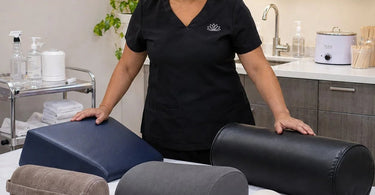
Because details matter... especially when your client is lying on a massage table for an hour, quietly wondering whether that little cushion under their knees is supposed to feel like a cloud or a rolled-up brick. Choosing the right massage bolsters involves much more than finding a shape that looks comfortable and a size that fits your table. For professional massage therapists, spa owners, and wellness practitioners, the right bolster can improve positioning, accommodate different client needs, support efficient treatments, and make the entire service feel more thoughtfully designed. And considering how much attention goes into massage oils, lighting, music, and the perfect treatment room temperature, it would be a shame to let an uncomfortable foam cylinder steal the show.
Massage bolsters are among the most practical accessories in a professional treatment room. They support different areas of the body, help clients maintain comfortable positions, and allow therapists to adapt their setup for various services. However, two bolsters with nearly identical dimensions can perform very differently depending on their foam density, construction, covering, stability, and maintenance requirements.
For busy massage practices, understanding these differences helps turn an ordinary equipment purchase into a smarter long-term investment.
Why Massage Bolster Selection Should Go Beyond Basic Dimensions
Shape and size are useful starting points, but they only describe the outside of a massage bolster. They do not explain how the bolster responds to body weight, whether it maintains its structure during treatment, or how easily it can be cleaned between appointments.
A perfectly sized bolster that compresses too much may provide insufficient support. A beautifully shaped bolster with an excessively firm surface may create pressure that distracts the client. And a supportive bolster with a covering that cannot tolerate routine cleaning may become a maintenance headache.
Professional selection should account for the complete treatment experience, including how the accessory performs before, during, and after a service.
Foam Density and Firmness Make a Bigger Difference Than You Might Expect
One of the most important considerations when comparing professional massage bolsters is the internal cushioning material.
Foam density and firmness are related, but they are not interchangeable. Density describes the amount of material within a given volume of foam, while firmness describes how strongly the foam resists compression. A higher-density foam is not automatically firmer, and density alone does not establish how long a particular product will last.
For massage therapists, these differences matter because positioning accessories must support the body without creating unnecessary pressure.
Soft cushioning: A softer bolster may feel especially welcoming at first contact and can work well when gentle support is preferred. However, excessive compression may reduce its effectiveness for clients requiring more consistent elevation.
Medium-firm cushioning: A moderately supportive bolster can offer a practical balance between comfort and structure for many routine massage services.
Firm cushioning: Firmer options may be useful when a defined position must be maintained. However, therapists should check for uncomfortable pressure, especially around sensitive joints or bony areas.
Rather than assuming one firmness works for everyone, evaluate how the bolster responds to different body types and treatment positions. A cushion that feels perfect under one client's knees may be less suitable under another client's ankles.
The goal is comfortable, appropriate support, not winning an imaginary competition for the firmest foam in the treatment room.
Compression Recovery Matters During Back-to-Back Appointments
Professional spa equipment experiences a very different workload from accessories used occasionally at home.
A massage bolster might support several clients throughout a busy day, repeatedly compressing and recovering as appointments change.
Compression recovery refers to how effectively the cushioning returns toward its original shape after pressure is removed. Foam that develops lasting indentations or loses support can change the way a bolster performs.
When evaluating massage table cushions, consider whether the manufacturer provides information about foam construction, compression resistance, and recommended usage.
During routine inspections, look for flattened areas, uneven cushioning, lumps, or a noticeable change in firmness. These signs may indicate that the bolster is no longer delivering the support your team expects.
For a practice scheduling multiple appointments every day, predictable performance matters more than how impressive a bolster looks when it first arrives.
Cover Material Should Match Your Cleaning Routine
Let's discuss the glamorous world of upholstery maintenance. It may not inspire the same excitement as shopping for beautiful spa decor, but it absolutely deserves a place on your purchasing checklist.
Professional massage bolsters frequently contact clients, linens, massage products, and treatment surfaces. Their coverings should be suitable for the hygiene practices required in a commercial wellness environment.
Many professional bolsters use coated upholstery materials designed to provide a smooth, wipeable surface. However, not every covering tolerates the same cleaning products or procedures.
Before purchasing, investigate several details:
- Cleaning compatibility: Confirm which cleaners and disinfectants the manufacturer approves for the covering.
- Surface condition: Look for smooth, intact materials without damaged areas that could become difficult to clean.
- Seams and closures: Consider whether stitching, zippers, and other construction details complicate cleaning.
- Oil resistance: Check whether the surface tolerates incidental contact with products commonly used during massage.
- Removable covers: Determine whether covers can be removed, laundered, replaced, or purchased separately.
Using an incompatible disinfectant may damage upholstery, even when the surface initially appears unaffected. Follow the bolster manufacturer's care instructions and the applicable disinfectant label, including any required contact time.
Many treatment rooms also use protective coverings from their Salon & Spa Bedding inventory. Fresh linens can provide a comfortable barrier, but they do not eliminate the need to clean and maintain reusable equipment appropriately.
A bolster that is easy to maintain can simplify room turnover without compromising the presentation clients expect from a professional spa.
Client Positioning Should Determine the Type of Support You Choose
Massage bolsters perform different jobs depending on where they are placed. Choosing accessories based on the treatments you actually provide is far more useful than selecting a collection of shapes simply because they look versatile.
Face-up positioning: When clients lie supine, a bolster positioned beneath the knees can support the legs and may make the lower back more comfortable by allowing a gentle bend at the knees. The appropriate height depends on the individual client and their comfort.
Face-down positioning: When clients lie prone, a bolster beneath the ankles can help position the feet without forcing them against the table. Excessive height, however, may create uncomfortable positioning at the knees or ankles.
Side-lying positioning: Pillows, wedges, and longer support cushions can help stabilize the upper leg, maintain space between the knees, and provide additional support where needed.
Semi-reclined positioning: Selected wedges and positioning systems may assist with supported reclining arrangements when appropriate for the service and client.
Browse massage positioning cushions when planning setups that require more specialized support.
Remember that a bolster's shape is only useful when its actual performance matches the position. A narrow cushion may fit beneath the ankles but shift when the client adjusts. A large cushion may offer substantial support while interfering with access to the treatment area.
Placement should always be adjusted to the client rather than expecting the client to adapt to the cushion.
Stability and Surface Grip Can Affect the Treatment Experience
Imagine carefully positioning a client's legs, beginning a wonderfully relaxing massage, and discovering that the bolster has slowly migrated toward the edge of the table.
Not exactly the peaceful journey everyone had in mind.
Bolster stability deserves attention because accessories may shift as clients reposition themselves or as therapists work around the table.
Several characteristics influence stability, including the bolster's base shape, upholstery texture, weight, and relationship with the table surface or linens.
Flat-bottomed designs may offer more resistance to rolling than fully rounded styles, depending on the application. However, neither design is universally superior.
Evaluate stability using the actual massage tables and chairs in your treatment rooms.
A bolster should remain comfortably positioned without requiring the therapist to repeatedly interrupt the service. At the same time, it should be easy to remove or reposition when the treatment changes.
Check that the overall arrangement allows safe client movement onto and off the table. Bolsters should never obstruct transfers or create an avoidable fall hazard.
Different Body Types Require Flexible Support Options
Professional treatment rooms welcome clients with different heights, proportions, mobility levels, sensitivities, and positioning preferences.
That is one reason a single bolster design rarely solves every positioning challenge.
A taller client may need support across a longer section of the legs. Another client may prefer less elevation beneath the knees. Someone with limited range of motion may need a carefully arranged combination of cushions to remain comfortable.
Rather than selecting equipment solely around an average body size, build a small assortment that allows reasonable adjustments.
For example, a practical inventory might include a versatile knee bolster, a lower-profile ankle support, and a positioning wedge or additional cushion for services requiring different arrangements.
Clients with injuries, recent surgery, pregnancy-related positioning needs, or other health considerations may require modified positioning, additional screening, or medical guidance. A bolster should never be presented as a treatment for an underlying condition simply because it changes body position.
Ask clients whether the support feels comfortable, and continue checking as necessary. Comfort is individual, and feedback is more reliable than assuming a familiar setup will suit everyone.
Consider How Bolsters Work With Your Existing Massage Table
A bolster does not operate independently from the rest of the treatment room.
Its effectiveness depends partly on the dimensions, padding, height, and configuration of the massage table beneath it.
A thick table topper combined with a tall bolster may elevate the knees more than intended. A narrow portable table may leave less room for wide cushions, particularly when the client changes position.
Before ordering, consider the complete setup:
- Does the bolster fit securely across the usable width of the table?
- Will the cushion remain accessible when linens and blankets are in place?
- Does its height create a comfortable position with the table's existing padding?
- Can the therapist reach the treatment area without awkward stretching?
- Is there adequate room for safe client entry, repositioning, and exit?
Practitioners who provide mobile services should also consider how bolsters pack alongside Portable Massage Tables and other supplies.
A cushion that works beautifully in a spacious spa suite might be inconvenient when transporting equipment between appointments.
Weight and Portability Matter for Mobile Massage Professionals
For mobile massage therapists, every piece of equipment must earn its place in the travel kit.
Bolster weight, packing dimensions, and ease of transport can influence how efficiently a therapist sets up and breaks down appointments.
A larger, heavier cushion may be perfectly practical in a permanent treatment room but less convenient when carried up apartment stairs alongside a portable table, linens, and massage supplies.
Look beyond basic product dimensions and consider transport requirements.
Can the bolster fit into the equipment bag? Does the design include a carrying handle? Will it maintain its shape during transport? Is the covering durable enough for frequent packing and unpacking?
Mobile professionals may benefit from maintaining a compact, versatile selection rather than transporting every bolster they own.
Your shoulders already have plenty to do. They do not need an additional unpaid internship carrying unnecessary equipment.
How Massage Oils and Lotions Influence Bolster Maintenance
Massage products are essential to many professional treatments, but repeated exposure to oils, lotions, and creams can affect certain upholstery materials over time.
This does not mean every massage bolster is incompatible with massage products. It means that compatibility should be checked rather than assumed.
If your team regularly uses Massage Oils, Lotions, and Creams for Therapists, consider how those formulations interact with your equipment.
Some upholstery materials may become stained, sticky, discolored, or weakened after prolonged exposure to particular ingredients or cleaning chemicals.
Follow the manufacturer's cleaning recommendations, remove product residue appropriately, and inspect coverings for deterioration.
Protective linens can help minimize direct contact while maintaining an inviting treatment surface.
For operations managers, establishing a consistent care process can also reduce confusion when several practitioners share the same equipment.
Bolster Construction and Seam Quality Deserve Attention
Two massage bolsters might have similar foam and upholstery but differ considerably in their construction.
Seams, handles, zippers, fastening systems, and covering attachment methods can affect everyday convenience and durability.
Inspect product descriptions and available photographs for construction details. If specifications are unclear, ask about upholstery materials, care requirements, and replacement options before placing a large order.
Seams should be appropriately finished, and any handles should be designed for their intended use. Avoid assuming that a handle can tolerate excessive pulling or that a removable cover is suitable for machine washing without checking instructions.
Also consider whether the bolster can be inspected easily for wear.
Equipment that develops torn seams, exposed filling, or damaged coverings may become unsuitable for continued professional use until properly repaired or replaced.
A durable-looking exterior is encouraging, but careful construction and appropriate maintenance are what help support dependable daily performance.
Think About Therapist Ergonomics, Not Just Client Comfort
Client comfort is the primary reason to use a massage bolster, but therapist positioning matters too.
Support accessories can influence the height and angle of the body area being treated. This may change how comfortably a practitioner performs particular massage techniques.
For example, a bolster that raises the knees significantly may alter access to portions of the legs. A wide support cushion might interfere with draping or require the therapist to reach farther across the table.
During equipment evaluation, therapists should consider their own working posture as well as the client's experience.
Can the intended techniques be performed without unnecessary reaching, twisting, or shoulder elevation? Does the support allow suitable access to the treatment area? Can the therapist adjust the bolster without compromising appropriate draping?
A properly selected accessory should complement the treatment rather than create an additional obstacle.
Positioning equipment is part of the overall ergonomic setup, which also includes table height, therapist technique, and workflow.
How Many Massage Bolsters Should a Professional Spa Keep?
The right quantity depends on your services, number of treatment rooms, appointment volume, and cleaning procedures.
A studio specializing in straightforward relaxation massage may have different needs from a wellness practice offering several bodywork modalities and more varied positioning arrangements.
Start by examining which support accessories therapists use most frequently.
Ask your team whether particular bolsters are regularly moved between rooms, whether certain client positions require improvised support, and whether cleaning or damage ever prevents an accessory from being available.
These observations can reveal whether you need additional quantities of an existing style or a more versatile assortment.
When managing several rooms, consider standardizing a basic set of supports while allowing selected specialty accessories for treatments that require them.
This approach can simplify purchasing, maintenance, and staff training.
Explore Professional Massage & Wellness Products when coordinating bolsters with other equipment and treatment supplies.
Include Replacement Costs in Your Purchasing Decision
The least expensive massage bolster is not necessarily the most economical choice for a high-volume practice.
Purchase price matters, but it should be considered alongside cleaning requirements, expected usage, replacement availability, and the consequences of equipment downtime.
For example, a moderately priced bolster with a replaceable cover may offer operational advantages if replacement covers are readily available and the cushioning remains in good condition.
On the other hand, an inexpensive bolster that quickly loses its shape or develops surface damage may require more frequent replacement.
Compare products using practical questions rather than relying on price alone:
- What is the initial purchase cost?
- Are replacement covers available?
- What maintenance products and procedures are required?
- How does the accessory perform under repeated use?
- Will it work across multiple services and treatment rooms?
- What manufacturer warranty or care information is provided?
A simple cost-per-use calculation can help evaluate purchases once you have reliable information about service life and usage.
Avoid assuming that a higher price automatically guarantees greater durability. Product specifications and actual performance deserve more weight than assumptions about premium pricing.
A Practical Massage Bolster Evaluation Checklist
Before adding new cushions to your professional inventory, use a consistent evaluation process.
1. Identify the treatment purpose. Determine whether the bolster will primarily support knees, ankles, side-lying positioning, or another appropriate application.
2. Evaluate firmness. Consider whether the cushioning provides adequate support without creating uncomfortable pressure.
3. Review compression behavior. Check whether the foam maintains an appropriate shape and support level during use.
4. Examine the covering. Confirm that the material and construction are compatible with your cleaning and maintenance procedures.
5. Test stability. Make sure the bolster stays appropriately positioned on the treatment surface.
6. Check table compatibility. Evaluate the accessory with your actual table dimensions, padding, and linens.
7. Consider versatility. Determine how many treatment positions and services can reasonably use the same bolster.
8. Review storage and transport. Account for treatment room space, shelving, and mobile service requirements.
9. Assess long-term costs. Consider maintenance, expected usage, and available replacement components.
10. Gather therapist and client feedback. Test the setup with appropriate consent and adjust based on comfort and practical treatment needs.
This process can help purchasing managers distinguish between accessories that merely look suitable and those that genuinely fit daily operations.
Do Not Forget the Rest of the Treatment Table Experience
Even an excellent bolster cannot compensate for an uncomfortable or poorly maintained treatment table.
Bolsters should be considered part of a larger comfort system that includes table padding, face supports, temperature management, and clean, appropriately fitted linens.
For example, Massage Table Warmers & Toppers may help create a more inviting surface when used according to manufacturer instructions and client preferences.
Fresh bedding, comfortable draping, and properly maintained accessories can contribute to a more polished professional experience.
However, adding more layers does not automatically make positioning better. Thick padding, excessive elevation, or loosely arranged accessories can introduce new comfort or stability concerns.
The best setup is one in which every component has a clear purpose.
Make Bolster Selection Part of Your Staff Training
Purchasing the right accessories is only half the job. Your team also needs to understand how to use them consistently and appropriately.
During staff onboarding or continuing education, review the available bolster types, intended applications, cleaning instructions, and storage procedures.
Encourage practitioners to ask clients about comfort rather than automatically arranging every person in the same position.
Demonstrate how to adjust supports while maintaining appropriate draping, how to recognize when an accessory is unsuitable, and how to report damaged equipment.
For spas with multiple therapists, clear procedures can help reduce variation in the basic room setup while preserving flexibility for individual client needs.
Staff should also know where spare bolsters and clean covers are stored. Nothing interrupts a smooth treatment transition quite like searching three cabinets for the one cushion everyone swears was there yesterday.
Consider adding bolster inspections to your regular equipment maintenance checklist so worn cushioning and damaged covers are identified before they affect appointments.
Small Accessories Can Make a Big Professional Impression
Massage bolsters may not be the most glamorous items on a spa purchasing list, but their influence extends beyond their modest appearance.
The right support can help a client settle comfortably into a treatment, make positioning adjustments easier, and contribute to an organized, professional service.
The wrong support can become an unnecessary distraction, whether it shifts across the table, compresses too deeply, creates uncomfortable pressure, or complicates cleaning.
For massage therapists and spa owners, the smartest purchasing decision considers foam performance, upholstery compatibility, stability, construction, therapist ergonomics, client variability, and long-term maintenance alongside shape and size.
Explore the Massage Bolsters collection at Pure Spa Direct to compare options for your professional treatment rooms. As a supplier of professional spa and massage equipment, Pure Spa Direct offers access to accessories that can help businesses build practical, comfortable, and well-equipped treatment environments.
Because great massage experiences depend on more than skilled hands. Sometimes the difference is a thoughtfully chosen cushion doing its job so well that nobody even thinks about it. And for a massage bolster, being completely forgettable might just be the ultimate compliment.
