
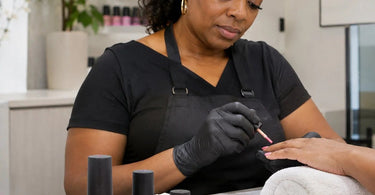
Pros rely on this daily essential to create gorgeous, glossy manicures that keep clients coming back. But professional gel polish can also create a surprisingly sneaky bookkeeping problem: one bottle contains 7.3 mL, another holds 10 mL, and that beautiful new shade comes in a generous 15 mL bottle. Suddenly, comparing prices feels less like shopping for nail supplies and more like taking a math exam while someone waves a glitter swatch in your face. Fortunately, calculating gel polish cost per service is much easier than it looks, and understanding the numbers can help your salon make smarter purchasing decisions without sacrificing quality.
Whether you manage a bustling nail salon, operate a private nail studio, or oversee multiple manicure stations, knowing exactly what each gel polish application costs is an important part of protecting your profits. A lower bottle price does not automatically mean a lower service cost, and a larger bottle is not necessarily the best investment. The secret is comparing the cost of the actual amount of polish used during each appointment.
With the right calculations, you can evaluate different bottle sizes, compare professional brands, establish realistic product budgets, and make inventory decisions based on actual salon usage rather than pretty packaging. And yes, there is still room in the budget for that irresistible new pink.
Why Gel Polish Bottle Size Matters for Salon Profitability
Professional nail technicians frequently work with gel polish bottles that contain different quantities of product. Common sizes include 7.3 mL, 8 mL, 10 mL, 12 mL, and 15 mL, although manufacturers may offer additional sizes.
These differences make direct price comparisons misleading. A $9 bottle might appear more economical than a $14 bottle, but the larger bottle could contain substantially more product.
For example, imagine comparing two hypothetical gel polish options:
- Brand A: 8 mL bottle priced at $9.60.
- Brand B: 15 mL bottle priced at $15.00.
At first glance, Brand A costs $5.40 less. However, dividing each purchase price by its bottle volume reveals a different picture.
- Brand A: $9.60 divided by 8 mL equals $1.20 per mL.
- Brand B: $15.00 divided by 15 mL equals $1.00 per mL.
Brand B costs approximately 16.7% less per milliliter, despite its higher upfront price.
That difference becomes relevant when purchasing dozens of shades or replenishing frequently used salon colors. Browse Professional Gel Polish to compare available options and bottle formats for your nail services.
Step 1: Calculate the Cost per Milliliter
The first calculation establishes a consistent measurement for comparing bottles of different sizes.
Formula: Cost per mL = Bottle Purchase Price / Bottle Volume in mL
Suppose you are evaluating three hypothetical gel polish bottles:
- Bottle A: 7.3 mL for $9.49 = approximately $1.30 per mL.
- Bottle B: 10 mL for $11.50 = $1.15 per mL.
- Bottle C: 15 mL for $15.75 = $1.05 per mL.
Bottle C offers the lowest unit cost in this comparison. However, the calculation does not yet reveal the actual cost of completing a manicure.
That requires understanding how much gel polish your technicians apply during each service.
For accurate comparisons, use the actual amount paid after discounts and include applicable shipping, taxes, or purchasing fees when those expenses are part of your inventory cost. If an invoice includes several products, allocate shared costs consistently.
Important: Compare milliliters with milliliters. Some manufacturers label products in grams rather than milliliters. Because gel formulas have different densities, grams and milliliters should not be treated as interchangeable without reliable product-specific conversion information.
Step 2: Estimate How Much Gel Polish You Use per Service
Once you know the cost per milliliter, determine how much color gel is typically used during a complete manicure.
The quantity depends on several variables:
- Nail length and overall surface area.
- Number of color coats applied.
- Gel viscosity and pigmentation.
- Brush design and application technique.
- Whether the shade provides coverage with one, two, or additional coats.
- Product remaining on brushes, bottle necks, or discarded materials.
A short-nail manicure with two thin coats may consume less gel than a long-nail service requiring additional coverage. Highly pigmented formulas may need fewer coats, while sheer colors and specialty finishes may require different application techniques.
For planning purposes, consider a hypothetical salon that averages 0.30 mL of color gel per complete manicure. This is an illustrative assumption, not a universal industry standard. Your actual usage may differ substantially.
If the salon purchases a 10 mL bottle for $11.50, the calculation becomes:
Color Cost per Service = Cost per mL x mL Used per Service
$1.15 x 0.30 mL = $0.345, or approximately $0.35 per manicure.
That is the estimated color gel expense before accounting for product waste and other manicure supplies.
Suddenly, that $11.50 bottle looks considerably less mysterious. We love a good plot twist, especially when the plot involves protecting your salon budget.
Step 3: Compare Different Bottle Sizes Using the Same Service Volume
Now apply the same estimated consumption rate to all three bottles.
Assume each manicure uses 0.30 mL of color gel, including both color coats.
- 7.3 mL bottle at $9.49: Approximately $1.30 per mL, resulting in a color cost of $0.39 per service.
- 10 mL bottle at $11.50: $1.15 per mL, resulting in a color cost of approximately $0.35 per service.
- 15 mL bottle at $15.75: $1.05 per mL, resulting in a color cost of approximately $0.32 per service.
These results show how a higher upfront investment can reduce the estimated material cost of each manicure.
However, the comparison assumes all three products perform equally and require the same application volume. That assumption is useful for an initial comparison but should be tested against actual salon experience.
A more expensive gel with excellent coverage might require less product than an inexpensive formula that needs additional coats. In that situation, cost per milliliter alone would not identify the better value.
The goal is not to find the cheapest bottle. It is to identify the most cost-effective product that delivers the results your clients expect.
Step 4: Determine How Many Manicures Each Bottle Can Provide
Another useful calculation estimates the number of complete services available from each bottle.
Formula: Estimated Services per Bottle = Usable Bottle Volume / Average Volume Used per Service
Using the same hypothetical consumption of 0.30 mL per manicure:
- 7.3 mL bottle: approximately 24.3 theoretical services.
- 10 mL bottle: approximately 33.3 theoretical services.
- 15 mL bottle: 50 theoretical services.
These calculations assume every milliliter can be used. In real salon conditions, some product may remain inside the bottle or be lost during normal handling.
A better estimate accounts for usable product rather than the entire labeled volume.
Suppose your salon determines that approximately 90% of a particular gel polish bottle is practically usable. This percentage is only an example and should be replaced with actual measured results.
For a 15 mL bottle:
15 mL x 0.90 = 13.5 mL of estimated usable product.
13.5 mL / 0.30 mL per service = 45 estimated manicures.
At a purchase price of $15.75:
$15.75 / 45 services = $0.35 per manicure.
Compare that with the original theoretical estimate of approximately $0.32, and you can see why realistic inventory calculations matter.
A few cents may seem insignificant until they are multiplied across hundreds or thousands of appointments.
Step 5: Measure Real Gel Polish Consumption Instead of Guessing
The most reliable way to understand salon product costs is to measure actual usage under normal working conditions.
One practical approach involves tracking a selected bottle over a fixed number of appointments.
Try this simple salon testing method:
- Select a frequently used gel polish shade.
- Record its purchase price, labeled quantity, and product identification.
- Use a sufficiently precise scale to weigh the complete bottle and cap before the test.
- Apply the product during 10 comparable manicure appointments, recording the number of coats and any unusual usage.
- Weigh the same closed bottle again after those appointments.
- Subtract the final weight from the starting weight.
- Divide the measured product loss by the number of services to determine average consumption in grams.
For example, suppose a bottle loses 3.2 grams of gel after 10 complete manicures.
3.2 grams / 10 services = 0.32 grams per manicure.
If the manufacturer provides the net contents in grams, you can use that information to estimate service yield directly. If the bottle is labeled only in milliliters, you need a reliable density measurement or conversion to compare mass-based usage with volume-based contents.
Do not divide the weight of the entire filled bottle by the weight of polish used. The empty container, cap, and brush contribute weight but do not represent usable gel.
Repeat the test across multiple shades and technicians. This helps identify differences in application habits, coverage requirements, and product performance.
For even better accuracy, track consumption until the bottle is no longer practical to use. The actual number of completed manicures provides an excellent historical benchmark for future purchasing.
Step 6: Calculate the Complete Gel Polish System Cost
Color gel is only one part of a professional gel manicure. A realistic service-cost calculation should also account for the products required to prepare, finish, and maintain the treatment.
Depending on the manufacturer and application system, these may include base coat, top coat, dehydrator, primer, cleanser, removal materials, and other consumables.
Consider the following hypothetical cost breakdown:
- Color gel polish: $0.35.
- Base coat: $0.22.
- Top coat: $0.28.
- Nail preparation liquids: $0.18.
- Disposable files, buffers, wipes, and related consumables: $0.85.
- Additional product waste allowance: $0.12.
Total estimated consumable cost: $2.00 per manicure.
These amounts are illustrative, not current product prices or guaranteed salon averages.
The $2.00 figure is considerably more useful for service planning than looking at color polish alone.
It also explains why managing Manicure Essentials, Nail Files & Buffers, and Professional Cotton, Sponges, and Wipes deserves attention alongside gel polish purchasing.
Remember that the complete service price must also cover technician compensation, rent, equipment expenses, sanitation, payment processing, and the salon profit target. Product cost is one component of pricing, not the entire pricing formula.
Why a Bigger Gel Polish Bottle Is Not Always the Better Deal
Large bottles frequently deliver a lower unit price, but salon purchasing decisions involve more than simple division.
Imagine buying a beautiful 15 mL shade at an attractive wholesale price. Unfortunately, your clients request that color only four times before the trend disappears into the same mysterious universe as last season's nail art inspiration.
The remaining product may sit unused until it is no longer suitable for professional application.
In that case, the bottle with the lowest price per milliliter might produce the highest actual cost per completed service.
Consider these factors before automatically choosing larger bottles:
- Client demand: Popular nudes, reds, and frequently requested shades may justify larger quantities.
- Seasonality: Holiday colors and temporary trends may be better purchased in smaller formats.
- Product performance: Formulas requiring fewer coats can potentially reduce usage.
- Usable product life: Follow manufacturer guidance for storage conditions and product expiration or period-after-opening information.
- Inventory investment: Money tied up in rarely used colors cannot support other operational needs.
- Service compatibility: Products should fit the salon's approved application and curing system.
Before switching products purely for a small cost advantage, consider compatibility with the manufacturer-recommended base coat, top coat, lamp, and curing instructions.
Professional brands such as CND, OPI, and Gelish offer options worth evaluating according to your salon's service needs. Compare actual products and manufacturer instructions rather than assuming all gel systems have identical requirements.
How Pigmentation and Coverage Change Cost per Service
Two gel polish formulas can have the same bottle size and purchase price but deliver very different service costs.
Suppose two hypothetical 10 mL bottles each cost $12.
Formula A achieves the intended finish using 0.25 mL of product per manicure. Formula B requires 0.40 mL to achieve a comparable result.
Both cost $1.20 per mL.
- Formula A: $1.20 x 0.25 mL = $0.30 per service.
- Formula B: $1.20 x 0.40 mL = $0.48 per service.
Formula A uses less product and saves $0.18 per service in this example.
Across 300 comparable manicures, that difference represents $54 in color gel expense alone.
Coverage, brush control, application consistency, and manufacturer-recommended coat thickness can all affect material consumption.
However, technicians should never apply excessively thick coats simply to work faster or skip required coats to reduce costs. Follow product-specific instructions for application and complete curing. Incorrect application can compromise service quality and increase the risk of unwanted skin exposure to uncured materials.
Efficiency should come from proper training and selecting suitable products, not cutting corners.
How to Calculate Gel Polish Costs for Long Nails and Specialty Services
A salon offering only one standard gel manicure price may overlook meaningful differences in product use and appointment time.
Long nails typically provide more surface area to coat. Specialty finishes, layered colors, detailed designs, and certain nail enhancement services may also involve additional materials.
Consider a hypothetical salon using gel polish that costs $1.10 per mL.
- Short natural nails using 0.25 mL: approximately $0.28 in color gel.
- Medium-length nails using 0.35 mL: approximately $0.39 in color gel.
- Long nails using 0.50 mL: $0.55 in color gel.
These quantities are examples for illustrating the calculation, not established consumption standards for different nail lengths.
The differences may appear modest, but longer or more elaborate services can also require additional base products, finishes, nail art materials, and technician time.
If your salon offers rhinestone designs, specialty accents, or elaborate decorative work, track those expenses separately. Browse Nail Art Supplies and Nail Art Rhinestones when planning the materials needed for these premium services.
Separating standard gel manicure costs from specialty-service costs makes it easier to establish fair, consistent upgrade pricing.
How to Build a Simple Gel Polish Cost Tracking Spreadsheet
You do not need expensive software to begin monitoring polish expenses. A basic spreadsheet can make comparing products remarkably easy.
Create columns for the following information:
- Brand and product name.
- Shade or product code.
- Purchase date and purchase price.
- Bottle size and measurement unit.
- Cost per milliliter or gram.
- Average quantity used per service.
- Estimated usable product percentage.
- Estimated number of services per bottle.
- Calculated color cost per service.
- Actual completed services, when available.
For volume-based calculations, a spreadsheet can use these formulas:
Cost per mL = Purchase Price / Bottle Volume
Usable Volume = Bottle Volume x Usable Percentage
Estimated Service Count = Usable Volume / Average Usage per Service
Adjusted Cost per Service = Purchase Price / Estimated Service Count
For example, a $14 bottle containing 12 mL of product, with an estimated 90% usable volume and 0.30 mL consumed per service, produces the following calculation:
12 x 0.90 = 10.8 mL usable.
10.8 / 0.30 = 36 estimated services.
$14 / 36 = approximately $0.39 per service.
Update the spreadsheet whenever wholesale prices change or when your salon gathers better information about actual product consumption.
Over time, this creates a useful purchasing reference instead of relying on memory, guesswork, or whichever bottle happens to look most impressive on the shelf.
Use Cost per Service to Make Smarter Wholesale Purchases
For busy salons, small purchasing improvements can add up across a full year of appointments.
Suppose your salon performs 600 gel manicures monthly and identifies a suitable product option that reduces color gel expense by $0.15 per service.
600 manicures x $0.15 = $90 in potential monthly savings.
Across 12 months, that represents $1,080 in potential annual savings, assuming the same service volume, actual usage, and product performance.
That does not mean every salon should immediately switch gel brands. Service quality, product compatibility, client satisfaction, and reliable inventory availability remain essential.
Instead, use cost-per-service information to make more informed choices when restocking popular shades, comparing bottle sizes, or introducing a new professional nail line.
Pure Spa Direct serves spa, salon, and beauty professionals as a wholesale distributor, offering access to products across multiple manufacturers rather than manufacturing the gel polish itself. Explore Professional Nail Care Collections to evaluate supplies for your service menu, or browse Nail Brushes & Tools for equipment that supports professional application.
Common Gel Polish Costing Mistakes to Avoid
Even experienced salon professionals can underestimate material expenses when inventory measurements are inconsistent.
Mistake 1: Comparing bottle prices instead of unit prices. A smaller bottle may cost less upfront while containing significantly more expensive product per milliliter.
Mistake 2: Assuming every formula uses the same amount. Pigmentation, consistency, coat requirements, and technique can affect consumption.
Mistake 3: Ignoring product that cannot be recovered. A small amount of residual gel, routine handling loss, and discarded product can influence actual service yield.
Mistake 4: Confusing grams with milliliters. These measurements describe mass and volume, respectively, and require product-specific information for conversion.
Mistake 5: Forgetting base coat and top coat. Tracking color alone does not provide the complete gel system cost.
Mistake 6: Purchasing too many oversized trend colors. The lowest theoretical unit cost means little when substantial inventory remains unused.
Mistake 7: Treating product cost as the complete service price. Technician labor, overhead, operational expenses, and desired profit must also be considered.
Correcting these mistakes creates a much clearer picture of how every manicure contributes to your salon's financial performance.
Frequently Asked Questions About Gel Polish Cost per Service
How do you calculate gel polish cost per manicure?
Divide the bottle purchase price by its volume in milliliters, then multiply that result by the average milliliters used during one manicure. For a more realistic calculation, account for unusable product and waste. Alternatively, divide the total bottle cost by the actual number of completed manicures obtained from that bottle.
Is a 15 mL gel polish bottle always cheaper than a 7.3 mL bottle?
No. A 15 mL bottle often offers a lower cost per milliliter, but its actual value depends on purchase price, usage, application performance, product life, and whether the salon can use the quantity before it becomes unsuitable.
How many gel manicures can you get from one bottle?
There is no universal number. Bottle volume, product formula, coat thickness, number of coats, nail dimensions, and usable product all affect service yield. Manufacturer estimates can help with planning, but tracking actual salon usage is more reliable for your business.
Should salons charge more for gel manicures on long nails?
Long nails may require additional product and technician time. Whether to apply a surcharge should depend on actual costs, appointment duration, service complexity, and your salon's pricing strategy.
What is the best way to compare different gel polish brands?
Start with cost per milliliter, then compare the average amount needed to complete the same service. Also evaluate coverage, durability, system compatibility, application requirements, product availability, and actual usable yield.
How often should a salon update its gel polish cost calculations?
Review calculations whenever supplier prices change, new products are introduced, or application procedures are modified. A monthly or quarterly review can also help identify changing usage patterns and purchasing opportunities.
The Bottom Line: Measure the Manicure, Not Just the Bottle
Learning how to calculate gel polish cost per service when bottles are different sizes turns an everyday purchasing decision into a practical salon management advantage.
Begin by calculating the price per milliliter, measure how much product your technicians actually use, account for realistic bottle yield, and add the other materials needed to complete the service. Once those numbers are available, comparing different brands and bottle formats becomes much more meaningful.
The most profitable choice is not automatically the smallest bottle, the largest bottle, or even the lowest-priced bottle. It is the product that delivers dependable professional results at an appropriate cost for the services your clients actually book.
Explore Professional Gel Polish, Manicure Essentials, and Nail Treatments at Pure Spa Direct when planning your next professional supply order.
Because beautiful manicures should make your clients smile, and smart inventory decisions should give your accountant something to smile about, too.
