
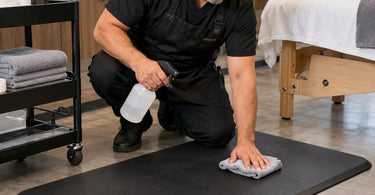
Stay competitive with this practical approach to cleaning anti-fatigue mats without turning your workstation into an accidental ice rink. In salons, spas, barber shops, nail studios, treatment rooms, and other professional beauty environments, these mats work hard beneath your team all day, collecting hair, dust, product residue, oils, polish particles, and the mysterious little bits of everything that somehow appear on a busy service floor. Cleaning them regularly matters, but cleaning them correctly matters even more because too much detergent, the wrong chemical, or incomplete rinsing can leave a slick film exactly where you need dependable footing.
The safest cleaning routine starts with one simple rule: know what your mat is made from and follow its manufacturer’s care instructions. Anti-fatigue mats may be constructed from PVC foam, rubber, polyurethane, vinyl, nitrile rubber, or layered combinations, and one cleaning method is not automatically appropriate for every material. If your mat came with care instructions, those directions should always take priority over a generic cleaning routine.
Why Do Anti-Fatigue Mats Get Slippery After Cleaning?
The usual culprit is residue. A cleaner can lift dirt beautifully and still leave behind surfactants, oils, fragrances, conditioners, or other ingredients that make the mat feel slick after it dries. Using too much cleaning solution can make the problem worse because more product means more material that must eventually be removed.
Salon and spa environments add another challenge: the mat may already have invisible buildup before cleaning begins. Hair products, massage products, creams, oils, wax residue, nail products, skincare formulas, and general floor cleaners can slowly accumulate on the surface. Add fresh detergent without thoroughly removing the old residue and you can create a surprisingly slippery little chemistry experiment under your feet.
That is why “more cleaner” is rarely the answer. For many washable dry-area mats, manufacturers recommend mild soap or detergent rather than aggressive cleaning products. Some commercial mat manufacturers specifically recommend mild detergents within a moderate pH range, while certain rubber mats designed for wet environments may tolerate more intensive rinsing. Always check the instructions for the actual mat you own.
Step 1: Remove Loose Debris Before Adding Water
Before reaching for your Professional Cleaners & Disinfectants for Salons and Spas, remove everything that can be handled dry. Sweep, vacuum, or dry-mop the top of the mat, paying extra attention to textured grooves where hair and debris tend to gather.
Then move the mat and clean underneath it. Yes, underneath. The floor below an anti-fatigue mat is one of those places that can quietly become its own ecosystem if nobody checks it for three weeks.
Removing loose material first prevents you from turning dry debris into wet sludge. It also gives you a better look at the surface so you can identify stains, oily patches, cracks, curled edges, or other wear before washing.
Step 2: Use the Mildest Effective Cleaner
For many foam, vinyl, PVC, urethane, and rubber anti-fatigue mats, a mild soap or detergent is the sensible starting point when permitted by the manufacturer. You generally do not need to attack an ordinary salon mat like you are stripping paint from a garage floor.
Dilute concentrated products according to their label directions rather than estimating. An overly strong mixture may be harder to rinse away and may damage certain mat materials. It can also leave exactly the slippery residue you are trying to avoid.
If you need additional cleaning supplies for your facility, keeping an organized assortment of cleaning supplies in a dedicated backbar or utility area makes it easier for employees to follow the same routine instead of grabbing whatever bottle happens to be closest.
Step 3: Damp Clean Instead of Flooding Foam Mats
Many dry-area anti-fatigue mats are designed to be damp-mopped or wiped rather than soaked. Closed-cell foam products may tolerate moisture on the surface, but that does not mean every mat should be submerged, pressure washed, steam cleaned, or sent through a washing machine.
Use a damp mop, microfiber cloth, sponge, or other manufacturer-approved cleaning tool to work across the surface. Pay attention to textured areas because grooves can hold both soil and detergent. If you are wiping by hand, clean in manageable sections so the solution does not sit longer than necessary.
For professional settings, Professional Cotton, Sponges, and Wipes for Salons & Spas can be useful for controlled surface cleaning and detail work around edges.
Step 4: Do Not Confuse Cleaning With Leaving Cleaner Behind
This is the step that saves you from the dreaded post-cleaning skate rink: remove the cleaning solution thoroughly.
If your mat’s instructions permit rinsing, rinse away detergent until the surface no longer feels soapy. If the mat should only be damp-cleaned, make another pass with a clean cloth or mop dampened with plain water, rinsing your cleaning tool frequently. The goal is to remove loosened soil and leftover cleaner rather than spreading it around until everything eventually dries.
A mat that looks clean but feels slick when rubbed with a clean damp hand may still have residue on it. Do another plain-water pass before declaring victory.
Step 5: Clean the Bottom Too
The underside deserves attention for two reasons. First, dirt trapped underneath can scratch or discolor certain flooring. Second, residue or moisture between the mat and floor can affect how securely the mat sits.
Sweep or wipe the underside according to the manufacturer’s instructions, then clean the floor where the mat normally sits. Make sure the floor itself is completely clean and free of product buildup. A perfectly clean mat placed on top of an oily floor is not going to win any awards for stability.
This is especially important near styling stations, shampoo areas, manicure stations, waxing rooms, and massage spaces where products can migrate farther than anyone expects. Somehow, one drop of oil can develop the travel ambitions of a college graduate with a new passport.
Step 6: Let the Mat Dry Completely
Do not immediately throw a freshly cleaned, damp mat back onto the floor and reopen the station. Allow both sides of the mat to dry thoroughly, and make sure the flooring underneath is dry as well.
Place the mat in a clean, ventilated area where air can reach it. Depending on the material, standing it carefully on edge may help the underside dry, provided doing so will not crease or deform the mat. Avoid excessive heat unless the manufacturer specifically allows it.
Before returning the mat to service, touch several areas with clean hands. It should feel dry, clean, and free from an obvious oily or soapy film.
What About Rubber Mats Designed for Wet Areas?
Commercial rubber mats designed specifically for wet or oily environments can have very different cleaning instructions from soft foam mats used at dry styling stations. Some manufacturers permit certain molded rubber mats to be rinsed with water or cleaned more aggressively, while still warning against harsh chemicals, steam, mechanical scrubbing, or inappropriate degreasers.
Never assume that a procedure appropriate for a heavy-duty rubber mat is safe for your cushioned salon mat. Check the model and material first. If you have several types of mats throughout the business, create separate cleaning instructions for each one.
A color-coded or labeled cleaning system can be especially useful in larger operations. Include mat care alongside the rest of your Must-Have Supplies for Salon & Spa Business Success so staff members know exactly which tools and products belong at each workstation.
Avoid Heavy Degreasers Unless the Manufacturer Approves Them
Seeing hairspray, massage lotion, oil, or styling residue on a mat can make a heavy-duty degreaser tempting. Resist the urge unless the manufacturer specifically says the material can handle that chemistry.
Strong solvents, caustic cleaners, aggressive degreasers, bleach solutions, and other harsh products may discolor, harden, soften, swell, crack, or otherwise affect certain mat materials. They may also create residue problems of their own.
If a stubborn contaminant cannot be removed with the approved routine, consult the mat manufacturer rather than escalating to stronger chemicals at random. Replacement is sometimes smarter than experimenting with the chemistry of an expensive floor mat.
Be Careful With Disinfectants Too
Cleaning and disinfecting are related but different jobs. If your workplace protocol requires a mat to be disinfected, verify that the disinfectant is compatible with the mat material and follow the disinfectant label exactly, including dilution, contact time, and any rinsing directions.
Do not mix cleaning chemicals or assume that combining two products makes them work better. It can damage surfaces and, depending on the products involved, create dangerous chemical reactions. Professional cleaning should be systematic, not an episode of “Salon Science Gone Wild.”
Keep Massage Oil and Other Service Products Off the Floor
Sometimes the best way to keep a mat from becoming slippery is to prevent contamination in the first place. If you work with Massage Oils, Lotions, and Creams for Therapists, keep dispensing bottles stable and wipe drips promptly. The same principle applies to hair serums, conditioning treatments, cuticle products, wax removers, and other slippery formulas.
Consider transferring frequently used professional products into appropriately sized Bottles & Jars when suitable for the product and permitted by its handling requirements. A controlled dispenser can help reduce drips compared with wrestling an oversized bulk container in the middle of a service.
Keep absorbent High-Quality Towels or other appropriate cleanup materials accessible so spills can be handled immediately instead of becoming tomorrow morning’s surprise.
Create a Mat-Cleaning Schedule Instead of Waiting for Gross
If your official cleaning trigger is “wow, that mat looks terrible,” the schedule needs work.
High-traffic mats may need daily debris removal and regular damp cleaning, while lightly used mats may require less frequent attention. Build the routine around your service volume, products used nearby, manufacturer recommendations, and how quickly debris accumulates.
Daily closing procedures can include sweeping or vacuuming the surface, checking underneath for moisture or debris, inspecting the edges, and addressing fresh spills. More thorough cleaning can then happen on an appropriate recurring schedule before heavy buildup develops.
Inspect the Mat Every Time You Clean It
Cleaning provides a perfect opportunity to check the condition of the mat itself. Look for cracks, tears, punctures, damaged edges, permanent curling, delamination, severe compression, or areas that no longer sit flat.
An anti-fatigue mat is supposed to improve the workstation experience, not introduce another floor hazard. If a damaged mat shifts, curls, bunches, or cannot be restored to a clean nonslip condition using the manufacturer-approved procedure, consider replacing it.
This is also a good time to evaluate whether the mat still suits the workstation. Browse salon floor mats and other professional flooring accessories if an older mat is no longer appropriate for the traffic, environment, or type of services performed around it.
The Simple Routine That Works for Most Salon Teams
For a typical dry-area anti-fatigue mat, the routine is refreshingly unglamorous: remove loose debris, use a manufacturer-approved mild cleaner, avoid overusing detergent, wipe or damp-mop thoroughly, remove residue with clean water where appropriate, clean underneath, and allow everything to dry completely before putting the mat back into service.
Most importantly, train everyone to use the same process. A written procedure prevents one employee from using a careful diluted cleaner while another arrives with a mystery spray bottle powerful enough to remove the numbers from a parking space.
Stocking the right Spa Essentials for Professionals, cleaning tools, towels, and professional maintenance supplies makes consistency easier. Pure Spa Direct supplies professional spas, salons, barber shops, nail studios, massage practices, waxing businesses, and other beauty professionals with products for keeping service environments organized, comfortable, and ready for clients.
Clean Mats Should Feel Clean, Not Coated
The biggest lesson in how to clean anti-fatigue mats without making them slippery is that cleanliness is not measured by how strongly the mat smells like cleaner or how much foam you produced. The goal is a surface that is free of debris, service-product buildup, excess detergent, and moisture while remaining appropriate for its intended professional environment.
Use mild products when recommended, respect the mat manufacturer’s instructions, rinse or wipe away residue, allow complete drying, and inspect the mat before every return to service. Your team’s feet already spend enough time working hard. They do not need an unexpected audition for an ice-skating show at the shampoo station.
